Wendy Steiner – författare
Visar alla böcker från författaren Wendy Steiner. Handla med fri frakt och snabb leverans.
8 produkter
8 produkter
292 kr
Skickas inom 7-10 vardagar
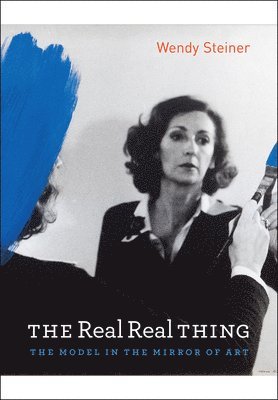
Our era is defined by the model. From Victoria's Secret and America's Next Top Model to the snapshots we post on Face-book and Twitter, our culture is fixated on the pose, the state of existing simultaneously as artifice and the real thing. In this bold view of contemporary culture, Wendy Steiner shows us the very meaning of the arts in the process of transformation. Her story begins at the turn of the last century, as the arts abandoned the representation of the world for a heady embrace of the abstract, the surreal, and the self-referential. Today though, this 'separate sphere of the aesthetic' is indistinguishable from normal life. Media and images overwhelm us: we gingerly negotiate a real-virtual divide that we suspect no longer exists, craving contact with what J. M. Coetzee has called 'the real real thing.' As the World Wide Web renders the lower-case world in ever-higher definition, the reality-based genres of memoir and documentary are displacing fiction, and novels and films are depicting the contemporary condition through model-protagonists who are half-human, half-image.Steiner shows the arts searching out a new ethical potential through this figure: by stressing the independent existence of the model, they welcome in the audience in all its unpredictability, redefining aesthetic experience as a real-world interaction with the promise of empathy, reciprocity, and egalitarian connection. A masterly performance by a penetrating, inquisitive mind, "The Real Real Thing" is that rarest of books, one whose provocations will inspire readers to take a new - and nuanced - look at the world around them.
281 kr
Skickas inom 7-10 vardagar
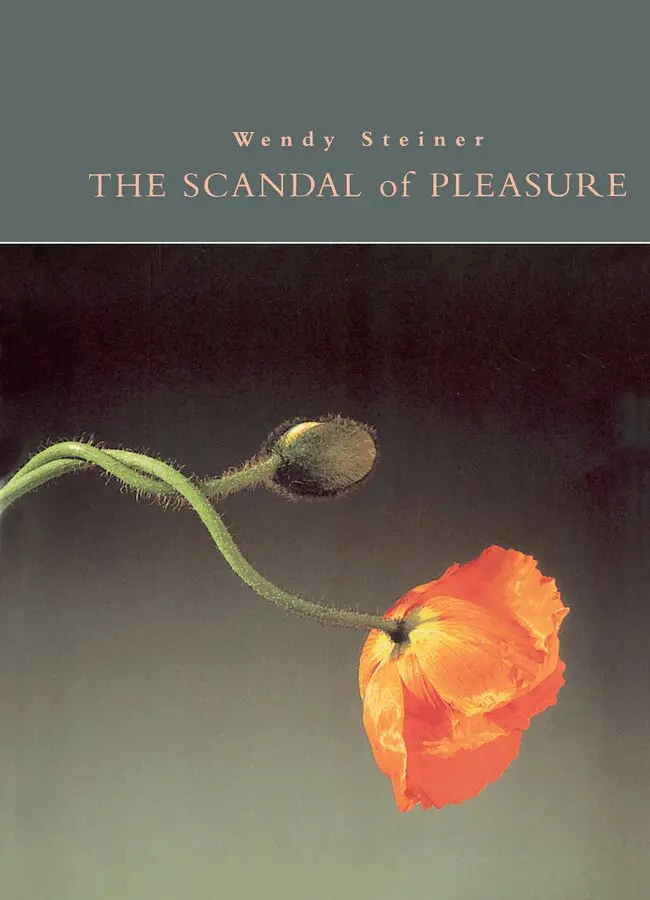
Surveying a wide range of cultural controversies, from the Mapplethorpe affair to Salman Rushdie's death sentence, from canon-revision in the academy to the scandals that have surrounded Anthony Blunt, Martin Heidegger, and Paul de Man, Wendy Steiner shows that the fear and outrage they inspired are the result of dangerous misunderstanding about the relationship between art and life.
727 kr
Tillfälligt slut
How do pictures tell stories? Why does the literary romance so often refer to paintings and other visual art objects? Beginning with these two seemingly unrelated questions, Wendy Steiner reveals an intricate exchange between the visual arts and the literary romance. Romances violate the casual, temporal, and logical cohesiveness of realist novels, and they do so in part by depicting love as a state of suspension, a condition outside of time. Steiner argues that because Renaissance and post-Renaissance painting also represents a suspended moment of perception with "unnatural" clarity and compression of meaning, it readily serves the romance as a symbol of antirealism. Yet the atemporality of stopped-action painting was actually an attempt to achieve pictorial realism—the way things "really" look. It is this paradox that interests Steiner: to signal their departure from realism, romances evoke the symbol of "realistic" visual artwork. Steiner explores this problem through analyses of Keats, Hawthorne, Joyce, and Picasso. She then examines a return to narrative conventions in visual art in the twentieth century, in the work of Lichtenstein and Warhol, and speculates on the fate of pictorial storytelling and the romance in postmodern art. An aesthetic fantasia of sorts, this study combines theory and analysis to illuminate an unexpected interconnection between literature and the visual arts.
509 kr
Skickas inom 11-20 vardagar
How do pictures tell stories? Why does the literary romance so often refer to paintings and other visual art objects? Beginning with these two seemingly unrelated questions, Wendy Steiner reveals an intricate exchange between the visual arts and the literary romance. Romances violate the casual, temporal, and logical cohesiveness of realist novels, and they do so in part by depicting love as a state of suspension, a condition outside of time. Steiner argues that because Renaissance and post-Renaissance painting also represents a suspended moment of perception with "unnatural" clarity and compression of meaning, it readily serves the romance as a symbol of antirealism. Yet the atemporality of stopped-action painting was actually an attempt to achieve pictorial realism—the way things "really" look. It is this paradox that interests Steiner: to signal their departure from realism, romances evoke the symbol of "realistic" visual artwork. Steiner explores this problem through analyses of Keats, Hawthorne, Joyce, and Picasso. She then examines a return to narrative conventions in visual art in the twentieth century, in the work of Lichtenstein and Warhol, and speculates on the fate of pictorial storytelling and the romance in postmodern art. An aesthetic fantasia of sorts, this study combines theory and analysis to illuminate an unexpected interconnection between literature and the visual arts.
229 kr
Skickas inom 7-10 vardagar
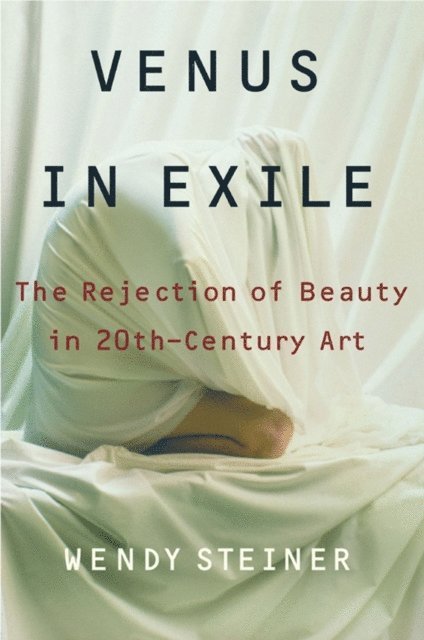
Ever since the Renaissance, the female body has been a primary symbol of artistic beauty in the West. But with the advent of avant-garde and modernist art, beauty suddenly became suspect. In Venus in Exile, renowned cultural critic Wendy Steiner explores how this happened, tracing the twentieth century's troubled relationship with beauty. Steiner shows how the avant-garde set out to replace the supposed impurity of woman and ornament with pure form - a new standard of art. Arguing that both modern artists and feminists rejected the female subject as an aesthetic symbol, Steiner suggests that we understand the experience of beauty as a form of communication, in which finding someone or something beautiful leads viewers to recognize beauty in themselves as well. She ends by discussing recent works that have begun to restore beauty to art, including the paintings of Marlene Dumas, the novels of Penelope Fitzgerald, and the choreography of Mark Morris.
284 kr
Skickas inom 7-10 vardagar
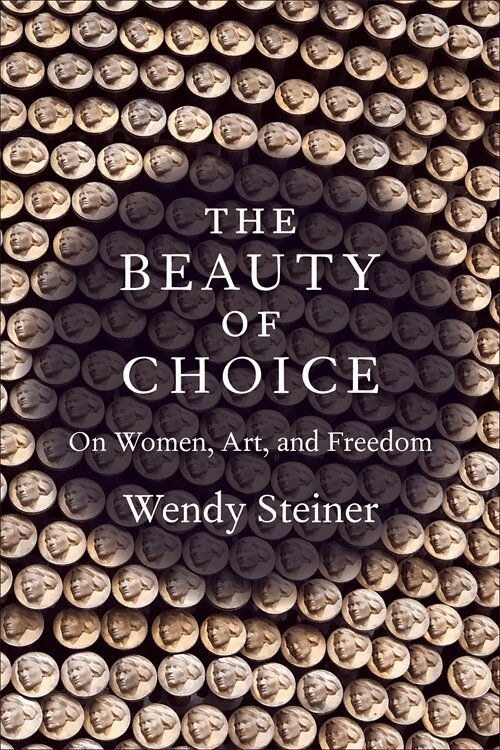
In The Beauty of Choice, the renowned cultural critic Wendy Steiner offers a dazzling new account of aesthetics grounded in female agency. Through a series of linked meditations on canonical and contemporary literature and art, she casts women’s taste as the engine of liberal values.Steiner reframes long-standing questions surrounding desire, art, sexual assault, and beauty in light of #MeToo. Beginning with an opera she wrote based on Chaucer’s “The Wife of Bath’s Tale,” she presents women’s sexual choices as fundamentally aesthetic in nature—expressions of their taste—and artworks as stagings of choice in courtship, coquetry, consent, marriage, and liberation. A merger of art criticism, evolutionary theory, political history, and aesthetics, this book paints the struggle between female autonomy and patriarchal violence and extremism as the essence of art.The Beauty of Choice pursues its claims through a striking diversity of examples: Sei Shōnagon’s defense of pleasure in the Pillow Book; Picasso’s and Balthus’s sexualization of their models; the redefinition of “waste” in postmodern fiction; and interactivity and empathy in the works of contemporary artists such as Marlene Dumas, Barbara MacCallum, Kristin Beeler, and Hannah Gadsby. It offers the first critical study of Heroines, a memorial to the twenty thousand women raped in Kosovo during the Serbian genocide. This deeply original book gives taste, beauty, and pleasure central roles in a passionate defense of women’s freedom.
276 kr
Kommande
In The Beauty of Choice, the renowned cultural critic Wendy Steiner offers a dazzling new account of aesthetics grounded in female agency. Through a series of linked meditations on canonical and contemporary literature and art, she casts women’s taste as the engine of liberal values.Steiner reframes long-standing questions surrounding desire, art, sexual assault, and beauty in light of #MeToo. Beginning with an opera she wrote based on Chaucer’s “The Wife of Bath’s Tale,” she presents women’s sexual choices as fundamentally aesthetic in nature—expressions of their taste—and artworks as stagings of choice in courtship, coquetry, consent, marriage, and liberation. A merger of art criticism, evolutionary theory, political history, and aesthetics, this book paints the struggle between female autonomy and patriarchal violence and extremism as the essence of art.The Beauty of Choice pursues its claims through a striking diversity of examples: Sei Shōnagon’s defense of pleasure in the Pillow Book; Picasso’s and Balthus’s sexualization of their models; the redefinition of “waste” in postmodern fiction; and interactivity and empathy in the works of contemporary artists such as Marlene Dumas, Barbara MacCallum, Kristin Beeler, and Hannah Gadsby. It offers the first critical study of Heroines, a memorial to the twenty thousand women raped in Kosovo during the Serbian genocide. This deeply original book gives taste, beauty, and pleasure central roles in a passionate defense of women’s freedom.
300 kr
Skickas inom 10-15 vardagar
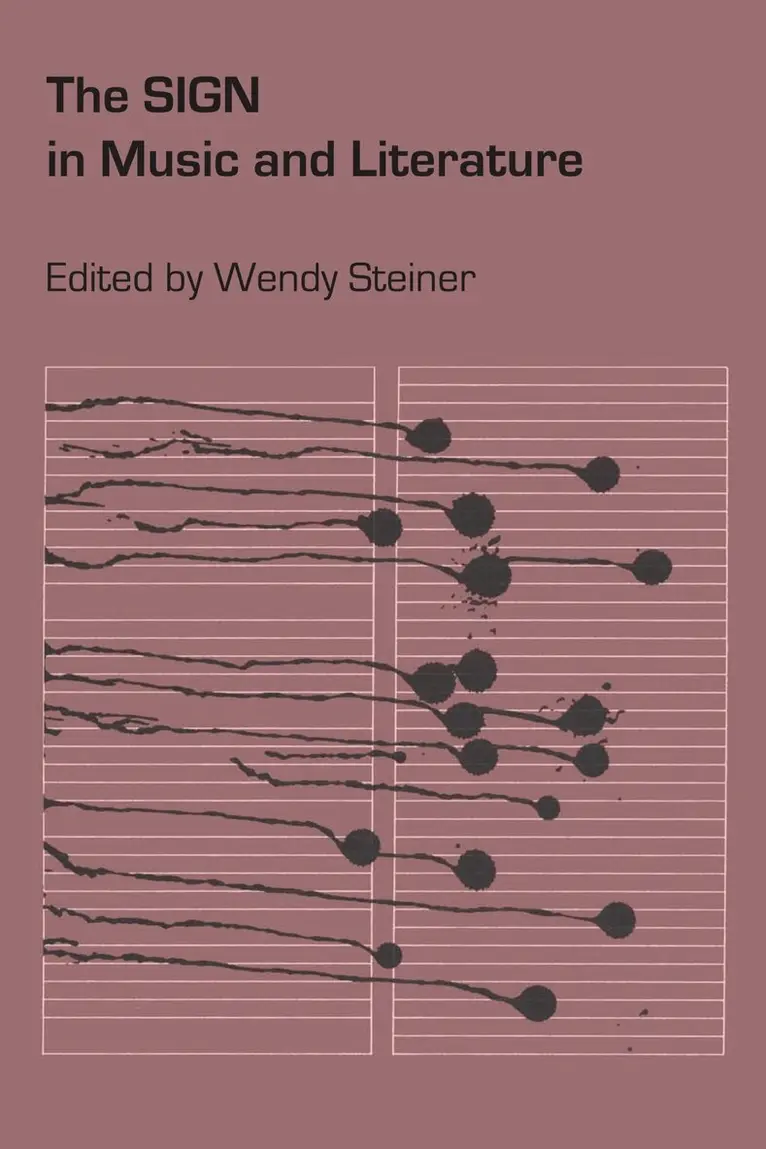
The notion of semiotics as a universal language that can encompass any object of perception makes it the focus of a revolutionary field of inquiry, the semiotics of art. This volume represents a unique gathering of semiotic approaches to art: from Saussurian linguistics to transformational grammar, from Prague School aesthetics to Peircean pragmatism, from structuralism to poststructuralism. Though concerned specifically with the semiotics of music and literature, the essays reveal the breadth of semiotics’ interdisciplinary appeal, involving specialists in musicology, ethnomusicology, jazz performance, literary criticism, poetics, aesthetics, rhetoric , linguistics, dance, and film. The diversity of authorial training and approach makes this collection a dramatic demonstration of the on-going debates in the field. In many ways the semiotics of art is the testing ground of sign theory as a whole, and work in this subject is as vital to the interests of theoretical semioticians as to students of the arts. It is to both these interests that this volume is addressed.