
Willard G. Manning – författare
Visar alla böcker från författaren Willard G. Manning. Handla med fri frakt och snabb leverans.
2 produkter
2 produkter
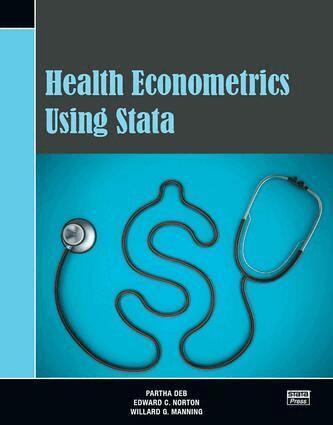
Häftad, Engelska, 2017
773 kr
Skickas inom 5-8 vardagar
Health Econometrics Using Stata by Partha Deb, Edward C. Norton, and Willard G. Manning provides an excellent overview of the methods used to analyze data on healthcare expenditure and use. Aimed at researchers, graduate students, and practitioners, this book introduces readers to widely used methods, shows them how to perform these methods in Stata, and illustrates how to interpret the results. Each method is discussed in the context of an example using an extract from the Medical Expenditure Panel Survey.After the overview chapters, the book provides excellent introductions to a series of topics aimed specifically at those analyzing healthcare expenditure and use data. The basic topics of linear regression, the generalized linear model, and log and Box-Cox models are covered with a tight focus on the problems presented by these data. Using this foundation, the authors cover the more advanced topics of models for continuous outcome with mass points, count models, and models for heterogeneous effects. Finally, they discuss endogeneity and how to address inference questions using data from complex surveys.The authors use their formidable experience to guide readers toward useful methods and away from less recommended ones. Their discussion of "health econometric myths" and the chapter presenting a framework for approaching health econometric estimation problems are especially useful for this aspect.
Inbunden, Engelska, 1991
879 kr
Tillfälligt slut
Poor health habits (drinking, smoking, lack of exercise) obviously take their toll on individuals and their families. The costs to society are less obvious but certainly more far-reaching. This investigation is the first to quantify the financial burden these detrimental habits place on American taxpayers. Willard Manning and his colleagues measure the direct costs of poor health habits (fire damage, motor vehicle accidents, legal fees), as well as collectively financed costs (medical care, employee sick leave, group health and life insurance, nursing home care, retirement pensions, liability insurance). Consider two co-workers covered by their employer's health plan: both pay the same premium, yet if one drinks heavily, the other--through their mutual insurance program--involuntarily funds the resulting health problems. After laying out their conceptual framework, methods, and analytical approach, the authors describe precisely how and to what extent drinking, smoking, and lack of exercise are currently subsidized, and make recommendations for reducing or reallocating the expense. They present, for example, a persuasive case for raising excise taxes on alcohol. The authors correlate their data to make costs comparable, to avoid double counting, and to determine the exact costs of each of these poor health habits and some of their findings are quite surprising. This unique study will be indispensable to public health policy specialists and researchers, as well as to health economists.