Yin-tak Woo – författare
Visar alla böcker från författaren Yin-tak Woo. Handla med fri frakt och snabb leverans.
6 produkter
6 produkter
Inbunden, Engelska, 1996
1 115 kr
Skickas inom 10-15 vardagar
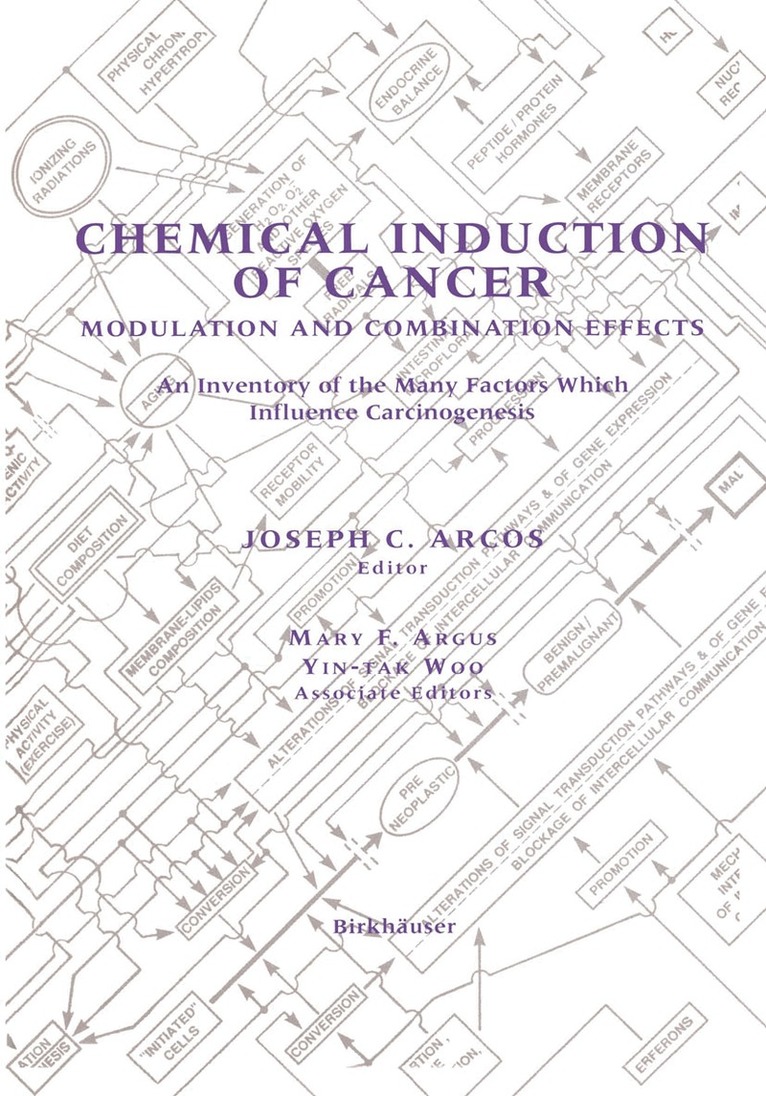
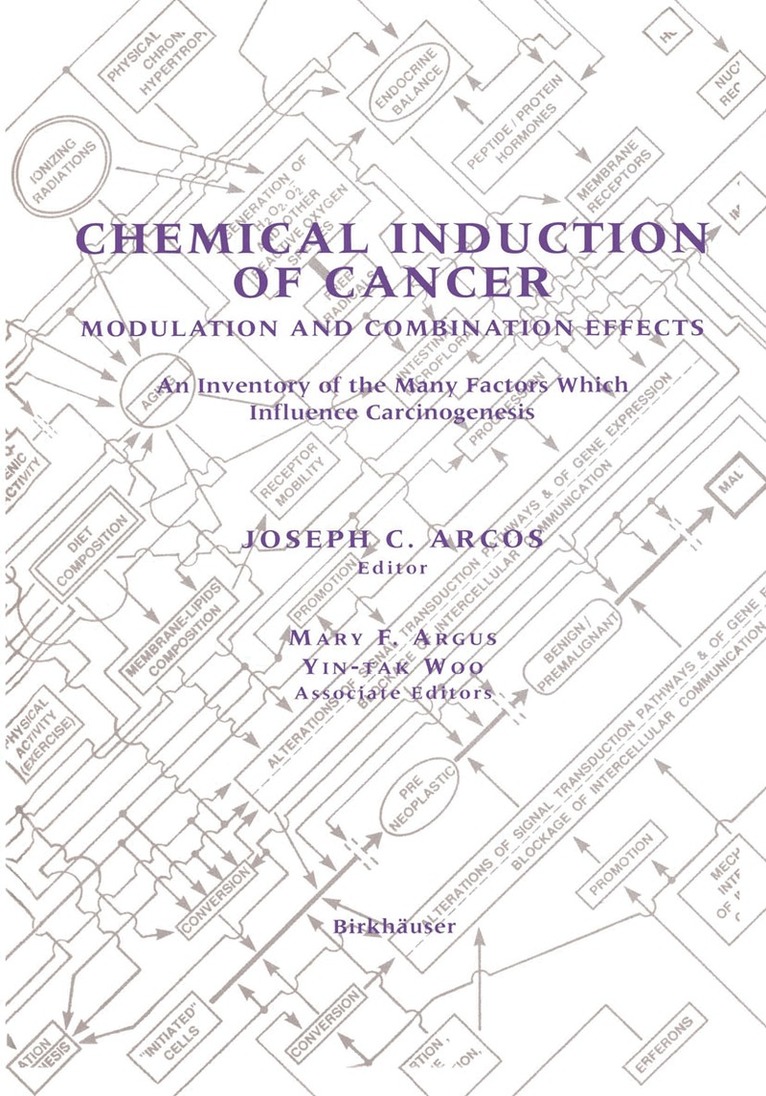
This text provides a perspective on the complex aetiology of cancer. The topics are grouped into two parts: Part 1 covers cross-reactions between carcinogens and modification of chemical carcinogenesis by noncarcinogenic agents; Part 2 examines exogenous factors and endogenous biological parameters that modulate chemical carcinogenesis. The chapters in Part 1 discuss: the combination effects between carcinogens (synergism and antagonism); modification of chemical carcinogenesis by inhibitors, promoters and carcinogens; intercellular communication as an interpretive paradigm for the modification of carcinogenesis; mathematical modelling in the evaluation of carcinogen interactions; and a computerized database search and logic system for the assessment of relative carcinogenic potency of chemical mixtures. Chapters in Part 2 discuss: other exogenous as well as endogenous factors that modulate chemical carcinogenesis; immunotoxicity of carcinogens, diet (caloric intake, protein/amino acids, vitamins, minerals and fibre); age of the organism; hormones and modification of the endocrine status; genetic susceptibility; radiations; viruses; stress; and electromagnetic fields.Because of the dominant role that the oncogene concept, signal transduction and tumour-suppressor genes play in the understanding of the mechanism of carcinogenesis, special emphasis is given to the chapter discussing viral-chemical interactions and the molecular biology of viral tumourigenesis.
E-bok
PDF, Engelska, 20121 459 kr
Läs direkt efter köp
In the approach to the analysis of disease, including, of course, cancer, two major thrusts may be distinguished. These may be referred to, in shorthand, as agents and processes: the causative agents (chemical, microbial, physical, environmental, and psychosocial) and the organismic processes, initiated and furthered by the agents, culminating in observable pathology (at the macromolecular, cytological, histological, organ function, locomotor, and behavioral levels). The past 25 years, since the appearance of the first volume of the predecessor series (1) authored by the Editors of this present volume, have seen an impressive number of studies on chemicals (and other agents) as etiologic factors in the induction of cancer. The major emphasis has been on the discovery of many chemical carcinogens of widely different structures, their metabolism by various tissues and cells, and, in turn, their molecular-biochemical effects on the cells. This rapidly expanded body of information, as effectively covered in the predecessor volumes, is an excellent entree to the second half of the overall problem of chemical carcinogenesis, the processes. The active agents trigger a large array of molecular-biochemical alterations to which the target cells, target tissues, and target organisms respond in many select and common ways. This second major aspect of the induction of cancer by chemicals (and by other agents)- the sequence of cellular and tissue changes clearly relevant to cancer-remains the challenge for the future.
Häftad, Engelska, 2011
1 115 kr
Skickas inom 10-15 vardagar
In the approach to the analysis of disease, including, of course, cancer, two major thrusts may be distinguished. These may be referred to, in shorthand, as agents and processes: the causative agents (chemical, microbial, physical, environmental, and psychosocial) and the organismic processes, initiated and furthered by the agents, culminating in observable pathology (at the macromolecular, cytological, histological, organ function, locomotor, and behavioral levels). The past 25 years, since the appearance of the first volume of the predecessor series (1) authored by the Editors of this present volume, have seen an impressive number of studies on chemicals (and other agents) as etiologic factors in the induction of cancer. The major emphasis has been on the discovery of many chemical carcinogens of widely different structures, their metabolism by various tissues and cells, and, in turn, their molecular-biochemical effects on the cells. This rapidly expanded body of information, as effectively covered in the predecessor volumes, is an excellent entree to the second half of the overall problem of chemical carcinogenesis, the processes. The active agents trigger a large array of molecular-biochemical alterations to which the target cells, target tissues, and target organisms respond in many select and common ways. This second major aspect of the induction of cancer by chemicals (and by other agents)- the sequence of cellular and tissue changes clearly relevant to cancer-remains the challenge for the future.
E-bok
PDF, Engelska, 20131 045 kr
Läs direkt efter köp
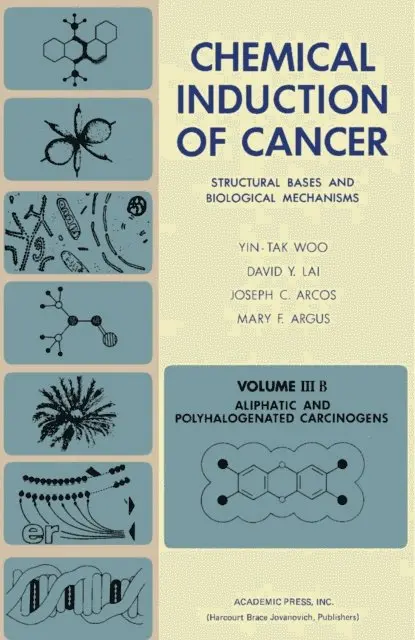
Chemical Induction of Cancer: Structural Bases and Biological Mechanisms, Volume IIIB: Aliphatic and Polyhalogenated Carcinogens covers environmentally and occupationally significant carcinogens of industrial origins. The book discusses the structure-activity relationships, metabolism, and environmental significance of the halogenated linear alkanes and alkenes and the halogenated cycloalkanes; and cycloalkene pesticides, biphenyls, and related aromatics. The text also describes the structure-activity relationships, metabolism, and environmental significance of the halogenated phenoxy acids, aromatic ethers, dibenzofurans, and dibenzo-p-dioxins; and ethylene glycol, diethylene glycol, dioxane, and related compounds. The structure-activity relationships, metabolism, and environmental significance of phenols and phenolic compounds; nitroalkanes and nitroalkenes; and acetamide, dimethylcarbamyl chloride, and related compounds thiocarbonyl compounds are also encompassed. The book further tackles the structure-activity relationships, metabolism, and environmental significance if fatty acids, detergents, and other surfactants with oncogenic potential. The text then looks into the effect of chemical reactivity, molecular geometry, and metabolism on carcinogenic activity. Chemists, geneticists, and those involved in cancer research will find the book invaluable.
E-bok
PDF, Engelska, 20131 045 kr
Läs direkt efter köp
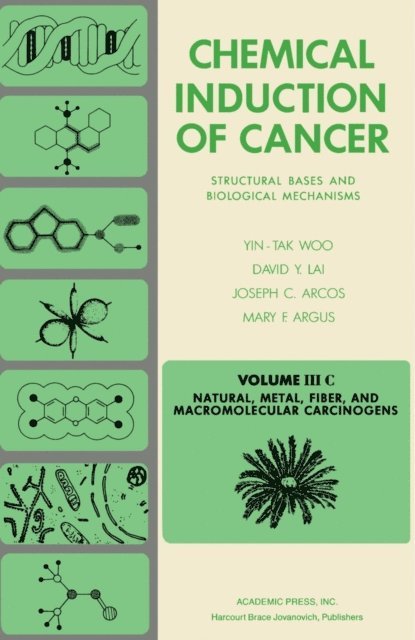
Chemical Induction of Cancer: Structural Bases and Biological Mechanisms, Volume IIIC: Natural, Metal, Fiber, and Macromolecular Carcinogens covers structure-carcinogenicity relationships of carcinogenic mycotoxins, carcinogenic substances generated by plants, carcinogenic metals and metalloids, and foreign-body carcinogens. The book discusses the metabolism and mechanism of carcinogenic action, physicochemical properties, other biological activities (principally mutagenicity and teratogenicity), modification of carcinogenic activity, formation and environmental significance. The text also describes the carcinogenic water-soluble high polymers and explores the intriguing problems of the carcinogenic effect of osmotic imbalance in tissue microenvironment, as well as of spontaneous malignant transformation occurring in cell cultures in vitro. Studies on tumor induction and carcinogenesis modification by nonviral nucleic acids, by nucleases, proteases, histones, and by antigenic stimulation as well as by antibodies are also considered. The book further tackles tumor-released factors as possible modifiers of carcinogenesis. The text will prove invaluable to chemists and people involved in cancer research.
E-bok
PDF, Engelska, 20131 008 kr
Läs direkt efter köp
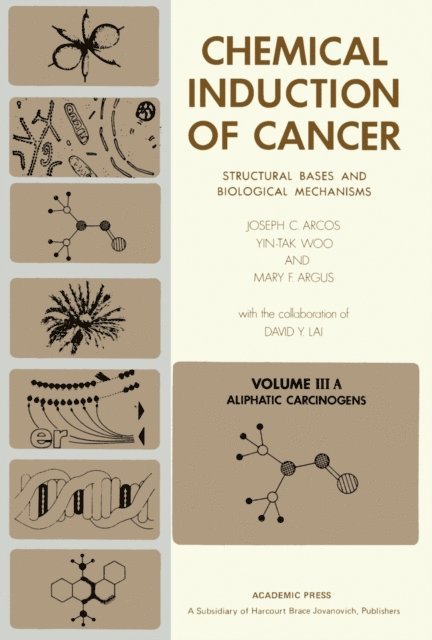
Chemical Induction of Cancer: Structural Bases and Biological Mechanisms Volume IIIA deals with the organic and biochemical principles behind cancer. This volume contains the continuation of Volume IIA, which tackles structure-activity relationships of chemical carcinogens, the effect of chemical reactivity, molecular geometry, and metabolism on carcinogenic activity. Under this is non-conjugated organic compounds. The text is recommended for doctors, organic chemists, and biochemists with an advanced knowledge in biochemistry and organic chemistry and would like to know more the biochemical processes of cancer.