Youssef Aboul-Enein – författare
Visar alla böcker från författaren Youssef Aboul-Enein. Handla med fri frakt och snabb leverans.
4 produkter
4 produkter
E-bok
Engelska, 2012370 kr
Läs direkt efter köp
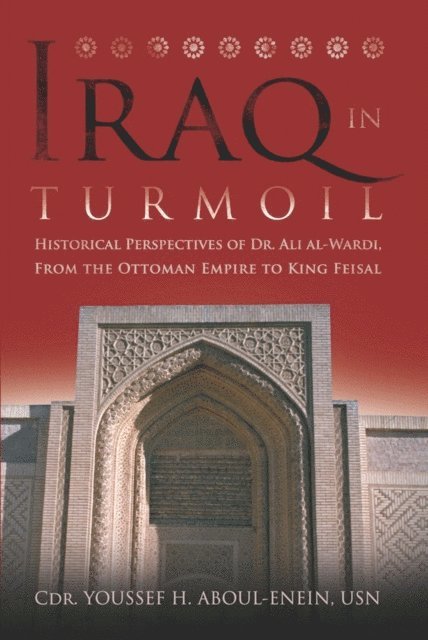
This is a unique collection of essays highlighting Iraq’s social, political and military history from a purely Iraqi perspective. Dr. Ali al-Wardi (1913-1995) attended the American University of Beirut in 1943 and then traveled to the United States to attain his Masters and Doctorate degrees in Sociology at the University of Texas in 1948 and 1950 respectively. He would return to Iraq and spend a career teaching, however his main legacy is a multi-volume work in Arabic that began to be published in late 1951 and ended in the early 1970s with his eighth book. It is a two decade work that highlights the history of Iraq from the arrival of the Ottomans to the monarchy of King Feisal I in 1925. Wardi’s volumes are read by a wide variety of Iraqi society, and this volume is an introduction to this pivotal Arabic work to English readers. It brings alive how the Ottomans, British and Safavid Persians dealt with sectarianism in Iraq and the battles fought over key areas of Iraq. It is required reading for those with an interest in or who are deploying to Iraq. Wardi''s work also discusses the dynamics of the 1920 Revolt, a year long insurgency against the British that was only satisified when London engineered a political solution to its advantage. That solution became the imposition of a monarchy under King Feisal of Iraq, who was not Iraqi. The monarchy would topple in 1958 and see the rise of Baathism.
E-bok
Engelska, 2013664 kr
Läs direkt efter köp
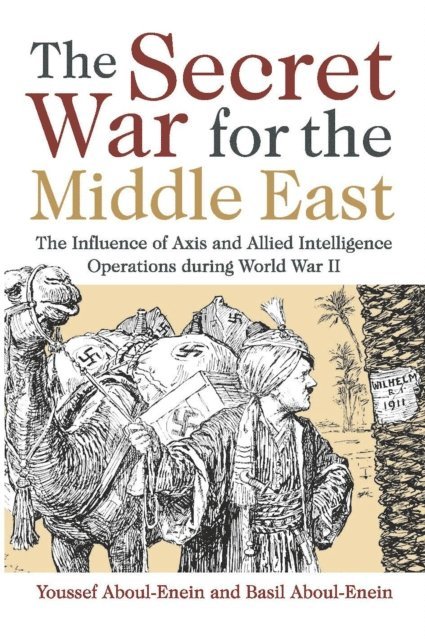
It can be argued that the Middle East during the World War II has been regarded as that conflict’s most overlooked theater of operations. Though the threat of direct Axis invasion never materialized beyond the Egyptian Western Desert with Rommel’s Afrika Korps, this did not limit the Axis from probing the Middle East and cultivating potential collaborators and sympathizers. These actions left an indelible mark in the socio-political evolution of the modern states of the Middle East. This book explores the infusion of the political language of anti-Semitism, nationalism, fascism, and Marxism that were among the ideological byproducts of Axis and Allied intervention in the Arab world. The status of British-dominated Middle East was tailor-made for exploitation by Axis intelligence and propaganda. German and Italian intelligence efforts fueled anti-British resentments; their influence shaped the course of Arab nationalist sentiments throughout the Middle East. A relevant parallel to the pan-Arab cause was Hitler’s attempt to bring ethnic Germans into the fold of a greater German state. In theory, as the Sudeten German stood on par with the Carpathian German, so too, according to doctrinal theory, did the Yemeni stand in union with the Syrian in the imagination of those espousing pan-Arabism. As historic evidence demonstrates, this very commonality proved to be a major factor in the development of relations between Arab and Fascist leaders. The Arab nationalist movement amounted to nothing more than a shapeless, fragmented, counter position to British imperialism, imported to the Arab East via Berlin for Nazi aspirations.
E-bok
Engelska, 2014281 kr
Läs direkt efter köp
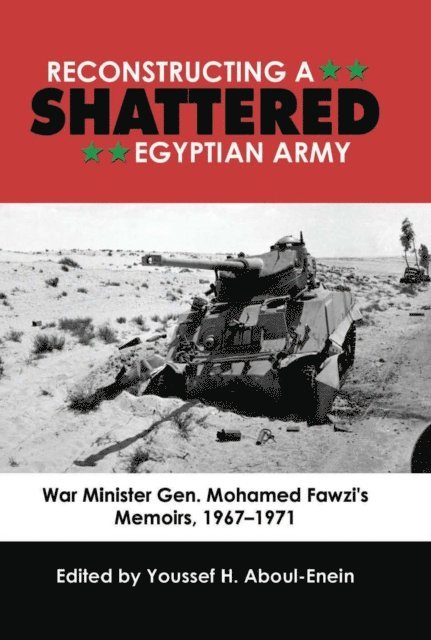
Central to CDR Youssef Aboul-Enein''s career has been the mission to introduce America''s military leaders to Arabic works of military significance. Just like American military leaders who had an obsession for all things Russian during the Cold War in order to understand the Soviets, the war on al-Qaida and the complex nuances of the Arab Spring demand a deeper comprehension of the Middle East from direct sources. The memoirs of General Mohamed Fawzi, Egyptian War Minister from 1967 to 1971, were first published in 1984, but his work has not ben translated and remains undiscovered by English speaking readers. Many in the United States Armed Services have yet to be introduced to his ideas, perspectives, and the seeds by which the 1973 Yom-Kippur War were laid. In this new contribution to his series of essays written for Infantry Journal, Aboul-Enein has determined to bring to life the military thoughts of this Arab War Minister. This book is a joint Infantry-Naval Institute Press project that has condensed the entire collection of essays on Fawzi to a single volume, to provide future generations of America’s military leaders with access his ideas. Fawzi is unique among Arab generals for his scathing critique of his own armed forces, and from his critical examination of what went wrong in 1967, he was able to slowly resurrect the Egyptian Armed Forces to a level that enabled Sadat to consider an offensive in 1973. This Egyptian general will provide insights into the level of Soviet cooperation and military aid provided Egypt after the 1967 Six-Day War, known simply in Arabic by one word, al-Naksah (the setback), not to be confused with the 1948 Arab-Israeli War known by one word, al-Nakbah (the catastrophe). While Fawzi lapses into conspiracy, indulges in wishful thinking, and employs the language of pan-Arabism on occasion, much like Soviet military theorists couched their ideas in Marxist-Leninist rhetoric, this will not stop serious American students of war from recognizing his brilliance about the lessons learned from the crushing defeat of Egyptian arms in the 1967 Six-Day War .
E-bok
Engelska, 2019639 kr
Läs direkt efter köp
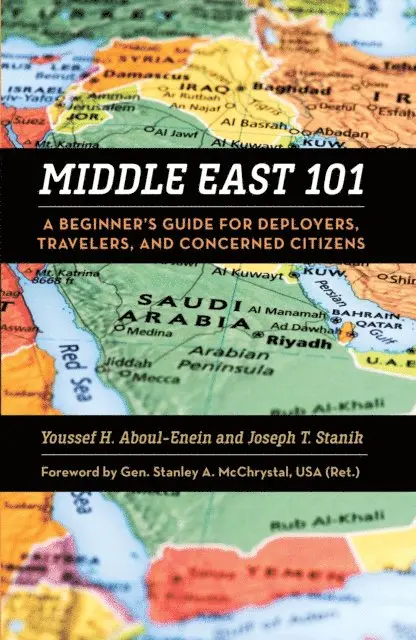
This work answers 101 essential questions on the Middle East, Islam, the Arab Spring, al-Qa’ida, and ISIS. It is for those wanting to begin an intellectual immersion into the complexities of the region from pre-biblical times to the post-Arab Spring. The authors have carefully focused on what the deploying soldier, sailor, Marine, coast guardsman or airman needs to know before arriving in the Middle East, including the nuances inherent in a region that is the crossroads of three continents (Europe, Asia, and Africa) and how previous global powers interacted and left their mark. While developed and written for Americans about to deploy to combat zones and areas of operation, it is also of use to a wider audience of Americans serious about the challenges of the region.