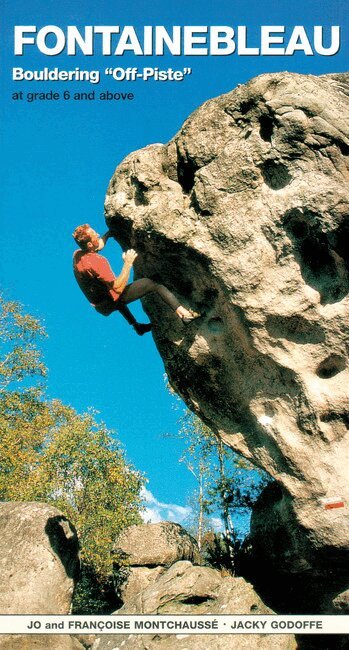
The forest of Fontainebleau is one of the major bouldering spots of the world. Thousands of sandstone boulders lie scattered over an area of 1,200 square kilometres of forest – wonderfully-shaped boulders of superb quality rock in a wilderness of pine, beech and oak trees. The climbing style is addictive, a subtle mixture of body positioning, footwork and power that is as demanding mentally as it is physically. There are problems at every grade imaginable, from the easiest of circuits to world class testpieces.Written by local climbers Jo and Francoise Montchausse and Jacky Godoffe, Fontainebleau Bouldering "Off-Piste" reveals the locations of over 3,000 of the best problems graded at Font 6a and above, and highlights 250 problems of outstanding quality. Some problems found on circuits, others are set apart and easily missed. This guide ensures that doesn't happen. Covering 92 different areas across the forest, the guide lists the harder problems in the main locations, and also on many lesser-known groups of boulders around the forest. There are 120 detailed maps - both general location maps and boulder layouts, colour photographs for every area and hints, tips and anecdotes throughout.This new edition also features a comprehensive alphabetical index to all the problems in the guide with those of the highest quality highlighted in bold type. More than enough for even the most dedicated enthusiast to go at. Fontainebleau Bouldering "Off-Piste" works particularly well when paired with the popular circuit guide Fontainebleau Climbs, written by the same authors.
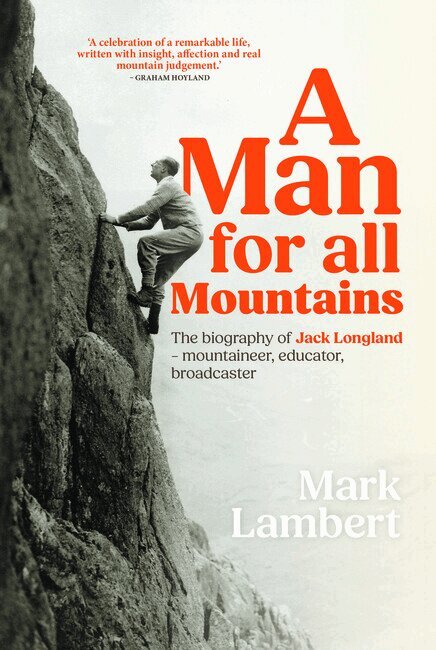
Sir John Laurence ‘Jack’ Longland (1905–1993) was one of the defining figures of British mountaineering and outdoor education in the twentieth century – a man whose influence reached from the highest mountains of the world to the classrooms, airwaves and policy rooms of post-war Britain.As a young climber, Jack Longland stood at the forefront of adventure. His eponymous climb on Clogwyn Du’r Arddu in North Wales in 1928 – the first on the crag’s imposing West Buttress – confirmed his standing among Britain’s leading rock climbers, while his 1930 ascent of Javelin Blade (E1) in Cwm Idwal was ahead of its time in terms of difficulty and boldness. Further from home, he was a member of the 1933 Everest expedition, gaining first-hand experience of the world’s highest mountain at a formative moment in Himalayan exploration; after helping to establish camp 6, he famously led his team of Sherpas down to the safety of camp 5 in a storm. His participation in the 1935 Greenland expedition further demonstrated a lifelong appetite for remote and demanding terrain.Yet Longland’s greatest legacy is how he connected mountaineering with public service. Appointed director of education for Dorset during the Second World War, and later for Derbyshire from 1949 to 1969, he became a visionary advocate for outdoor learning. In 1950 he founded White Hall, the first local authority outdoor pursuits centre in Britain, establishing a model that transformed access to the outdoors for generations of young people. He was knighted on his retirement in 1970.A respected leader within the climbing world, Longland served as chairman of the Mountain Leadership Training Board and of Plas y Brenin between 1964 and 1980, and as president of the Alpine Club from 1974 to 1976. His authority was matched by a gift for communication: he was a familiar and much-loved voice on BBC Radio, regularly contributing to Any Questions?, as well as chairing Country Questions in the 1940s and 1950s, and My Word! for twenty years from 1957.In A Man for All Mountains, the long-awaited biography of Jack Longland, Mark Lambert profiles a climber, educator and broadcaster united by a single belief: that mountains, landscapes and ideas are at their best when shared.
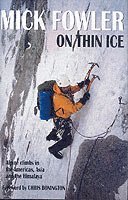
On Thin Ice is Mick Fowler's second set of climbing memoirs, following Vertical Pleasure. Here, the celebrated mountaineer records his expeditions since 1990 where, despite work and family commitments, he maintained a regular series of 'big trips' to challenging objectives around the world with a sequence of major successes. The combination of exotic travel with major climbs provides the ultimate adrenalin-soaked holiday experience that Mick Fowler has mastered to the full. We are transported from the cliffs of Jordan to remote peaks in deepest Asia via Taweche and Changabang in the Himalaya, with jaunts to the Andes and Alaska thrown in for good measure. That Fowler has organised this routine for years, while holding down a conventional nine-to-five job with the Inland Revenue, has constantly amazed his peers. In this, his second book, he has also mastered the skills of amusing travel-writing to entertain us as a preliminary to the finale of a titanic struggle on each of his fiendishly demanding climbs.His ascent of Siguniang in 2002, with Paul Ramsden featured hard ice climbing on a fabulous face in deepest China and was so admired by the international climbing community that it won the US Golden Piton and the French Piolets d'Or, both awards given for the finest alpine achievements in the world during that year. Fowler describes his travels in the great traditions, with engaging modesty and wit, but the climbs themselves are frequently so dramatic that the anxiety and tension forces its way to the surface to be matched by a corresponding relief and triumph when success and safe descent is achieved.
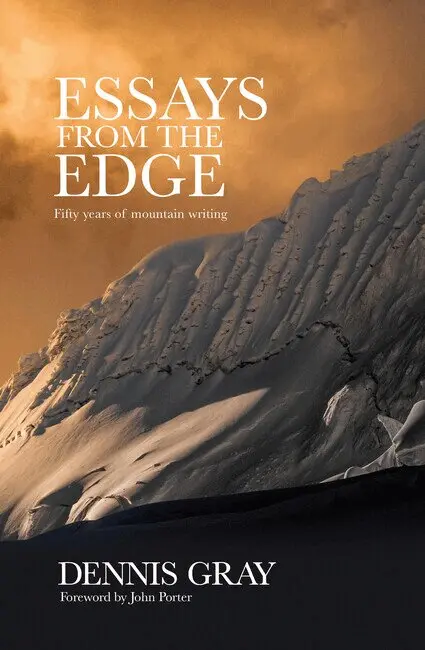
Essays from the Edge gathers fifty years of selected writing by Dennis Gray, one of British climbing’s most influential voices. These twenty-one essays, spanning one of British mountaineering’s most exciting periods, provide a compelling narrative of a life studying the art of climbing and of living it first-hand on the cliffs and mountains of the world in the company of some of the sport’s most colourful characters of the last century.Vivid portraits anchor the collection: the legendary Joe Brown and Don Whillans, members of the Rock and Ice Club; American pioneers Royal Robbins, Jeff Lowe and Warren Harding; and unsung originals such as the Barley brothers, Robin and Tony. A wide-ranging 1973 interview with climber Allan Austin gives a fascinating insight into the Yorkshire scene of the early 1970s. Dennis’s commentary expands to cover other issues, such as the 1932 Kinder Mass Trespass, climbing’s debut in the Olympics and the development of modern rock climbing in Belgium.Broad in scope yet precise in observation, Essays from the Edge celebrates the values and spirit of British climbing.
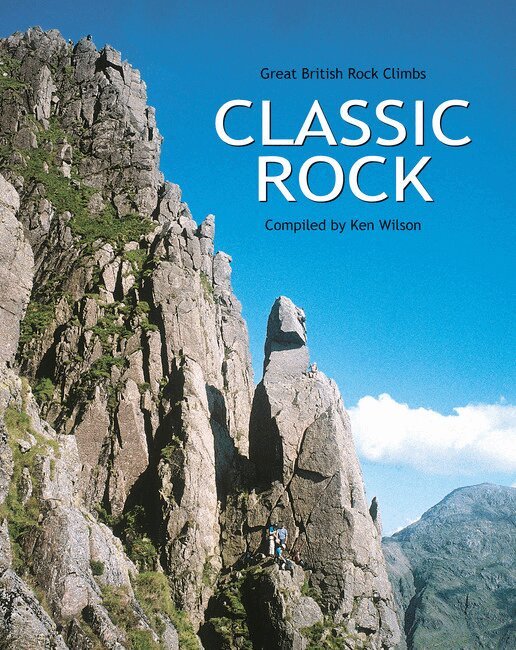
Ken Wilson’s Classic Rock is one of the most popular and iconic works of climbing literature ever written. Along with Hard Rock and Extreme Rock, it has acquired legendary status.First published in 1978, Classic Rock represented the absolute best of British climbing at that time, quickly establishing itself as a must-have publication. It is a celebration of 80 of the best lower-grade routes in Great Britain, bringing them to life through a superb selection of photographs, anecdotes and essays from some of the most accomplished climbers of the day.‘Ticking’ the book became an instant and obvious challenge, and remains so to this day (Wilson wasn’t a fan, describing it as ‘puerile ticking’). Any climber working his or her way through the book will be taken on a tour of the finest routes on the best cliffs and crags to be found throughout England, Scotland and Wales.Many of the routes in the book were established over a century ago. At that time the Victorian and Edwardian alpinists, flushed with successes abroad, sought harder challenges at home. With their well-honed confidence, they went straight for the biggest cliffs of Scotland. Anyone seeking to retrace their steps will immediately be transported to bold lines of weakness up otherwise daunting precipices! Before long these pioneers trailed their hemp ropes and balanced their hobnail boots up the sea cliffs of Cornwall and the gritstone edges of the Pennines, and the crags of the Lake District and North Wales. These climbers provided us with a great national treasure – a repository of adventure and spectacle that can provide a lifetime’s enjoyment and challenge.An ascent of a great historic route will rarely disappoint. Such routes retain much of their original challenge, unsullied by the pitons and bolts often found on their continental equivalents. They take bold, logical lines up otherwise difficult cliffs – usually cleaned and stabilised by years of use.Classic Rock provides a mere sampling of these treasures. This latest edition has been transformed with over 300 new colour photos. These sit alongside archive images to create an inspirational dialogue between today’s climbers and those of history. Fifty-five chapters, contributed by acclaimed climbers and writers such as Jim Perrin, Paul Nunn and Angela Soper, describe the finest classic rock climbs in Britain.
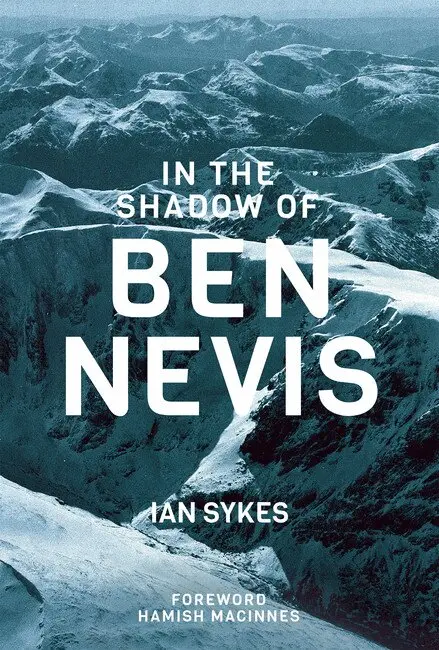
In 1959, sixteen-year-old Ian ‘Spike’ Sykes left school and, after a short period of work at Leeds University, joined the RAF. Already a keen climber, he signed up on the promise of excitement and adventure and was posted to the remote RAF Kinloss Mountain Rescue Team in the north of Scotland. It was the beginning of a journey which would see him involved in some of the most legendary call-outs in Scottish mountain rescue history, including the 1963 New Year tragedy on the Isle of Skye.In the Shadow of Ben Nevis tells Spike’s story from growing up in Leeds in the aftermath of the Second World War, to his time with the RAF during the cold war. After leaving the RAF, he remained an active member of the Lochaber Mountain Rescue Team and was involved in the first lower down the north face of Ben Nevis – an epic 1,500-foot descent to rescue stricken climbers in the middle of winter.Following a two-and-a-half-year stint on Antarctica with the British Antarctic Survey, he returned to the Highlands and opened the first Nevisport shop with his close friend Ian ‘Suds’ Sutherland. Together, they brought Sunday trading to Fort William and were one of a small number of shops to revolutionise outdoor retail in the UK. Later, he was a key player in the development of the Nevis Range ski area. Over many years, and against all odds, the project became a reality and a great success.Recounted within these pages are a great many lively tales of adventures and mishaps, told with immediacy and charm. With a foreword by legendary Scottish mountaineer Hamish MacInnes, a close friend of Spike’s, In the Shadow of Ben Nevis is a must-read for anyone with an interest in Scottish mountaineering and mountain rescue.
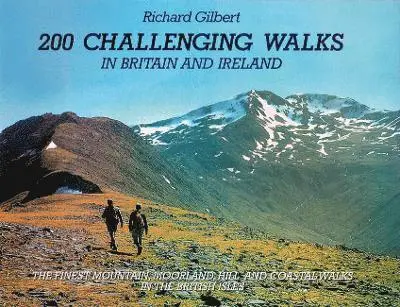
200 Challenging Walks in Britain and Ireland is a collection of the finest wild walks in the British Isles. The routes are selected from the classic and definitive Walks series of guidebooks: Classic Walks, Wild Walks and Big Walks. Whether you are an accomplished mountaineer or first-time hiker, the walks featured will allow you to discover remote isolation, negotiate technical scrambles and enjoy quintessential hill expeditions. They range from the hills and clifftops of southern England to the river valleys of Wales. There are island excursions in the Hebrides and trips to the clifftops of Ireland's wild Atlantic coastline. The book concludes with the ultimate British mountain expedition - the infamous Cuillin Ridge on Skye. The only true 'alpine' route in the UK, this is the dream target for many mountain walkers, climbers and fell-runners. Each walk is clearly described and plotted on a bespoke map, with notes on difficulty, escape routes, transport and accommodation. There are also 32 character-filled colour photos. Whether you choose 'an exceptionally long and tough walk over high and remote mountains' or 'a fine day's walk along rock escarpments, moorland edges and a beautiful river valley', Richard Gilbert's succinct but passionate prose will encourage a true spirit of adventure.
Games Climbers Play is a collection of essays, tales and stories that plugs into the frenetic world of rock climbers and mountaineers. Written by a diverse band of writers who range from Frank Smythe, Dougal Haston and Pete Boardman to Martin Boysen, Ed Drummond and Yvon Chouinard, the book captures the joie de vivre that attends genuinely adventurous climbing, while never losing sight of the deadly serious game that it can become. The collection of essays articles, poems and short stories was first printed in 1978 and has been reprinted a whopping six times - a testament to its popularity and position as a classic of climbing literature. Many of the entries are drawn from magazines and journals, which gives Games an immediacy not found in other collections. It is spiced with light-hearted and humorous items, tempered with some polemical and philosophical tracts and illustrated by Sheridan Anderson's cartoons, which punctuate any hint of pomposity with their scathing caricatures and observations, to complete a truly irreverent picture of the climbing game. This latest edition contains commentaries to each article. Despite the passage of time, the thoughts and ideas of the band of voices collected here are instantly recognizable as belonging to that breed of beings that gravitate towards vertical challenges. Climbers have always played, and always will, the very many varieties of their game, and this wonderful anthology is a wonderful reflection of that fact, a resource for the next generation; you are not alone, many have spent lifetimes enslaved to a playing the climbers game, and many more will follow, incensed by the mandate of this kaleidoscopic anthology.
When John Dunlop gives Judy Scott a lift to Glencoe on his motorbike, both are surprised when a relationship develops. But for John all passions must be relegated to the demands of the big climb. The focus soon shifts to the Alps where he teams up with the American climber Jack McDonald. Their careful planning goes awry and a major first ascent bid turns into an intense struggle bringing disaster and tragedy. Calculated Risk is a fictional portrayal of the world of mountaineering, of climbing the most demanding routes at a time when climbing was still emerging from its primitive inter-war and post war austerities and such routes were a stark struggle against the elements. The realities and tensions of big-time climbing, firmly focussed on the Alps and the Himalaya, are revealed with greater clarity through the medium of fiction. Dougal Haston was among Britain's leading mountaineers. A controversial figure, he began climbing in Scotland, putting up numerous new routes before moving on to bigger mountains and ascents of Annapurna, Everest and Denali. He was part of the team which, in 1966, made a directtissima ascent of the North Face of the Eiger.In 1967, Haston became Director of the International School of Mountaineering at Leysin in Switzerland. He wrote Calculated Risk in 1977, shortly before his death while skiing above Leysin - an accident strangely foretold in the book.
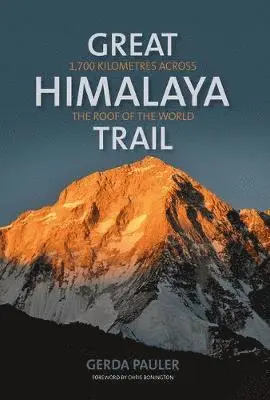
The Great Himalaya Trail is one of the longest and highest trails in the world. It is a trail that winds for 1,700 kilometres through Nepal - across the 'roof of the world', over ice-covered passes, crossing high-mountain deserts and through some of the most remote areas on earth. This path is perhaps the ultimate walk. In 2012, Himalaya veteran Gerda Pauler set out to walk the length of the trail to raise awareness of autism in Nepal. Travelling across the country with open eyes and ears, ascending high passes, visiting isolated villages and drinking tea with the locals allowed her to see and hear things many of us might never hear, never experience - and never know. Beautifully written like many great travel books and with a foreword by Sir Chris Bonington, this is so much more than a travel diary - it is a collection of stories from the very heart of Nepal and its people. From Tibetan tea and local beer to corrupt politicians and child marriage; cold nights and monsoon rain to incredible views and searing heat; and from angry yaks and giant spiders to Mr Bean and Jack Nicholson ...
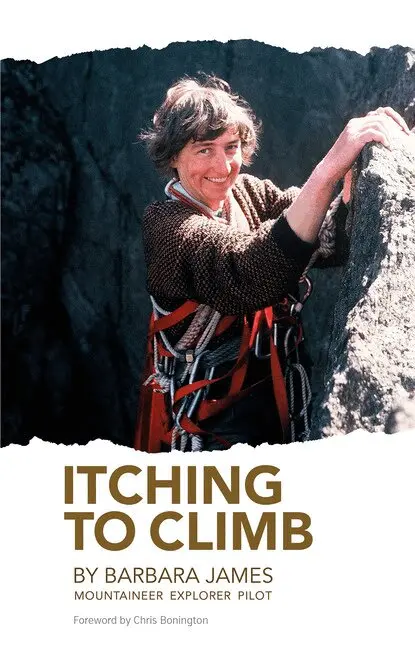
Inherited eczema and allergies made Barbara James different from her classmates, something she did not like. She was lucky. The severity of her eczema had lessened when her teacher introduced her to the Snowdonia hills. In 1964 she became a full time mountaineering instructor and mountain rescue first aider in Capel Curig at a time when there were few females instructing or leading difficult rock routes. Divorced in 1976 and with a mortgage to pay, Barbara needed a job, and became the first and possibly the only woman civilian to be employed by MOD to train soldiers. At the Infantry Junior Leaders Battalion in Folkestone she learned another language, new codes of behaviour, and to lead expeditions. After early retirement, Barbara took her first holiday in 11 years. She was probably the second person to go, unaccompanied, to the magical Falkland Islands soon after the conflict. Alone she walked up Tumbledown, communed with wild life and was told that "Anyone can learn to fly". So on return, her 50th birthday present to herself was to get a Private Pilot's Licence. A year later she flew a Cessna 40 hours solo around Florida.But nothing Barbara had done was as challenging as surviving, alone, the furiously tourist evenings in Tenerife's Playa de Las Americas. Only the magical El Teide National Park and the genuine, spontaneous kindness of the Canarians ensured her return. She rented an apartment in Adeje village and the locals' initial suspicious looks soon disappeared. Itching to Climb tells the story of one woman's undaunting spirit in the face of adversities, of a life spent facing challenges head on, with a singleminded determination to achieve despite the difficulties that life had laid in her way. This is a story of encouragement and hope for anyone who suffers with eczema, or any similar debilitating condition.
In August 1979 twenty-seven-year-old Mike Trueman set sail from the south-west coast of Wales, en route to Cornwall. The young army helicopter pilot was helping to move his friend’s yacht from Northern Ireland to the south coast of England. But as they sailed out into the Irish Sea, the sky turned progressively darker and the winds gathered pace. Over the next twenty-four hours the two young sailors battled to survive force-10 gales in what became known as the Fastnet disaster and which claimed the lives of fifteen sailors off the coast of Ireland.Almost seventeen years later, Trueman was at Camp 2 at 6,400 metres on Mount Everest as the May 1996 tragedy unfolded high above him. As stricken guides, clients and Sherpas tried to survive the fierce storms which engulfed the upper mountain, Trueman was able to descend and – using his twenty-four years of experience as an officer in the British Army – coordinate the rescue effort from Base Camp.The Storms is the remarkable memoir of a British Army Gurkha officer. Trueman, a veteran of twenty expeditions to the Himalaya, gives a candid account of life inside expeditions to the highest mountain in the world. He gives a unique personal perspective on the 1996 Everest storm, as well as on the fateful day in May 1999 when Briton Mike Matthews disappeared high on the mountain after he and Trueman had summited.