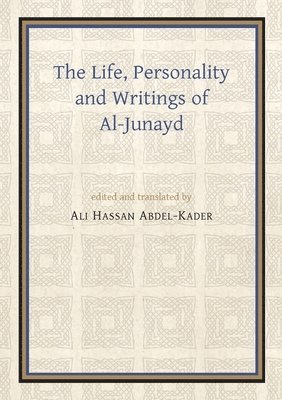
Al-Junayd (d. 910) was one of the most significant figures of the formative period of Islamic mystical thought and practice in the third to ninth centuries. This volume contains an account of his life, personality and writings; his doctrine; and both Arabic text and translation of his Rasa'il .
The Hudud al-'Alam, written in AD 982 for a Prince of Guzganan (located in the North West of modern Afghanistan), is a geography covering the whole known world and one of the earliest works of Persian prose. It was designed to accompany a map and, though the product of cabinet scholarship rather than original observation, it preserves much material from earlier compositions which are lost and shows originality in its organization. A facsimile edition of the unique MS, which came to light in Bukhara in the late 19th century, was published in Russia in 1930 by Barthold but it was left to Minorsky to make the data widely accessible by his English translation and his extensive commentary, which analyses the work's position in the early Islamic geographical tradition and identifies and discusses the places mentioned in the light of a wealth of other information. V. Minorsky was a former Professor of Persian in the University of London and his other translations include Tadhkirat al-Muluk, A Manual of Safavid Administration in this series.
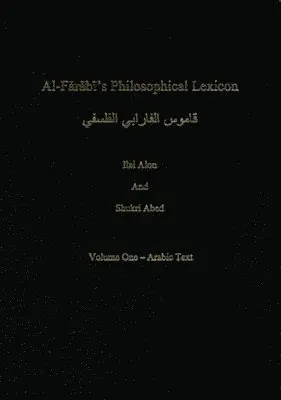
Al-Farabi (d. 950 AD), was perhaps the most original and influential of all Muslim philosophers of the Middle Ages. His intellectual activity spanned over areas as different as music, medicine, political theory, linguistics, logic, metaphysics, religion and philosophy at large. Great thinkers within the Islamic world from Ibn Bajjah to Ibn Rushd, as well as many outside it, such as Maimonides, St Thomas Aquinas and Spinoza refer to his works with great deference. Al-Farabis main contribution is the co-systematization of various spiritual disciplines in Islamic non-traditional culture, using them in a sophisticated manner for promoting a universalistic world-view. This edition consists of two volumes; volume one quotes the Arabic text of al-Farabi's philosophical definitions and those of parallel authors, and volume two contains an English translation, an interpretative essay on al-Farabi and detailed indices.
The Qur'an is the sacred book of Islam. For Muslims it is the word of God revealed in Arabic by the archangel Gabriel to the Prophet Muhammad, and thence to mankind. Originally it was delivered orally: traditional sources indicate that Muhammad always recited his message.
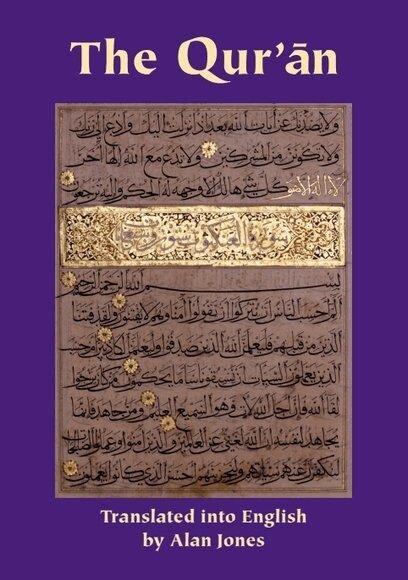
The Qur'an is the sacred book of Islam. For Muslims it is the word of God revealed in Arabic by the archangel Gabriel to the Prophet Muhammad, and thence to mankind. Originally it was delivered orally: traditional sources indicate that Muhammad always recited his message. He was a preacher; he delivered good news; and he warned; thus, the Qur'an is a collection of sermons, exhortations, guidance, warnings and pieces of encouragement. This new translation is unique. The result of decades of study of the text, of the traditional Muslim authorities and of the works of other scholars, special thought has been given to what the text would have meant to its original hearers. The traditional verse structure has been maintained, and where necessary verses have been further divided into sections to indicate where there are natural points for pause, and to emphasize the original oral nature of the text. This is the first translation of the Qur'an to adopt such an approach. The oral nature of the text presents problems for the translator, for recitation frequently gives the text a dimension that does not come across in silent reading. Some previous translators have introduced bridging phrases drawn from past commentators, resulting in interruptions to the flow of the text. Alan Jones's approach underlines the need for a sympathetic response to the oral and aural structures of the Arabic of the Qur'an. An introductory note to each sura provides some background material on the contents of the sura and its dating, and the notes are kept to a minimum. The translation is preceded by a brief Introduction describing the religion and culture of the Arabian peninsula, and the land and its peoples, in the years before Muhammad's birth. There is an account of his life: his early years in Mecca, the hijra, the migration to Medina, and his years there. And there is an account of the Qur'an and the transmission of the text. Alan Jones is a specialist in early Arabic literature, and the author of Early Arabic Poetry, two books of translations and commentary on pre-Islamic poetry. He has been a lecturer and teacher of Arabic at Oxford University for 43 years; now retired he is at work on a commentary to accompany this new translation of the Qur'an. A Festschrift, Islamic Reflections, Arabic Musings was published by Oxbow on behalf of the Gibb Memorial Trust, in his honour.
Written in the middle of the 12th century for a member of the Ghurid family of Bamiyan (in modern Afghanistan) the Four Discourses are concerned with four professions necessary at the Prince's court, those of scribe, poet, astrologer and physician. After describing the natural qualities and training required for each of them, Nizami 'Arudi relates anecdotes, mostly exemplifying the vicissitudes of life in the profession and the conditions that lead to success. The work is a particularly interesting and charming example of early ornamental prose in Persian. Edward G. Browne was a Former Fellow of Pembroke College, Cambridge.