
Häftad, Engelska, 2020
409 kr
Skickas inom 5-8 vardagar
409 kr
Skickas inom 5-8 vardagar

347 kr
Läs direkt efter köp
The Sound of the Sundial is the internationally acclaimed novel by Czech sensation Hana Andronikova, told over the course of a single day and night, but spanning three continents and much of the twentieth century.
In this intimate and affecting love story about a Jewish teacher and a German-Czech builder, Andronikova sends her readers on a captivating journey through time and memory, from the Czech town of Zlín in the 1920s to Calcutta in the 1930s, Theresienstadt and Auschwitz during World War II, Toronto in the decades afterward, and finally into modern-day Colorado. It is at once a deeply personal narrative and an homage to the lost relationship of the Czech, German, and Jewish peoples.
In 2002, The Sound of the Sundial received the Czech Republic’s prestigious Magnesia Litera Award in the category of Best New Discovery, just a few years before its young author died. It is making its world premiere appearance in English here.
238 kr
Läs direkt efter köp
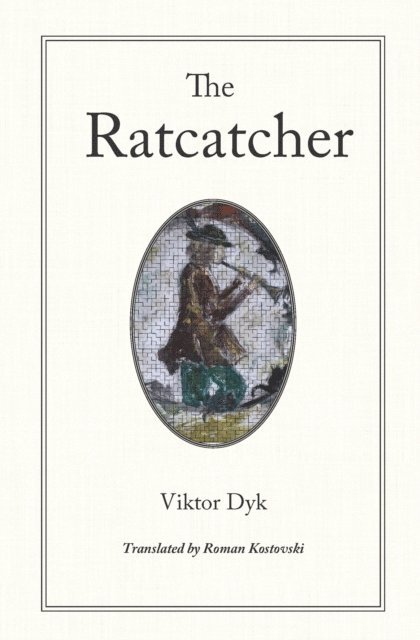
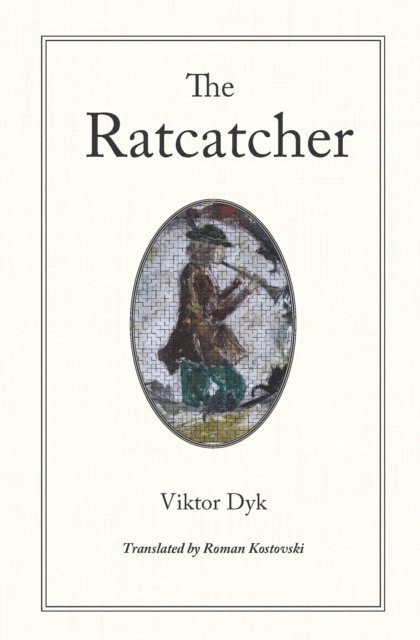
A stranger with a magical fife promises to rid the rat-infested town of Hamelin of its vermin for the sum of one hundred Rhine ducats. Viktor Dyk’s rendition of the medieval Saxon legend of the pied piper masterfully blends lyrical prose with early twentieth century modernism, and has held its own among works of Eastern European literature for over a hundred years. Now this Czech classic is introduced in English translation for the first time.
2 922 kr
Läs direkt efter köp

2 987 kr
Läs direkt efter köp
The Sound of the Sundial is the internationally acclaimed novel by Czech sensation Hana Andronikova, told over the course of a single day and night, but spanning three continents and much of the twentieth century. In this intimate and affecting love story about a Jewish teacher and a German-Czech builder, Andronikova sends her readers on a captivating journey through time and memory, from the Czech town of Zlín in the 1920s to Calcutta in the 1930s, Theresienstadt and Auschwitz during World War II, Toronto in the decades afterward, and finally into modern-day Colorado. It is at once a deeply personal narrative and an homage to the lost relationship of the Czech, German, and Jewish peoples. In 2002, The Sound of the Sundial received the Czech Republic’s prestigious Magnesia Litera Award in the category of Best New Discovery, just a few years before its young author died. It is making its world premiere appearance in English here.
498 kr
Läs direkt efter köp
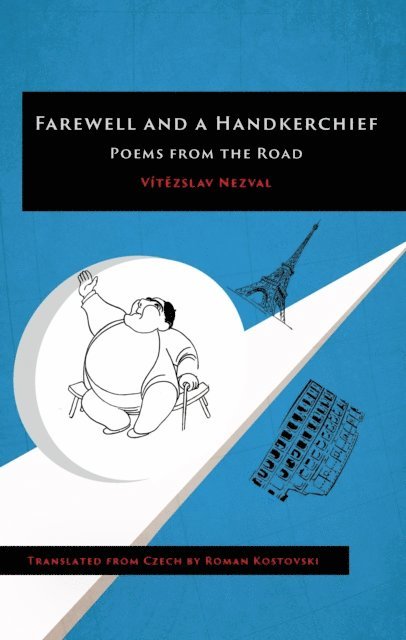
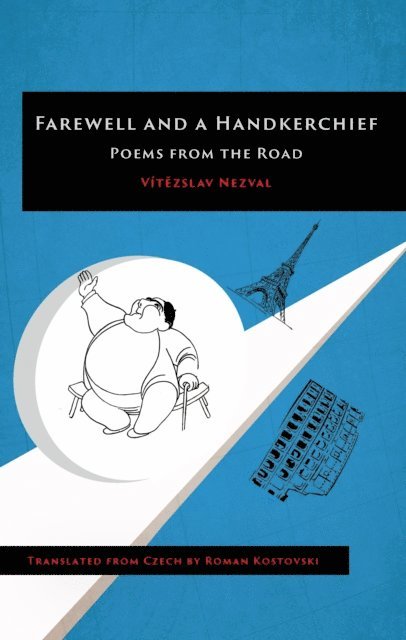
Farewell and a Handkerchief—Poems from the Road is a collection that reflects on the month-long travels of Czech poet Vítězslav Nezval through Vienna, Paris, southern France, and Italy. During this journey, on May 9, 1933, Nezval had a chance encounter with two of the surrealist movement’s most influential poets—André Breton and Paul Éluard—while sitting at the Cardinal Café on the Grands Boulevards in Paris, a meeting that proved transformative. After returning home, Nezval helped found the Czech Surrealist Group, along with Karel Teige, Jindřich Stýrský, and Toyen. It became the only official group of its kind outside of France.
2 922 kr
Läs direkt efter köp
Farewell and a Handkerchief—Poems from the Road is a collection that reflects on the month-long travels of Czech poet Vítězslav Nezval through Vienna, Paris, southern France, and Italy. During this journey, on May 9, 1933, Nezval had a chance encounter with two of the surrealist movement’s most influential poets—André Breton and Paul Éluard—while sitting at the Cardinal Café on the Grands Boulevards in Paris, a meeting that proved transformative. After returning home, Nezval helped found the Czech Surrealist Group, along with Karel Teige, Jindřich Stýrský, and Toyen. It became the only official group of its kind outside of France.

374 kr
Läs direkt efter köp

2 892 kr
Läs direkt efter köp
297 kr
Läs direkt efter köp
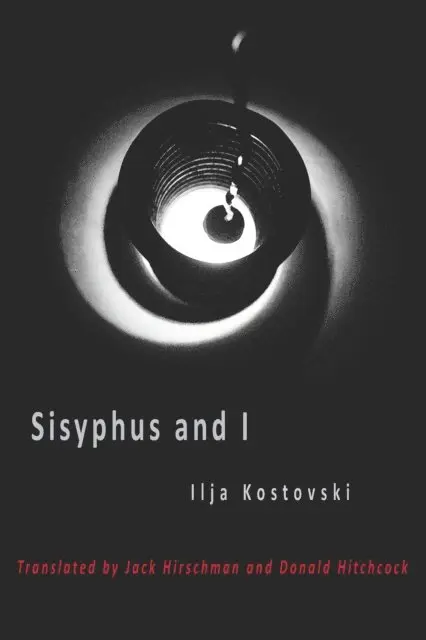
A Glance into Ilja Kostovski’s Selected Poetry
It is a slightly smirking smile that accompanies the voice calling on Muses in Ilja Kostovski’s epic poetry and final book, Sisiphus and I. In this seminal production of the poet’s work, an eager, if slightly sarcastic, voice cries out from the woodpile of modernity:
Don’t tarry You envious GodThis minute I will go Into the deep forestsAnd will chop for you Firewood in piles.
As for Kostovski’s readers, they are the “connoisseurs of sorrow,” the “suicide…leaning on the railings of bridges,” the “self-despisers,” for he is a poet of the lone wolves, the melancholy wanderer we read about in Blake and imagine among the happy crowds at Coney Island in the 1920s, or among the tripping multitudes of Haight Ashbury in the 1960s, or in the city where he made his last residence, the throngs of the upright and enraged of Washington, D.C.
Kostovski’s verse is prayer to a God who is or is not there, a nearly desperate, repeating “Come unto me.” It is not merely exhortation to the deity. He invokes, too, the gathering crowds of the lost and broken-hearted, as though the divine could only be conjured by those numbers, or as if the dead God of Nietzsche could be resurrected by a hoard whose suffering is the very thing that binds them. In that case, instead of a savior, the hero of these poems is a common wound: “Come unto me those/Who have turned your roads/Into hazardous games.” The language is straight out of the book of Micah (whose own anaphoric language begins each chapter with “Hear”), an Old Testament prophet no one believes, but the language pops with contemporary hideousness: “Come, candidates for oval offices/ Come, candidates for electric chairs.”
In what is perhaps the most powerful poem in the collection, “Sermon at the Washington Monument,” Kostovski the poet recalls his association with Ferlinghetti, who “Told me once/The Anglo-Saxons speak the truth/with half-closed mouths...” From a formal angle, the collection Sisyphus and I is Kostovski’s open-mouthed song to a universe that may or may not be listening. Like the fledgling with mouth turned upward, Kostovski’s poetry is both artistic hallelujah and hungry yawp, whose overarching tone is a kind of “gallows praise”: “I hear America is not singing anymore/All songs are dead/And you are the executioner…/Have you ever known Francois Villion/ Who multiplied his life on the gallows?” The poet calls on writers to awaken—rather like Micah, standing on his street corner—if not to save anything, then to attend it as it passes, flares out, at the height of its beauty.
Kostovski, born in the Macedonian province of Greece, is the author of Dostoevsky and Goethe: Two Devils, Two Geniuses. Like his poetry, his scholarship sought out the insight of the outsider, as he himself carried the burden of his generation through exile during Communist overthrows, until he settled in Washington, D.C. The prophetic insight is this: a monument does not memorialize a country, but rather a misinterpreted ideal. The best remembrances are those that serve a human purpose. And the best invitation to the gods, in Kostovski’s reckoning at least, is to chop some firewood, good for burning. This is a poet whose voice at once harkens back to the Tanakh while it recalls the beatniks of San Francisco, the homeless, and the insidious white power structures and silent mausoleums of Washington D.C. We are reminded in these pages that life is to be sung open-mouthed, if at all.
David KeplingerDecember, 2017
3 186 kr
Läs direkt efter köp
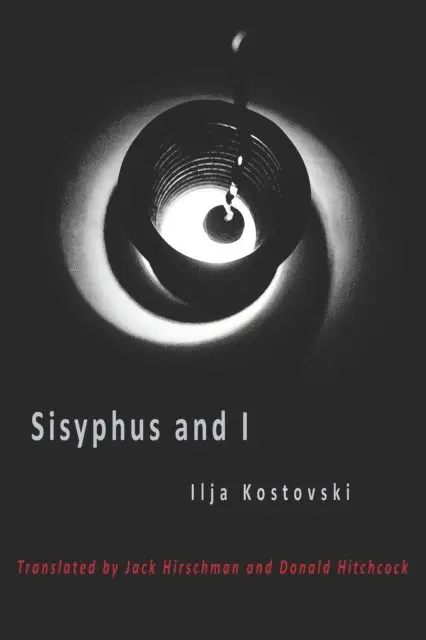
A Glance into Ilja Kostovski’s Selected Poetry
It is a slightly smirking smile that accompanies the voice calling on Muses in Ilja Kostovski’s epic poetry and final book, Sisiphus and I. In this seminal production of the poet’s work, an eager, if slightly sarcastic, voice cries out from the woodpile of modernity:
Don’t tarry You envious GodThis minute I will go Into the deep forestsAnd will chop for you Firewood in piles.
As for Kostovski’s readers, they are the “connoisseurs of sorrow,” the “suicide…leaning on the railings of bridges,” the “self-despisers,” for he is a poet of the lone wolves, the melancholy wanderer we read about in Blake and imagine among the happy crowds at Coney Island in the 1920s, or among the tripping multitudes of Haight Ashbury in the 1960s, or in the city where he made his last residence, the throngs of the upright and enraged of Washington, D.C.
Kostovski’s verse is prayer to a God who is or is not there, a nearly desperate, repeating “Come unto me.” It is not merely exhortation to the deity. He invokes, too, the gathering crowds of the lost and broken-hearted, as though the divine could only be conjured by those numbers, or as if the dead God of Nietzsche could be resurrected by a hoard whose suffering is the very thing that binds them. In that case, instead of a savior, the hero of these poems is a common wound: “Come unto me those/Who have turned your roads/Into hazardous games.” The language is straight out of the book of Micah (whose own anaphoric language begins each chapter with “Hear”), an Old Testament prophet no one believes, but the language pops with contemporary hideousness: “Come, candidates for oval offices/ Come, candidates for electric chairs.”
In what is perhaps the most powerful poem in the collection, “Sermon at the Washington Monument,” Kostovski the poet recalls his association with Ferlinghetti, who “Told me once/The Anglo-Saxons speak the truth/with half-closed mouths...” From a formal angle, the collection Sisyphus and I is Kostovski’s open-mouthed song to a universe that may or may not be listening. Like the fledgling with mouth turned upward, Kostovski’s poetry is both artistic hallelujah and hungry yawp, whose overarching tone is a kind of “gallows praise”: “I hear America is not singing anymore/All songs are dead/And you are the executioner…/Have you ever known Francois Villion/ Who multiplied his life on the gallows?” The poet calls on writers to awaken—rather like Micah, standing on his street corner—if not to save anything, then to attend it as it passes, flares out, at the height of its beauty.
Kostovski, born in the Macedonian province of Greece, is the author of Dostoevsky and Goethe: Two Devils, Two Geniuses. Like his poetry, his scholarship sought out the insight of the outsider, as he himself carried the burden of his generation through exile during Communist overthrows, until he settled in Washington, D.C. The prophetic insight is this: a monument does not memorialize a country, but rather a misinterpreted ideal. The best remembrances are those that serve a human purpose. And the best invitation to the gods, in Kostovski’s reckoning at least, is to chop some firewood, good for burning. This is a poet whose voice at once harkens back to the Tanakh while it recalls the beatniks of San Francisco, the homeless, and the insidious white power structures and silent mausoleums of Washington D.C. We are reminded in these pages that life is to be sung open-mouthed, if at all.
David KeplingerDecember, 2017
339 kr
Läs direkt efter köp
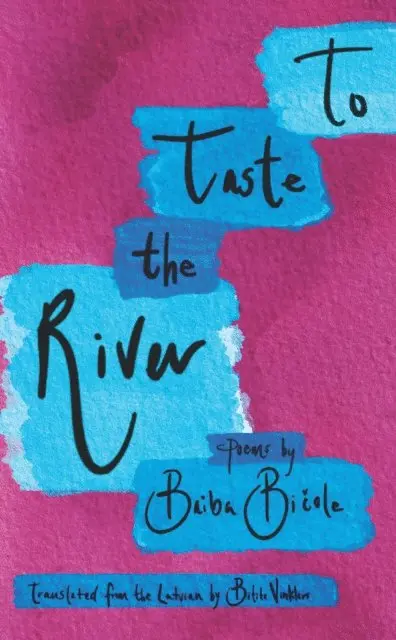
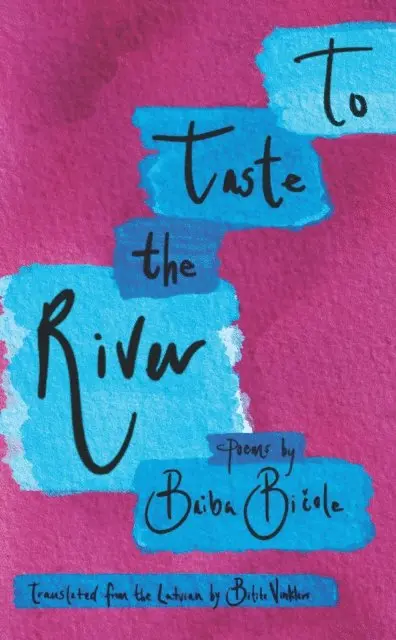
Baiba Bičole belongs to the postwar generation of Latvian poets living in exile who reached artistic maturity outside their native country and broke with the older exile generation’s traditional, nationalistic poetry. In To Taste the River, Bičole''s poems are lyrical and personal, often with intense emotion and startling imagery. Shown through different prisms, like variations on a theme, her subjects include separation, loss, and time; the power of language and song; and love. Central to her vision is nature, both as subject and metaphor. Appearing most frequently are waters (rain, mist, ice, rivers), birds, sun, and sky. Her unique voice renders a continuing motif of thirst, along with the need for freedom and movement, usually expressed through transformation. Nature in her poetry is distinct in that it is rooted in the world of the traditional Latvian folk songs, the dainas, where nature is animistic and personified, and the human and natural worlds are deeply interrelated. This is Bičole''s first collection of poems in English translation.
2 987 kr
Läs direkt efter köp
Baiba Bičole belongs to the postwar generation of Latvian poets living in exile who reached artistic maturity outside their native country and broke with the older exile generation’s traditional, nationalistic poetry. In To Taste the River, Bičole''s poems are lyrical and personal, often with intense emotion and startling imagery. Shown through different prisms, like variations on a theme, her subjects include separation, loss, and time; the power of language and song; and love. Central to her vision is nature, both as subject and metaphor. Appearing most frequently are waters (rain, mist, ice, rivers), birds, sun, and sky. Her unique voice renders a continuing motif of thirst, along with the need for freedom and movement, usually expressed through transformation. Nature in her poetry is distinct in that it is rooted in the world of the traditional Latvian folk songs, the dainas, where nature is animistic and personified, and the human and natural worlds are deeply interrelated. This is Bičole''s first collection of poems in English translation.
379 kr
Läs direkt efter köp
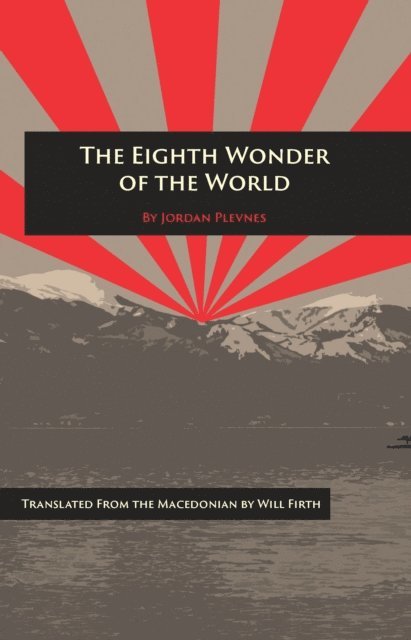
In his novel The Eighth Wonder of the World, Plevnes takes his dark sense of humor and undeniable wit on a search for a common ground in an uncommon world. His protagonist Alexander Simsar, during the last 3.3 seconds of his life in Berlin in 1989 (weeks before the fall of Berlin Wall), envisions the creation of a monument—an eighth wonder of the world—that would embrace humanity in all its layers and countenances. In this absurdist novel, Plevnes invents a utopia that unites many of the differences in the world: Christianity, Islam, Judaism, Buddhism, and even Satanism.
The Eighth Wonder of the World is yet another of Jordan Plevnes’s parables of hope. His preoccupation with the role of beauty in the context of social, religious, and cultural differences is front and center, as is his central question: Does humanism have a prospect of survival in the future of humankind? Plevnes suggests that survival and idealism can be found in beauty and art —and that only beauty and art have the power to save the world.
2 900 kr
Läs direkt efter köp
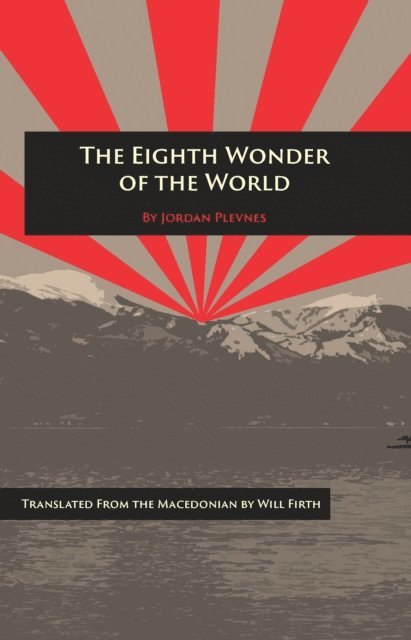
In his novel The Eighth Wonder of the World, Plevnes takes his dark sense of humor and undeniable wit on a search for a common ground in an uncommon world. His protagonist Alexander Simsar, during the last 3.3 seconds of his life in Berlin in 1989 (weeks before the fall of Berlin Wall), envisions the creation of a monument—an eighth wonder of the world—that would embrace humanity in all its layers and countenances. In this absurdist novel, Plevnes invents a utopia that unites many of the differences in the world: Christianity, Islam, Judaism, Buddhism, and even Satanism.
The Eighth Wonder of the World is yet another of Jordan Plevnes’s parables of hope. His preoccupation with the role of beauty in the context of social, religious, and cultural differences is front and center, as is his central question: Does humanism have a prospect of survival in the future of humankind? Plevnes suggests that survival and idealism can be found in beauty and art —and that only beauty and art have the power to save the world.
239 kr
Läs direkt efter köp
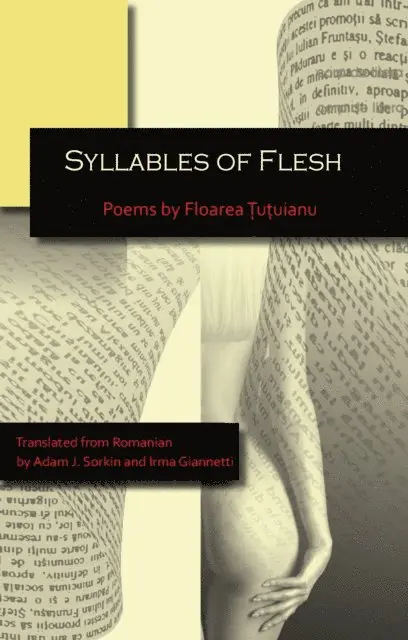
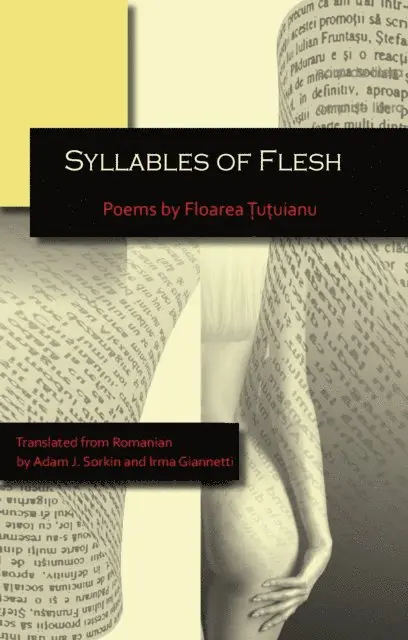
Romania’s Floarea Ţuţuianu is a fiercely sensual poet and visual artist, known for her provocative playfulness with words and images.
The 2007 recipient of the Lucian Blaga International Poetry Festival Prize, she is the only woman to be included in Bucharest’s definitive anthology of contemporary poets, Manualul de literature. In Romania, she has published six books of poetry, and her words and images have traveled the world. Now, for the first time in the United States, her poems—masterfully translated by Adam L. Sorkin and Irma Giannetti—are gathered in this book, some with their original counterparts, paired with arresting photo plates wrought by the artist herself. Strange, ferocious, and lovely, her images and words leave a lingering echo.
2 987 kr
Läs direkt efter köp
398 kr
Läs direkt efter köp
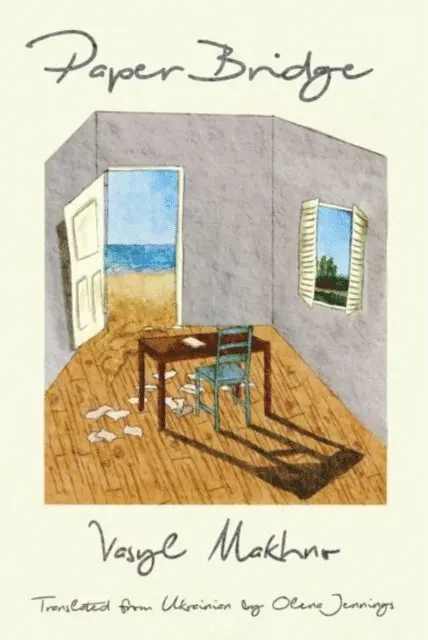
Paper Bridge is the first bilingual collection by Ukrainian poet Vasyl Makhno, a “master of the contemporary Ukrainian Ballad, who builds a lifeline for the broken-hearted wanderers, homeless heartbreakers, hopeless romantics, and helpful ironists,” in the words of Valzhyna Mort, winner of the Griffin Poetry prize. Makhno’s bridge extends to us all, serving whatever purpose we need it to, as Lidijia Dimkovska, author of A Spare Life, writes, “it is a bridge that can burn or resist… but it is a witness to the existence of a traveler through souls, bodies, and spirits, through our own subconsciousness.” With this outstanding collection of poems, Makhno is able to preserve an “enviable spiritual equilibrium…one that grinds out the music even in the toughest of days, a music that survived the twentieth century and keeps alive in the new horrors of the twenty-first,” in the words of Los Angeles Book Prize winner Ilya Kaminsky, “and now despite it all, even in his room in New York City away from Ukraine, [Makhno] can still hear how ‘old age sings’ how it ‘nervously forces the music into a rhythm,” and how ‘it might falter, but it plays again.’”
2 892 kr
Läs direkt efter köp
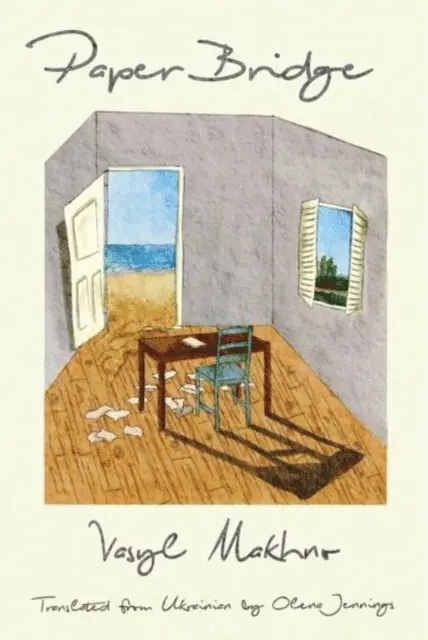
Paper Bridge is the first bilingual collection by Ukrainian poet Vasyl Makhno, a “master of the contemporary Ukrainian Ballad, who builds a lifeline for the broken-hearted wanderers, homeless heartbreakers, hopeless romantics, and helpful ironists,” in the words of Valzhyna Mort, winner of the Griffin Poetry prize. Makhno’s bridge extends to us all, serving whatever purpose we need it to, as Lidijia Dimkovska, author of A Spare Life, writes, “it is a bridge that can burn or resist… but it is a witness to the existence of a traveler through souls, bodies, and spirits, through our own subconsciousness.” With this outstanding collection of poems, Makhno is able to preserve an “enviable spiritual equilibrium…one that grinds out the music even in the toughest of days, a music that survived the twentieth century and keeps alive in the new horrors of the twenty-first,” in the words of Los Angeles Book Prize winner Ilya Kaminsky, “and now despite it all, even in his room in New York City away from Ukraine, [Makhno] can still hear how ‘old age sings’ how it ‘nervously forces the music into a rhythm,” and how ‘it might falter, but it plays again.’”
2 966 kr
Läs direkt efter köp
379 kr
Läs direkt efter köp
2 715 kr
Läs direkt efter köp
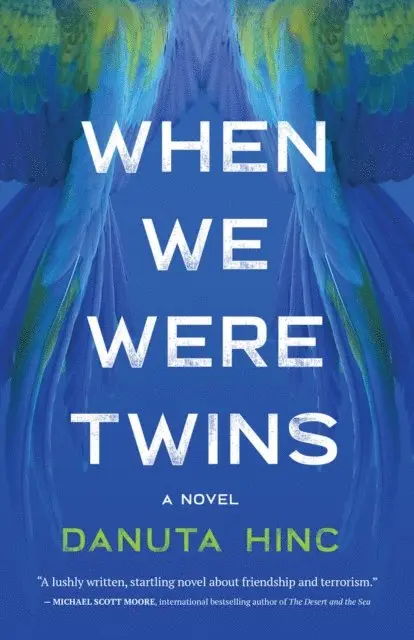
From their privileged childhood in Egypt, the paths of once-inseparable twins Taher and Aisha diverge early:
When the USSR invades Afghanistan, Taher abandons their shared plans to study medicine in Europe, instead joining their cousin, Ahmed, as a medic for the mujahideen fighting the Soviets. As Aisha’s Western perspective grows, so does her fear for her brother, who is becoming increasingly radicalized during the civil war between the Taliban and the Northern Alliance. With powerful imagery, Danuta Hinc’s When We Were Twins shows how innocence and loyalty to those we love can be twisted by political forces, leading a young man to choose a fateful path that changes the course of history.
“The questions Hinc’s novel explores—about love and war, about family, peace, and the price of freedom—couldn’t be more urgent. Her imagination revs at full throttle, and we would be wise to go along for the ride.”
— ASKOLD MELNYCZUK, author of The Man Who Would Not Bow
“Infused with urgency and propelled by a sense of the world in catastrophe mode…”
— SVEN BIRKERTS, author of Changing the Subject: Art and Attention in the Internet Age
“A deceptively simple novel brimming with visions and allegories…Hinc has created a work of historical imagination.”
— MARIA BUSTILLOS
“Taher is a memorable protagonist…A psychological snapshot of radicalization, intelligently charted by the author…”
— KIRKUS REVIEWS
362 kr
Läs direkt efter köp
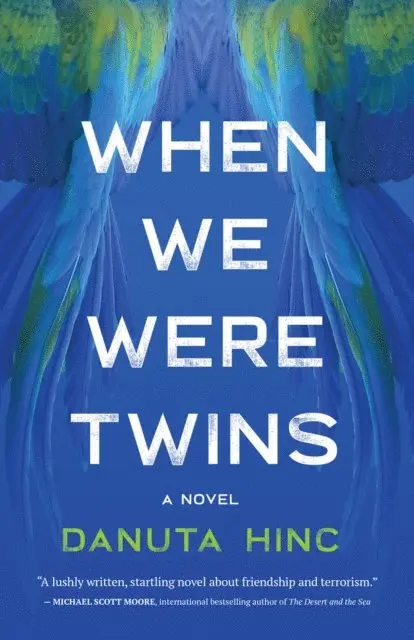
From their privileged childhood in Egypt, the paths of once-inseparable twins Taher and Aisha diverge early:
When the USSR invades Afghanistan, Taher abandons their shared plans to study medicine in Europe, instead joining their cousin, Ahmed, as a medic for the mujahideen fighting the Soviets. As Aisha’s Western perspective grows, so does her fear for her brother, who is becoming increasingly radicalized during the civil war between the Taliban and the Northern Alliance. With powerful imagery, Danuta Hinc’s When We Were Twins shows how innocence and loyalty to those we love can be twisted by political forces, leading a young man to choose a fateful path that changes the course of history.
“The questions Hinc’s novel explores—about love and war, about family, peace, and the price of freedom—couldn’t be more urgent. Her imagination revs at full throttle, and we would be wise to go along for the ride.”
— ASKOLD MELNYCZUK, author of The Man Who Would Not Bow
“Infused with urgency and propelled by a sense of the world in catastrophe mode…”
— SVEN BIRKERTS, author of Changing the Subject: Art and Attention in the Internet Age
“A deceptively simple novel brimming with visions and allegories…Hinc has created a work of historical imagination.”
— MARIA BUSTILLOS
“Taher is a memorable protagonist…A psychological snapshot of radicalization, intelligently charted by the author…”
— KIRKUS REVIEWS
398 kr
Läs direkt efter köp

2 966 kr
Läs direkt efter köp