
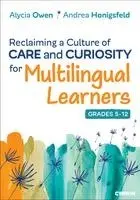
Häftad, Engelska, 2027
421 kr
Kommande
421 kr
Kommande

408 kr
Kommande
Turn empathy into action and action into lasting student impact
Many schools champion global citizenship in their mission statements yet leave educators without a clear path to bring that vision into daily teaching. Empathy to Impact closes that gap. Written by Aaron Moniz, co-founder and director of Inspire Citizens, this practical guide introduces the five-stage Empathy to Impact framework—Care, Aware, Able, Impact, Reflect—to help educators embed global citizenship, service learning, and community engagement into existing curricula across any grade level or subject area. Whether you teach language arts or science or lead co-curricular programs, this resource equips you to encourage the development of learners who think critically, act empathetically, and contribute meaningfully to the world.
Empathy to Impact provides:
A framework that integrates global citizenship into existing curricula without sacrificing academic rigorPractical tools, including community asset audits and the Inspire Citizens Action Menu, to guide authentic student inquiry and actionStrategies applicable across pedagogical approaches, including International Baccalaureate, Common Core, project-based learning, and moreThis is the essential guide for educators ready to prove that meaningful impact and rigorous learning are not competing priorities and for the students who deserve both.

488 kr
Kommande

488 kr
Kommande
Build the knowledge and confidence needed to create classrooms where all students belong
Students with disabilities are an essential part of our school communities, and you likely already teach students with disabilities. Nearly 15% of public school students receive special education services, and most spend the majority of their day in general education settings alongside their peers. Yet many general education teachers receive little formal preparation in disability or inclusive education. Welcome to Teaching Students With Disabilities! An Illustrated Guide for Classroom Teachers gives educators practical, research-based guidance for creating classrooms where students with disabilities are meaningfully included, supported, and learning alongside their peers. From inclusive planning and instruction to behavior support, co-teaching, and assessment, the book helps classroom teachers turn the commitment to inclusion and equity into everyday practice, because supporting students with disabilities is part of good teaching, not a separate specialty.
Written by nationally recognized authors, researchers and leaders in teaching, disability and inclusion Nancy Frey, Julie Causton, Douglas Fisher, and Kristie Pretti-Frontczak, and with illustrations by Taryl Hansen, this guide helps you confidently support every learner. This resource includes:
Did You Know? features in each section, highlighting current research and emerging trends in inclusive educationAsk a Chatbot prompts, showing how AI tools can spark ideas and resources for supporting diverse learnersPOV sections where Otto Lana, a self-advocate and college student, brings lived experience and firsthand knowledge of disability and inclusion.Elevate Your Practice sections offering actionable strategies, grade-band adaptations, and collaboration checklists for working with special education partnersWhether you're new to the profession or a seasoned educator, this guide equips you to build classrooms where students with disabilities are fully included, supported with meaningful access, participation, challenge, and belonging.
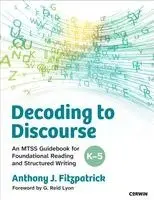
482 kr
Kommande
448 kr
Kommande
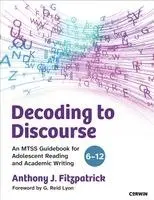
"That's an elementary problem" is no longer an answer.
Every middle and high school has them: students who can decode the words but not navigate the dense sentences, specialized vocabulary, and multi-source arguments of secondary coursework. Their struggles are often dismissed as unfinished elementary business. Yet secondary literacy requires its own instruction, and many students have never received explicit instruction in those demands.
Decoding to Discourse, 6–12 is an MTSS playbook for closing that gap. Organized around the seven interconnected domains of academic vocabulary, sentence craft, text structure, evidence and argument, synthesis, writing process, and metacognition, it offers 154 classroom-ready strategies for teachers, coaches, and interventionists. Practitioner-scholar Dr. Anthony Fitzpatrick helps educators
Pinpoint why adolescent readers struggle, from syntax and morphology to comprehensionUse four Literacy Bridges to connect foundational skills to disciplinary literacyMove students from Surface to Deep to Transfer learning with tiered strategiesBuild a shared literacy vocabulary across grade levels and departmentsTeach syntax, evidence use, argument, and synthesis in any content areaA companion to the K–5 volume that also stands on its own, Decoding to Discourse, 6–12 helps middle and secondary educators teach students to read complex texts, write with precision, and use evidence to reason across subjects.