
Häftad, Engelska, 2005
414 kr
Skickas inom 7-10 vardagar
414 kr
Skickas inom 7-10 vardagar

322 kr
Kommande
651 kr
Tillfälligt slut
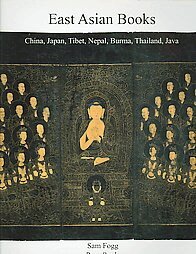
East Asian Books

503 kr
Tillfälligt slut
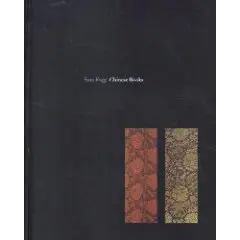
For more than a thousand years, the paths of the Silk Road joined the distant empires of East Asia and the Mediterranean, forming a complex web of trade, pilgrimage and intellectual exchange between China, Central Asia, Persia, Tibet, India, the Near East and Europe.
Interest in the Silk Road was renewed in the nineteenth century. In 1907 Sir Aurel Stein made one of the most sensational archaeological finds of all time: at Dunhuang he discovered a cache of thousands of manuscripts dating from the fifth to the eleventh centuries in several different languages. Most such documents have ended up in institutions like the British Museum, the Bibliothèque Nationale and other national libraries in India, China and Japan.
In keeping with the diversity of the Dunhuang discoveries, this book consists of examples of manuscripts in Chinese, Khotanese, Bactrian, Gandhari, Sanskrit, Tibetan, Syriac, Hebrew and Arabic. The material provides a sense of the fruitful exchanges as well as bitter struggles in these regions over the centuries.
509 kr
Tillfälligt slut
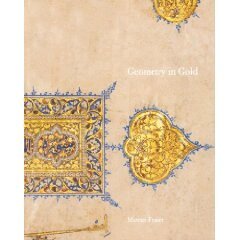
This book is devoted to a monumental and superbly illuminated very large early fourteenth-century Mamluk Qur'an in muhaqqaq script. It constitutes the final part (Juz' 30) of a superb two-volume Qur'an of which the first volume is preserved in the National Museum in Damascus while the second volume, from which the present section originates, is widely dispersed. Remarkably, here the final part of the Qur'an is reunited with its magnificent and richly decorated double finispieces, thus reassembling what must have been among the most striking and lavishly illuminated sections of the entire manuscript.
The high degree of inventiveness along with the overall quality of the manuscript point to the work of a master artist. Especially the geometric proficiency suggests the work of Muhammad ibn Mubadir, one of the leading illuminators in Mamluk Cairo at the turn of the thirteenth century. Although little is known of the life of this artist, his illumination in the Baybars al-Jashnagir Qur'an, now in the British Library, and a Qur'an copied in 1306-10 for an unknown patron, now in the Chester Beatty Library, constitute some of the most celebrated achievements of Mamluk Qur'an illumination.
648 kr
Tillfälligt slut
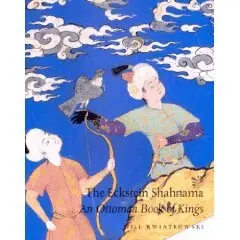
The great Persian poet Firdausi's epic Shahnama, or 'Books of Kings', written at the turn of the eleventh century CE, is a seamless tapestry of historical and legendary material prominently featuring battles and individual struggles with fierce demons and enemy champions. The first known illustrations of the poem date to the early fourteenth century CE.
The splendidly illustrated and illuminated late sixteenth-century Eckstein Shahnama (so called from a distinguished previous owner, Bernard Eckstein) is one of an important group of so-called 'truncated' Shahnamas which end Firdausi's narrative with Alexander the Great. These manuscripts were long regarded as Persian, but new research suggests that, though the text is Persian and the style of the painting is apparently Persian, they were actually produced in imitation of Persian examples by Turkish workshops.
This richly illustrated study confirms the Ottoman origin of this and other manuscripts in the group and demonstrates the Eckstein Shahnama in particular to be a representative example of Ottoman manuscript painting and to have had itself a significant influence on later production.