757 kr
Läs direkt efter köp
757 kr
Läs direkt efter köp
350 kr
Läs direkt efter köp
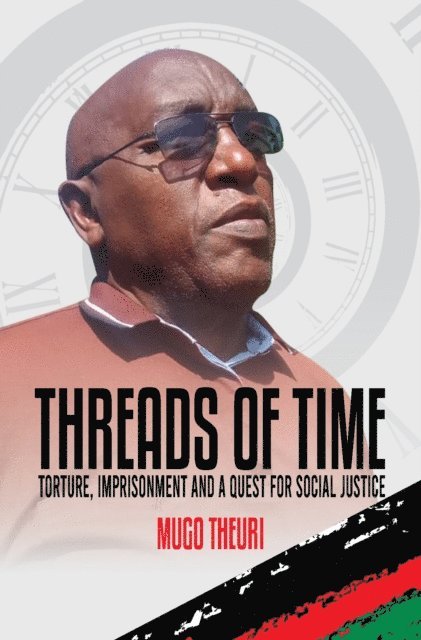
Mugo Theuri was plucked from his reporting job at the lawcourts in Nakuru after barely three months in post and driven to Nairobi for what would turn out to be 49 days of torture in the infamous Nyayo House. Jailed for four years, he joined the ‘Liberation University’, the study group in prison, and emerged a much more thoughtful and reflectiveman. He uses personal memoir to thread his personal experiences into the historical events in the country and the world.
His experience with the courts, and his attempt to get justice for his wrongful imprisonment enable him to reflect on the justice system, just as his average scholarship give him clarity of how the country’s systems and policies discriminate against the poor and frustrate the right to justice and education.
The candour with which Threads of Time is rendered allows the reader into the writer’s personal crisis in struggling to reconcile his father’s public role as headman during the Mau Mau war of independence in a context where most of his family were guerrillas in the forest, as well as his relationship with religion.326 kr
Läs direkt efter köp
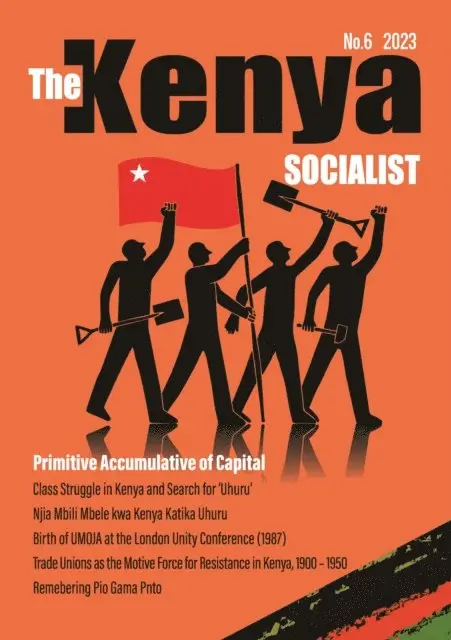
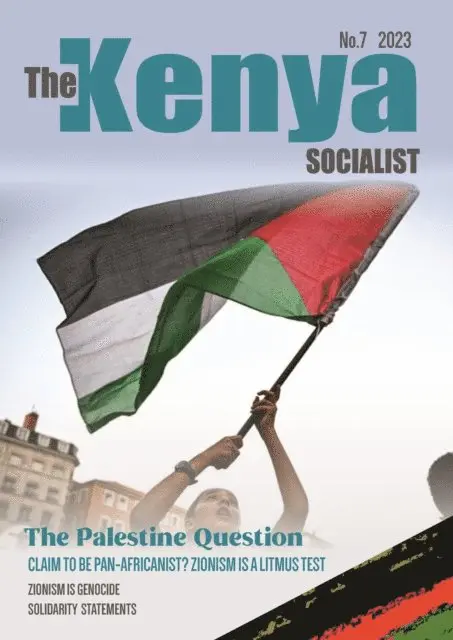
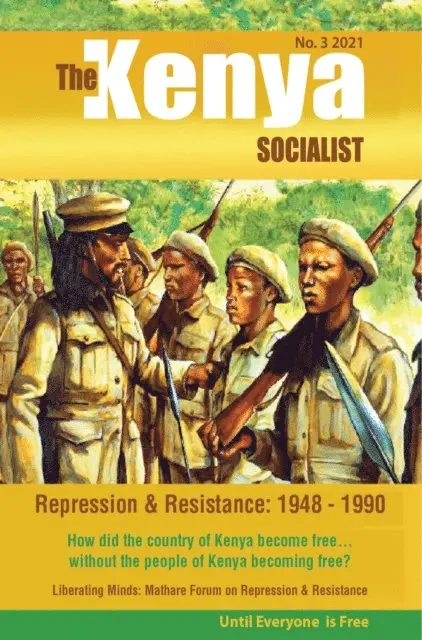
The Kenya Socialist is published by Vita Books, Nairobi and is edited by Shiraz Durrani and Kimani Waweru. It aims to encourage free flow of information, knowledge and discussion which can lead to a better understanding of socialism. It seeks to promote socialist ideas, experiences, and world outlook and to increase awareness of classes, class contradictions and class struggles in Kenya, both historical and current.
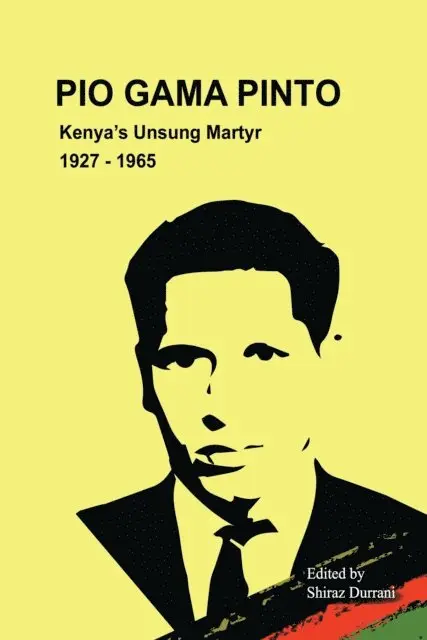
The latest issue (No. 6, August 2023) carries articles on class struggle in Kenya, primitive accumulation of capital and an essay on understanding socialism through literature. Other articles are on thehistory of UMOJA and the role of trade unions as a force for resistancein Kenya. A Kiswahili section is also included, as is a section on ‘Remembering Pio Gama Pinto’. A short Poems section ends this issue.
239 kr
Läs direkt efter köp
812 kr
Läs direkt efter köp
374 kr
Läs direkt efter köp
302 kr
Läs direkt efter köp
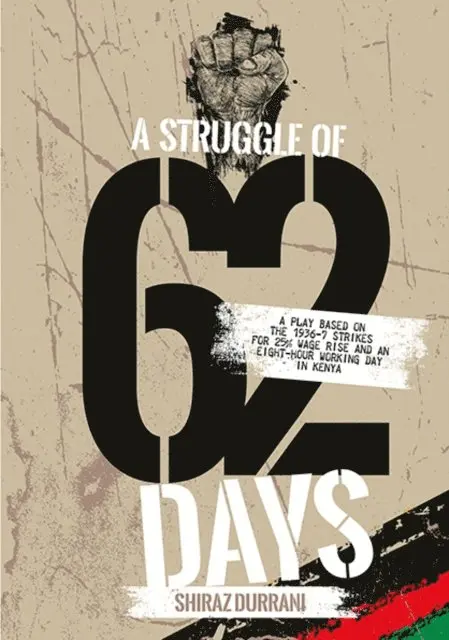
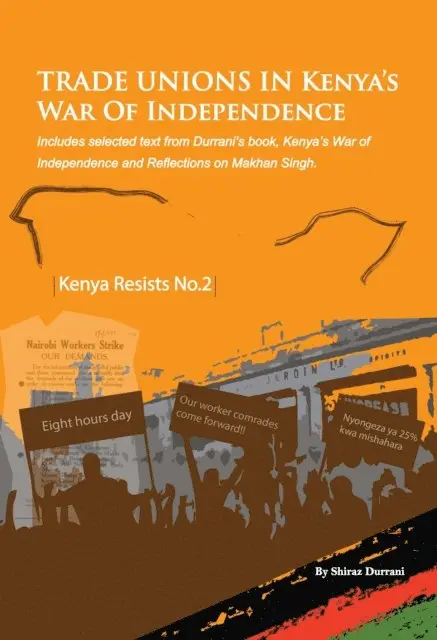
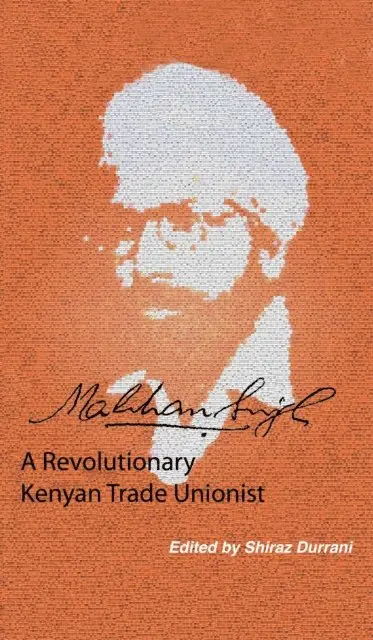
The Annual General Meeting of the Labour Trade Union of Kenya in Sept 1936 fixed Oct 1936 for implementation of the eight-hour day .. In December 1936, the Union gave notices to employers that all wages should be increased by 25% from April 1937. The strike began on 1 April, 1937. It was a complete strike. A strike-committee was formed, picketing was organised, a free kitchen was started .. the decision was popularised through handbills, meetings in residential areas, works-discussions and public announcements (preceded by ringing of a large bell), in the the main thoroughfares of Nairobi, and daily mass meetings. The campaign created a new spirit among workers. The employers were at last compelled to reach a settlement. They agreed to wage-increase of 15-22%, to an eight-hour day and reinstatement of all workers. The workers resumed work on 2 June, 1937.
- Makhan Singh (1969)
Thus ended the longest, and the most successful, strike in the history of Kenya. But the sacrifices, the actions and the reality of the strike for workers is not captured by history books. Nor are the organisation by the East African Trade Union Congress and the role of its leader, Makhan Singh, fully understood. In going on strike for sixty-two days, the workers showed their industrial and political power, unmatched to this day.
Shiraz Durrani''s A Struggle of Sixty-Two Days is a welcome addition to a growing backlist of drama texts that draw on the rich and often hidden history of East Africa. A Struggle of Sixty-Two-Days sets itself apart from the tradition of historical plays before it by eschewing the use of a singular heroic figure to centre the drama. Instead, the play deliberately delivers the texture of the lived realities, skills and experiences of the workers who made a success of the longest and most consequential strike in the country''s history, but also acknowledges the collaboration and support they drew from the people against the backdrop of the imperialist, racist and colonial era The 1937 strike would not only deliver an eight-hour working day as a right, besides wage increases, but would also be the seeding for mobilising the people of Kenya to challenge injustice and launch the fight for freedom. It is a struggle that pits the might of imperialist capital against the survival instincts of the oppressed and their quest for justice. The scenery and dialogue transport the reader back to 1937, but its echoes still ring true in continuing present-day clashes between labour and exploitative capital.
- Kwamchetsi Makokha
275 kr
Läs direkt efter köp
243 kr
Läs direkt efter köp
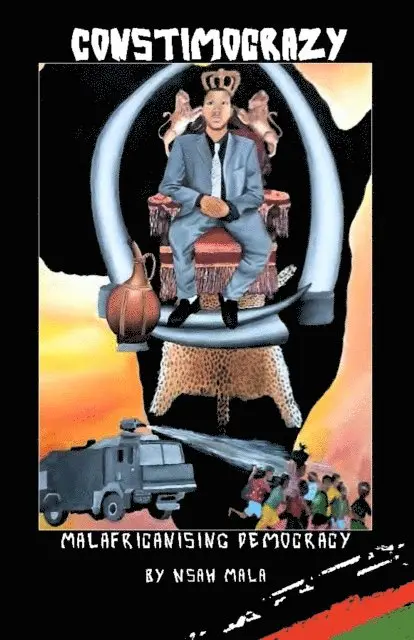
The lyrical pessimism of Nsah Mala''s poetry presents a world characterized by violence, inhumanity and destruction, a world that is sadly too familiar. While many of the poems address contemporary issues in the poet''s native Cameroon, much of the human-inflicted damage they describe is not limited to ''Cam-Kingdom''. Although much of the content is negative, many of the poems contain questions. These questions express the cynical voice of this politically committed poet, but behind them lies the distant possibility of a better version of the world in which values of love, peace and unity reign: ''Don''t we know,'' the poet asks, ''that violence is out of fashion?''
- Professor Nicki Hitchcott, University of St Andrews, UK
704 kr
Läs direkt efter köp
382 kr
Läs direkt efter köp
307 kr
Läs direkt efter köp
382 kr
Läs direkt efter köp
1 323 kr
Läs direkt efter köp
284 kr
Läs direkt efter köp
630 kr
Läs direkt efter köp
488 kr
Läs direkt efter köp
488 kr
Läs direkt efter köp
385 kr
Läs direkt efter köp
756 kr
Läs direkt efter köp
504 kr
Läs direkt efter köp
756 kr
Läs direkt efter köp
693 kr
Läs direkt efter köp
566 kr
Läs direkt efter köp
457 kr
Läs direkt efter köp