First part of 5-part history of the development of Gothic in the churches of the Paris Basin, 1120-1250.The Creation of Gothic Architecture 2 volume set is a five-part illustrated thesaurus of the Early Gothic churches in the limestone region of northern France known as the Paris Basin. It focuses on the transformation from romanesque to gothic architecture during the years between 1120 and 1250, and when complete it will provide a comprehensive pictorial history of the 1,420 churches of the Paris Basin. Most of these churches, which represent a vital step in the evolution of western European architecture, are barely known outside the region, and have been little recorded. The completed project will: provide a photographic description of all the more significant churches; analyse stylistic changes to foliate capitals and vault-erection techniques; establish a foundation for dating the contruction phases of the churches; and, using this chronology, will identify the time and place for each of the creative ideas, inventions and innovations that produced the gothic style, follow their evolution from place to place, and identify the major creators. Dr JOHN JAMES is a world authority on medieval architecture, author of over sixty books and articles.
A further volume in this monumental series on the architecture of the Gothic churches of the Paris Basin.A complete collection of all the capitals carved in the Paris Basin before 1130 - over 4,000 - few of which have ever been published before. From this has come a profoundly significant analysis: That these carvers pursued what might be called a Quest for Order, a quest that grew into an obsession over the next two generations. By following each step in this quest in the dateable buildings in the rest of Europe, James has dated nearly every campaign in theBasin to within ±5 years - a unique achievement possible only because every one of the 147 remaining works have been included. This holistic approach provides the evidence that pointed arches and rib vaults were both being employed in the Paris Basin from the mid-1080s. Volume 3 in Part B of The Creation of Gothic Architecture: The Ark of God provides valuable insights into the development of Early Romanesque carving and architecture prior to theseminal work at Chartres and Saint-Denis. It complements Part A and, with the later volumes, aims to establish from all the evidence a comprehensive chronology for the Creation of Gothic Architecture.
No serious art-historical library should be without it. [The publisher] is to be congratulated for taking on this epic venture. BURLINGTON MAGAZINE.The fifty years between 1130 and 1180 produced some of the most original and evocative capitals of the middle ages - a period that was largely responsible for the evolution of the Gothic style. But despite the fact that many are hard to examine in situ and are often too dark to observe closely, they have rarely been published before. These volumes will therefore be widely welcomed. The 7,600 illustrations they contain cover, in large and exquisite detail,nearly every capital; they include the multitude of works in the great cathedrals and abbeys of the time, including Chartres, Laon, Noyon, Paris, Saint-Denis, Senlis and Sens. The staggering range of individual creativity shows aculture able to reinvent itself in a rare and exciting way.The publication of the fourth and fifth volumes in the sequence completes the photographic archive of foliate carving from the Paris Basin during the formative two centuries in which architecture and the techniques of building were transformed. They are also the foundation for subsequent volumes which will establish a chronology for Early Gothic architecture and sculpture, as well as technological developments in rib vaults and construction methods.Dr JOHN JAMES is a world authority on medieval architecture, and author of over sixty books and articles.
The church of Notre-Dame is a forgotten masterpiece, its past glory ruthlessly suppressed. The crusaders had brought back eastern techniques to transform Notre-Dame into a beacon of mystical exploration. They longed to join the angels in passionate union with the divine and built this church to make that possible. Notre-Dame was provided with vast sums of money to turn the promise of transcendence into a daily reality. Yet today we sense the contradiction between the magnificence of the architecture and its present role as the local parish church. We know it must have been more. What it was has been taken.After only 70 years, Notre-Dame's mission was brutally suppressed, its unique beauty silenced, the Glory window sealed, sightlines erased until it became a shell of its former self. Yet the secrets in the architecture whisper still. They describe the clash between a very personal search for mystical union and the hierarchic policies of the Church that insisted only the clergy knew how to guide the soul. What one king had cherished his successor deemed heretical and ruthlessly suppressed. Why the brutal reversal? Why the violent resistance from the congregation? Why suppress its mystical ambitions and why hide the facts? Was it a heresy that was too dangerous to tolerate? The clash between faith and power remains etched in the silence of the masonry, so we may still unravel the distant echoes of their quest for spiritual union, a quest that still resonates in the shadows of this remarkable church."Glory and Tragedy in Notre-Dame d'Etampes" unravels the forgotten saga of a silenced masterpiece, where religious intrigue and architectural brilliance collided. It remains a poignant reminder of the persistent struggle between institutional power and individual enlightenment. It is a tale of breathtaking triumph with devastating consequences.
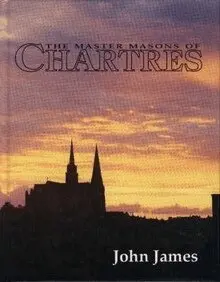
James' analysis of Chartres is likely to be the best and most detailed we shall have.' JOURNAL OF ARCHITECTURAL HISTORIANS The great cathedral of Chartres is the most impressive and exciting building surviving from themiddle ages, andis preserved almost intact. Yet we know nothing of the men who created it. John James, in this masterpiece of detection, shows how he came to identify the master masons from the stones themselves. His meticulous `reading' of the cathedral has revealed much about those men: how they solved problems of engineering and design, how they raised two-ton stones forty metres into the air, and how one mason controlled over 300 men in this gigantic workshop. JOHN JAMES is an Australian architect. His first visit to Chartres, in 1969, led to a continuing passion for the early Gothic buildings of northern France, and he has been `reading their stones' ever since.
The 12th- and 13th-century early Gothic churches from the region around Paris which form the basis of this study were large-scale undertakings. Dr James draws on evidence which suggests that work proceeded in a series of projects, when funding, technical problems (for example, slow-setting mortar), and the work of other trades (such as roofing and centring) allowed. Within each project there were generally a number of separately organised phases, or 'campaigns', and it is from close study of these campaigns that the author proceeds to an identification of the characteristics of the individual master masons, the template-makers.