`E: Erroneous: Capable of being proved true'; `J: Jolly: The downfall of our enemies'; `M: Mystery: What I understand and you don't' . . . Enter the delightful, satirical world of the Good Citizen, according to one of the best-known writers and philosophers of modern times. In this pocket-sized book, Bertrand Russell's witty, subversive A-Z encompasses pedants and nincompoops, knowledge and virtue, providing a diverting and entertaining guide to the English alphabet. Brought back into print for the first time since the 1970s, the brief texts are illustrated with the lively drawings of Franciszka Themerson, a leading figure of the twentieth century avant-garde, whose apt and amusing images add an anarchic spirit to this delightful gift book - perfect for linguistic novices and eloquent eggheads alike. Facsimile pages reproduce the vintage look and feel of the original 1953 publication.
Stefan Themerson Läsebok Översättning, urval och kommentarer av Magnus Hedlund. Illustrationer av Franciszka Themerson. Boken fanns med i Rönnells Antikvariats första förlagskatalog 2001, bland kommande titlar. Sjutton år senare är den här! Idén var ursprungligen att sätta samman en behändig Themerson-läsebok utifrån ett radioprogram som Magnus Hedlund och Claes Hylinger gjorde 1982 i en serie som hette Medan tiden går ... "Nu blev det inte precis så, men ungefär", skriver Hedlund i förordet. "Det krävdes förtydliganden och här och var korrigeringar, det behövdes lite längre texter än de korta snuttar vi hade haft med i programmet". Med finns en lite utförligare version av Magnus Hedlunds besök hos Themersons i London tidigare publicerad i Ökenkejsaren och andra stycken. Läseboken rymmer även ett urval av Themersons semantiska och andra dikter. Utgåvan är rikt illustrerad med Franciszka Themersons teckningar och kreativt formgiven av Lars Paulsrud.
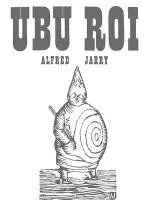
One of the most extraordinary events of the late nineteenth century in Paris was the opening on December 11, 1896, at the Théâtre de l’Oeuvre, of Alfred Jarry’s play Ubu Roi. The audience was scandalized by this revolutionary satire, developed from a schoolboy farce, which began with a four-letter word, defied all the traditions of the stage, and ridiculed the established values of bourgeois society.Barbara Wright’s witty translation of this riotous work is accompanied with drawings by Franciszka Themerson. Two previously untranslated essays in which Jarry explains his theories of the drama have also been included.
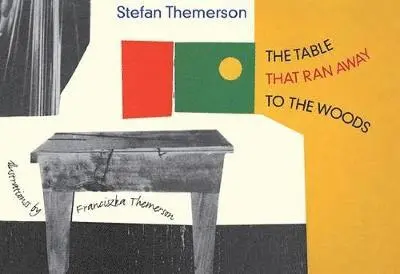
"The Table that Ran Away to the Woods" tells the tale of a writing desk that one day 'grabbed two pairs of shoes/ran downstairs, and took flight', escaping into the countryside with its owners in barefoot pursuit. This is the first time the story - first published in a Polish newspaper in 1940 and recreated in this exquisite collaged version in 1963 - has been made available to an English-speaking audience. Franciszka and Stefan Themerson were Polish avant-garde artists and filmmakers who arrived as refugees in London, she in 1940, he in 1942, and who continued to work on a huge range of creative projects in England. With her unique illustrations, and his deceptively simple, humorous stories, they created many successful children's books together. Lovingly republished, this will be an opportunity for a new audience to escape into a book, which, as Wadely says in his introductory note, 'has all the innocence of a child's song, as the table dances back to nature, and the liberated typography floats across the page'.
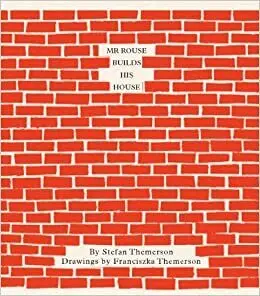
Mr Rouse has decided to build himself a house. Inevitably, the process is much longer and more detailed than Mr Rouse initially envisages: "Mr Builder, I'm not a bird, you know; how could I live in a house made of leaves?" This quirky tale takes the reader through a timeline of inventions. In a wonderful blend of absurd poetry and British pragmatism, Mr Rouse contends with housing, transport, lighting, plumbing and timekeeping, encountering quarrelling stairs and dapper guttering on his way.