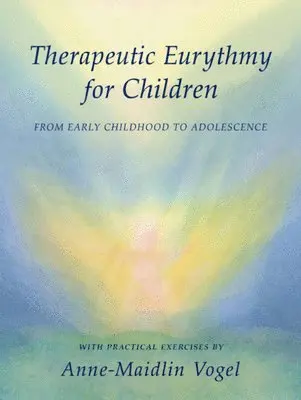
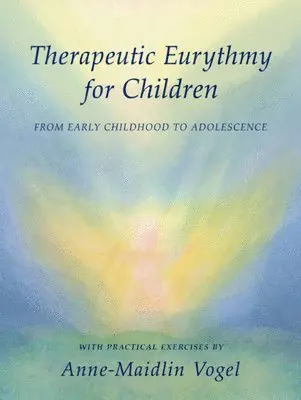
Therapeutic Eurythmy for Children is a collection of exercises gathered by Anne-Maidlin Vogel from 1968 until 1998. Many arose from lectures the author attended, given by experienced therapeutic eurythmists-especially Trude Thetter and Ilse Rolofs, as well as medical doctors and colleagues. Much of the material she used in her own therapy lessons with patients, with some of the exercises created from her own work with children for over thirty years.As a form of movement therapy, eurythmy has been very effective in treating physical and mental developmental disorders. This book is a rich source of information for professional eurythmy therapists, physicians, and teachers of children up to fifteen years of age. Therapeutic Eurythmy for Children provides not only examples for exercises, but also offers useful references for personal development and additional training for therapists.Included here are eurythmy therapy exercises to be performed with premature infants, babies, and young children up to the age of four. Although based firmly on Rudolf Steiner's spiritual science and his general recommendations for eurythmy, anyone can follow the descriptions and sketches for individual exercises, which are based on healthy movement of the developing human organism.Speech eurythmy exercises (specific spoken sounds and sequences) are included for postural problems, enuresis, lack of concentration, and more. These encourage readers to study the principles behind the practice of eurythmy performance and eurythmy therapy.Therapeutic Eurythmy for Children will inspire and enrich the work of therapists, provide a means to more holistic pediatrics, give teachers a better understanding of how to approach their students through movement, and encourage parents toward a more effective, holistic aid to their children's overall health and development.
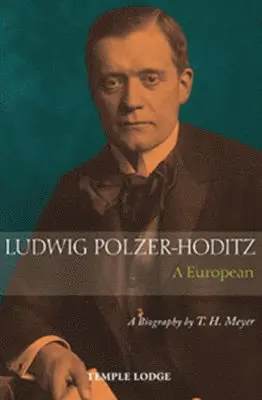
Finally available in English, Thomas Meyer's major biography of Ludwig Polzer-Hoditz (1869-1945) offers a panoramic view of an exceptional life. One of Rudolf Steiner's most valued and independent-minded colleagues, Polzer-Hoditz was born in Prague - in the midst of the Austro-Hungarian Empire - to an aristocratic family with royal connections. Leaving behind the traditions of his background, he was to become a key actor in Steiner's regenerative 'threefold' social impulses, working tirelessly for a genuinely unified and free Europe. Polzer-Hoditz also fought to protect Rudolf Steiner's esoteric legacy and the integrity of the Anthroposophical Society that had been founded to further his work. Following Steiner's untimely death, Polzer-Hoditz fostered a broad range of friendships and alliances with key figures such as D.N. Dunlop, Walter Johannes Stein and Ita Wegman. In a bid to avoid further division and conflict, he made significant interventions to alter the tragic course of events that consumed the Anthroposophical Society, although he was unable to stop the major split within the membership that was to follow.In the final decade of his life he concentrated his energies on world issues, seeking to influence events in Europe in particular, lecturing widely and writing a number of books and memoranda. In contrast to the destructive 'special interests' of the national and religious groups that craved dominion and power, Polzer-Hoditz sought to build a true understanding between Central and Eastern Europe and to cultivate a spiritual connection with the West. Meyer's book is a pioneering work in biographical literature, structured in four main sections that reflect the stages of an individual's personal development. In the concluding section he studies world events up to the present day, practising a method referred to as a 'symptomatological observation of history', which Polzer-Hoditz himself sought to develop. Much more than a standard biography, Ludwig Polzer-Hoditz presents a vibrantly living picture of how a spiritual individuality can work in human culture and history - in past, present and future. This first English edition is based on the latest German version and features additional material.
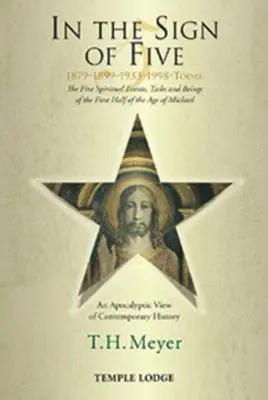
'Spiritual knowledge is not given to us as in ancient times. By spiritual means it must be struggled and striven for against a host of demons...We must therefore get to know the powers that would cover up and obscure all spiritual knowledge.' - from the Preface 'The world seems to be standing within a demonic storm that threatens to overwhelm it', states T.H. Meyer at the outset of this rousing call for a wide-ranging, spiritual-scientific knowledge of the world. Appeals to traditional religious belief will no longer pacify this storm, and neither will 'good will' suffice. Building on Rudolf Steiner's anthroposophy, In the Sign of Five tackles the central task of our epoch: the epistemological struggle with evil, and presents the five most important spiritual events since the beginning of the Age of Michael: 1879 - the rise of Michael to the rank of Time Spirit; 1899 - the end of Kali Yuga; 1933 - the appearance of Christ in the Etheric; 1998 - the assault of Sorath, 'one of the greatest ahrimanic demons'; The present - the incarnation of Ahriman.These events are linked to the five main tasks of the Age of Michael, the great challenge of inner knowledge and spiritual consciousness posed by the epoch as a whole. In the light of world history, and within the context of 'the sign of five', we stand today at the fifth place - at the point of the incarnation of Ahriman. Is humanity prepared for this decisive event? Have we recognised the phenomena of evil that surround us on a daily basis? Have the tasks corresponding to the five events been identified, and to what extent have they been carried out? How is evil related to 'the good' that guides the world, and specifically to the Christ impulse? Meyer provides a vital, pithy, aphoristic handbook for our apocalyptic times.
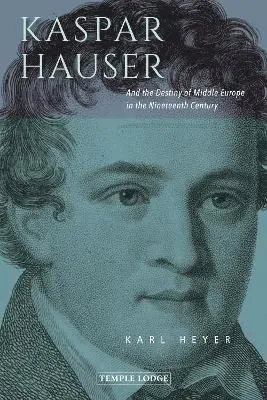
Who was Kaspar Hauser and where did he come from? Why did he spend his childhood in a prison cell? Was he related to nobility, royalty or even Napoleon, as some have concluded?From his appearance on the streets of Nuremberg in 1828 to his disturbing murder only five years later, the enigmatic story of Kaspar Hauser has stirred feelings of love and admiration in countless people. He has been celebrated as the subject of films and plays, popular books and academic studies, yet even today – almost two hundred years after his death – he continues to arouse opposition and hatred from his detractors, who dismiss him as an opportunist and a fraud.In the first English-language edition of this classic text – the original, comprehensive attempt to illumine the mysterious life of Kaspar Hauser from a spiritual-scientific, anthroposophical perspective – historian Karl Heyer gathers the basic facts of the life and death of the ‘Child of Europe’, exploring his remarkable abilities and character. With impressive clarity, he goes on to study Hauser’s fate in relation to the mission and destiny of Middle Europe, focusing on the roles of the House of Baden and key political actors such as Napoleon and Otto von Bismarck. His original research leads to some shattering conclusions with significant consequences for Europe’s future.Heyer was initially drawn to the subject through a private conversation with Rudolf Steiner. That seed matured forty years later into intensive research and the first publication of this book in German in 1958. ‘For me’, said Heyer, ‘it represented the high point of my writing and a kind of crowning of my life’s work.’
Philip Henry, 4th Earl Stanhope, was considered by his contemporaries one of the most enigmatic figures surrounding the mystery of Kaspar Hauser. An English aristocrat who assumed the role of Hauser's foster father, Stanhope presented himself as a benevolent philanthropist concerned solely with the young man's welfare. Hauser - who appeared on the streets of Nuremberg at the age of sixteen, claiming to have been raised in total isolation - was hailed as a symbol of 'natural innocence' and dubbed 'the Child of Europe'. But five years later, he was dead from a stab wound to the chest. Though whispers of Stanhope's involvement in the tragedy have persisted, they have never been definitively proven - until now.In this groundbreaking and only major biography of Stanhope, Johannes Mayer uncovers the true and disturbing nature of the nobleman's relationship with the mysterious youth. Far from being a caring patron, Stanhope was a British intelligence agent trained for a career in European political espionage. Groomed by powerful allies and fluent in German, Stanhope was strategically positioned to observe - and ultimately neutralize - Hauser. His mission: win Hauser's trust, make him dependent, and then discredit and abandon him, setting the stage for his downfall.Drawing on extensive primary sources - including letters, official documents and newly revealed material - Mayer paints a gripping portrait of deception and betrayal. Featuring dozens of photographs and illustrations, this riveting account follows a trail of intrigue from Great Britain and Sicily to the courts of Germany and Austria. At the heart of the story stands Kaspar Hauser: a tragic, sacrificial figure in the spiritual history of modern humanity.