• Fri frakt över 249 kr
  • •
  • Snabba leveranser
  • •
  • Billiga böcker
Kundservice

Du är på sajten för privatpersoner.

Företag, bibliotek eller offentlig verksamhet?

Du handlar på classic.bokus.com, där alla dina funktioner finns intakta.
Till classic.bokus.com
Bokus logotyp. Gå till startsidan.
  • Erbjudanden
  • Nyheter
  • Student
  • Topplistor
  • Barn & ungdom
  • Bokus Play
  • E-böcker
  • Pocketböcker
  • Spel & pussel

10% studentrabatt med kod TERM26

Sidfot

Mina sidor

    Hjälp

    • Kundservice
    • Vanliga frågor och svar
    • Frakt och leverans
    • Retur vid ångerrätt
    • Reklamera vara
    • Betalning
    • Köpvillkor
    • Allmänna villkor
    • Information om webbplatsens tillgänglighet

    Om Bokus

    • Om oss
    • Pressrum
    • För studenter
    • För företag
    • För bibliotek och offentlig verksamhet
    • För leverantörer
    • Hållbarhet

    Populärt

    • Aktuella erbjudanden
    • Presentkort
    • Studentlitteratur
    • Nya böcker
    • Topplistor
    • Signerade böcker
    • Engelska böcker

    Inspiration

    • Boktips
    • BookTok
    • Populära bokserier
    • Barnbokskaraktärer
    • Populära författare

    Mina sidor

      Hjälp

      • Kundservice
      • Vanliga frågor och svar
      • Frakt och leverans
      • Retur vid ångerrätt
      • Reklamera vara
      • Betalning
      • Köpvillkor
      • Allmänna villkor
      • Information om webbplatsens tillgänglighet

      Om Bokus

      • Om oss
      • Pressrum
      • För studenter
      • För företag
      • För bibliotek och offentlig verksamhet
      • För leverantörer
      • Hållbarhet

      Populärt

      • Aktuella erbjudanden
      • Presentkort
      • Studentlitteratur
      • Nya böcker
      • Topplistor
      • Signerade böcker
      • Engelska böcker

      Inspiration

      • Boktips
      • BookTok
      • Populära bokserier
      • Barnbokskaraktärer
      • Populära författare
      Logotyp för Bokus
      Följ oss på Facebook (extern länk)Följ oss på Instagram (extern länk)Följ oss på YouTube (extern länk)Följ oss på TikTok (extern länk)
      bokus @ CookiesAnpassa cookiesIntegritetspolicyKöpvillkor
      Till Citymail hemsida (extern länk)Till Budbee hemsida (extern länk)Till Postnord hemsida (extern länk)Till Schenker hemsida (extern länk)Till Early Bird hemsida (extern länk)Till Walleys hemsida (extern länk)
      1. Naturvetenskap och teknik
      2. Geovetenskap
      3. Geovetenskap

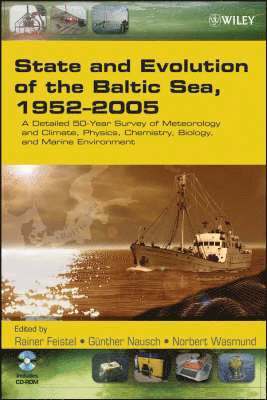
      State and Evolution of the Baltic Sea, 1952-2005

      A Detailed 50-Year Survey of Meteorology and Climate, Physics, Chemistry, Biology, and Marine Environment

      AvRainer Feistel,Günther Nausch

      John Wiley & Sons Inc

      2008

      3 996 kr

      Beställningsvara. Skickas inom 11-20 vardagar. Fri frakt över 249 kr.

      Beskrivning

      Based on a fifty-year study conducted by the Leibniz Institute for Baltic Sea Research, this book brings together a comprehensive summary of their observations and findings. Written by well-known experts, this revealing book concentrates on long-term changes in the Baltic Sea?which can be extrapolated to shed light on the environmental problems of other shelf seas, brackish seas, and large estuaries?thereby contributing to our understanding of water exchange processes, eutrophication, and climatic impacts at the forefront of international concern.

      Produktinformation

      • Märke:John Wiley & Sons Inc
      • Utgivningsdatum:2008-05-23
      • Höjd:185 x 259 x 39 mm
      • Vikt:1 420 g
      • Språk:Engelska
      • Antal sidor:728
      • Förlag:John Wiley & Sons Inc
      • EAN:9780471979685

      Utforska kategorier

      • Geovetenskap inom Naturvetenskap och teknik
      • Meteorologi och klimatologi inom Naturvetenskap och teknik

      Mer om författaren

      Rainer Feistel, PhD, is a physicist and oceanographer at IOW inWarnemünde, Germany, and is the author of four previous books.Günther Nausch, PhD, is a senior marine chemist at IOW, where he works on nutrient cycles and long-term trend observations in the Baltic Sea.Norbert Wasmund, PhD, is a senior marine biologist at IOW, where he specializes in phytoplankton research and is responsible for biological monitoring.

      Innehållsförteckning

      • 1. Introduction. 2. General oceanography of the Baltic Sea.2.1.Specific natural conditions and their consequences.2.2.Estuarine circulation.2.2.1.Long term exchange.2.2.2.Short term barotropic exchange.2.2.3.Stratification and mixing in the channels.2.2.4.Quantifying the stochastic salt exchange associated with the barotropic water exchange.2.3.Wind driven currents.2.3.1.Ekman current and transport.2.3.2.Upwelling and coastal jets.2.4.Surface waves, tides, seiches, surges.2.4.1.Surface gravity waves.2.4.2.Seiches and wind stau.2.4.3.Tides.2.5.Kelvin waves, topographic waves and eddies.2.5.1.Kelvin waves.2.5.2.Coastal trapped waves and continental shelf waves.2.5.3.Eddies.2.6.Internal waves, turbulence, diapycnical mixing.2.6.1.Introduction.2.6.2.Vertical mixing in the interior.2.7.References.3. The history of long-term observations in Warnemünde.3.1.Introduction.3.2.Ship-borne measurements at fixed stations.3.2.1.Basic oceanographic instrumentation for ship-borne measurements.3.2.2.Oceanographic observations in the 1950s and 1960s.3.2.3.International cooperation 1969-2005.3.2.4.Activities in the frame of BMP, 1979-2005.3.3.Buoy stations and measuring platforms.3.3.1.The first buoy stations.3.3.2.MARNET stations.3.3.3.Current meter stations in the central Baltic Sea.3.4.Parameters measured.3.5.Data quality.3.6.References110.4. Weather of the Baltic Sea.4.1.Introduction.4.2.Extreme weather conditions.4.2.1.Hurricanes, gales.4.2.2.Storm surges.4.3.Special weather situations.4.3.1.Baltic cyclones.4.3.2.Land and sea breeze.4.3.3.Warnemnder wind.4.3.4.General Vb- and Omega-weather types.4.4.Greenhouse effect.4.5.Acknowledgment.4.6.References.5. Baltic climate change.5.1.Introduction.5.2.Seasonal cycles.5.3.Climatic trends.5.4.Climatic variability.5.4.1.Year-to-year fluctuations.5.4.2.Decadal scale changes.5.4.3.Possible trigger mechanisms.5.5.Conclusions and outlook.5.6.References.6. Current Observations in the western Baltic Sea.6.1.Introduction.6.2.Great Belt and Fehmarnbelt.6.2.1.Great Belt.6.2.2.Fehmarnbelt.6.3.Arkona Sea West and Drogden Sill.6.3.1.Darss Sill.6.3.2.Drogden Sill.6.3.3.From Kriegers Flak to Hiddensee.6.4.Around Rgen.6.4.1.West off Hiddensee.6.4.2.Wittow.6.4.3.Kap Arkona.6.4.4.Tromper Wiek.6.4.5.From Landtief A to Jan Heweliusz.6.4.6.Oderbank.6.5.Conclusions.6.6.Acknowledgement.6.7.References.7. Sea state and tides.7.1.Sea state.7.1.1.History of observation and research.7.1.2.Observation and measurement.7.1.3.Sea state characteristics and wave generating factors.7.1.3.1.Wind sea characteristics.7.1.3.2.Wave height frequency distribution.7.1.3.3.Wave spectra.7.1.3.4.Wave generating and wave modifying factors (wind, fetch, wind duration, water depth).7.1.3.5.Special phenomena (air-sea temperature, currents, crossing seas).7.1.4.Calculation and forecast of the sea state.7.1.4.1.Empirical wave parameter calculation.7.1.4.2.Empirical wave spectra.7.1.4.3.Numerical models.7.1.5.Wave climatology.7.1.5.1.Open sea wave climate.7.1.5.2.Wave climate of the coastal zone.7.1.6.Extreme wave conditions.7.2.Tides.7.2.1.History of tidal research in the Baltic Sea.7.2.2.Theory of tides in the Baltic Sea and a proper model concept.7.2.3.Modelling of co-oscillating and direct tides.7.3.References.8. Ice.8.1.Introduction.8.2.The Baltic Sea and winter time maritime transportation.8.3.Frequency of ice occurrence in the Baltic Sea as well as mean and extreme ice parameters from representative stations in the period 1956 - 2005.8.4.Ice conditions in the Baltic Sea and adjacent waters in 1956 - 2005.8.4.1.Transition area between the North Sea and Baltic Sea.8.4.2.Western Baltic.8.4.3.Southern Baltic.8.4.4.Northern Baltic.8.4.5.Gulf of Riga.8.4.6.Gulf of Finland.8.4.7.Gulf of Bothnia.8.5.Classification of ice winters.8.5.1.Maximum extent of ice cover in the Baltic Sea 1720 - 2005.8.5.2.Ice winter severity indicator - Swedish coast.8.5.3.Ice winter severity indicator for the Southern Baltic Sea.8.5.4.Accumulated areal ice volume for the Western Baltic Sea.8.5.5.Changes of sea ice conditions in the Western Baltic from 1300 to present.8.6.References.9. Satellite-derived Sea Surface Temperature for the period 1990 - 2005.9.1.Introduction.9.2.Methodology.9.3.Seasonal, regional, and inter-annual variations of SST in the Baltic Sea.9.4.Trends in the development of SST.9.5.Relation to climate indices.9.6.Regional particularities in SST-Patterns.9.6.1.Upwelling and other dynamical features in the Baltic Sea.9.6.2.Oder river discharge and Oder flood.9.6.3.Coastal wind-driven processes along the German Baltic Sea coast.9.7.Summary and conclusions.9.8.Acknowledgment.9.9.References.10. The inflow of highly saline water into the Baltic Sea.10.1.Introduction.10.2.The causes of MBIs and their basic impact on the Baltic Sea.10.3.The statistical analysis of major Baltic inflows.10.4.The analysis of selected events.10.4.1.MBIs in the 1950s and 1960s.10.4.2.The 1970s.10.4.3.The very strong MBI in January 1993.10.4.4.The warm water MBI in autumn 1997.10.4.5.The specific MBI in January 2003.10.5.The analysis of baroclinic summer inflows.10.6.The effects of MBIs and baroclinic summer inflows in the central Baltic deep water.10.6.1.The effects on the hydrographic parameters temperature, salinity and oxygen concentration.10.6.2.The effects on inorganic nutrients.10.7.References.11. BALTIC: Monthly time series 1900 - 2005.11.1.Introduction.11.2.Data material.11.3.Quality control and uncertainties.11.3.1.IOW data.11.3.2.SMHI data.11.3.3.NERI data.11.3.4.IMGW data.11.3.5.Additional data.11.4.Monthly time series 1900 - 2005.11.5.References.12. Nutrient concentrations, trends and their relation to eutrophication.12.1.Introduction.12.2.Nutrient inputs.12.3.Annual inorganic nutrient cycles and long term nutrient trends in the surface layer.12.4.Inorganic nutrient reservoirs in the deep basins.12.5.Organic nutrients.12.6.Conclusions.12.7.References.13. Trace metals in Baltic Seawater.13.1.The state of knowledge until 1993.13.2.Trace metal trends in the western and central Baltic Sea between saltwater inflow events in 1993 and 2003.13.3.The influence of major saltwater inflow events and stagnant anoxic deepwater conditions on trace metal trends in the Gotland Deep.13.3.1.Pb, Cd, Cu, and Zn trends "Above and Below Halocline".13.3.2.Quantification of trace metal fluxes across the redox interface caused by vertical turbulent mixing..13.3.3.The relation between external and internal fluxes.13.4.Seasonal particulate trace metal fluxes across the halocline in the water column of the Eastern Gotland Basin.13.5.Flux and budget estimations of Cd, Cu, Pb and Zn in the surface water of the central Baltic Sea.13.6.Outlook.13.7.Acknowledgment.13.8.References.14. Sedimentary records of environmental changes and anthropogenic impacts during the past decades.14.1.Changing coastlines of the Baltic Sea.14.1.1.Introduction.14.1.2.The geological/tectonic setting of the Baltic area.14.1.3.Relative sea level change.14.1.4.Palaeogeography - coastline change.14.1.5.Summary.14.1.6.Acknowledgement.14.2.Recent sedimentation in the eastern Gotland Basin: spatial patterns, rates, and drivers.14.2.1.Introduction.14.2.2.Spatial distribution of sedimentation rates.14.2.3.Element accumulation rates.14.2.4.Vertical versus horizontal fluxes of biogenic elements.14.2.5.Summary.14.3.Reconstruction of pollution history in sediment cores from different Baltic Sea basins.14.3.1.Introduction and background.14.3.2.Field work and laboratory methods.14.3.3.Sediment properties and age models.14.3.4.Heavy metals and organic pollutants in the sediment cores.14.3.5.Inventories of pollutants.14.3.6.Summary.14.3.7.Acknowledgements.14.4.Repeated geochemical mapping of the Arkona Basin after 17 years (1988 and 2005).14.4.1.Introduction.14.4.2.Methodology.14.4.3.Results.14.4.4.General sedimentology, hydro- and sediment dynamics.14.4.5.Redox dependent processes.14.4.6.Fe-Mn micro-concretions.14.4.7.Pollution (heavy metals).14.4.8.Conclusions and outlook.14.4.9.Summary.14.4.10.Acknowledgements.14.5.References.15. Phytoplankton.15.1.History of phytoplankton research and methodology in the Baltic Sea.15.1.1.Quantitative phytoplankton analysis.15.1.2.Chlorophyll.15.1.3.Primary production and nitrogen fixation.15.1.4.Satellite imagery.15.2.Factors influencing phytoplankton.15.3.Spatial distribution.15.3.1.Phytoplankton composition and biomass.15.3.2.Chlorophyll.15.3.3.Primary production and nitrogen fixation.15.4.Seasonal pattern.15.4.1.Phytoplankton succession and blooms.15.4.2.Chlorophyll.15.4.3.Primary production and nitrogen fixation.15.5.Long-term trends.15.5.1.Phytoplankton composition and biomass.15.5.2.Chlorophyll.15.5.3.Primary production and nitrogen fixation.15.6.Relationship between the different phytoplankton parameters.15.7.Acknowledgement.15.8.References.16. Macrophytobenthos.16.1.Preview.16.2.Species inventory.16.2.1.Data available.16.2.2.Definition of the term "macrophytobenthos".16.2.3.Taxonomic problems.16.2.4.Species disappeared from the Baltic Sea.16.2.5.Species invading the Baltic Sea.16.3.Developments in the Baltic Sea by regions.16.3.1.Western Baltic - Kattegat, Belt Sea and the southern coast.16.3.2.Eastern Baltic proper coast and Gulf of Riga.16.3.3.Western Baltic Proper coast and Archipelago / Aland Sea.16.3.4.Gulf of Finland and Neva bay.16.3.5.Bothnian Sea and Bay.16.4.Summary.17. Zoobenthos.17.1.Introduction.17.2.How diverse is the macrozoobenthos in the southern Baltic Sea? Analysis of historical and more recent (IOW) data.17.2.1.History of macrozoobenthic research in the southern Baltic Sea.17.2.2.Investigation area.17.2.3.Literature sources.17.2.4.IOW data.17.2.5.Taxonomy.17.2.6.Data base.17.2.7.Macrozoobenthic diversity in the southern Baltic.17.3.Macrozoobenthos patterns and dynamic in the Southern Baltic at selected monitoring stations during the last 15 years.17.3.1.Spatial distribution of macrozoobenthic species.17.3.2.Temporal changes in the macrozoobenthos distribution in the southern Baltic.17.4.References.18. Fish Stock Development under hydrographic and hydrochemical aspects, the history of Baltic Sea fisheries and its management.18.1.Introduction.18.2.The cod story.18.3.The flatfish story.18.4.Effects of climate- and fishery-induced changes on Baltic fish stocks, and ecosystem structure.18.5.Cod reproductive success and climate-hydrographic processes.18.6.Sprat and herring reproductive success and climate-hydrographic processes.18.7.Climate effects on growth.18.8.Climate effects on species interactions and ecosystem structure.18.9.The potential for a recovery of the Eastern Baltic cod stock and benefits from potentially re-established balanced ecosystem.18.10.Managing into and out of the clupeid trap - a case for conservation and Baltic ecosystem improvement.18.11.Influence of contaminants on Baltic fish and fisheries.18.12.Summary and perspective.18.13.References.19. Description of the Baltic Sea with numerical models.19.1.Introduction.19.2.A model system.19.2.1.Circulation models.19.2.2.Biogeochemical models.19.2.3.Model implementation.19.3.Applications of the model system.19.3.1.Simulation of circulation patterns in the transition area between Baltic and North Sea.19.3.2.River plumes.19.3.3.Pathways of salt transports into the Arkona Basin.19.3.4.Nutrient load experiments and oxygen dynamics.19.3.5.Transport of suspended particulate matter.19.3.6.Long-term simulations.19.4.Future challenges.19.4.1.Highly resolving models.19.4.2.Coupled atmosphere-ice-ocean models.19.4.3.Higher levels of the food web.19.4.4.Modelling across the disciplines.19.5.References.20. Digital supplement.20.1.Introduction.20.2.General data.20.2.1.Thermodynamic properties.20.2.2.Parameters: Codes, units and conversions.20.2.3.Reference data.20.2.4.Digital shorelines.20.2.5.Digital bottom topography.20.3.Observational data.20.3.1.Climatological data.20.3.2.Ice data.20.3.3.Sea level data.20.3.4.River discharge data.20.3.5.BALTIC atlas data.20.3.6.Inflow data.20.3.7.Irradiation data.20.3.8.Phytoplankton data.20.4.Figures of the book.20.5.Acknowledgment.20.6.References.21. Summary and outlook.
      Hoppa över listan

      Mer från samma författare

      Norbert Wasmund, G nther Nausch, Rainer Feistel - State and Evolution of the Baltic Sea, 1952-2005, E-bok

      State and Evolution of the Baltic Sea, 1952-2005

      Norbert Wasmund, G nther Nausch, Rainer Feistel

      E-bok
      2008

      3 818 kr

      Werner Ebeling, Rainer Feistel - Physik Der Selbstorganisation Und Evolution, Inbunden

      Physik Der Selbstorganisation Und Evolution

      Werner Ebeling, Rainer Feistel

      Inbunden, 1982

      1 958 kr

      Werner Ebeling, Andreas Engel, Rainer Feistel - Physik Der Evolutionsprozesse, Inbunden

      Physik Der Evolutionsprozesse

      Werner Ebeling, Andreas Engel, Rainer Feistel

      Inbunden, 1990

      1 958 kr

      Rainer Feistel, Werner Ebeling - Physics of Self-Organization and Evolution, E-bok

      Physics of Self-Organization and Evolution

      Rainer Feistel, Werner Ebeling

      E-bok
      2011

      2 429 kr

      Rainer Feistel, Werner Ebeling - Physics of Self-Organization and Evolution, E-bok

      Physics of Self-Organization and Evolution

      Rainer Feistel, Werner Ebeling

      E-bok
      2011

      2 429 kr

      Rainer Feistel, Werner Ebeling - Evolution of Complex Systems, Inbunden

      Evolution of Complex Systems

      Rainer Feistel, Werner Ebeling

      Inbunden, 1989

      549 kr

      Hoppa över listan

      Du kanske också är intresserad av

      K. J. Gregory, G. Benito, Victor R. Baker - Palaeohydrology and Environmental Change, Inbunden

      Palaeohydrology and Environmental Change

      K. J. Gregory, G. Benito, Victor R. Baker

      Inbunden, 1998

      3 996 kr

      Gunnar Sjostedt, Bertram I. Spector - Negotiating International Regimes: Lessons Learned from the United Nations Conference on Environmental and Development (UNCED), E-bok

      Negotiating International Regimes: Lessons Learned from the United Nations Conference on Environmental and Development (UNCED)

      Gunnar Sjostedt, Bertram I. Spector

      E-bok
      2001

      3 996 kr

      David Hayton - Extending the Boundaries of Trusts and Similar Ring-Fenced Funds, E-bok

      Extending the Boundaries of Trusts and Similar Ring-Fenced Funds

      David Hayton

      E-bok
      2002

      3 996 kr

      Prof. Jules Stuyck, Prof. Floris O.W. Vogelaar - Competition Law in the EU, Its Member States and Switzerland, E-bok

      Competition Law in the EU, Its Member States and Switzerland

      Prof. Jules Stuyck, Prof. Floris O.W. Vogelaar

      E-bok
      2002

      3 996 kr

      Doo Hwan Kim, Chia-Jiu Cheng - Utilization of the World's Air Space and Free Outer Space in the 21st Century, E-bok

      Utilization of the World's Air Space and Free Outer Space in the 21st Century

      Doo Hwan Kim, Chia-Jiu Cheng

      E-bok
      2000

      3 996 kr

      Oleg N. Temkin - Homogeneous Catalysis with Metal Complexes, Inbunden

      Homogeneous Catalysis with Metal Complexes

      Oleg N. Temkin

      Inbunden, 2012

      3 996 kr

      Ross Ramsay, Ben Boer - International Environmental Law in the Asia Pacific, E-bok

      International Environmental Law in the Asia Pacific

      Ross Ramsay, Ben Boer

      E-bok
      1998

      3 996 kr

      Kris Hinterseer - Criminal Finance, E-bok

      Criminal Finance

      Kris Hinterseer

      E-bok
      1989

      3 996 kr

      Suzan Dionne Balz, Olivier Hance - New Virtual Money: Law and Practice, E-bok

      New Virtual Money: Law and Practice

      Suzan Dionne Balz, Olivier Hance

      E-bok
      1999

      3 996 kr

      Norbert Wasmund, G nther Nausch, Rainer Feistel - State and Evolution of the Baltic Sea, 1952-2005, E-bok

      State and Evolution of the Baltic Sea, 1952-2005

      Norbert Wasmund, G nther Nausch, Rainer Feistel

      E-bok
      2008

      3 818 kr