• Fri frakt över 249 kr
  • •
  • Snabba leveranser
  • •
  • Billiga böcker
Kundservice

Du är på sajten för privatpersoner.

Företag, bibliotek eller offentlig verksamhet?

Du handlar på classic.bokus.com, där alla dina funktioner finns intakta.
Till classic.bokus.com
Bokus logotyp. Gå till startsidan.
  • Erbjudanden
  • Nyheter
  • Student
  • Topplistor
  • Barn & ungdom
  • Bokus Play
  • E-böcker
  • Pocketböcker
  • Spel & pussel

10% studentrabatt med kod TERM26

Sidfot

Mina sidor

    Hjälp

    • Kundservice
    • Vanliga frågor och svar
    • Frakt och leverans
    • Retur vid ångerrätt
    • Reklamera vara
    • Betalning
    • Köpvillkor
    • Allmänna villkor
    • Information om webbplatsens tillgänglighet

    Om Bokus

    • Om oss
    • Pressrum
    • För studenter
    • För företag
    • För bibliotek och offentlig verksamhet
    • För leverantörer
    • Hållbarhet

    Populärt

    • Aktuella erbjudanden
    • Presentkort
    • Studentlitteratur
    • Nya böcker
    • Topplistor
    • Signerade böcker
    • Engelska böcker

    Inspiration

    • Boktips
    • BookTok
    • Populära bokserier
    • Barnbokskaraktärer
    • Populära författare
    Logotyp för Bokus
    Följ oss på Facebook (extern länk)Följ oss på Instagram (extern länk)Följ oss på YouTube (extern länk)Följ oss på TikTok (extern länk)
    bokus @ CookiesAnpassa cookiesIntegritetspolicyKöpvillkor
    Till Citymail hemsida (extern länk)Till Budbee hemsida (extern länk)Till Postnord hemsida (extern länk)Till Schenker hemsida (extern länk)Till Early Bird hemsida (extern länk)Till Walleys hemsida (extern länk)
    1. Läromedel
    2. Läromedel: samhälle och humaniora
    3. Läromedel: historia

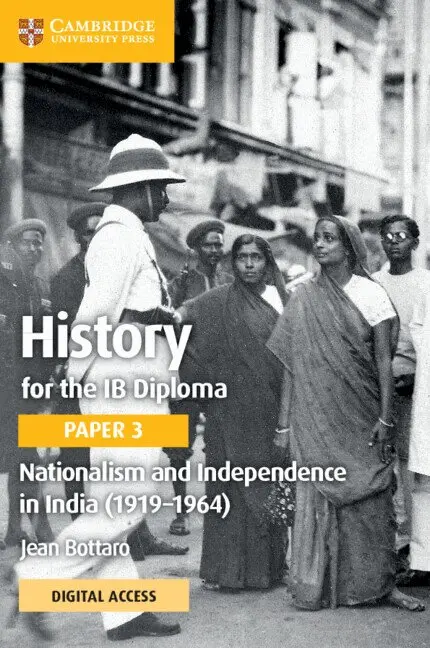
    History for the IB Diploma Paper 3 Nationalism and Independence in India (1919-1964) Coursebook with Digital Access (2 Years)

    AvJean Bottaro

    Cambridge University Press

    2022

    Del i serien IB Diploma

    543 kr

    Beställningsvara. Skickas inom 10-15 vardagar. Fri frakt över 249 kr.

    Beskrivning

    This coursebook covers Paper 3, HL option 3: History of Asia and Oceania, Topic 10: Nationalism and Independence in India (1919-1964) of the History for the International Baccalaureate (IB) Diploma syllabus for first assessment in 2017. Tailored to the requirements of the IB syllabus, and written by an experienced examiner and teacher it offers an authoritative and engaging guidance through nationalism in India, from the end of World War I to the achievement of Indian independence and the development of the country.

    Produktinformation

    • Märke:Cambridge University Press
    • Utgivningsdatum:2022-01-27
    • Höjd:157 x 228 x 14 mm
    • Vikt:470 g
    • Språk:Engelska
    • Serie:IB Diploma
    • Antal sidor:326
    • Upplaga:2
    • Förlag:Cambridge University Press
    • EAN:9781009190121

    Utforska kategorier

    • Läromedel: historia inom Läromedel

    Innehållsförteckning

    • 1. Introduction; Chapter 2. The origins of Indian nationalism and the impact of the First World War: 2.1. What were the origins of the nationalist movement in India?; 2.2. How did the First World War affect India?; 2.3. To what extent did the demands for Home Rule boost the nationalist movement?; Chapter 3. Political developments between 1919 and 1935: 3.1. To what extent was the Amritsar Massacre a turning point?; 3.2. How did the Government of India Act (1919) affect India?; 3.3. What was the significance of the Simon Commission?; 3.4. How effective were the Round Table Conferences?; 3.5. What were the responses to the Government of India Act, 1935?; Chapter 4. The role and importance of key groups and individuals: 4.1. What role did the Indian National Congress play in the nationalist movement?; 4.2. How important was the All-India Muslim League in the nationalist movement?; 4.3. Why was Gandhi so important to the nationalist movement?; 4.4. What was Nehru's contribution to the nationalist movement?; 4.5. How significant was Jinnah's role in the nationalist movement?; Chapter 5. The struggle for independence: 5.1. What was the Non-Cooperation movement?; 5.2. Why was the Salt March so significant?; 5.3. What happened during further Civil Disobedience campaigns?; 5.4. Why was the 'Quit India' campaign significant?; Chapter 6. The growth of Muslim separatism: 6.1. What was the background to the growth of Muslim separatism?; 6.2. When and how did the 'Two Nation' theory develop?; 6.3. How significant was the Lahore Resolution?; Chapter 7. The impact of the Second World War: 7.1. How did the Second World War affect India?; 7.2. What role did Subhas Chandra Bose play?; 7.3. Why did the Cripps Mission fail?; 7.4. How did the war affect British power in India?; 7.5. What was the situation in India after the war?; Chapter 8. Independence and partition: 8.1. What role did Mountbatten play?; 8.2. How did India achieve independence?; 8.3. What were the reasons for the partition of the South Asian subcontinent?; Chapter 9. Post-independence India: 9.1. What ethnic and religious conflicts did India face?; 9.2. How were the princely states incorporated?; 9.3. Why was there conflict with Pakistan over Kashmir?; 9.4. To what extent were Nehru's domestic policies successful?; Chapter 10. Exam practice; Further Reading; Index.