Addison-Wesley Signature Series (Fowler) - Böcker
421 kr
Skickas inom 7-10 vardagar
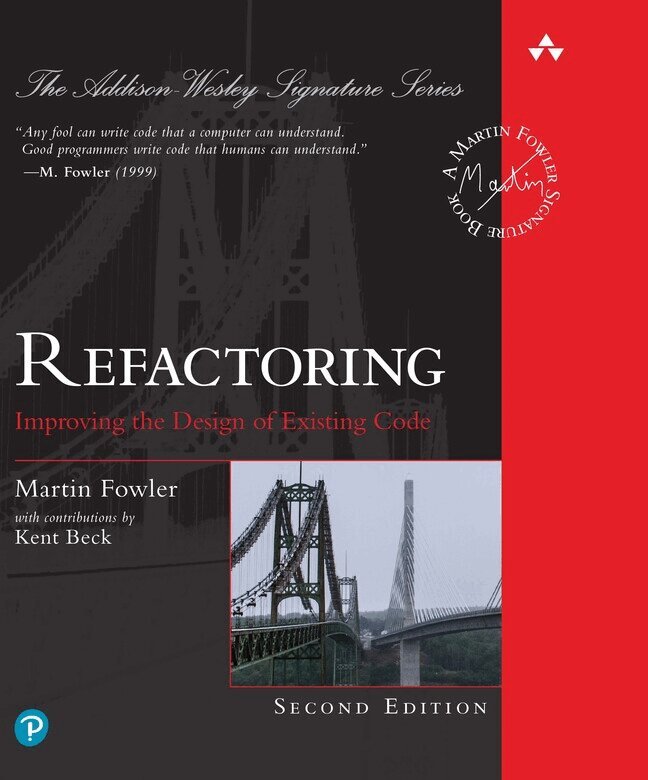
Martin Fowler’s guide to reworking bad code into well-structured code
Refactoring improves the design of existing code and enhances software maintainability, as well as making existing code easier to understand. Original Agile Manifesto signer and software development thought leader, Martin Fowler, provides a catalog of refactorings that explains why you should refactor; how to recognize code that needs refactoring; and how to actually do it successfully, no matter what language you use.
Refactoring principles: understand the process and general principles of refactoring Code smells: recognize “bad smells” in code that signal opportunities to refactor Application improvement: quickly apply useful refactorings to make a program easier to comprehend and change Building tests: writing good tests increases a programmer’s effectiveness Moving features: an important part of refactoring is moving elements between contexts Data structures: a collection of refactorings to organize data, an important role in programs Conditional Logic: use refactorings to make conditional sections easier to understand APIs: modules and their functions are the building blocks of our software, and APIs are the joints that we use to plug them together Inheritance: it is both very useful and easy to misuse, and it’s often hard to see the misuse until it’s in the rear-view mirror---refactorings can fix the misuseExamples are written in JavaScript, but you shouldn’t find it difficult to adapt the refactorings to whatever language you are currently using as they look mostly the same in different languages.
"Whenever you read [Refactoring], it’s time to read it again. And if you haven’t read it yet, please do before writing another line of code." –David Heinemeier Hansson, Creator of Ruby on Rails, Founder & CTO at Basecamp
“Any fool can write code that a computer can understand. Good programmers write code that humans can understand.” –M. Fowler (1999)
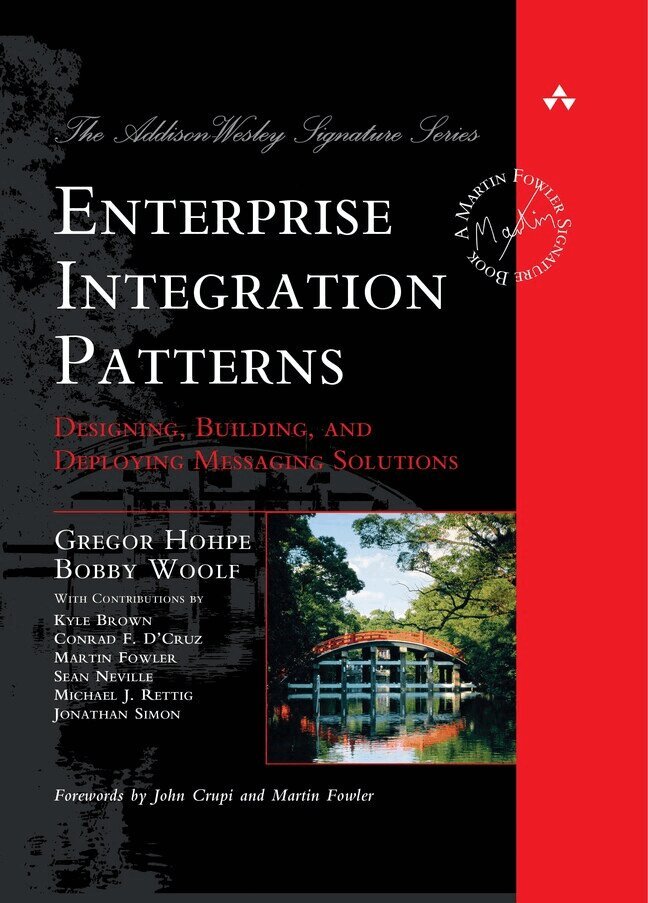
Enterprise Integration Patterns
Designing, Building, and Deploying Messaging Solutions
446 kr
Skickas inom 7-10 vardagar
Enterprise Integration Patterns provides an invaluable catalog of sixty-five patterns, with real-world solutions that demonstrate the formidable of messaging and help you to design effective messaging solutions for your enterprise.
The authors also include examples covering a variety of different integration technologies, such as JMS, MSMQ, TIBCO ActiveEnterprise, Microsoft BizTalk, SOAP, and XSL. A case study describing a bond trading system illustrates the patterns in practice, and the book offers a look at emerging standards, as well as insights into what the future of enterprise integration might hold.
This book provides a consistent vocabulary and visual notation framework to describe large-scale integration solutions across many technologies. It also explores in detail the advantages and limitations of asynchronous messaging architectures. The authors present practical advice on designing code that connects an application to a messaging system, and provide extensive information to help you determine when to send a message, how to route it to the proper destination, and how to monitor the health of a messaging system. If you want to know how to manage, monitor, and maintain a messaging system once it is in use, get this book.
348 kr
Skickas inom 7-10 vardagar
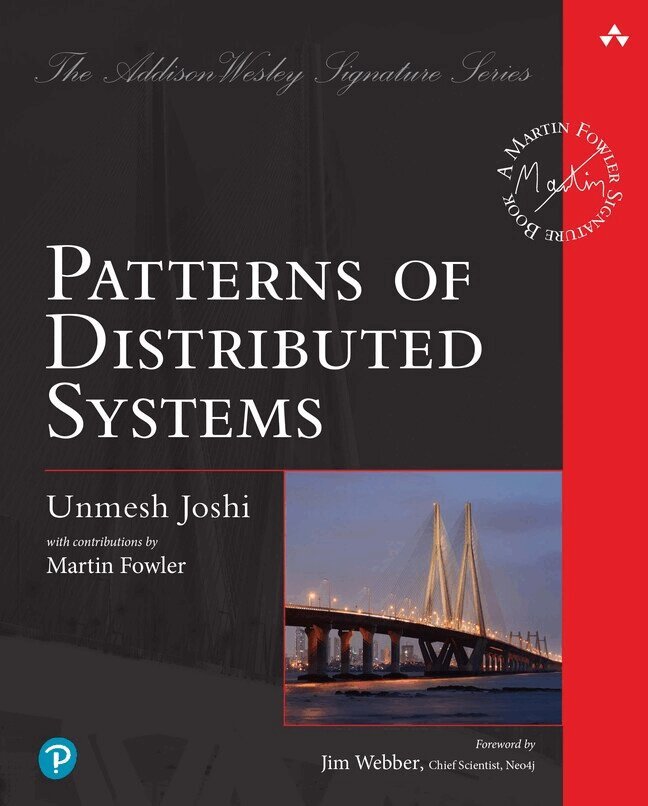
A Patterns Approach to Designing Distributed Systems and Solving Common Implementation Problems
More and more enterprises today are dependent on cloud services from providers like AWS, Microsoft Azure, and GCP. They also use products, such as Kafka and Kubernetes, or databases, such as YugabyteDB, Cassandra, MongoDB, and Neo4j, that are distributed by nature. Because these distributed systems are inherently stateful systems, enterprise architects and developers need to be prepared for all the things that can and will go wrong when data is stored on multiple servers--from process crashes to network delays and unsynchronized clocks.
Patterns of Distributed Systems describes a set of patterns that have been observed in mainstream open-source distributed systems. Studying the common problems and the solutions that are embodied by the patterns in this guide will give you a better understanding of how these systems work, as well as a solid foundation in distributed system design principles.
Featuring real-world code examples from systems like Kafka and Kubernetes, these patterns and solutions will prepare you to confidently traverse open-source codebases and understand implementations you encounter "in the wild."
Review the building blocks of consensus algorithms, like Paxos and Raft, for ensuring replica consistency in distributed systems Understand the use of logical timestamps in databases, a fundamental concept for data versioning Explore commonly used partitioning schemes, with an in-depth look at intricacies of two-phase-commit protocol Analyze mechanisms used in implementing cluster coordination tasks, such as group membership, failure detection, and enabling robust cluster coordination Learn techniques for establishing effective network communication between cluster nodes.Along with enterprise architects and data architects, software developers working with cloud services such as Amazon S3, Amazon EKS, and Azure CosmosDB or GCP Cloud Spanner will find this set of patterns to be indispensable.
Register your book for convenient access to downloads, updates, and/or corrections as they become available. See inside book for details.
458 kr
Skickas inom 7-10 vardagar
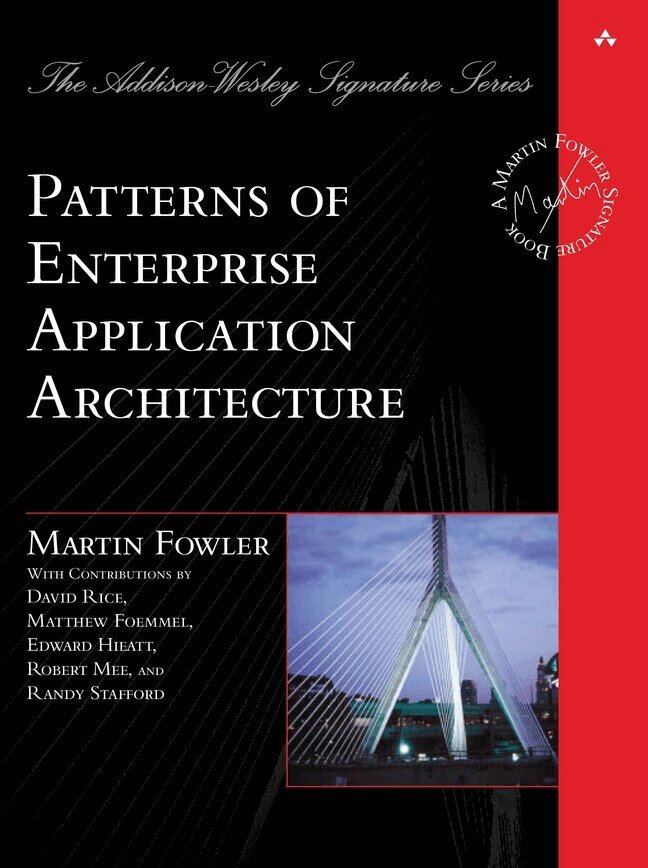
The practice of enterprise application development has benefited from the emergence of many new enabling technologies. Multi-tiered object-oriented platforms, such as Java and .NET, have become commonplace. These new tools and technologies are capable of building powerful applications, but they are not easily implemented. Common failures in enterprise applications often occur because their developers do not understand the architectural lessons that experienced object developers have learned.
Patterns of Enterprise Application Architecture is written in direct response to the stiff challenges that face enterprise application developers. The author, noted object-oriented designer Martin Fowler, noticed that despite changes in technology--from Smalltalk to CORBA to Java to .NET--the same basic design ideas can be adapted and applied to solve common problems. With the help of an expert group of contributors, Martin distills over forty recurring solutions into patterns. The result is an indispensable handbook of solutions that are applicable to any enterprise application platform.
This book is actually two books in one. The first section is a short tutorial on developing enterprise applications, which you can read from start to finish to understand the scope of the book's lessons. The next section, the bulk of the book, is a detailed reference to the patterns themselves. Each pattern provides usage and implementation information, as well as detailed code examples in Java or C#. The entire book is also richly illustrated with UML diagrams to further explain the concepts.
Armed with this book, you will have the knowledge necessary to make important architectural decisions about building an enterprise application and the proven patterns for use when building them.
The topics covered include
· Dividing an enterprise application into layers
· The major approaches to organizing business logic
· An in-depth treatment of mapping between objects and relational databases
· Using Model-View-Controller to organize a Web presentation
· Handling concurrency for data that spans multiple transactions
· Designing distributed object interfaces
611 kr
Skickas inom 3-6 vardagar
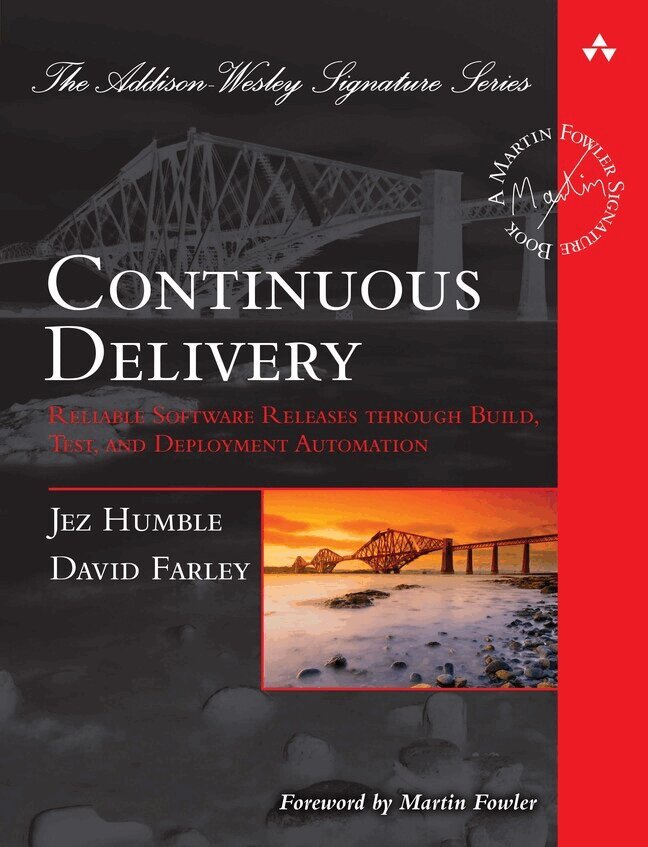
Continuous Delivery
Reliable Software Releases through Build, Test, and Deployment Automation
608 kr
Skickas inom 7-10 vardagar
Winner of the 2011 Jolt Excellence Award!
Getting software released to users is often a painful, risky, and time-consuming process.This groundbreaking new book sets out the principles and technical practices that enable rapid, incremental delivery of high quality, valuable new functionality to users. Through automation of the build, deployment, and testing process, and improved collaboration between developers, testers, and operations, delivery teams can get changes released in a matter of hours—sometimes even minutes–no matter what the size of a project or the complexity of its code base.
Jez Humble and David Farley begin by presenting the foundations of a rapid, reliable, low-risk delivery process. Next, they introduce the “deployment pipeline,” an automated process for managing all changes, from check-in to release. Finally, they discuss the “ecosystem” needed to support continuous delivery, from infrastructure, data and configuration management to governance.
The authors introduce state-of-the-art techniques, including automated infrastructure management and data migration, and the use of virtualization. For each, they review key issues, identify best practices, and demonstrate how to mitigate risks. Coverage includes
Automating all facets of building, integrating, testing, and deploying software Implementing deployment pipelines at team and organizational levels Improving collaboration between developers, testers, and operations Developing features incrementally on large and distributed teams Implementing an effective configuration management strategy Automating acceptance testing, from analysis to implementation Testing capacity and other non-functional requirements Implementing continuous deployment and zero-downtime releases Managing infrastructure, data, components and dependencies Navigating risk management, compliance, and auditingWhether you’re a developer, systems administrator, tester, or manager, this book will help your organization move from idea to release faster than ever—so you can deliver value to your business rapidly and reliably.
339 kr
Skickas inom 7-10 vardagar
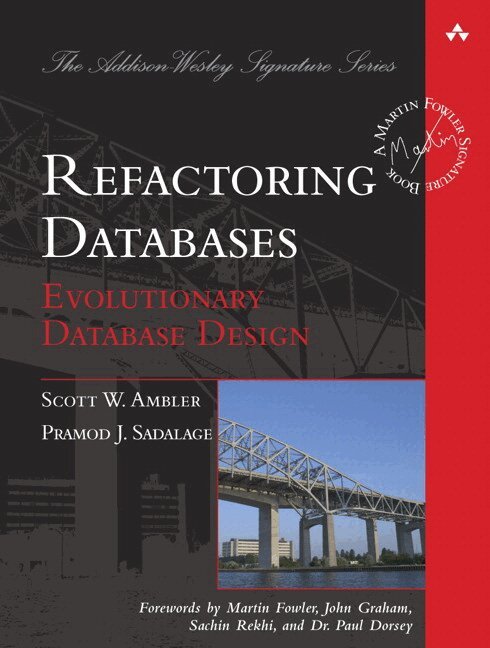
Refactoring has proven its value in a wide range of development projects–helping software professionals improve system designs, maintainability, extensibility, and performance. Now, for the first time, leading agile methodologist Scott Ambler and renowned consultant Pramodkumar Sadalage introduce powerful refactoring techniques specifically designed for database systems.
Ambler and Sadalage demonstrate how small changes to table structures, data, stored procedures, and triggers can significantly enhance virtually any database design–without changing semantics. You’ll learn how to evolve database schemas in step with source code–and become far more effective in projects relying on iterative, agile methodologies.
This comprehensive guide and reference helps you overcome the practical obstacles to refactoring real-world databases by covering every fundamental concept underlying database refactoring. Using start-to-finish examples, the authors walk you through refactoring simple standalone database applications as well as sophisticated multi-application scenarios. You’ll master every task involved in refactoring database schemas, and discover best practices for deploying refactorings in even the most complex production environments.
The second half of this book systematically covers five major categories of database refactorings. You’ll learn how to use refactoring to enhance database structure, data quality, and referential integrity; and how to refactor both architectures and methods. This book provides an extensive set of examples built with Oracle and Java and easily adaptable for other languages, such as C#, C++, or VB.NET, and other databases, such as DB2, SQL Server, MySQL, and Sybase.
Using this book’s techniques and examples, you can reduce waste, rework, risk, and cost–and build database systems capable of evolving smoothly, far into the future.