
Algorithms and Society – serie
Visar alla böcker i serien Algorithms and Society. Handla med fri frakt och snabb leverans.
20 produkter
20 produkter
Inbunden, Engelska, 2022
763 kr
Skickas inom 10-15 vardagar
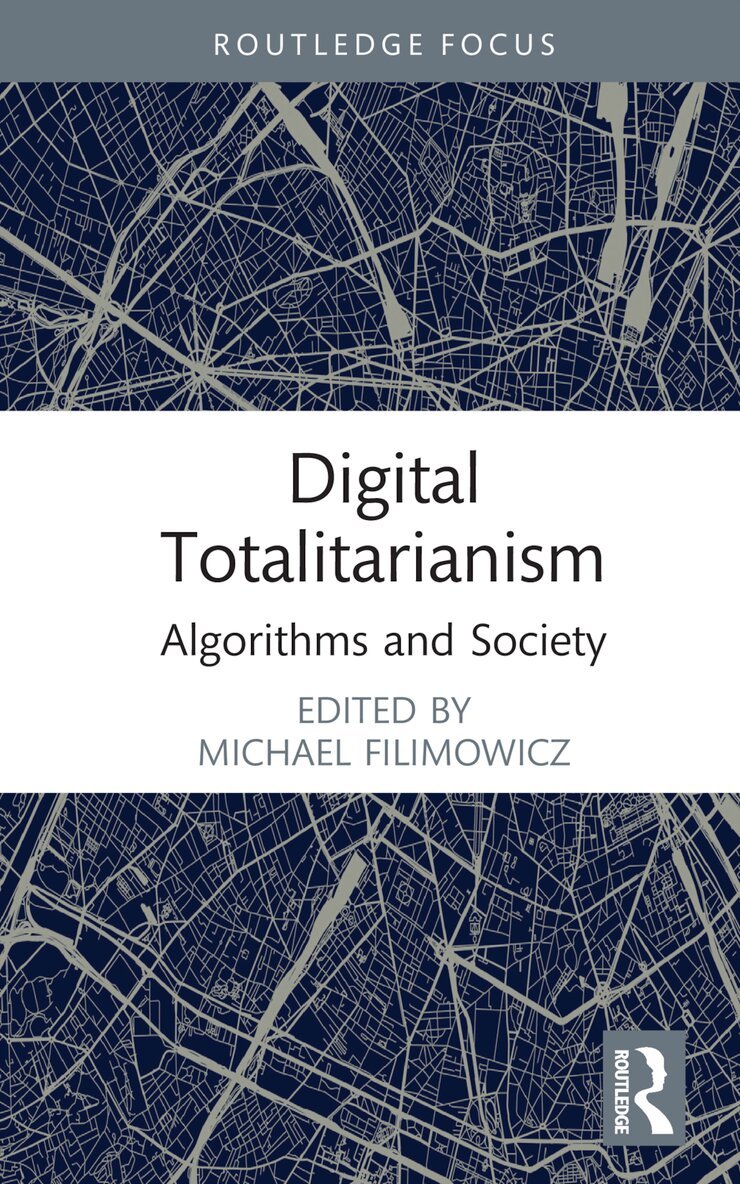
Digital Totalitarianism: Algorithms and Society focuses on important challenges to democratic values posed by our computational regimes: policing the freedom of inquiry, risks to the personal autonomy of thought, NeoLiberal management of human creativity, and the collapse of critical thinking with the social media fueled rise of conspiranoia.Digital networks allow for a granularity and pervasiveness of surveillance by government and corporate entities. This creates power asymmetries where each citizen’s daily ‘data exhaust’ can be used for manipulative and controlling ends by powerful institutional actors. This volume explores key erosions in our fundamental human values associated with free societies by covering government surveillance of library-based activities, cognitive enhancement debates, the increasing business orientation of art schools, and the proliferation of conspiracy theories in network media.Scholars and students from many backgrounds, as well as policy makers, journalists and the general reading public will find a multidisciplinary approach to questions of totalitarian tendencies encompassing research from Communication, Rhetoric, Library Sciences, Art and New Media.
Häftad, Engelska, 2023
296 kr
Skickas inom 10-15 vardagar
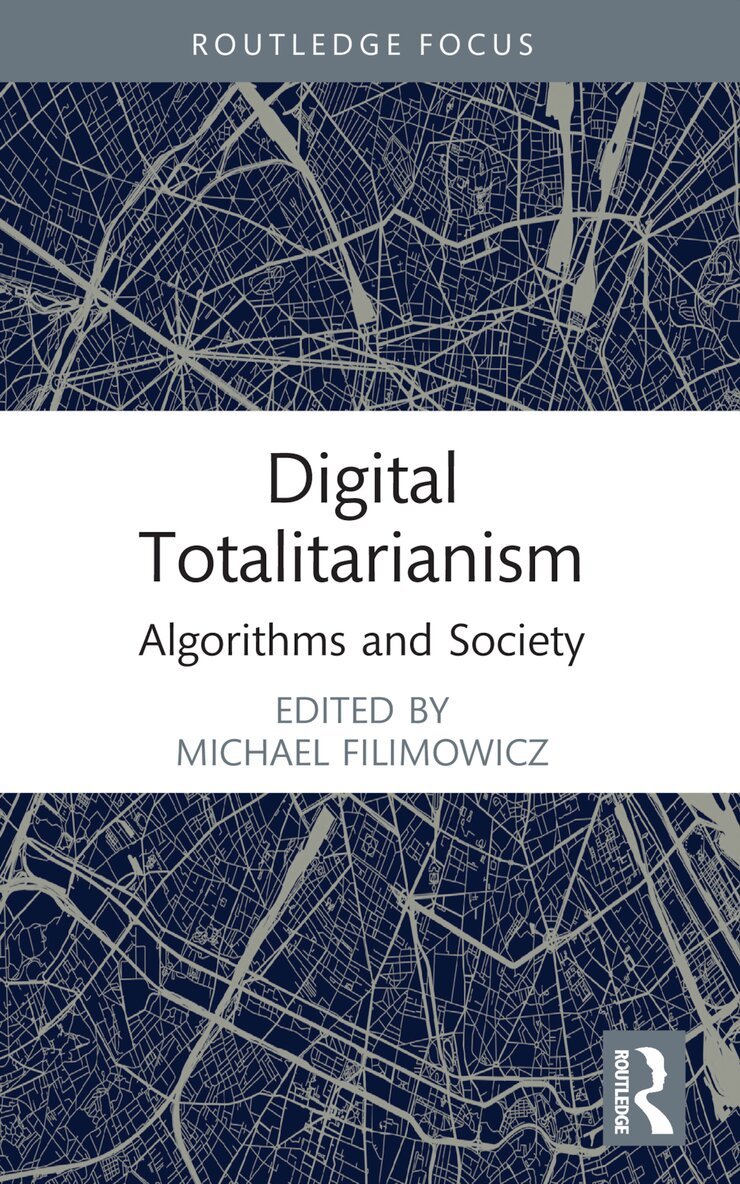
Digital Totalitarianism: Algorithms and Society focuses on important challenges to democratic values posed by our computational regimes: policing the freedom of inquiry, risks to the personal autonomy of thought, NeoLiberal management of human creativity, and the collapse of critical thinking with the social media fueled rise of conspiranoia.Digital networks allow for a granularity and pervasiveness of surveillance by government and corporate entities. This creates power asymmetries where each citizen’s daily ‘data exhaust’ can be used for manipulative and controlling ends by powerful institutional actors. This volume explores key erosions in our fundamental human values associated with free societies by covering government surveillance of library-based activities, cognitive enhancement debates, the increasing business orientation of art schools, and the proliferation of conspiracy theories in network media.Scholars and students from many backgrounds, as well as policy makers, journalists and the general reading public will find a multidisciplinary approach to questions of totalitarian tendencies encompassing research from Communication, Rhetoric, Library Sciences, Art and New Media.
Inbunden, Engelska, 2022
763 kr
Skickas inom 10-15 vardagar
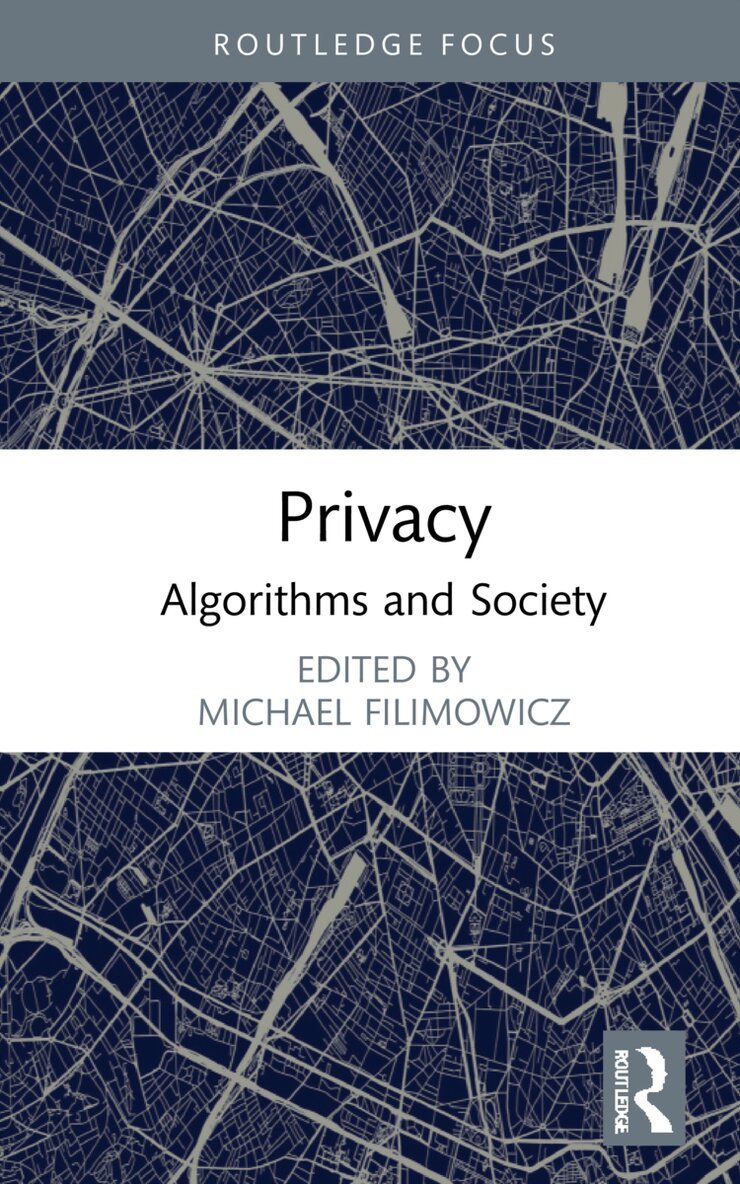
Privacy: Algorithms and Society focuses on encryption technologies and privacy debates in journalistic crypto-cultures, countersurveillance technologies, digital advertising, and cellular location data.Important questions are raised such as: How much information will we be allowed to keep private through the use of encryption on our computational devices? What rights do we have to secure and personalized channels of communication, and how should those be balanced by the state’s interests in maintaining order and degrading the capacity of criminals and rival state actors to organize through data channels? What new regimes may be required for states to conduct digital searches, and how does encryption act as countersurveillance? How have key debates relied on racialized social constructions in their discourse? What transformations in journalistic media and practices have occurred with the development of encryption tools? How are the digital footprints of consumers tracked and targeted?Scholars and students from many backgrounds as well as policy makers, journalists, and the general reading public will find a multidisciplinary approach to questions of privacy and encryption encompassing research from Communication, Sociology, Critical Data Studies, and Advertising and Public Relations.
Häftad, Engelska, 2023
296 kr
Skickas inom 10-15 vardagar
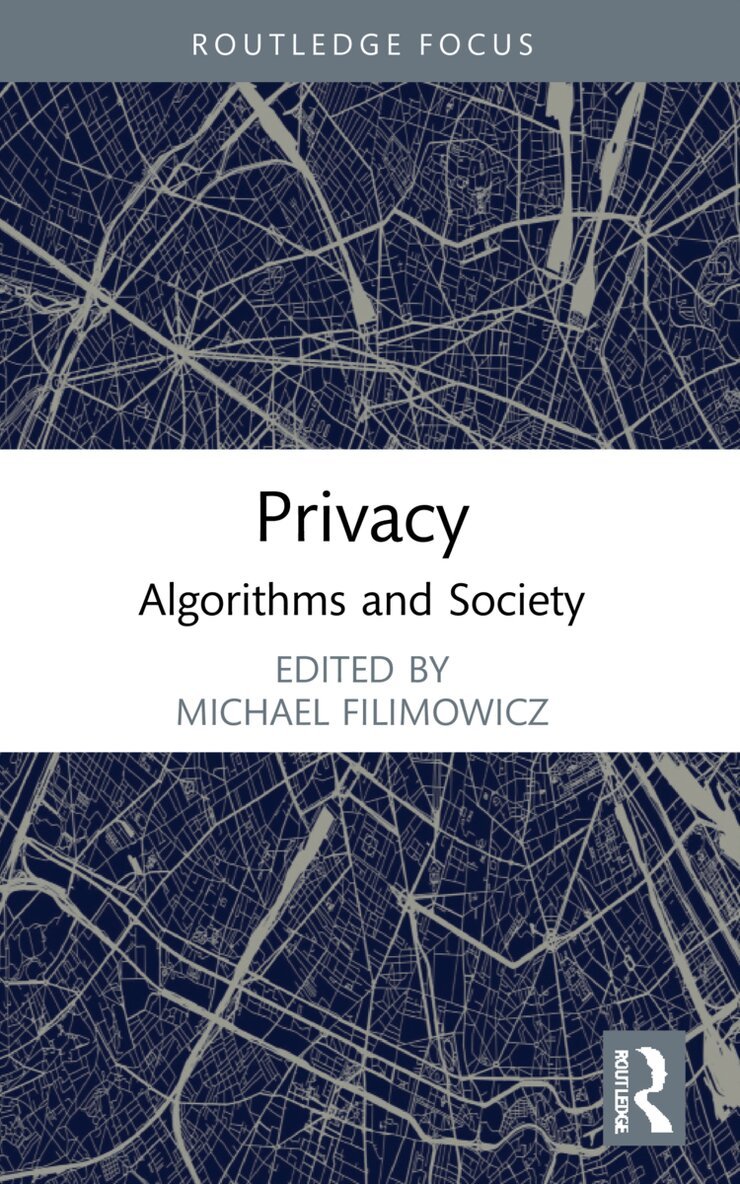
Privacy: Algorithms and Society focuses on encryption technologies and privacy debates in journalistic crypto-cultures, countersurveillance technologies, digital advertising, and cellular location data.Important questions are raised such as: How much information will we be allowed to keep private through the use of encryption on our computational devices? What rights do we have to secure and personalized channels of communication, and how should those be balanced by the state’s interests in maintaining order and degrading the capacity of criminals and rival state actors to organize through data channels? What new regimes may be required for states to conduct digital searches, and how does encryption act as countersurveillance? How have key debates relied on racialized social constructions in their discourse? What transformations in journalistic media and practices have occurred with the development of encryption tools? How are the digital footprints of consumers tracked and targeted?Scholars and students from many backgrounds as well as policy makers, journalists, and the general reading public will find a multidisciplinary approach to questions of privacy and encryption encompassing research from Communication, Sociology, Critical Data Studies, and Advertising and Public Relations.
Inbunden, Engelska, 2022
763 kr
Skickas inom 10-15 vardagar
Systemic Bias: Algorithms and Society looks at issues of computational bias in the contexts of cultural works, metaphors of magic and mathematics in tech culture, and workplace psychometrics.The output of computational models is directly tied not only to their inputs but to the relationships and assumptions embedded in their model design, many of which are of a social and cultural, rather than physical and mathematical, nature. How do human biases make their way into these data models, and what new strategies have been proposed to overcome bias in computed products?Scholars and students from many backgrounds, as well as policy makers, journalists, and the general reading public will find a multidisciplinary approach to inquiry into algorithmic bias encompassing research from Communication, Art, and New Media.
Häftad, Engelska, 2023
304 kr
Skickas inom 10-15 vardagar
Systemic Bias: Algorithms and Society looks at issues of computational bias in the contexts of cultural works, metaphors of magic and mathematics in tech culture, and workplace psychometrics.The output of computational models is directly tied not only to their inputs but to the relationships and assumptions embedded in their model design, many of which are of a social and cultural, rather than physical and mathematical, nature. How do human biases make their way into these data models, and what new strategies have been proposed to overcome bias in computed products?Scholars and students from many backgrounds, as well as policy makers, journalists, and the general reading public will find a multidisciplinary approach to inquiry into algorithmic bias encompassing research from Communication, Art, and New Media.
Inbunden, Engelska, 2022
763 kr
Skickas inom 10-15 vardagar
Deep Fakes: Algorithms and Society focuses on the use of artificial intelligence technologies to produce fictitious photorealistic audiovisual clips that are indistinguishable from traditional video media.For over a century, the indexical relationship of the photographic image, and its related media of film and video, to the scene of capture has served as a basis for truth claims. Historically, the iconicity of these images has featured a causal traceback to actual light rays in a particular time and space, which were fixed by chemical reactions or digital sensors to the resultant image. Today, photorealistic audiovisual media can be generated from deep learning networks that sever any connection to an actual event. Should society instantiate new regimes to manage this new challenge to our sense of reality and the traditional evidential capacities of the ‘mechanical image’? How do these images generate information disorder while also providing the basis for legitimate tools used in entertainment and creative industries?Scholars and students from many backgrounds, as well as policymakers, journalists and the general reading public, will find a multidisciplinary approach to questions posed by deep fake research from Communication, International Studies, Writing and Rhetoric.
Häftad, Engelska, 2023
296 kr
Skickas inom 10-15 vardagar
Deep Fakes: Algorithms and Society focuses on the use of artificial intelligence technologies to produce fictitious photorealistic audiovisual clips that are indistinguishable from traditional video media.For over a century, the indexical relationship of the photographic image, and its related media of film and video, to the scene of capture has served as a basis for truth claims. Historically, the iconicity of these images has featured a causal traceback to actual light rays in a particular time and space, which were fixed by chemical reactions or digital sensors to the resultant image. Today, photorealistic audiovisual media can be generated from deep learning networks that sever any connection to an actual event. Should society instantiate new regimes to manage this new challenge to our sense of reality and the traditional evidential capacities of the ‘mechanical image’? How do these images generate information disorder while also providing the basis for legitimate tools used in entertainment and creative industries?Scholars and students from many backgrounds, as well as policymakers, journalists and the general reading public, will find a multidisciplinary approach to questions posed by deep fake research from Communication, International Studies, Writing and Rhetoric.
Inbunden, Engelska, 2022
763 kr
Skickas inom 10-15 vardagar
Democratic Frontiers: Algorithms and Society focuses on digital platforms’ effects in societies with respect to key areas such as subjectivity and self-reflection, data and measurement for the common good, public health and accessible datasets, activism in social media and the import/export of AI technologies relative to regime type.Digital technologies develop at a much faster pace relative to our systems of governance which are supposed to embody democratic principles that are comparatively timeless, whether rooted in ancient Greek or Enlightenment ideas of freedom, autonomy and citizenship. Algorithms, computing millions of calculations per second, do not pause to reflect on their operations. Developments in the accumulation of vast private datasets that are used to train automated machine learning algorithms pose new challenges for upholding these values. Social media platforms, while the key driver of today’s information disorder, also afford new opportunities for organized social activism. The US and China, presumably at opposite ends of an ideological spectrum, are the main exporters of AI technology to both free and totalitarian societies. These are some of the important topics covered by this volume that examines the democratic stakes for societies with the rapid expansion of these technologies.Scholars and students from many backgrounds as well as policy makers, journalists and the general reading public will find a multidisciplinary approach to issues of democratic values and governance encompassing research from Sociology, Digital Humanities, New Media, Psychology, Communication, International Relations and Economics.Chapter 3 of this book is available for free in PDF format as Open Access from the individual product page at www.routledge.com. It has been made available under a Creative Commons Attribution-Non Commercial-No Derivatives 4.0 license
Häftad, Engelska, 2023
296 kr
Skickas inom 10-15 vardagar
Democratic Frontiers: Algorithms and Society focuses on digital platforms’ effects in societies with respect to key areas such as subjectivity and self-reflection, data and measurement for the common good, public health and accessible datasets, activism in social media and the import/export of AI technologies relative to regime type.Digital technologies develop at a much faster pace relative to our systems of governance which are supposed to embody democratic principles that are comparatively timeless, whether rooted in ancient Greek or Enlightenment ideas of freedom, autonomy and citizenship. Algorithms, computing millions of calculations per second, do not pause to reflect on their operations. Developments in the accumulation of vast private datasets that are used to train automated machine learning algorithms pose new challenges for upholding these values. Social media platforms, while the key driver of today’s information disorder, also afford new opportunities for organized social activism. The US and China, presumably at opposite ends of an ideological spectrum, are the main exporters of AI technology to both free and totalitarian societies. These are some of the important topics covered by this volume that examines the democratic stakes for societies with the rapid expansion of these technologies.Scholars and students from many backgrounds as well as policy makers, journalists and the general reading public will find a multidisciplinary approach to issues of democratic values and governance encompassing research from Sociology, Digital Humanities, New Media, Psychology, Communication, International Relations and Economics.Chapter 3 of this book is available for free in PDF format as Open Access from the individual product page at www.routledge.com. It has been made available under a Creative Commons Attribution-Non Commercial-No Derivatives 4.0 license
Inbunden, Engelska, 2023
833 kr
Skickas inom 10-15 vardagar
This book focuses on the intelligent technologies that are transforming creative practices and industries.The future of creative work will be more complicated than “the robots will take our jobs.” The workplace is becoming increasingly hybridized, with human and computational labor complementing each other. Some economic roles for the former will no doubt fade over time, while new roles are created to produce artificial intelligence (AI)-related technologies and implementations for productivity. New tools for the generation and personalization of content across platforms will be as ubiquitous as the automation of repetitive tasks in content creation workflows. Cultural conceptions of what it means to be a creative worker will necessarily change as a result of these transformations in human-machine labor. The volume covers the possibilities of humans and robots developing collegial relationships, creative cybernetics as machines and artists become co-creators of art, the reconcentration of corporate power as AI transforms the music industry, the rhetoric of algorithm-driven cultural production in streaming media and how artisans provide a model of counter-hegemony to automation processes.Scholars and students from many backgrounds, as well as policy makers, journalists and the general reading public, will find a multidisciplinary approach to questions posed by creative labor and industry research from communication, philosophy, robotics, media, music and the creative arts, informatics, information science, and computer science and engineering.
Häftad, Engelska, 2024
297 kr
Skickas inom 10-15 vardagar
This book focuses on the intelligent technologies that are transforming creative practices and industries.The future of creative work will be more complicated than “the robots will take our jobs.” The workplace is becoming increasingly hybridized, with human and computational labor complementing each other. Some economic roles for the former will no doubt fade over time, while new roles are created to produce artificial intelligence (AI)-related technologies and implementations for productivity. New tools for the generation and personalization of content across platforms will be as ubiquitous as the automation of repetitive tasks in content creation workflows. Cultural conceptions of what it means to be a creative worker will necessarily change as a result of these transformations in human-machine labor. The volume covers the possibilities of humans and robots developing collegial relationships, creative cybernetics as machines and artists become co-creators of art, the reconcentration of corporate power as AI transforms the music industry, the rhetoric of algorithm-driven cultural production in streaming media and how artisans provide a model of counter-hegemony to automation processes.Scholars and students from many backgrounds, as well as policy makers, journalists and the general reading public, will find a multidisciplinary approach to questions posed by creative labor and industry research from communication, philosophy, robotics, media, music and the creative arts, informatics, information science, and computer science and engineering.
Inbunden, Engelska, 2023
833 kr
Skickas inom 10-15 vardagar
This book focuses on how new technologies are raising and reshaping ethical questions and practices that aim to automate ethics into program outputs.With new powerful technologies come enhanced capacities to act, which in turn require new ethical concepts for guiding just and fair actions in the use of these new capabilities. The new algorithmic regimes, for their ethical articulation, build on prior ethics discourses in computer and information ethics, as well as the philosophical traditions of ethics generally. Especially as our technologies become more autonomous, operating alongside us in the home, workplace or on the roads, ethics has the potential to limit negative effects and shape the new technical terrains in a more humanly recognizable way. The volume covers a critique of human-centered AI, the effects of AI and the Internet of Things in the domain of human resource management, how decentralized finance applications on the blockchain encode ethical norms into “smart contracts,” and the personal surveillance risks of audio beacon technology operating invisibly in our cellphones.Scholars and students from many backgrounds, as well as policy makers, journalists and the general reading public will find a multidisciplinary approach to questions posed by research in algorithmic ethics from the fields of management, sociology, social policy, public service, religion and interactive media.
Häftad, Engelska, 2024
297 kr
Skickas inom 10-15 vardagar
This book focuses on how new technologies are raising and reshaping ethical questions and practices that aim to automate ethics into program outputs.With new powerful technologies come enhanced capacities to act, which in turn require new ethical concepts for guiding just and fair actions in the use of these new capabilities. The new algorithmic regimes, for their ethical articulation, build on prior ethics discourses in computer and information ethics, as well as the philosophical traditions of ethics generally. Especially as our technologies become more autonomous, operating alongside us in the home, workplace or on the roads, ethics has the potential to limit negative effects and shape the new technical terrains in a more humanly recognizable way. The volume covers a critique of human-centered AI, the effects of AI and the Internet of Things in the domain of human resource management, how decentralized finance applications on the blockchain encode ethical norms into “smart contracts,” and the personal surveillance risks of audio beacon technology operating invisibly in our cellphones.Scholars and students from many backgrounds, as well as policy makers, journalists and the general reading public will find a multidisciplinary approach to questions posed by research in algorithmic ethics from the fields of management, sociology, social policy, public service, religion and interactive media.

Inbunden, Engelska, 2023
833 kr
Skickas inom 10-15 vardagar
This book focuses on the “algorithmic turn” in state surveillance and the development of new platforms that allow the Chinese Communist Party (CCP) to shape human behavior in all areas of life through its widespread social credit system.Perhaps no country has gone further than China in setting up overt systematic tracking, surveillance and constant computational evaluation of its citizens. Everyday life is saturated with a pervasive digitization that affects social mobility, economic opportunities and personal freedoms. Global organizations operating in China have to take account of the ramifications of these systems for data protection within the CCP’s explicit project of forming a digital civilization. The volume covers the new technological practices that have transformed how states acquire and analyze personal data, the “TikTok-ification” of society as social credit platforms built on the familiarity with this popular app’s interaction paradigm and the fast expansion of the digital economy that followed the new legal status of data as a production component in 2019.Scholars and students from many backgrounds, as well as policy makers, journalists and the general reading public, will find a multidisciplinary approach to questions posed by research into China’s digital civilization project from media, journalism, communication and global studies.
Häftad, Engelska, 2024
306 kr
Skickas inom 10-15 vardagar
This book focuses on the “algorithmic turn” in state surveillance and the development of new platforms that allow the Chinese Communist Party (CCP) to shape human behavior in all areas of life through its widespread social credit system.Perhaps no country has gone further than China in setting up overt systematic tracking, surveillance and constant computational evaluation of its citizens. Everyday life is saturated with a pervasive digitization that affects social mobility, economic opportunities and personal freedoms. Global organizations operating in China have to take account of the ramifications of these systems for data protection within the CCP’s explicit project of forming a digital civilization. The volume covers the new technological practices that have transformed how states acquire and analyze personal data, the “TikTok-ification” of society as social credit platforms built on the familiarity with this popular app’s interaction paradigm and the fast expansion of the digital economy that followed the new legal status of data as a production component in 2019.Scholars and students from many backgrounds, as well as policy makers, journalists and the general reading public, will find a multidisciplinary approach to questions posed by research into China’s digital civilization project from media, journalism, communication and global studies.
Inbunden, Engelska, 2023
833 kr
Skickas inom 10-15 vardagar
This book focuses on the values and effects that are operational in data technologies as they sustain colonial and imperialist legacies while also highlighting strategies for resistance to autocratic regimes and pathways towards decolonizing efforts.Systems and schemes for databases and automated data flow processing often contain implicitly Westernized, autocratic or even imperialist features, but can also be appropriated for resistance and revolt. Algorithms are not strictly mathematical but also embody cultural constructs. Values circulate in systems along with labels and quantities. This entails more critically reflective data practices whether in government, academia, industry or the civic sphere. The volume covers a critique of the data colonialism thesis which frames computer science as a colonizing science that uses data to classify and govern us, an alternate framing of metadata as ‘data near data’ to challenge seemingly neutral technical terms, and a case study of the use of social media platforms in the 2018 Sudanese uprising.Scholars and students from many backgrounds, as well as policy makers, journalists and the general reading public will find a multidisciplinary approach to questions posed by data decolonization research from the fields of Communication and Digital Media studies.
Häftad, Engelska, 2024
297 kr
Skickas inom 10-15 vardagar
This book focuses on the values and effects that are operational in data technologies as they sustain colonial and imperialist legacies while also highlighting strategies for resistance to autocratic regimes and pathways towards decolonizing efforts.Systems and schemes for databases and automated data flow processing often contain implicitly Westernized, autocratic or even imperialist features, but can also be appropriated for resistance and revolt. Algorithms are not strictly mathematical but also embody cultural constructs. Values circulate in systems along with labels and quantities. This entails more critically reflective data practices whether in government, academia, industry or the civic sphere. The volume covers a critique of the data colonialism thesis which frames computer science as a colonizing science that uses data to classify and govern us, an alternate framing of metadata as ‘data near data’ to challenge seemingly neutral technical terms, and a case study of the use of social media platforms in the 2018 Sudanese uprising.Scholars and students from many backgrounds, as well as policy makers, journalists and the general reading public will find a multidisciplinary approach to questions posed by data decolonization research from the fields of Communication and Digital Media studies.
Inbunden, Engelska, 2023
833 kr
Skickas inom 10-15 vardagar
This book focuses on the recent rise of “infodemics” as forms of disinformation, misinformation and mal-information saturate contemporary media platforms, shaping public opinion to advance agendas.The internet in general and social media in particular have relativized, through their global, complex and instantaneous information flows, assumptions about truth and authority in fact-based content. This has created new opportunities for state actors to use information beyond traditional conceptions of propaganda to directly assault a public’s conception of reality. Additionally, almost anyone has the capability to challenge evidential claims through narratives and imagery alone as there is a wide appetite online for alternative realities. This requires new approaches to media literacy in education, the creative arts and our acts of media consumption and dissemination. The volume covers the ways that social media platforms amplify and catalyze the messages of politicians and influencers, the ambivalence of algorithms that can both generate and detect problematic information, how fake news imitates the style of memes to gain widespread social traction and virality, and how artists have intentionally created “sicko AIs” in new media performances to highlight the ethical risks of increasingly “intelligent” technologies.Scholars and students from many backgrounds, as well as policy makers, journalists and the general reading public, will find a multidisciplinary approach to questions posed by information disorder research from the fields of communication, social psychology, human-computer interaction, journalism, media, semiotics and new media art.
Häftad, Engelska, 2024
297 kr
Skickas inom 10-15 vardagar
This book focuses on the recent rise of “infodemics” as forms of disinformation, misinformation and mal-information saturate contemporary media platforms, shaping public opinion to advance agendas.The internet in general and social media in particular have relativized, through their global, complex and instantaneous information flows, assumptions about truth and authority in fact-based content. This has created new opportunities for state actors to use information beyond traditional conceptions of propaganda to directly assault a public’s conception of reality. Additionally, almost anyone has the capability to challenge evidential claims through narratives and imagery alone as there is a wide appetite online for alternative realities. This requires new approaches to media literacy in education, the creative arts and our acts of media consumption and dissemination. The volume covers the ways that social media platforms amplify and catalyze the messages of politicians and influencers, the ambivalence of algorithms that can both generate and detect problematic information, how fake news imitates the style of memes to gain widespread social traction and virality, and how artists have intentionally created “sicko AIs” in new media performances to highlight the ethical risks of increasingly “intelligent” technologies.Scholars and students from many backgrounds, as well as policy makers, journalists and the general reading public, will find a multidisciplinary approach to questions posed by information disorder research from the fields of communication, social psychology, human-computer interaction, journalism, media, semiotics and new media art.