Analytical Methods in Earth and Environmental Science - Böcker
Visar alla böcker i serien Analytical Methods in Earth and Environmental Science. Handla med fri frakt och snabb leverans.
8 produkter
8 produkter
Del 5 - Analytical Methods in Earth and Environmental Science
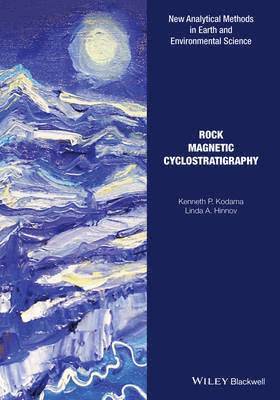
Rock Magnetic Cyclostratigraphy
Inbunden, Engelska, 2014
870 kr
Skickas inom 7-10 vardagar
Rock magnetic cyclostratigraphy merges environmental magnetism, in which rock magnetic measurements are used to detect past environmental change, and cyclostratigraphy, in which cyclic variations of lithology or a sedimentary rock’s physical properties are related to astronomically-forced paleoclimate change. In addition to providing paleoclimate data, cyclostratigraphy can establish high-resolution chronostratigraphy for a sequence of sedimentary rocks, even at distant times in Earth’s history. This book provides an overview of concepts underlying these two techniques, recipes for the time series analysis of cyclostratigraphy, and case studies to illustrate the variety and breadth of problems addressed by rock magnetic cyclostratigraphy.New Analytical Methods in Earth and Environmental Science Because of the plethora of analytical techniques now available, and the acceleration of technological advance, many earth scientists find it difficult to know where to turn for reliable information on the latest tools at their disposal, and may lack the expertise to assess the relative strengths or limitations of a particular technique. This new series will address these difficulties by providing accessible introductions to important new techniques, lab and field protocols, suggestions for data handling and interpretation, and useful case studies. The series represents an invaluable and trusted source of information for researchers, advanced students and applied earth scientists wishing to familiarise themselves with emerging techniques in their field. All titles in this series are available in a variety of full-colour, searchable e-book formats.
958 kr
Skickas inom 7-10 vardagar
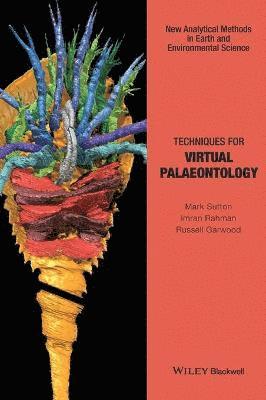
Virtual palaeontology, the use of interactive three-dimensional digital models as a supplement or alternative to physical specimens for scientific study and communication, is rapidly becoming important to advanced students and researchers. Using non-invasive techniques, the method allows the capture of large quantities of useful data without damaging the fossils being studiedTechniques for Virtual Palaeontology guides palaeontologists through the decisions involved in designing a virtual palaeontology workflow and gives a comprehensive overview, providing discussions of underlying theory, applications, historical development, details of practical methodologies, and case studies. Techniques covered include physical-optical tomography (serial sectioning), focused ion beam tomography, all forms of X-ray CT, neutron tomography, magnetic resonance imaging, optical tomography, laser scanning, and photogrammetry. Visualization techniques and data/file formats are also discussed in detail.Readership: All palaeontologists and students interested in three-dimensional visualization and analysis. New Analytical Methods in Earth and Environmental ScienceBecause of the plethora of analytical techniques now available, and the acceleration of technological advance, many earth scientists find it difficult to know where to turn for reliable information on the latest tools at their disposal, and may lack the expertise to assess the relative strengths or limitations of a particular technique. This new series will address these difficulties by providing accessible introductions to important new techniques, lab and field protocols, suggestions for data handling and interpretation, and useful case studies. The series represents an invaluable and trusted source of information for researchers, advanced students and applied earth scientists wishing to familiarise themselves with emerging techniques in their field.All titles in this series are available in a variety of full-colour, searchable eBook formats. Titles are also available in an enhanced eBook edition which may include additional features such as DOI linking, high resolution graphics and video.
1 419 kr
Skickas inom 7-10 vardagar
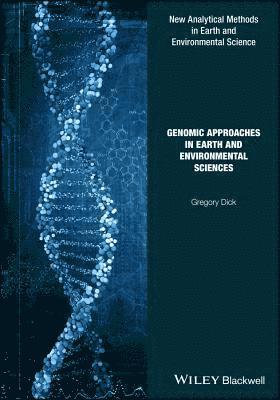
The first comprehensive synthesis of genomic techniques in earth sciencesThe past 15 years have witnessed an explosion of DNA sequencing technologies that provide unprecedented insights into biology. Although this technological revolution has been driven by the biomedical sciences, it also offers extraordinary opportunities in the earth and environmental sciences. In particular, the application of "omics" methods (genomics, transcriptomics, proteomics) directly to environmental samples offers exciting new vistas of complex microbial communities and their roles in environmental and geochemical processes. This unique book fills the gap where there exists a lack of resources and infrastructure to educate and train geoscientists about the opportunities, approaches, and analytical methods available in the application of omic technologies to problems in the geosciences. Genomic Approaches in Earth and Environmental Sciences begins by covering the role of microorganisms in earth and environmental processes. It then goes on to discuss how omics approaches provide new windows into geobiological processes. It delves into the DNA sequencing revolution and the impact that genomics has made on the geosciences. The book then discusses the methods used in the field, beginning with an overview of current technologies. After that it offers in-depth coverage of single cell genomics, metagenomics, metatranscriptomics, metaproteomics, and functional approaches, before finishing up with an outlook on the future of the field. The very first synthesis of an important new family of techniquesShows strengths and limitations (both practical and theoretical) of the techniquesDeals with both theoretical and laboratory basicsShows use of techniques in a variety of applications, including various aspects of environmental science, geobiology, and evolutionGenomic Approaches in Earth and Environmental Sciences is a welcome addition to the library of all earth and environmental scientists and students working within a wide range of subdisciplines.
729 kr
Tillfälligt slut
Phosphorus Pollution Control – Policies and StrategiesDeterioration and decline of water resources due to pollution caused by humans and their activities has become a universal health, environmental, social and economic problem. Excess discharges of nutrients, in particular, phosphorus, has been recognized as the most prevalent water pollution problem globally. Moreover, its perpetual occurrence and expansion creates imminent threats to water and food security.Despite extensive research during the past five decades, many key questions in eutrophication science remain unanswered. This book summarizes the most recent policies and strategies for phosphorus removal and recovery from municipal, residential and agricultural wastewater effluents and runoff into a concise and up-to-date volume. The book will be of interest to environmental and water resources scientists and engineers, consultants, policy makers, and practitioners working in the field.
1 131 kr
Skickas inom 7-10 vardagar
Structure from Motion with Multi View Stereo provides hyperscale landform models using images acquired from standard compact cameras and a network of ground control points. The technique is not limited in temporal frequency and can provide point cloud data comparable in density and accuracy to those generated by terrestrial and airborne laser scanning at a fraction of the cost. It therefore offers exciting opportunities to characterise surface topography in unprecedented detail and, with multi-temporal data, to detect elevation, position and volumetric changes that are symptomatic of earth surface processes. This book firstly places Structure from Motion in the context of other digital surveying methods and details the Structure from Motion workflow including available software packages and assessments of uncertainty and accuracy. It then critically reviews current usage of Structure from Motion in the geosciences, provides a synthesis of recent validation studies and looks to the future by highlighting opportunities arising from developments in allied disciplines. This book will appeal to academics, students and industry professionals because it balances technical knowledge of the Structure from Motion workflow with practical guidelines for image acquisition, image processing and data quality assessment and includes case studies that have been contributed by experts from around the world.
1 433 kr
Skickas inom 7-10 vardagar
A digital elevation model (DEM) is a digital representation of ground surface topography or terrain. It is also widely known as a digital terrain model (DTM). A DEM can be represented as a raster (a grid of squares) or as a vector based triangular irregular network (TIN). DEMs are commonly built using remote sensing techniques, but they may also be built from land surveying. DEMs are used often in geographic information systems, and are the most common basis for digitally-produced relief maps. The terrain surface can be described as compromising of two different elements; random and systematic. The random (stochastic) elements are the continuous surfaces with continuously varying relief. It would take an endless number of points to describe exactly the random terrain shapes, but these can be described in practice with a network of point. It is usual to use a network that creates sloping triangles or regular quadrants.This book examines how the methods and data sources used to generate DEMs and calculate land surface parameters have changed over the past 25 years. The primary goal is to describe the state-of-the-art for a typical digital terrain modeling workflow that starts with data capture, continues with data preprocessing and DEM generation, and concludes with the calculation of one or more primary and secondary land surface parameters. Taken as a whole, this book covers the basic theory behind the methods, the instrumentation, analysis and interpretation that are embedded in the modern digital terrain modeling workflow, the strengths and weaknesses of the various methods that the terrain analyst must choose among, typical applications of the results emanating from these terrain modeling workflows, and future directions.This book is intended for researchers and practitioners who wish to use DEMs, land surface parameters, land surface objects and landforms in environmental projects. The book will also be valuable as a reference text for environmental scientists who are specialists in related fields and wish to integrate these kinds of digital terrain workflows and outputs into their own specialized work environments.
1 016 kr
Skickas inom 7-10 vardagar
There has long been a strong collaboration between geologists and archaeologists, and the sub-field of geoarchaeology is well developed as a discipline in its own right. This book now bridges the gap between those fields and the geophysical technique of ground-penetrating radar (GPR), which allows for three-dimensional analysis of the ground to visualize both geological and archaeological materials. This method has the ability to produce images of the ground that display complex packages of materials, and allows researchers to integrate sedimentary units, soils and associated archaeological features in ways not possible using standard excavation techniques. The ability of GPR to visualize all these buried units can help archaeologists place ancient people within the landscapes and environments of their time, and understand their burial and preservation phenomena in three-dimensions.Readership: Advanced students in archaeology and geoarchaeology, as well as practicing archaeologists with an interest in GPS techniques.
1 379 kr
Skickas inom 7-10 vardagar
Anthropogenic carbon dioxide emissions do not only warm our planet but also acidify our oceans. It is currently unclear to which degree Earth’s climate and marine life will be impacted by these changes but information from Earth history, particularly the geochemical signals of past environmental changes stored in the fossil remains of marine organisms, can help us predict possible future changes. This book aims to be a primer for scientists who seek to apply boron proxies in marine carbonates to estimate past seawater carbonate chemistry and atmospheric pCO2.Boron proxies (δ11B and B/Ca) were introduced nearly three decades ago, with subsequent strides being made in understanding their mechanistic functioning. This text reviews current knowledge about the aqueous systematics, the inorganic and biological controls on boron isotope fractionation and incorporation into marine carbonates, as well as the analytical techniques for measurement of boron proxies. Laboratory and field calibrations of the boron proxies are summarized, and similarities between modern calibrations are explored to suggest estimates for proxy sensitivities in marine calcifiers that are now extinct. Example applications illustrate the potential for reconstructing paleo-atmospheric pCO2 from boron isotopes. Also explored are the sensitivity of paleo-ocean acidity and pCO2 reconstructions to boron isotope proxy systematics that are currently less well understood, including the elemental and boron isotopic composition of seawater through time, seawater alkalinity, temperature and salinity, and their collective impact on the uncertainty of paleo-reconstructions. The B/Ca proxy is based on the same mechanistic principles as the boron isotope proxy, but empirical calibrations suggest seawater pH is not the only controlling factor. B/Ca therefore has the potential to provide a second carbonate parameter that could be paired with δ11B to fully constrain the ocean carbonate system, but the associated uncertainties are large. This text reviews and examines what is currently known about the B/Ca proxy systematics. As more scientists embark on characterizing past ocean acidity and atmospheric pCO2, Boron in Paleoceanography and Paleoclimatology provides a resource to introduce geoscientists to the opportunities and complications of boron proxies, including potential avenues to further refine them.