Animalities - Böcker
Visar alla böcker i serien Animalities. Handla med fri frakt och snabb leverans.
8 produkter
8 produkter
1 227 kr
Skickas
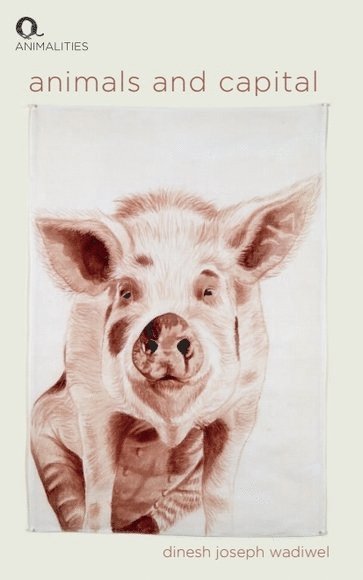
The first systematic application of Marx's value theory to animal labour within the context of capitalist food systemsApplies Marx's value theory which builds on and adapts recent work in animal studies, posthumanities, critical race theory and feminist theory to provide new insights into human-animal relations under capitalismExplores animals as labour, and the implications for the interaction of human and animal labour forcesPresents animal-sourced food as a means of subsistence and social reproduction for human populationsElaborates on animal resistance and its role within capitalist productionBuilding on Karl Marx's value theory, Dinesh Joseph Wadiwel argues that factory farms and industrial fisheries are not merely an example of unchecked human supremacism. Nor a result of the victory of market forces. But a combination of both. In Animals and Capital Wadiwel untangles this contemporary handshake between hierarchical anthropocentrism and capitalism.In the 20th century, capitalist animal agriculture emerged with a twofold mission: to ruthlessly exploit animals for their labour time and enlarge human food supplies. The results of this process are clear. Animal-sourced foods have expanded exponentially. And simultaneously, hundreds of billions of animals confront humans and machines in brutal, antagonistic relations shaped by domination and resistance.
496 kr
In the 20th century, capitalist animal agriculture emerged with a twofold mission: to ruthlessly exploit animals for their labour time and enlarge human food supplies. The results of this process are clear. Animal-sourced foods have expanded exponentially. And simultaneously, hundreds of billions of animals confront humans and machines in brutal, antagonistic relations shaped by domination and resistance. Building on Karl Marx's value theory, Dinesh Joseph Wadiwel argues that factory farms and industrial fisheries are not merely an example of unchecked human supremacism. Nor a result of the victory of market forces. But a combination of both. In Animals and Capital Wadiwel untangles this contemporary handshake between hierarchical anthropocentrism and capitalism.
2 025 kr
Skickas inom 3-6 vardagar
The two issues around which this collection revolves are that it is impossible to address biopolitics without taking the animal question into account, and that the animal question inherently concerns the politics of life beyond species barriers. Although biopolitical theories are necessarily structured around animal metaphors, they predominantly refer to human corporeality. On the other hand, the animal question is typically treated as an ethical issue, that is, a question of how human beings, the dominant species, ought to learn how to live peaceably with and respect other forms of life. This collection of essays by leading scholars in the fields of biopolitics and animal studies problematises, reconceptualises, and redefines these categories in order to realise the full potential of the biopolitical framework of analysis in the context of animal studies and praxis.
297 kr
Kommande
The two issues around which this collection revolves are that it is impossible to address biopolitics without taking the animal question into account, and that the animal question inherently concerns the politics of life beyond species barriers. Although biopolitical theories are necessarily structured around animal metaphors, they predominantly refer to human corporeality. On the other hand, the animal question is typically treated as an ethical issue, that is, a question of how human beings, the dominant species, ought to learn how to live peaceably with and respect other forms of life. This collection of essays by leading scholars in the fields of biopolitics and animal studies problematises, reconceptualises, and redefines these categories in order to realise the full potential of the biopolitical framework of analysis in the context of animal studies and praxis.
2 095 kr
Skickas inom 3-6 vardagar
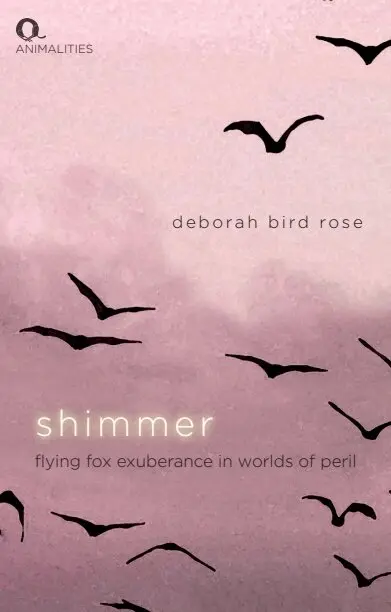
I was called to flying-foxes. My research questions led me into multispecies ethnographic work involving wildlife carers and academically trained scientists in eastern Australia. The people I met were at the front line in the work of holding flying-foxes back from the edge of extinction. I continued to visit the north, and I revisited my notebooks from several decades of research with Aboriginal people. The research was exhilarating, and then again at times deeply disheartening. I was to encounter more passion, intimacy, cruelty, horror, complexity, generosity and wild beauty than I could ever have imagined. Living with flying-foxes, I came to understand, takes us straight to the heart of every big question facing Earth life in the 21st century.' In this deeply personal book, the last one she wrote before hear death in 2018, Deborah Bird Rose explores the shimmer of life - the iridescent pulse of beauty and power, the processes of transition and transformation - that flows across and between generations. Grounded within this insight, she develops and advocates for an ethics of attention that is in the world within everyday practices, and in this case for and with flying foxes and their worlds.
205 kr
Skickas
I was called to flying-foxes. My research questions led me into multispecies ethnographic work involving wildlife carers and academically trained scientists in eastern Australia. The people I met were at the front line in the work of holding flying-foxes back from the edge of extinction. I continued to visit the north, and I revisited my notebooks from several decades of research with Aboriginal people. The research was exhilarating, and then again at times deeply disheartening. I was to encounter more passion, intimacy, cruelty, horror, complexity, generosity and wild beauty than I could ever have imagined. Living with flying-foxes, I came to understand, takes us straight to the heart of every big question facing Earth life in the 21st century.' In this deeply personal book, the last one she wrote before hear death in 2018, Deborah Bird Rose explores the shimmer of life - the iridescent pulse of beauty and power, the processes of transition and transformation - that flows across and between generations. Grounded within this insight, she develops and advocates for an ethics of attention that is in the world within everyday practices, and in this case for and with flying foxes and their worlds.
1 886 kr
Skickas inom 3-6 vardagar
What happens to political thought if we take the problematic nature of the human animal distinction, not as something to be demonstrated, but rather as a given? What sorts of animal-existential possibilities are derived by tracking not the animal but the animal-to-come through the inherited traditions and institutions that continue to shape prevailing concepts of culture and politics? Robert Briggs lays out an original interpretation of Derrida's work which takes the 'question of the animal' beyond the critique of political and philosophical anthropocentrism. Eschewing approaches grounded in animal vulnerability, Briggs reviews theories of power, politics and culture in terms of their capacity to enable novel images of 'zoopolitics'. Along the way he engages with recently translated work in the emerging field of philosophical ethology, including Vinciane Despret's What Would Animals Say If We Asked the Right Questions? (2016) and Dominique Lestel's empirical and constructivist phenomenology of human-animal relations. Through these and other interventions, Briggs departs from well-established positions in animal studies to develop new ways of thinking animal politics today.
469 kr
Skickas inom 3-6 vardagar
Thinks the politics of animals and animality beyond the critique of anthropocentrism and the concerns of biopoliticsOffers a reinterpretation of concepts of institution, culture and power in the service of thinking animal politics beyond a biopolitical frameworkProvides an interdisciplinary approach to analysing 'human-animal' distinctions as forms of institutional (rather than ontological) differenceIncludes analyses of animal behaviours and practices revealing new potentialities in human-animal interactionsEngages with both established Continental thinkers, Derrida, Foucault, Arendt, and recently translated work by key figures in the emerging field of philosophical ethology, including Dominique Lestel and Vinciane DespretReformulates 'the animal-to-come' as a means for reflecting on and further developing 'the question of the animal' in contemporary humanities inquiryReads Derrida's deconstructive interrogation of the human-animal distinction in the context of his 'quasi-messianic' logic of 'the future-to-come'What happens to political thought if we take the problematic nature of the human animal distinction as a given, not as something to be demonstrated? What sorts of animal-existential possibilities are derived by tracking not the animal but the animal-to-come through the inherited traditions and institutions that continue to shape prevailing concepts of culture and politics?Robert Briggs lays out an original interpretation of Derrida's that which takes the question of the animal beyond the critique of political and philosophical anthropocentrism. Eschewing approaches grounded in animal vulnerability, Briggs reviews theories of power, politics and culture in terms of their capacity to enable novel images of zoopolitics. Along the way he engages with recently translated work in the emerging field of philosophical ethology, including Vinciane Despret's What Would Animals Say If We Asked the Right Questions? (2016) and Dominique Lestel's empirical and constructivist phenomenology of human-animal relations. Through these and other interventions, Briggs departs from well-established positions in animal studies to develop new ways of thinking animal politics today.