Applied Software Engineering Series - Böcker
Visar alla böcker i serien Applied Software Engineering Series. Handla med fri frakt och snabb leverans.
14 produkter
14 produkter
1 597 kr
Skickas inom 10-15 vardagar
Technology and organizations co-evolve, as is illustrated by the growth of information and communication technology (ICT) and global software engineering (GSE). Technology has enabled the development of innovations in GSE. The literature on GSE has emphasized the role of the organization at the expense of technology. This book explores the role of technology in the evolution of globally distributed software engineering. To date, the role of the organization has been examined in coordinating GSE activities because of the prevalence of the logic of rationality (i.e., the efficiency ethos, mechanical methods, and mathematical analysis) and indeterminacy (i.e., the effectiveness ethos, natural methods, and functional analysis). This logic neglects the coordination role of ICT. However, GSE itself is an organizational mode that is technology-begotten, technology-dominated, and technology-driven, as is its coordination. GSE is a direct reflection of ICT innovation, change, and use, yet research into the role technology of GSE has been neglected.Global Software Engineering: Virtualization and Coordination considers existing fragmented explanations and perspectives in GSE research, poses new questions about GSE, and proposes a framework based on the logic of virtuality (i.e., creativity ethos, electrical methods, and technological analysis) rather than of rationality and indeterminacy. Virtuality is the primary perspective in this book’s comprehensive study of GSE. The book concludes with an integrated explanation of GSE coordination made possible through ICT connectivity and capitalization.
2 219 kr
Skickas inom 10-15 vardagar
Solid requirements engineering has increasingly been recognized as the key to improved, on-time, and on-budget delivery of software and systems projects. New software tools are emerging that are empowering practicing engineers to improve their requirements engineering habits. However, these tools are not usually easy to use without significant training. Requirements Engineering for Software and Systems, Fourth Edition is intended to provide a comprehensive treatment of the theoretical and practical aspects of discovering, analyzing, modeling, validating, testing, and writing requirements for systems of all kinds, with an intentional focus on software-intensive systems. It brings into play a variety of formal methods, social models, and modern requirements writing techniques to be useful to practicing engineers. The book is intended for professional software engineers, systems engineers, and senior and graduate students of software or systems engineering.Since the first edition, there have been made many changes and improvements to this textbook. Feedback from instructors, students, and corporate users was used to correct, expand, and improve the materials. The fourth edition features two newly added chapters: "On Non-Functional Requirements" and "Requirements Engineering: Road Map to the Future." The latter provides a discussion on the relationship between requirements engineering and such emerging and disruptive technologies as Internet of Things, Cloud Computing, Blockchain, Artificial Intelligence, and Affective Computing.All chapters of the book were significantly expanded with new materials that keep the book relevant to current industrial practices. Readers will find expanded discussions on new elicitation techniques, agile approaches (e.g., Kanpan, SAFe, and DEVOps), requirements tools, requirements representation, risk management approaches, and functional size measurement methods. The fourth edition also has significant additions of vignettes, exercises, and references. Another new feature is scannable QR codes linked to sites containing updates, tools, videos, and discussion forums to keep readers current with the dynamic field of requirements engineering.
1 618 kr
Skickas inom 10-15 vardagar
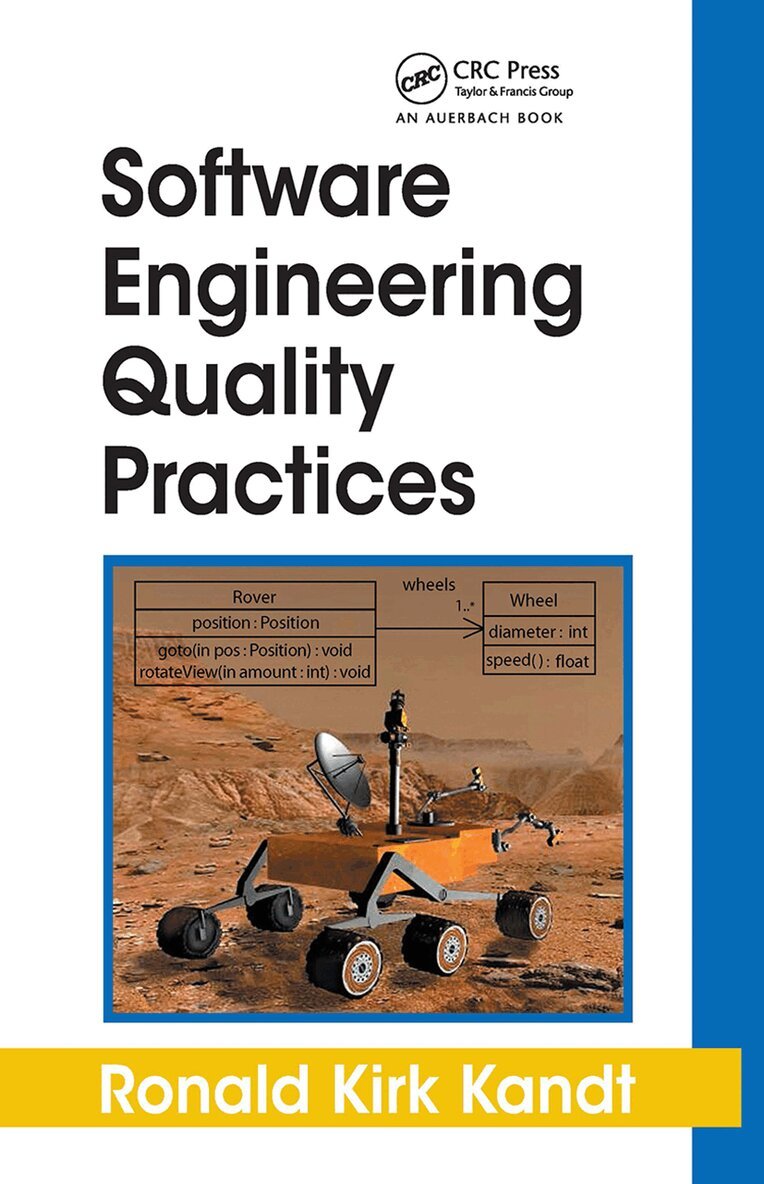
Learn how to attract and keep successful software professionalsSoftware Engineering Quality Practices describes how software engineers and the managers that supervise them can develop quality software in an effective, efficient, and professional manner. This volume conveys practical advice quickly and clearly while avoiding the dogma that surrounds the software profession. It concentrates on what the real requirements of a system are, what constitutes an appropriate solution, and how you can ensure that the realized solution fulfills the desired qualities of relevant stakeholders. The book also discusses how successful organizations attract and keep people who are capable of building high-quality systems.The author succinctly describes the nature and fundamental principles of design and incorporates them into an architectural framework, enabling you to apply the framework to the development of quality software for most applications. The text also analyzes engineering requirements, identifies poor requirements, and demonstrates how bad requirements can be transformed via several important quality practices.
928 kr
Skickas inom 10-15 vardagar
Solid requirements engineering has increasingly been recognized as the key to improved, on-time, and on-budget delivery of software and systems projects. New software tools are emerging that are empowering practicing engineers to improve their requirements engineering habits. However, these tools are not usually easy to use without significant training. Requirements Engineering for Software and Systems, Fourth Edition is intended to provide a comprehensive treatment of the theoretical and practical aspects of discovering, analyzing, modeling, validating, testing, and writing requirements for systems of all kinds, with an intentional focus on software-intensive systems. It brings into play a variety of formal methods, social models, and modern requirements writing techniques to be useful to practicing engineers. The book is intended for professional software engineers, systems engineers, and senior and graduate students of software or systems engineering.Since the first edition, there have been made many changes and improvements to this textbook. Feedback from instructors, students, and corporate users was used to correct, expand, and improve the materials. The fourth edition features two newly added chapters: "On Non-Functional Requirements" and "Requirements Engineering: Road Map to the Future." The latter provides a discussion on the relationship between requirements engineering and such emerging and disruptive technologies as Internet of Things, Cloud Computing, Blockchain, Artificial Intelligence, and Affective Computing.All chapters of the book were significantly expanded with new materials that keep the book relevant to current industrial practices. Readers will find expanded discussions on new elicitation techniques, agile approaches (e.g., Kanpan, SAFe, and DEVOps), requirements tools, requirements representation, risk management approaches, and functional size measurement methods. The fourth edition also has significant additions of vignettes, exercises, and references. Another new feature is scannable QR codes linked to sites containing updates, tools, videos, and discussion forums to keep readers current with the dynamic field of requirements engineering.
677 kr
Skickas inom 10-15 vardagar
Technology and organizations co-evolve, as is illustrated by the growth of information and communication technology (ICT) and global software engineering (GSE). Technology has enabled the development of innovations in GSE. The literature on GSE has emphasized the role of the organization at the expense of technology. This book explores the role of technology in the evolution of globally distributed software engineering. To date, the role of the organization has been examined in coordinating GSE activities because of the prevalence of the logic of rationality (i.e., the efficiency ethos, mechanical methods, and mathematical analysis) and indeterminacy (i.e., the effectiveness ethos, natural methods, and functional analysis). This logic neglects the coordination role of ICT. However, GSE itself is an organizational mode that is technology-begotten, technology-dominated, and technology-driven, as is its coordination. GSE is a direct reflection of ICT innovation, change, and use, yet research into the role technology of GSE has been neglected.Global Software Engineering: Virtualization and Coordination considers existing fragmented explanations and perspectives in GSE research, poses new questions about GSE, and proposes a framework based on the logic of virtuality (i.e., creativity ethos, electrical methods, and technological analysis) rather than of rationality and indeterminacy. Virtuality is the primary perspective in this book’s comprehensive study of GSE. The book concludes with an integrated explanation of GSE coordination made possible through ICT connectivity and capitalization.
1 082 kr
Skickas inom 10-15 vardagar
Enterprise-Scale Agile Software Development is the collective sum of knowledge accumulated during the full-scale transition of a 1400-person organization to agile development—considered the largest implementation of agile development and Scrum ever attempted anywhere in the world. Now James Schiel, a certified Scrum trainer and member of the Scrum Alliance, draws from his experience at the helm of that global four-year project to guide you and your organization through the transition. He lends his insight on how you can use Scrum as an organizational framework and implement XP practices to define how software is written and tested. He provides key information and tools to assess potential outcomes and then make the best corresponding choices in any given situation. Schiel sequences chapters to match typical developmental progression, and in addition to practical guidance, he provides a tool kit from which you can take ideas and select what works for you. Covering quality development practices based on ISO 9001, which help you create consistently high-quality software in a cost-efficient manner, this invaluable resource shows you how to— Improve project management practices and product quality assuranceAdopt new management methods and requirements Involve your current customers in development, while inviting new onesMuch more than a mere "body of knowledge," this volume goes beyond standardizing agile and Scrum practices. It breaks up the process into manageable tasks, illustrating how to set the stage for the change, plan it, and then initiate it. Using the methods and information presented, any organization should be able to achieve a nearly seamless transition to agile.
820 kr
Skickas inom 10-15 vardagar
Modern-day projects require software and systems engineers to work together in realizing architectures of large and complex software-intensive systems. To date, the two have used their own tools and methods to deal with similar issues when it comes to the requirements, design, testing, maintenance, and evolution of these architectures.Software and Systems Architecture in Action explores practices that can be helpful in the development of architectures of large-scale systems in which software is a major component. Examining the synergies that exist between the disciplines of software and systems engineering, it presents concepts, techniques, and methods for creating and documenting architectures.The book describes an approach to architecture design that is driven from systemic quality attributes determined from both the business and technical goals of the system, rather than just its functional requirements. This architecture-centric design approach utilizes analytically derived patterns and tactics for quality attributes that inform the architect’s design choices and help shape the architecture of a given system.The book includes coverage of techniques used to assess the impact of architecture-centric design on the structural complexity of a system. After reading the book, you will understand how to create architectures of systems and assess their ability to meet the business goals of your organization.Ideal for anyone involved with large and complex software-intensive systems, the book details powerful methods for engaging the software and systems engineers on your team. The book is also suitable for use in undergraduate and graduate-level courses on software and systems architecture as it exposes students to the concepts and techniques used to create and manage architectures of software-intensive systems.
845 kr
Skickas inom 10-15 vardagar
In IT divisions and organizations, the need to execute in a competitive and complex technical environment while demonstrating personal integrity can be a significant personal and organizational challenge. Supplying concrete guidelines for those at an ethical crossroads, Ethics in IT Outsourcing explores the complex challenges of aligning IT outsourcing programs with ethical conduct and standards.This one-stop reference on the ethical structure and execution of IT outsourcing incorporates an easy-to-apply checklist of principles for outsourcing executives and managers. It examines certification programs, such as the online ethics training and certification offered by the Code of Ethics and Business Practice Standards for Outsourcing Professionals established by the International Association of Outsourcing Professionals (IAOP). Based upon significant research on the economic impact of outsourcing at a micro, macro, and corporate level, this volume defines a comprehensive set of ethical program components to ensure your program is aligned with ethical guidelines.Based on a solid foundation of documented research and analysisExamines the ethical impact of outsourcing on individuals, corporations, and society Outlines a new corporate capability—the Ethics PMO Includes a list of tools to help readers establish their own Ethics PMOFilled with authoritative insights based on the author’s decades of experience working with large firms in IT and outsourcing, this book is suitable for both veteran IT practitioners and stakeholders new to the topic. A must-read for anyone seeking to understand the underlying issues in this area of growing importance, it will bring you up to speed on the recent developments you need to be aware of to ensure ethical personal, corporate, and societal decision-making.Readers are invited to participate in the growing dialog of business ethics, and IT outsourcing ethics in particular, at the author’s website: www.ethicsinit.com
2 250 kr
Tillfälligt slut
Enterprise-Scale Agile Software Development is the collective sum of knowledge accumulated during the full-scale transition of a 1400-person organization to agile development—considered the largest implementation of agile development and Scrum ever attempted anywhere in the world. Now James Schiel, a certified Scrum trainer and member of the Scrum Alliance, draws from his experience at the helm of that global four-year project to guide you and your organization through the transition. He lends his insight on how you can use Scrum as an organizational framework and implement XP practices to define how software is written and tested. He provides key information and tools to assess potential outcomes and then make the best corresponding choices in any given situation. Schiel sequences chapters to match typical developmental progression, and in addition to practical guidance, he provides a tool kit from which you can take ideas and select what works for you. Covering quality development practices based on ISO 9001, which help you create consistently high-quality software in a cost-efficient manner, this invaluable resource shows you how to— Improve project management practices and product quality assuranceAdopt new management methods and requirements Involve your current customers in development, while inviting new onesMuch more than a mere "body of knowledge," this volume goes beyond standardizing agile and Scrum practices. It breaks up the process into manageable tasks, illustrating how to set the stage for the change, plan it, and then initiate it. Using the methods and information presented, any organization should be able to achieve a nearly seamless transition to agile.
1 166 kr
Skickas inom 10-15 vardagar
Modern-day projects require software and systems engineers to work together in realizing architectures of large and complex software-intensive systems. To date, the two have used their own tools and methods to deal with similar issues when it comes to the requirements, design, testing, maintenance, and evolution of these architectures.Software and Systems Architecture in Action explores practices that can be helpful in the development of architectures of large-scale systems in which software is a major component. Examining the synergies that exist between the disciplines of software and systems engineering, it presents concepts, techniques, and methods for creating and documenting architectures.The book describes an approach to architecture design that is driven from systemic quality attributes determined from both the business and technical goals of the system, rather than just its functional requirements. This architecture-centric design approach utilizes analytically derived patterns and tactics for quality attributes that inform the architect’s design choices and help shape the architecture of a given system.The book includes coverage of techniques used to assess the impact of architecture-centric design on the structural complexity of a system. After reading the book, you will understand how to create architectures of systems and assess their ability to meet the business goals of your organization.Ideal for anyone involved with large and complex software-intensive systems, the book details powerful methods for engaging the software and systems engineers on your team. The book is also suitable for use in undergraduate and graduate-level courses on software and systems architecture as it exposes students to the concepts and techniques used to create and manage architectures of software-intensive systems.
1 081 kr
Tillfälligt slut
In IT divisions and organizations, the need to execute in a competitive and complex technical environment while demonstrating personal integrity can be a significant personal and organizational challenge. Supplying concrete guidelines for those at an ethical crossroads, Ethics in IT Outsourcing explores the complex challenges of aligning IT outsourcing programs with ethical conduct and standards.This one-stop reference on the ethical structure and execution of IT outsourcing incorporates an easy-to-apply checklist of principles for outsourcing executives and managers. It examines certification programs, such as the online ethics training and certification offered by the Code of Ethics and Business Practice Standards for Outsourcing Professionals established by the International Association of Outsourcing Professionals (IAOP). Based upon significant research on the economic impact of outsourcing at a micro, macro, and corporate level, this volume defines a comprehensive set of ethical program components to ensure your program is aligned with ethical guidelines.Based on a solid foundation of documented research and analysisExamines the ethical impact of outsourcing on individuals, corporations, and society Outlines a new corporate capability—the Ethics PMO Includes a list of tools to help readers establish their own Ethics PMOFilled with authoritative insights based on the author’s decades of experience working with large firms in IT and outsourcing, this book is suitable for both veteran IT practitioners and stakeholders new to the topic. A must-read for anyone seeking to understand the underlying issues in this area of growing importance, it will bring you up to speed on the recent developments you need to be aware of to ensure ethical personal, corporate, and societal decision-making.Readers are invited to participate in the growing dialog of business ethics, and IT outsourcing ethics in particular, at the author’s website: www.ethicsinit.com
1 235 kr
Skickas inom 10-15 vardagar
Taking a learn-by-doing approach, Software Engineering Design: Theory and Practice uses examples, review questions, chapter exercises, and case study assignments to provide students and practitioners with the understanding required to design complex software systems. Explaining the concepts that are immediately relevant to software designers, it begins with a review of software design fundamentals.The text presents a formal top-down design process that consists of several design activities with varied levels of detail, including the macro-, micro-, and construction-design levels. As part of the top-down approach, it provides in-depth coverage of applied architectural, creational, structural, and behavioral design patterns. For each design issue covered, it includes a step-by-step breakdown of the execution of the design solution, along with an evaluation, discussion, and justification for using that particular solution. The book outlines industry-proven software design practices for leading large-scale software design efforts, developing reusable and high-quality software systems, and producing technical and customer-driven design documentation. It also:Offers one-stop guidance for mastering the Software Design & Construction sections of the official Software Engineering Body of Knowledge (SWEBOK®)Details a collection of standards and guidelines for structuring high-quality codeDescribes techniques for analyzing and evaluating the quality of software designs Collectively, the text supplies comprehensive coverage of the software design concepts students will need to succeed as professional design leaders. The section on engineering leadership for software designers covers the necessary ethical and leadership skills required of software developers in the public domain. The section on creating software design documents (SDD) familiarizes students with the software design notations, structural descriptions, and behavioral models required for SDDs.Course notes, exercises with answers, online resources, and an instructor’s manual are available upon qualified course adoption. Instructors can contact the author about these resources via the author's website: http://softwareengineeringdesign.com/
877 kr
Tillfälligt slut
Examining the questions most commonly asked by students attending Certified Scrum Master (CSM) and Certified Scrum Product Owner (CSPO) classes, The ScrumMaster Study Guide provides an accessible introduction to the concepts of Scrum and agile development. It compiles the insights gained by the author in teaching more than 100 CSM classes and countless seminars.Describing how to sell agile development to upper management and customers, the book illustrates real-world implementation of agile development, addressing the roles and responsibilities of each team member as well as some of the things that can go wrong in an implementation. Focuses on running Scrum projects in an agile environment Covers agile development, team building, and transitioning to Scrum and agile Explains how to adapt Scrum and agile to your work environment Describes how to measure individual and team productivity Illustrates the functions of a Scrum team on a day-to-day basis This book is intended for newly minted ScrumMasters, product owners, and students about to attend a CSM or CSPO class as well as developers and managers who want to sharpen their skills. Scrum is a simple framework and agile development is simply a concept; successful implementation requires more than just the training you can get in a CSM class or a workshop. Helping you understand key aspects of agile development and Scrum that might have previously been difficult to comprehend, this book is the ideal starting point for finding the answers you need for agile software development in your organization.
1 166 kr
Skickas inom 10-15 vardagar
Emphasizing leadership principles and practices, Antipatterns: Managing Software Organizations and People, Second Edition catalogs 49 business practices that are often precursors to failure. This updated edition of a bestseller not only illustrates bad management approaches, but also covers the bad work environments and cultural traits commonly found in IT, software development, and other business domains. For each antipattern, it describes the situation and symptoms, gives examples, and offers a refactoring solution. The authors, graduate faculty at Penn State University, avoid an overly scholarly style and infuse the text with entertaining sidebars, cartoons, stories, and jokes. They provide names for the antipatterns that are visual, humorous, and memorable. Using real-world anecdotes, they illustrate key concepts in an engaging manner. This updated edition sheds light on new management and environmental antipattems and includes a new chapter, six updated chapters, and new discussion questions. Topics covered include leadership principles, environmental antipatterns, group patterns, management antipatterns, and team leadership.Following introductory material on management theory and human behavior, the text catalogs the full range of management, cultural, and environmental antipatterns. It includes thought-provoking exercises that each describe a situation, ask which antipatterns are present, and explain how to refactor the situation. It provides time-tested advice to help you overcome bad practices through successful interaction with your clients, customers, peers, supervisors, and subordinates.