Armies of the Past - Böcker
Visar alla böcker i serien Armies of the Past. Handla med fri frakt och snabb leverans.
9 produkter
9 produkter
Armies of Plantagenet England, 1135–1337
The Scottish and Welsh Wars and Continental Campaigns
Inbunden, Engelska, 2022
266 kr
Skickas
The ascent of the Plantagenets to the English throne in 1154 led to the beginning of a new historical phase in the British Isles, which was marked by numerous wars that were fought between the Kingdom of England and the 'Celtic nations' of Wales, Scotland and Ireland. During the rule of the Norman kings, the English armies had not completed the conquest of Wales and had established only some footholds in Ireland; Scotland was still independent and was ready to contest the Plantagenets' possession of northern England. As a result of this situation, the two centuries between the rise of the new dynasty and the beginning of the Hundred Years' War were characterized by a series of wars that ravaged feudal England. Gabriele Esposito covers all these conflicts, following the campaigns of Richard the Lionheart as well as those of his younger brother who was defeated on the continent at the large Battle of Bouvines; the conquest of Wales is analysed in detail, as well as the First Scottish War of Independence that saw William Wallace playing a prominent role. The organization and equipment of all the troop types taken into account is described in full detail and lavishly illustrated with colour images of reenactors, bringing these forces to life.
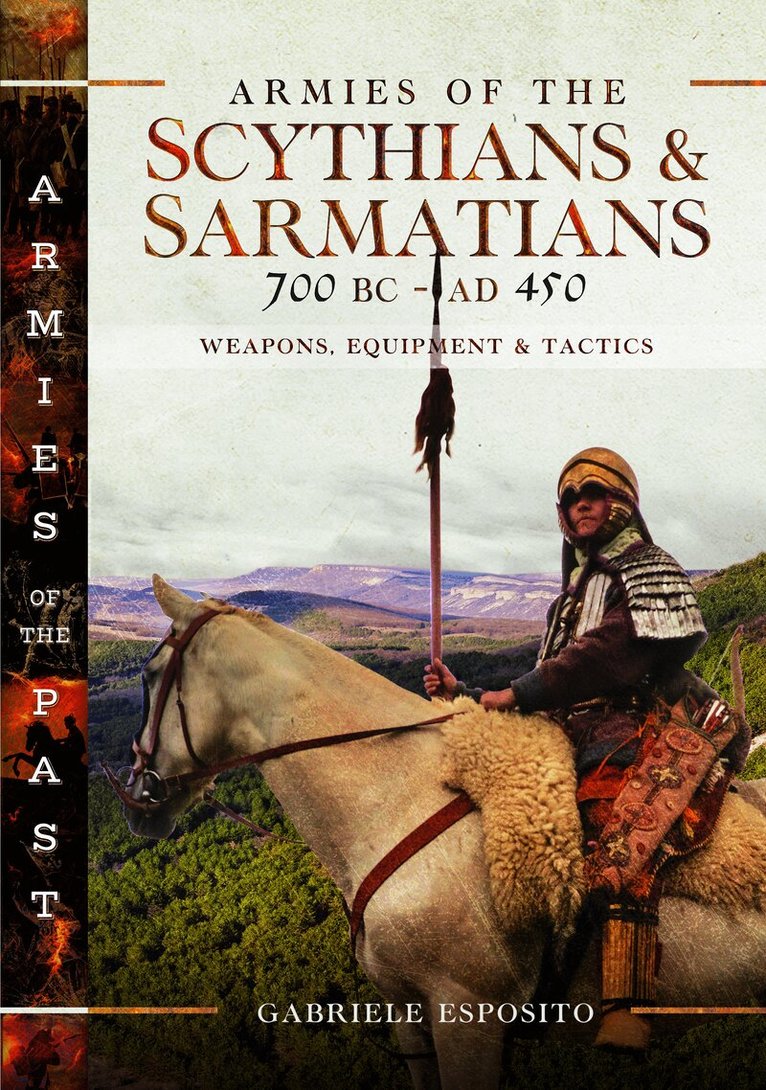
Armies of the Scythians and Sarmatians 700 BC to AD 450
Weapons, Equipment and Tactics
Inbunden, Engelska, 2024
299 kr
Skickas
The Scythians were a horse nomads from the central Eurasian steppes who migrated south and west into the region around the Black Sea from the seventh century BC which they dominated until replaced and absorbed by the very similar Sarmatians from the third century BC. A harsh life spent riding, herding and hunting on the steppes made them into tough warriors, and highly skilled horsemen and archers. Their armies were highly mobile, mostly comprising swift mounted archers capable of elusive hit-and-run attacks but with the wealthier warriors constituting a core of heavier cavalry, armoured and equipped for close combat. Over hundreds of years the Scythians fought, and often defeated, such notable opponents as the Assyrians, Medes, Persians, Greeks and Macedonians. Their Sarmatian successors continued the tradition, being among the Romans’ most dangerous opponents for several centuries.Gabriele Esposito discusses these remarkable warriors of the steppes, analysing what made them such formidable opponents to their neighbours over the centuries. He describes in detail their weapons, armour, equipment and tactics as they evolved over the centuries. The fascinating text is supported by dozens of beautiful colour photographs of replica costume, arms and equipment in use.
266 kr
Skickas
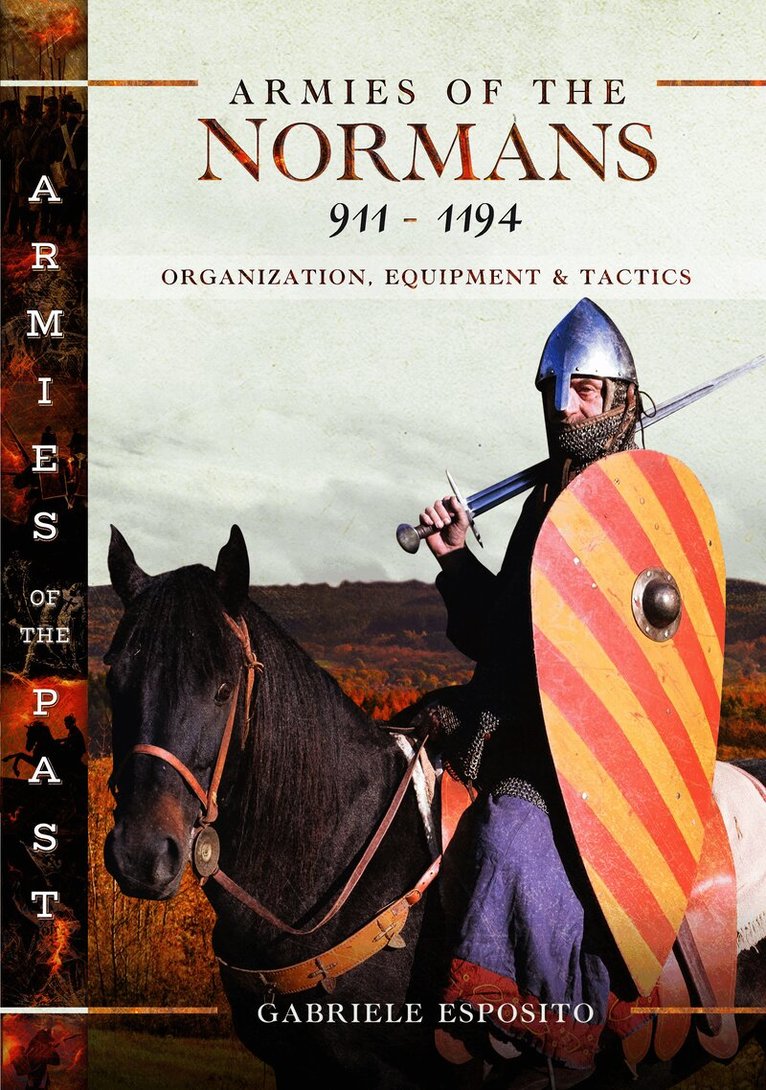
The Norman story began in 911, when a frightened French king (Charles III ‘the Simple’) gave land on the Channel coast to the Viking leader Rollo in return for adopting Christianity and helping repel other Viking marauders. Rollo and his fellow Norsemen (hence ‘Normandy’ and ‘Normans’) adopted all the trappings of feudalism, evolving from pagan ship-borne raiders to archetypal Christian knights and builders of castles. However, they seem to have lost none of their ferocity and adventuring spirit. As well as Duke William’s famous cross-Channel conquest, Norman forces (often mercenaries) conquered territories in Spain, Sicily, Malta, Italy and Albania and formed the hard core of the early Crusades. Bohemond captured Antioch from the Turks and set up a principality that endured almost two centuries.Gabriele Esposito discusses the armies of the Normans in all these theatres, incorporating not only the Norman knights but the various feudal levies, local auxiliaries and mercenary contingents that fought with them. Having outlined the major battles and campaigns, he details their equipment, weapons and tactics. The accessible text is supported by numerous colour photographs of replica costume, weapons and equipment in use.
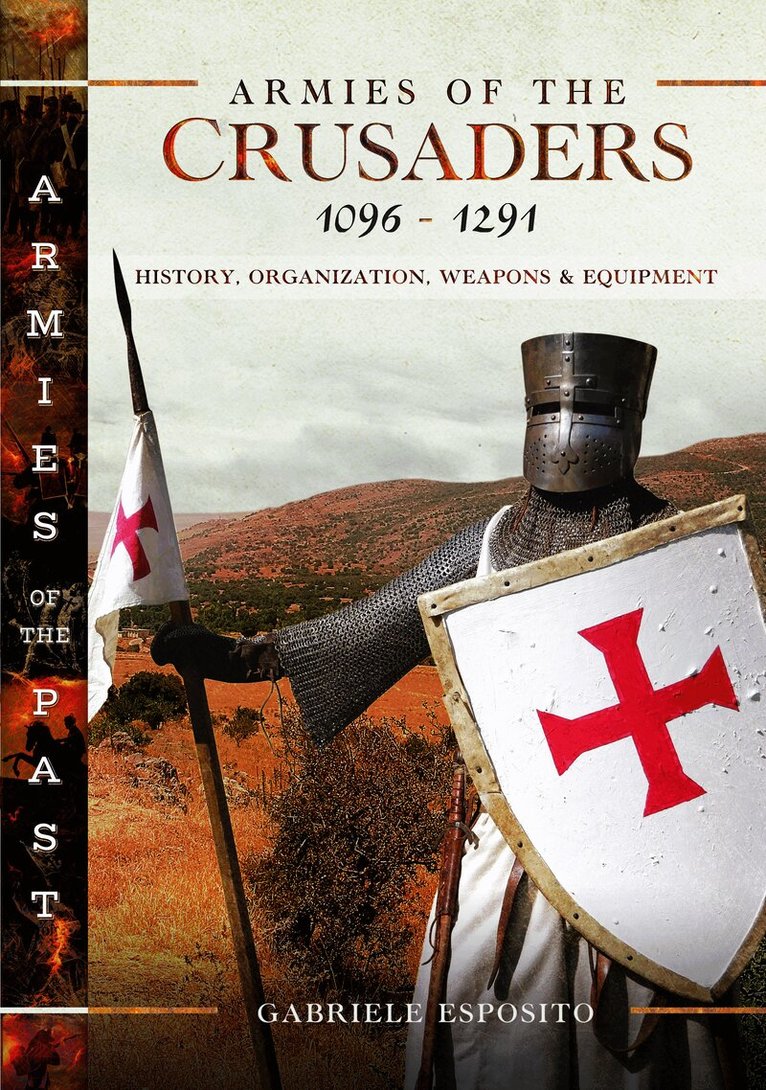
Armies of the Crusaders, 1096–1291
History, Organization, Weapons and Equipment
Inbunden, Engelska, 2023
299 kr
Skickas
The Crusades were among the most astonishing historical events that took place during the Middle Ages. After centuries of relative isolation following the fall of the Roman Empire, Western Europe looked again towards the Middle East in search of lands to conquer. Incited by the Church to believe that the Holy Land must be ‘liberated’ from its Muslim rulers (who had by then occupied it for centuries), and that to do so would bring spiritual salvation, many thousands from all over Christian Europe ‘took the cross’ and joined the Crusades. Led by some of the most illustrious personalities of the age, such as Richard the Lionheart and Frederick Barbarossa, they fought numerous campaigns and even founded new ‘Crusader states’, some of which lasted for almost two centuries.Gabriele Esposito gives an overview of the key events of these campaigns, from the First Crusade in 1096 to the fall of Acre, the last Christian stronghold in the Holy Land, in 1291. He analyses the various contingents that made up the Crusader forces, describing their equipment and tactics and showing how they attempted to adapt to unfamiliar terrain and enemies. Included, of course, are the military orders (the Templar, Hospitaller and Teutonic knights) who combined the religious fervour of a monastic brotherhood with martial prowess, forming an elite core to the Christian forces. As usual, the informative text is lavishly illustrated with colour photos depicting replica weapons and equipment in use.
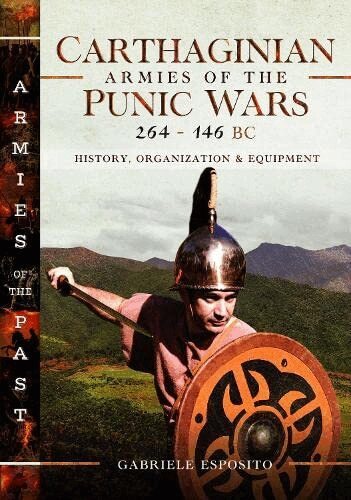
Carthaginian Armies of the Punic Wars, 264–146 BC
History, Organization and Equipment
Inbunden, Engelska, 2023
266 kr
Skickas
The Carthaginians were undoubtedly the most formidable enemies of the ever-expanding Roman Republic, due to their sophisticated and often well-led military forces. Although the citizens of Carthage itself, a seafaring, mercantile state by tradition, may not have had the same military ethos as the Romans, they compensated by fielding varied multinational armies consisting of subject, allied and mercenary contingents, many of them recruited from the most famous warrior peoples of the Mediterranean. These included the incomparable Numidian light cavalry, the famed slingers of the Balearic islands, fierce Celts and skilled Spanish swordsmen, not forgetting the famous war elephants. During the first of the three conflicts that they fought against the Roman Republic - the famous Punic Wars - the Carthaginians completely reformed their land forces along Hellenistic lines and invited an experienced Spartan officer to command it. During the Second Punic War, they obtained a series of stunning victories over the Romans under the brilliant leadership of their own Hannibal Barca, marauding through Italy for some fifteen years.Gabriele Esposito reconstructs the history, organization and weapons of the Carthaginian military forces across the Punic Wars (264-146 BC). The weapons, armour and tactics of each of the various ethnic components is analyzed and the accessible text is supported by dozens of excellent colour photographs, showing replica equipment in use.
266 kr
Skickas
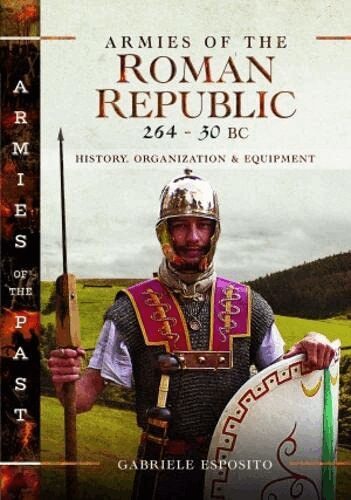
The period covered in this book saw the Roman Republic face its greatest military challenges. In 264 the Romans were pitted against the might of Carthage in the first of the three Punic Wars, which would push Rome to the brink but end with the destruction of this great rival city. In the following two centuries they would clash repeatedly with the Gauls, this recurrent threat finally overcome by Caesar's campaigns in Gaul. In this period they defeated the Hellenistic Successor states, proud heirs to the military legacy of Alexander the Great, a process completed by the annexation of Egypt in 30 BC. These wars, and others, made the Romans masters of all Western Europe and the whole Mediterranean basin, though failure against the Parthians limited their ambitions in the East. The Roman armies of this era were also employed against each other in the vicious civil wars that marked the end of the Republican period.Gabriele Esposito describes the tactics, organization, weapons and equipment of the Roman forces involved in these wars. He shows how the lessons of defeats and victories against such varied opponents in far-flung theatres, as well as social changes, forced a process of evolution and reforms that transformed Roman armies across this turbulent period. As usual, his clear, accessible text is supported by dozens of colour images of replica weapons and equipment in use.
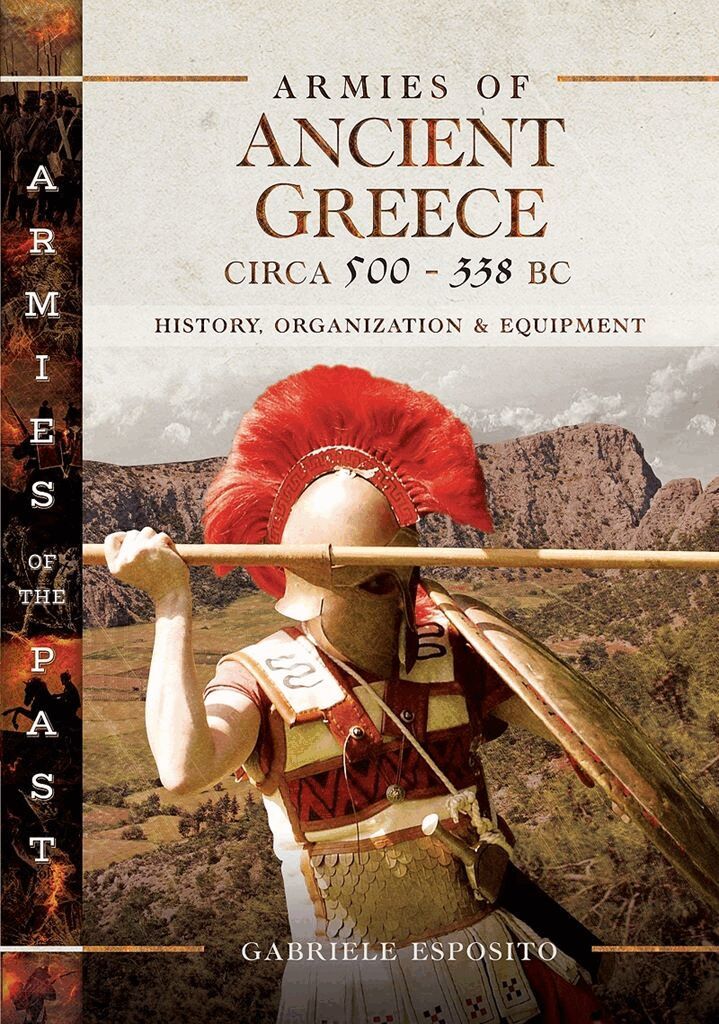
Armies of Ancient Greece Circa 500 to 338 BC
History, Organization & Equipment
Inbunden, Engelska, 2020
266 kr
Skickas
Conflict was rife among the Greeks of the Classical period, including some of the most famous wars and battles of the whole ancient period, such as the defeat of the Persians at Marathon, the Spartans' heroic last stand at Thermopylae, the gruelling Pelopponesian War and the epic March of the Ten Thousand. The Greek heavy infantry spearmen, or hoplites, are one of the most recognizable types of ancient warrior and their tighly-packed phalanx formation dominated the battlefield. Covering the period from the Persian Wars to the Macedonian victory at the Battle of Chaeronea, Gabriele Esposito examines not only the hoplites but also the other troops that featured in Greek armies with growing importance as time went on, such as light infantry skirmishers and cavalry. He details their arms, armour and equipment, organization and tactics. His clear, informative text is beautifully illustrated with dozens of colour photographs showing how the equipment was worn and used.
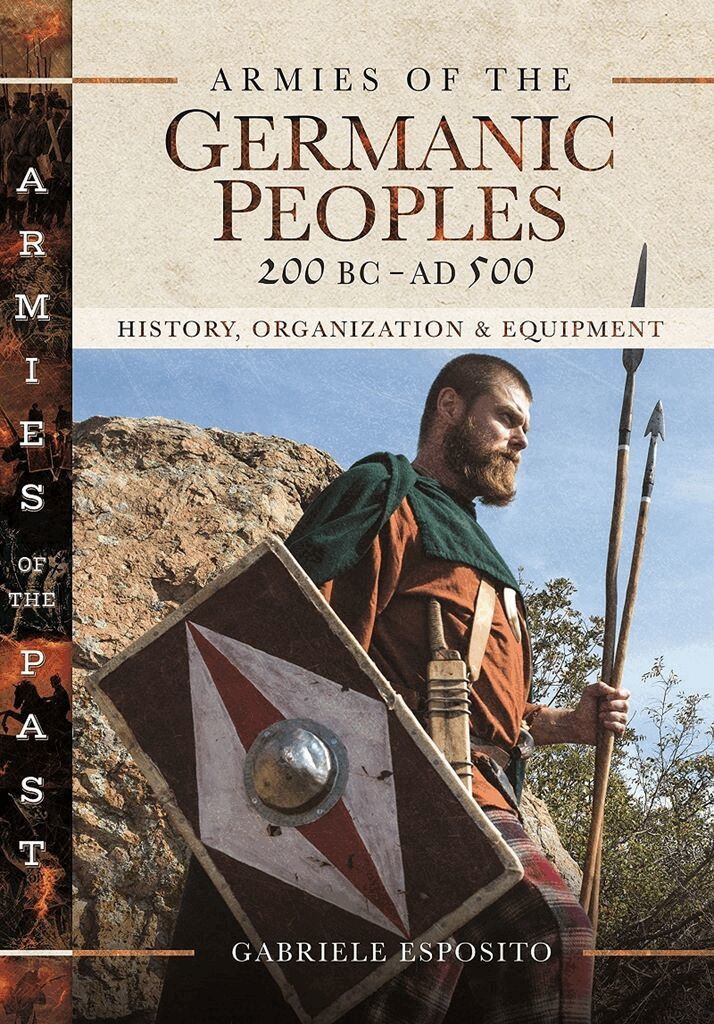
Armies of the Germanic Peoples, 200 BC to AD 500
History, Organization and Equipment
Inbunden, Engelska, 2021
214 kr
Skickas
Gabriele Esposito presents an overview of the military history of the Germanic peoples of this period and describes in detail the weapons and tactics they employed on the battlefield. He starts by showing how, from very early on, the Germanic communities were heavily influenced by Celtic culture. He then moves on to describe the major military events, starting with the first major encounter between the Germanic tribes and the Romans: the invasion by the Cimbri and Teutones. Julius Caesar's campaigns against German groups seeking to enter Gaul are described in detail as is the pivotal Battle of the Teutoburg Forest, which effectively halted Roman expansion into Germany and for centuries fixed the Rhine as the border between the Roman and Germanic civilizations. Escalating pressure of Germanic raids and invasions was a major factor in the collapse of the Western Roman Empire. The author's analysis explains how Germanic warriors were able to crush the Roman military forces on several occasions, gradually transformed the Roman Army itself from the inside and, after the fall of the Empire, created new Romano-Germanic Kingdoms across Europe. The evolution of Germanic weapons, equipment and tactics is examined and brought to life through dozens of colour photos of replica equipment in use.
Macedonian Army of Philip II and Alexander the Great, 359–323 BC
History, Organization and Equipment
Inbunden, Engelska, 2022
214 kr
Skickas
This book provides a complete and detailed analysis of the organization and equipment of the Macedonian army built by Philip II and later employed to world-changing effect by his son, Alexander III (the Great). This work explains how Philip took the traditional forces of Macedon and reformed them into the most modern and sophisticated combined-arms force in the Mediterranean world. Not only the formidable pike phalanx and the hard-charging Companion cavalry, but also the less famous components, such as light and cavalry types, are described in detail. The tactics employed in the great battles that won the largest empire the world had seen are analysed. With numerous colour photos showing replica weapons and equipment in use, this is a vivid, detailed and accessible study of the army that made Alexander great.