Arsenic in the environment - Böcker
Visar alla böcker i serien Arsenic in the environment. Handla med fri frakt och snabb leverans.
10 produkter
10 produkter
691 kr
Skickas inom 10-15 vardagar
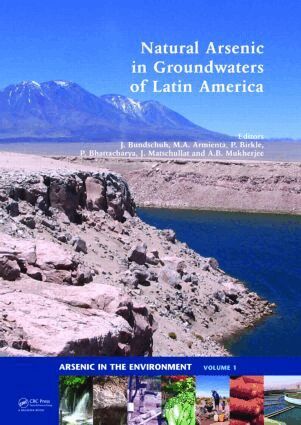
Groundwater resources naturally contain high levels of arsenic in many parts of the world. Over the last two decades, the As-containing groundwater in South-East Asia has received much attention, but the situation is just as crucial in Latin America, where the number of studies is still relatively low, and the extent and severity of As-exposure in the populations has yet to be fully evaluated. This book aims to promote knowledge of the occurrence and genesis of As-rich groundwater in Latin America. It deals with constraints on the mobility of As in groundwater, As-uptake from soil and water by plants, As-propagation through the food chain, human health impacts, and As-removal technologies. Case studies are presented from Argentina, Bolivia, Chile, Ecuador, El Salvador, Mexico, Nicaragua and Peru, amongst others, and are viewed against the background of experience from other world regions. The book is a state-of-art overview of arsenic research in Latin America. It aims to create interest within the Latin American countries affected by the presence of arseniferous aquifers and to increase awareness among administrators, policy makers and company executives. It will also serve to inform the international scientific community, and improve international cooperation on arsenic in groundwater.
2 960 kr
Skickas inom 10-15 vardagar
The discussion on arsenic in the environment is complex and must grasp the importance of very many, mostly unrelated works on individual aspects. This volume represents one of the first comprehensive and interdisciplinary examinations into arsenic's behaviour in air, water, soils, sediments, plants and the human body. Based on state-of-the-art investigations into the global arsenic cycle, the related human toxicology and available remediation technologies, arsenic is assessed holistically in all the environmental compartments. Using the results of primary research, the authors offer concrete suggestions for risk reduction and management of environmental pollution that allow the reader to successfully tackle similar problems and find sustainable solutions.
2 960 kr
Skickas inom 10-15 vardagar
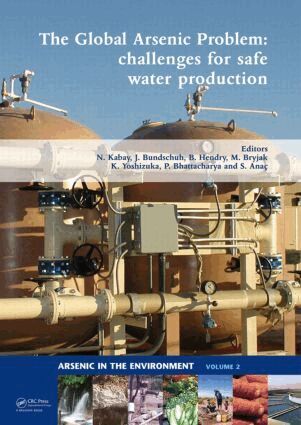
A prevalent and increasingly important issue, arsenic removal continues to be one of the most important areas of water treatment. Conventional treatment plants may employ several methods for removing arsenic from water. Commonly used processes include oxidation, sedimentation, coagulation and filtration, lime treatment, adsorption onto sorptive media, ion exchange, and membrane filtration. However, in the most affected regions, large conventional treatment plants may not be appropriate and factors such as cost and acceptability as well as performance must be considered. This book, published in cooperation with leading experts in this field, provides a thorough analysis of the problems, solutions, and possible alternatives to achieve safe water production on a global scale.
1 618 kr
Skickas inom 7-10 vardagar
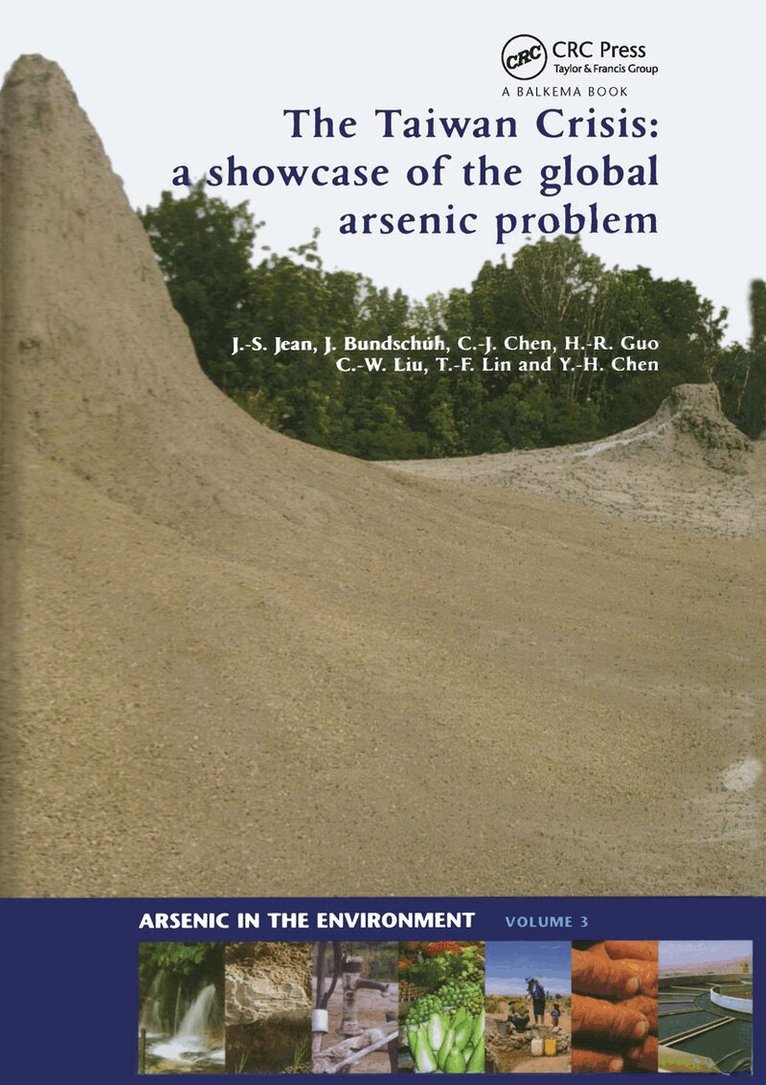
In the 1950s, the residents of the southwestern coastal areas of Taiwan suffered greatly from Blackfoot disease (BFD) due to the consumption of arsenic-contaminated groundwater. Groundwater with high levels of arsenic in southwestern and northeastern Taiwan received much attention. After arsenic-safe tap water was utilized for drinking instead of groundwater in the 1970s, BFD cases decreased greatly. After 1990, no new BFD cases were reported, and as a consequence, BFD problems disregarded. However, arsenic is still present in the groundwater.This book will improve the knowledge and understanding of the occurrence and genesis of arsenic-rich groundwaters in Taiwan. It deals with constraints on the mobility of arsenic in groundwater, its uptake from soil and water by plants, arsenic-propagation through the food chain, human health impacts, and arsenic-removal technologies. Taiwan case experiences are described in this book and can be applied worldwide.This book is a state-of-the-art overview of research on arsenic in Taiwan and is designed to:create interest in regions within Taiwan that are affected by the presence of arseniferous aquifers;draw attention from the international scientific community;increase awareness among researchers, administrators, policy makers, and company executives;improve the international cooperation on arsenic problems worldwide.
1 886 kr
Skickas inom 7-10 vardagar
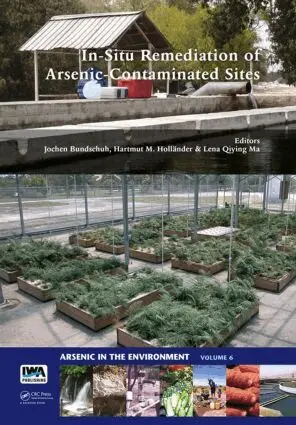
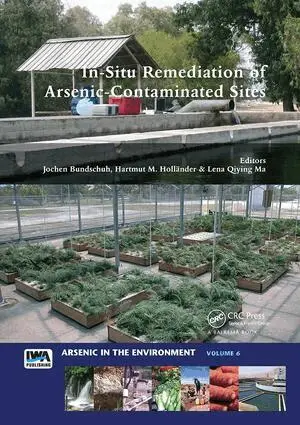
Providing an introduction, the scientific background, case studies and future perspectives of in-situ arsenic remediation technologies for soils, soil water and groundwater at geogenic and anthropogenic contaminated sites. The case studies present in-situ technologies about natural arsenic, specifically arsenate and arsenite, but also about organic arsenic compounds. This work covers geochemical, microbiological and plant ecological solutions for arsenic remediation.It will serve as a standard textbook for (post-)graduate students and researchers in the field of Environmental Sciences and Hydrogeochemistry as well as researchers, engineers, environmental scientists and chemists, toxicologists, medical scientists and even for general public seeking an in-depth view of arsenic which had been classed as a carcinogen. This book aims to stimulate awareness among administrators, policy makers and company executives of in-situ remediation technologies at sites contamined by arsenic and to improve the international cooperation on the subject.
2 185 kr
Tillfälligt slut
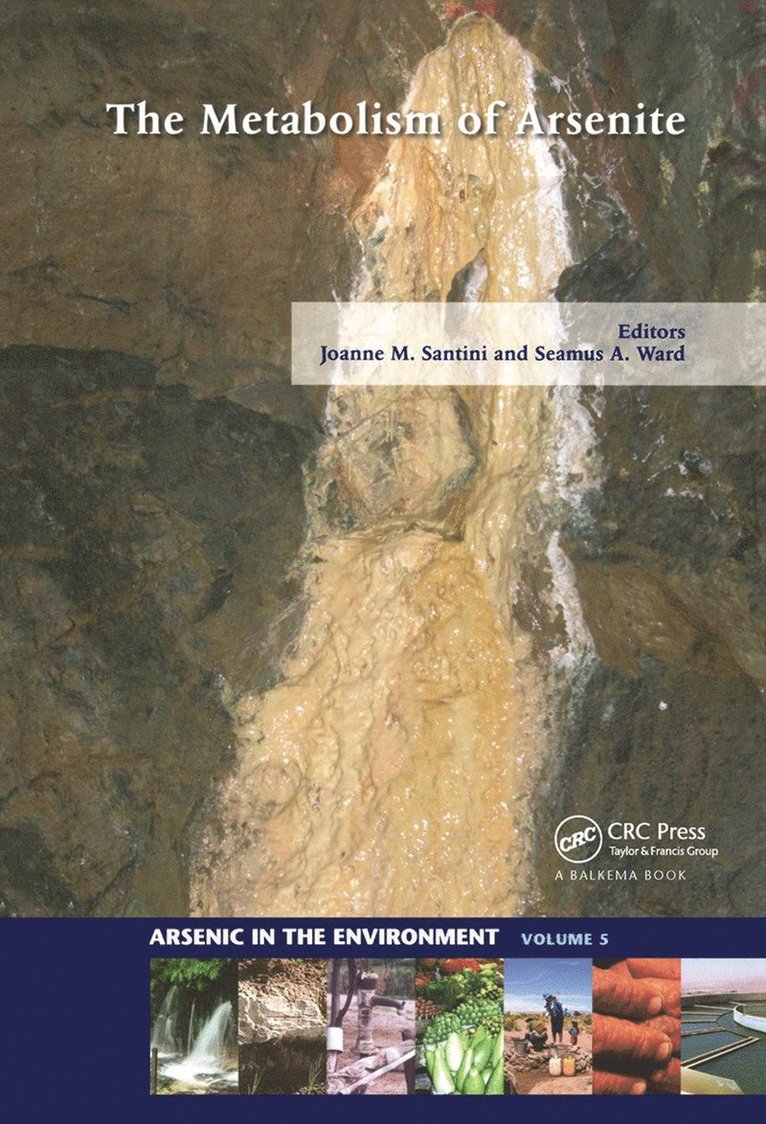
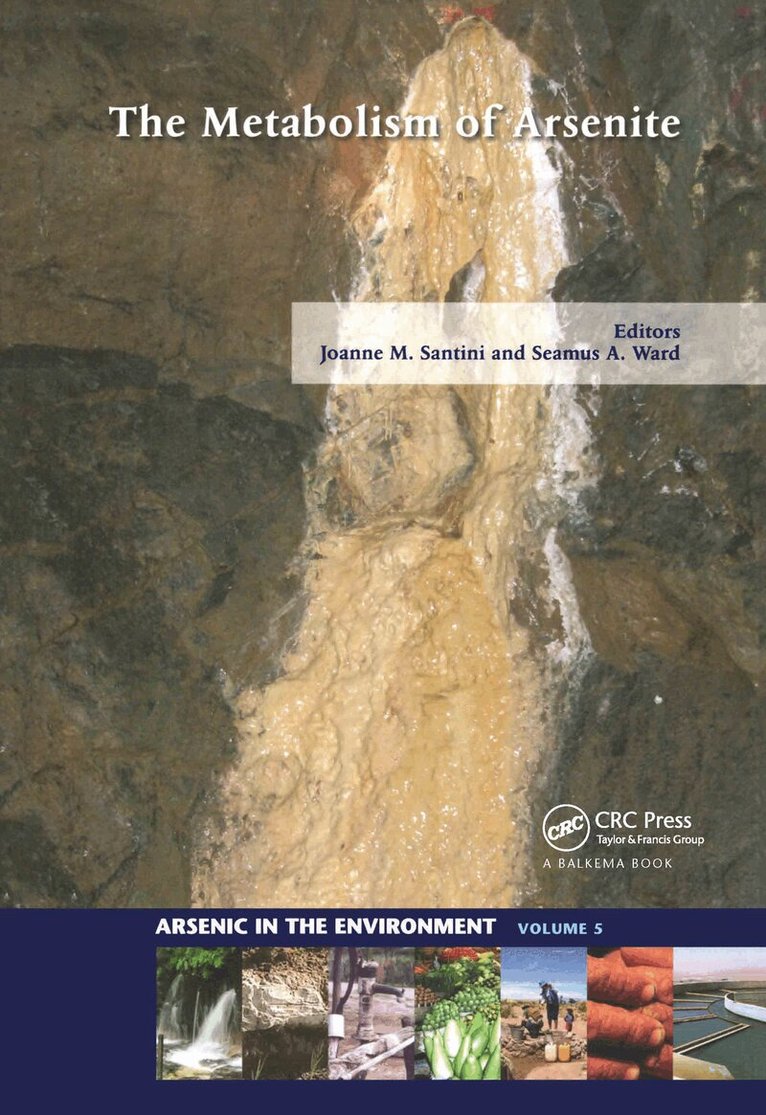
Up to 200 million people in 70 countries are at risk from drinking water contaminated with arsenic, which is a major cause of chronic debilitating illnesses and fatal cancers. Until recently little was known about the mobility of arsenic, and how redox transformations determined its movement into or out of water supplies. Although human activities contribute to the release of arsenic from minerals, it is now clear that bacteria are responsible for most of the redox transformation of arsenic in the environment. Bacterial oxidation of arsenite (to the less mobile arsenate) has been known since 1918, but it was not until 2000 that a bacterium was shown to gain energy from this process. Since then a wide range of arsenite-oxidizing bacteria have been isolated, including aerobes and anaerobes; heterotrophs and autotrophs; thermophiles, mesophiles and psychrophiles. This book reviews recent advances in the study of such bacteria. After a section on background—geology and health issues—the main body of the book concerns the cellular machinery of arsenite oxidation. It concludes by examining possible applications. Topics treated are:The geology and cycling of arsenicArsenic and diseaseArsenite oxidation: physiology, enzymes, genes, and gene regulation.Community genomics and functioning, and the evolution of arsenite oxidation Microbial arsenite oxidation in bioremediationBiosensors for arsenic in drinking water and industrial effluents
1 105 kr
Skickas inom 10-15 vardagar
The discussion on arsenic in the environment is complex and must grasp the importance of very many, mostly unrelated works on individual aspects. This volume represents one of the first comprehensive and interdisciplinary examinations into arsenic's behaviour in air, water, soils, sediments, plants and the human body. Based on state-of-the-art investigations into the global arsenic cycle, the related human toxicology and available remediation technologies, arsenic is assessed holistically in all the environmental compartments. Using the results of primary research, the authors offer concrete suggestions for risk reduction and management of environmental pollution that allow the reader to successfully tackle similar problems and find sustainable solutions.
1 105 kr
Skickas inom 10-15 vardagar
Up to 200 million people in 70 countries are at risk from drinking water contaminated with arsenic, which is a major cause of chronic debilitating illnesses and fatal cancers. Until recently little was known about the mobility of arsenic, and how redox transformations determined its movement into or out of water supplies. Although human activities contribute to the release of arsenic from minerals, it is now clear that bacteria are responsible for most of the redox transformation of arsenic in the environment. Bacterial oxidation of arsenite (to the less mobile arsenate) has been known since 1918, but it was not until 2000 that a bacterium was shown to gain energy from this process. Since then a wide range of arsenite-oxidizing bacteria have been isolated, including aerobes and anaerobes; heterotrophs and autotrophs; thermophiles, mesophiles and psychrophiles. This book reviews recent advances in the study of such bacteria. After a section on background—geology and health issues—the main body of the book concerns the cellular machinery of arsenite oxidation. It concludes by examining possible applications. Topics treated are:The geology and cycling of arsenicArsenic and diseaseArsenite oxidation: physiology, enzymes, genes, and gene regulation.Community genomics and functioning, and the evolution of arsenite oxidation Microbial arsenite oxidation in bioremediationBiosensors for arsenic in drinking water and industrial effluents
1 105 kr
Skickas inom 10-15 vardagar
A prevalent and increasingly important issue, arsenic removal continues to be one of the most important areas of water treatment. Conventional treatment plants may employ several methods for removing arsenic from water. Commonly used processes include oxidation, sedimentation, coagulation and filtration, lime treatment, adsorption onto sorptive media, ion exchange, and membrane filtration. However, in the most affected regions, large conventional treatment plants may not be appropriate and factors such as cost and acceptability as well as performance must be considered. This book, published in cooperation with leading experts in this field, provides a thorough analysis of the problems, solutions, and possible alternatives to achieve safe water production on a global scale.
956 kr
Skickas inom 10-15 vardagar
Providing an introduction, the scientific background, case studies and future perspectives of in-situ arsenic remediation technologies for soils, soil water and groundwater at geogenic and anthropogenic contaminated sites. The case studies present in-situ technologies about natural arsenic, specifically arsenate and arsenite, but also about organic arsenic compounds. This work covers geochemical, microbiological and plant ecological solutions for arsenic remediation.It will serve as a standard textbook for (post-)graduate students and researchers in the field of Environmental Sciences and Hydrogeochemistry as well as researchers, engineers, environmental scientists and chemists, toxicologists, medical scientists and even for general public seeking an in-depth view of arsenic which had been classed as a carcinogen. This book aims to stimulate awareness among administrators, policy makers and company executives of in-situ remediation technologies at sites contamined by arsenic and to improve the international cooperation on the subject.