Aviation & Air Power - Böcker
Visar alla böcker i serien Aviation & Air Power. Handla med fri frakt och snabb leverans.
3 produkter
3 produkter
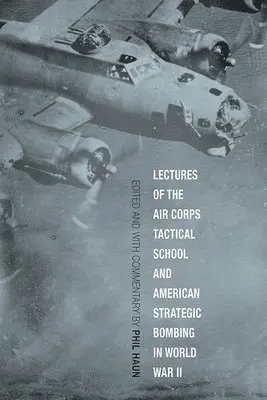
Lectures of the Air Corps Tactical School and American Strategic Bombing in World War II
Häftad, Engelska, 2020
512 kr
Skickas inom 3-6 vardagar
Following the cataclysmic losses suffered in World War I, air power theorists in Europe advocated for long-range bombers to overfly the trenches and strike deep into the enemy's heartland. The bombing of cities was seen as a means to collapse the enemy's will to resist and bring the war to a quick end. In the United States, airmen called for an independent air force, but with the nation's return to isolationism, there was little appetite for an offensive air power doctrine. By the 1930s, however, a cadre of officers at the US Army Air Corps Tactical School (ACTS) had articulated an operational concept of high-altitude daylight precision bombing (HADPB) that would be the foundation for a uniquely American vision of strategic air attack.In Lectures of the Air Corps Tactical School and American Strategic Bombing in World War II editor Phil Haun brings together nine ACTS lecture transcripts, which have been preserved in Air Force archives, exactly as delivered to the airmen destined to lead the US Army Air Forces in World War II. Presented is a distinctive American strategy of high-altitude daylight precision bombing as told through lectures given at the ACTS during the interwar period and how these airmen put the theory to the test. The book examines the Air Corps theory of HADPB as compared to the reality of combat in World War II by relying on recent, revisionist histories that have given scholars a deeper understanding of the impact of strategic bombing on Germany.
706 kr
Skickas inom 3-6 vardagar
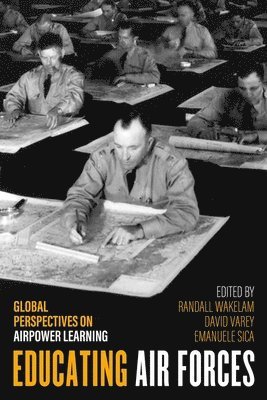
Compared to armies and navies, which have existed as professional fighting services for centuries, the technology that makes air forces possible is much newer. As a result, these services have had to quickly develop methods of preparing aviators to operate in conditions ranging from peace or routine security to full-scale war. The first book to address the history and scope of air power professionalization through learning programs, Educating Air Forces offers valuable new insight into strategy and tactics worldwide. Here, a group of international experts examine the philosophies, policies, and practices of air service educational efforts in the United States, France, Italy, Germany, Australia, Canada, and the UK. First, the contributors discuss the founding, successes, and failures of European air force learning programs between the Great War and World War II. Chapters in section two explore how the tense political climate during the Cold War influenced the creation, curriculum, and results of various programs. The final section addresses the post--Cold War era, specifically examining how educational programs are adapting to soldiers' needs and the demands of modern warfare.Featuring contributions from eminent scholars in the field, this volume surveys the learning approaches globally employed by air forces in the past century and evaluates their effectiveness. Educating Air Forces reveals how experiential learning and formal education are not only inextricably intertwined, but also necessary to cope with advances in modern warfare.
476 kr
Skickas inom 3-6 vardagar
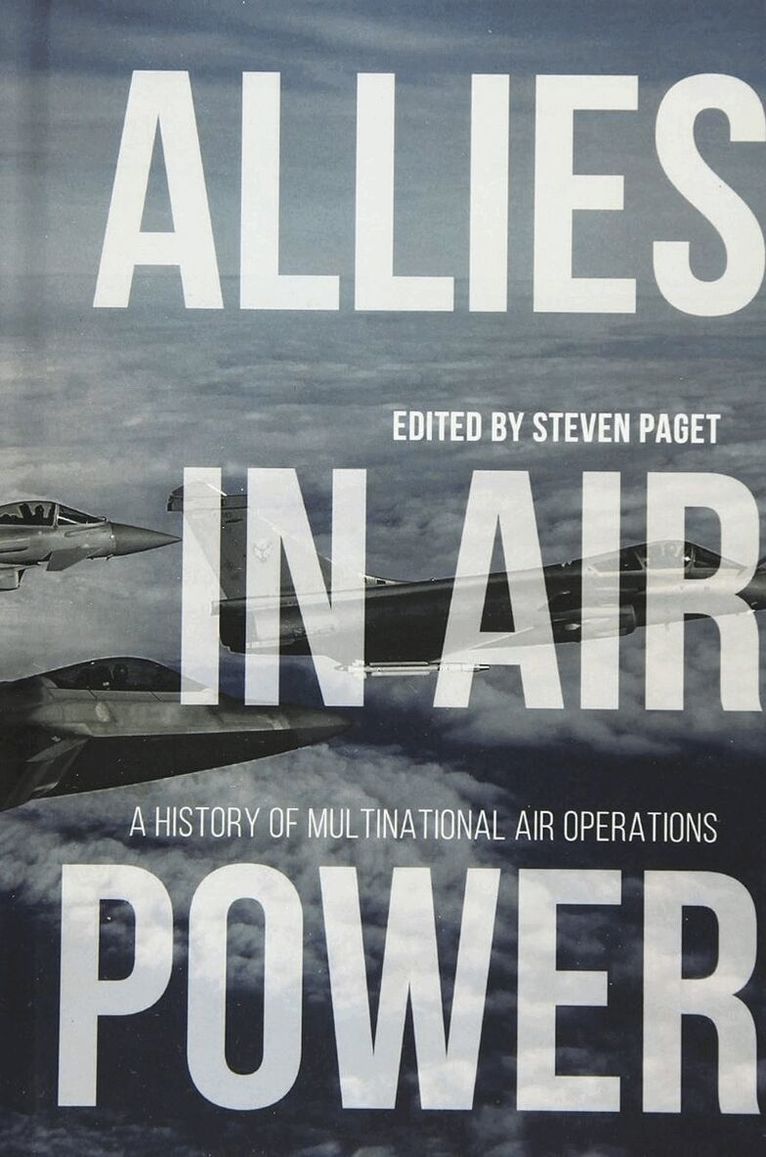
In the past century, multinational military operations have become the norm; but while contributions from different nations provide many benefits - from expanded capability to political credibility - they also present a number of challenges. Issues such as command and control, communications, equipment standardization, intelligence, logistics, planning, tactics, and training all require consideration. Cultural factors present challenges as well, particularly when language barriers are involved. In Allies in Air Power, experts from around the world survey these operations from the birth of aviation to the present day. Chapters cover conflicts including World War I, multiple theaters of World War II, the Korean War, the Vietnam War, the Gulf War, Kosovo, the Iraq War, and various United Nations peacekeeping missions. Contributors also analyze the role of organizations such as the UN, NATO, and so-called "coalitions of the willing" in laying the groundwork for multinational air operations. While joint military action has become commonplace, there have been few detailed studies of air power cooperation over a prolonged period or across multiple conflicts. The case studies in this volume not only assess the effectiveness of multinational operations over time, but also provide vital insights into how they may be improved in the future.