
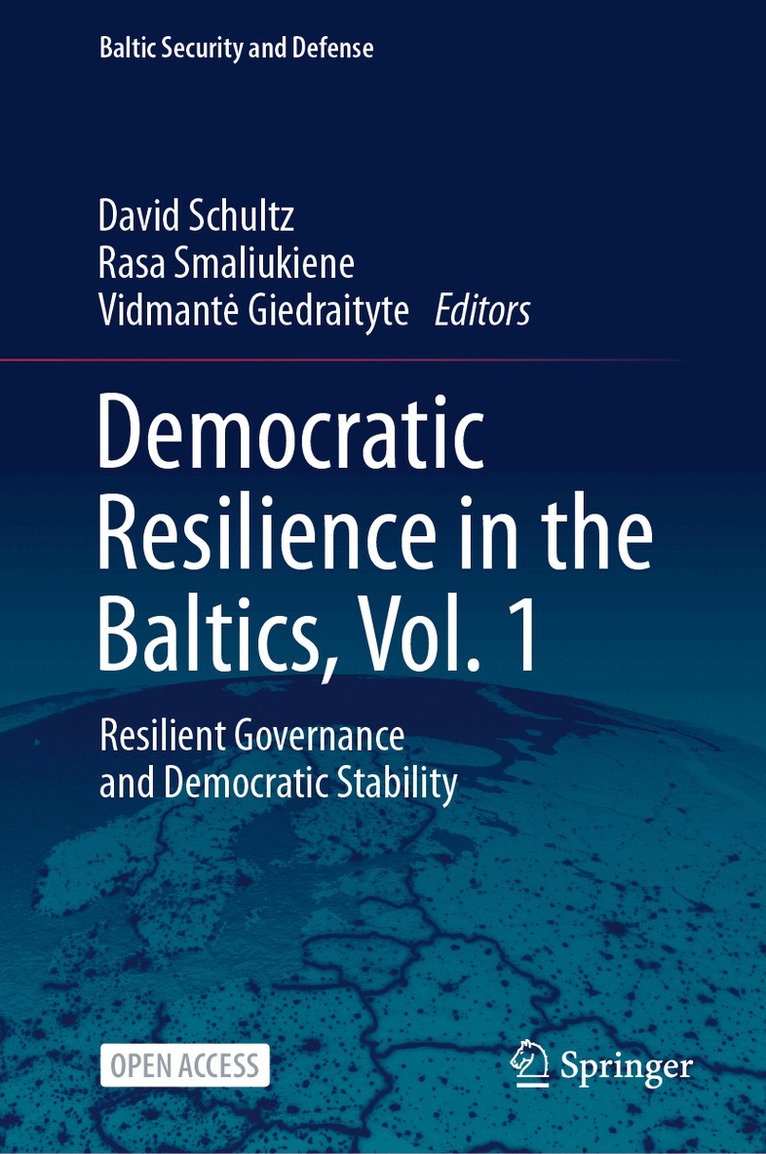
This open access volume examines current threats to democracy with a focus on Estonia, Latvia, and Lithuania. These small democracies face unique challenges from climate change, hybrid security threats, and geopolitical tensions. The book examines how these nations have adapted their institutions and practices to withstand disinformation campaigns, cyberattacks, and economic coercion, while also addressing environmental issues such as extreme weather and biodiversity loss. Part of the two-volume Democratic Resilience in the Baltics, Volume 1, "Resilient Governance and Democratic Stability," highlights the mechanisms the Baltic states have developed to counter hybrid threats and maintain democratic integrity. It covers political, economic, legal, and social resilience, and provides insights into crisis management and infrastructure protection. It also covers underexplored areas of resilience such as legal frameworks and intelligence mechanisms. The two volumes offer valuable lessons for other small democracies and larger states alike, highlighting the importance of resilience in safeguarding democratic institutions in an increasingly unstable world.
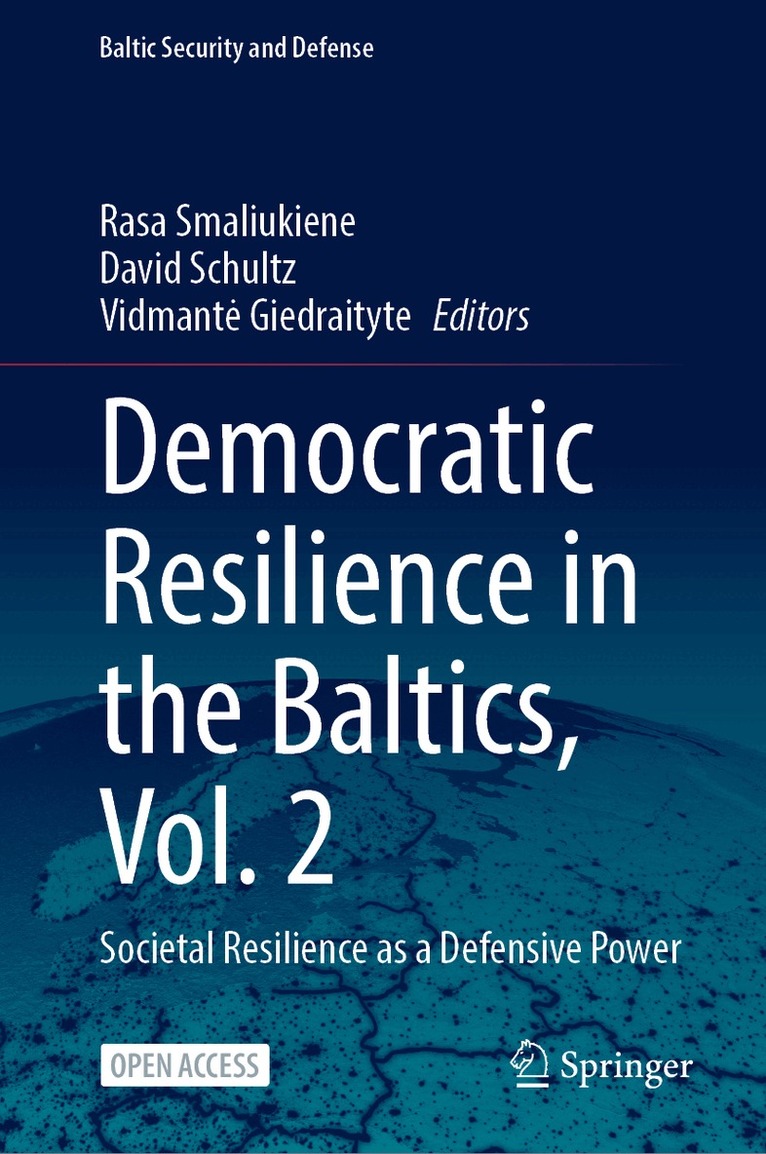
This open access volume examines current threats to democracy with a focus on Estonia, Latvia, and Lithuania. These small democracies face unique challenges from climate change, hybrid security threats, and geopolitical tensions. The book examines how these nations have adapted their institutions and practices to withstand disinformation campaigns, cyberattacks, and economic coercion, while also addressing environmental issues such as extreme weather and biodiversity loss.Part of the two-volume "Democratic Resilience in the Baltics," Volume 2, "Societal Resilience as a Defence Force," presents societal resilience as an element of national defense, drawing lessons from global conflicts and offering practical strategies for building resilient societies.The two volumes offer valuable lessons for other small democracies and larger states alike, highlighting the importance of resilience in safeguarding democratic institutions in an increasingly unstable world.
This Open Access book examines how Estonia, Latvia, Lithuania and Poland have adjusted their security strategies in response to increasing geopolitical threats. Moving beyond traditional deterrence, these states have adopted a Total Defence approach as an inclusive strategy that unites the military and civilian sectors to bolster national resilience.Drawing on insights from scholars and military leaders, the book examines how Total Defence is understood, communicated and implemented across the region. Through detailed case studies, it reveals the shared objectives and distinct national models that influence defence policy.The book shows how cross-border cooperation and community-based defence efforts are creating a unified operational space in the Greater Baltic Region. Offering valuable lessons for countries facing similar security challenges, it also contributes to broader discussions on NATO’s evolving role in regional defence.
This open access volume examines current threats to democracy with a focus on Estonia, Latvia, and Lithuania. These small democracies face unique challenges from climate change, hybrid security threats, and geopolitical tensions. The book examines how these nations have adapted their institutions and practices to withstand disinformation campaigns, cyberattacks, and economic coercion, while also addressing environmental issues such as extreme weather and biodiversity loss. Part of the two-volume Democratic Resilience in the Baltics, Volume 1, "Resilient Governance and Democratic Stability," highlights the mechanisms the Baltic states have developed to counter hybrid threats and maintain democratic integrity. It covers political, economic, legal, and social resilience, and provides insights into crisis management and infrastructure protection. It also covers underexplored areas of resilience such as legal frameworks and intelligence mechanisms. The two volumes offer valuable lessons for other small democracies and larger states alike, highlighting the importance of resilience in safeguarding democratic institutions in an increasingly unstable world.
This open access volume examines current threats to democracy with a focus on Estonia, Latvia, and Lithuania. These small democracies face unique challenges from climate change, hybrid security threats, and geopolitical tensions. The book examines how these nations have adapted their institutions and practices to withstand disinformation campaigns, cyberattacks, and economic coercion, while also addressing environmental issues such as extreme weather and biodiversity loss.Part of the two-volume "Democratic Resilience in the Baltics," Volume 2, "Societal Resilience as a Defence Force," presents societal resilience as an element of national defense, drawing lessons from global conflicts and offering practical strategies for building resilient societies.The two volumes offer valuable lessons for other small democracies and larger states alike, highlighting the importance of resilience in safeguarding democratic institutions in an increasingly unstable world.
This Open Access book examines how Estonia, Latvia, Lithuania and Poland have adjusted their security strategies in response to increasing geopolitical threats. Moving beyond traditional deterrence, these states have adopted a Total Defence approach as an inclusive strategy that unites the military and civilian sectors to bolster national resilience.Drawing on insights from scholars and military leaders, the book examines how Total Defence is understood, communicated and implemented across the region. Through detailed case studies, it reveals the shared objectives and distinct national models that influence defence policy.The book shows how cross-border cooperation and community-based defence efforts are creating a unified operational space in the Greater Baltic Region. Offering valuable lessons for countries facing similar security challenges, it also contributes to broader discussions on NATO’s evolving role in regional defence.