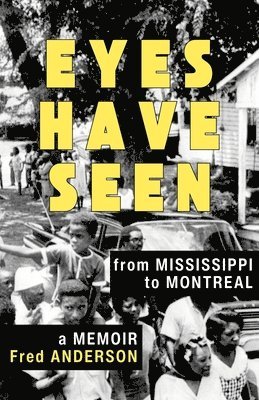
At the age of fifteen, Fred Anderson left home and was sucked into the maelstrom of the U.S. southern civil rights movement. He became active with the Student Non-Violent Coordinating Committee (SNCC) and other civil rights organization, working with some of the well-known leaders including John Lewis, Bob Moses, Stokely Carmichael, Fanni Lou Hamer and more. As the movement voiced opposition to the Vietnam War and support for liberation movements in Africa and other Third World countries, including Palestine, the FBI targeted it, while military draft boards systemically and disproportionately inducted social activists and poor Blacks, including Fred Anderson. When he refused to go to war, he chose Flight to Canada, where he became Clifford Gaston, the name he went by until the amnesty granted draft dodgers in 1977. Eyes Have Seen: From Mississippi to Montreal is a memoir about embracing the racial and tyrannical crosswinds of Hattiesburg and the south of the 1960 s and riding the tailwinds of SNCC, civil rights, anti-Vietnam War activism and reimagining the underground railroad to Canada.Little did he know that the internal and public outcomes of the waning Mississippi Freedom
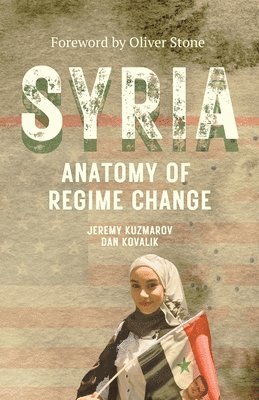
In December 2024, Syria s president Bashar al-Assad departed for Russia after militia forces took Damascus. An Al-Qaeda affiliated group led by Abu Mohammed Al-Jolani took power. New York Times columnist Thomas L. Friedman hooted that it was the biggest most game-changing event in the Middle East in the last 45 years. Yet until then, Al-Jolani was wanted for terrorism and had a U.S. State Department $10 million bounty on his head since 2017. The media-established story of popular rebels triumphing over evil has since dominated. Washington s role in this long-standing regime change operation was erased. This is the first comprehensive account of the U.S. regime change operation in Syria dating back decades. The goal was to end Syria s nationalist economic program, its support for the Palestinians, and its steadfast opposition to U.S. and Israeli hegemonic designs in Western Asia. The methods utilized fit a long-standing U.S. regime-change playbook applied worldwide. Key aspects include a protracted demonization campaign, imposition of crippling economic sanctions, and CIA financing of rebel groups under the billion-dollar Operation Timber-Sycamore.
The Before Columbus Foundation, founded in 1976 by Ishmael Reed and others, is "dedicated to the promotion and dissemination of contemporary American multicultural literature." It operates on the premise that storytelling traditions existed thousands of years before the arrival of Europeans, which counters the myth that storytelling begins with the Puritan settlement. Puritans weren t even the first Europeans to arrive in North America. It founded the American Book Awards in 1978, which has recognized hundreds of writers who otherwise would have been ignored. Its board of directors includes three MacArthur Fellows, three former U.S. Poet Laureates, three Pulitzer Prize winners, a winner of the Booker Prize, and a recipient of a Presidential medal. BLIND PERSISTENCE is the Before Columbus story as told by a host of leading American poets, novelists, public intellectuals. Contributors include Wajahat Ali, Carolyn Forch , Joy Harjo, Henry Louis Gates, Jr., Nancy Mercado, Margaret Porter Troupe, Shawn Wong and more
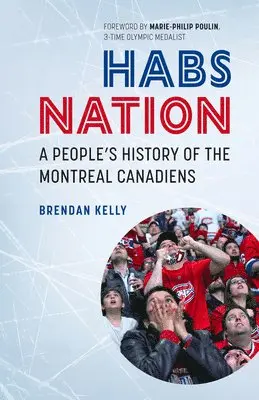
The history of the Montreal Canadiens is not just a story about hockey. It's also the story of how hockey's most legendary team has always skated hand-in-hand with its home province of Quebec. Brendan Kelly takes a fresh look at the ups and downs of the Habs since the heyday of the "Flying Frenchmen" in the '50s, '60s and '70s and shows how the history of the team mirrors the tumultuous changes in Quebec over the past decades. Kelly talks to former Canadiens greats like Serge Savard and Bob Gainey, journalists, politicians, filmmakers and even to Lord of the Rings star Viggo Mortensen, maybe the Canadiens' most famous fan and they tell the tale of a team and its unique bond with its local fans. One surprising conclusion is that when the team's roster was at its most Qu b cois, the team had its greatest success on the ice. Since Montreal's last Quebec superstar, Patrick Roy, was unceremoniously booted out of town, the franchise has failed to win a Stanley Cup and has rarely been amongst the NHL's elite squads.