Battles & Campaigns - Böcker
Visar alla böcker i serien Battles & Campaigns. Handla med fri frakt och snabb leverans.
9 produkter
9 produkter
177 kr
Tillfälligt slut
512 kr
Skickas inom 3-6 vardagar
The opening months of 1951 comprised the first winter of the Korean War, and the fighting was as intense as the weather. In The Line: Combat in Korea, January-February 1951, William T. Bowers analyzes this significant period and its effects on the remainder of the war. The Line is the first of three volumes about the Korean War that focus on combat experiences at the ground level: from battalion hierarchy to the accounts of individual soldiers. Drawn from interviews conducted by Army historians immediately after combat, the books in this series offer intensive examinations of military conflict.
986 kr
Skickas inom 3-6 vardagar
In the spring of 1972, North Vietnam invaded South Vietnam in what became known as the Easter Offensive. Almost all of the American forces had already withdrawn from Vietnam except for a small group of American advisers to the South Vietnamese armed forces. The 23rd ARVN Infantry Division and its American advisers were sent to defend the provincial capital of Kontum in the Central Highlands. They were surrounded and attacked by three enemy divisions with heavy artillery and tanks but, with the help of air power, managed to successfully defend Kontum and prevent South Vietnam from being cut in half and defeated.Although much has been written about the Vietnam War, little of it addresses either the Easter Offensive or the Battle of Kontum. In Kontum: The Battle to Save South Vietnam, Thomas P. McKenna fills this gap, offering the only in-depth account available of this violent engagement. McKenna, a U.S. infantry lieutenant colonel assigned as a military adviser to the 23rd Division, participated in the battle of Kontum and combines his personal experiences with years of interviews and research from primary sources to describe the events leading up to the invasion and the battle itself.Kontum sheds new light on the actions of U.S. advisers in combat during the Vietnam War. McKenna's book is not only an essential historical resource for America's most controversial war but a personal story of valor and survival.
655 kr
Skickas inom 3-6 vardagar
For U.S. and UN soldiers fighting the Korean War, the spring of 1951 was brutal. The troops faced a tough and determined foe under challenging conditions. The Chinese Spring Offensive of 1951 exemplified the hardships of the war, as the UN forces struggled with the Chinese troops over Line Kansas, a phase line north of the 38th parallel, in a conflict that led to the war's final stalemate. Passing the Test: Combat in Korea, April--June 1951 explores the UN responses to the offensive in detail, looking closely at combat from the perspectives of platoons, squads, and the men themselves. Editors William T. Bowers and John T. Greenwood emphasize the tactical operations on the front lines and examine U.S. and UN strategy, as well as the operations of the Communist Chinese and North Korean forces. They employ a variety of sources, including interviews conducted by U.S. Army historians within hours or days of combat, unit journals, and after action reports, to deliver a comprehensive narrative of the offensive and its battles.Passing the Test highlights the experiences of individual soldiers, providing unique insights into the chaos, perseverance, and heroism of war. The interviews offer a firsthand account that is untainted by nostalgia and later literature, illuminating the events that unfolded on the battlefields of Korea.
584 kr
Skickas inom 3-6 vardagar
In the early 1970s, as U.S. combat forces began to withdraw from Southeast Asia, South Vietnamese and Cambodian forces continued the fight against the People's Army of Vietnam (PAVN) and the National Front for the Liberation of South Vietnam (NLF), more commonly known as the Viet Cong. Despite the evacuation of its ground troops, the United States promised to materially support its allies' struggle against communist aggression. Over time, however, the American government drastically reduced its funding of the conflict, placing immense strain on the Cambodian and South Vietnamese armed forces, which were fighting well-supplied enemies.In Losing Vietnam, Major General Ira A. Hunt Jr. chronicles the efforts of U.S. military and State Department officials who argued that severe congressional budget reductions ultimately would lead to the defeat of both Cambodia and South Vietnam. Hunt details the catastrophic effects of reduced funding and of conducting "wars by budget." As deputy commander of the United States Support Activities Group Headquarters (USAAG) in Nakhon Phanom, Thailand, Hunt received all Southeast Asia operational reports, reconnaissance information, and electronic intercepts, placing him at the forefront of military intelligence and analysis in the area. He also met frequently with senior military leaders of Cambodia and South Vietnam, contacts who shared their insights and gave him personal accounts of the ground wars raging in the region.This detailed and fascinating work highlights how analytical studies provided to commanders and staff agencies improved decision making in military operations. By assessing allied capabilities and the strength of enemy operations, Hunt effectively demonstrates that America's lack of financial support and resolve doomed Cambodia and South Vietnam to defeat.
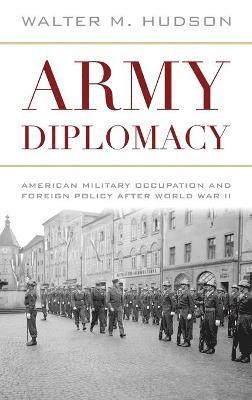
Army Diplomacy
American Military Occupation and Foreign Policy after World War II
Inbunden, Engelska, 2015
706 kr
Skickas inom 3-6 vardagar
In the immediate aftermath of World War II, the United States Army became the principal agent of American foreign policy. The army designed, implemented, and administered the occupations of the defeated Axis powers Germany and Japan, as well as many other nations. Generals such as Lucius Clay in Germany, Douglas MacArthur in Japan, Mark Clark in Austria, and John Hodge in Korea presided over these territories as proconsuls. At the beginning of the Cold War, more than 300 million people lived under some form of U.S. military authority. The army's influence on nation-building at the time was profound, but most scholarship on foreign policy during this period concentrates on diplomacy at the highest levels of civilian government rather than the armed forces' governance at the local level.In Army Diplomacy, Hudson explains how U.S. Army policies in the occupied nations represented the culmination of more than a century of military doctrine. Focusing on Germany, Austria, and Korea, Hudson's analysis reveals that while the post--World War II American occupations are often remembered as overwhelming successes, the actual results were mixed. His study draws on military sociology and institutional analysis as well as international relations theory to demonstrate how "bottom-up" decisions not only inform but also create higher-level policy. As the debate over post-conflict occupations continues, this fascinating work offers a valuable perspective on an important yet underexplored facet of Cold War history.
1 177 kr
Skickas inom 3-6 vardagar
In the seminal Just and Unjust Wars, Michael Walzer famously considered the ethics of modern warfare, examining the moral issues that arise before, during, and after conflict. However, Walzer and subsequent scholars have often limited their analyses of the ethics of combat to soldiers on the ground and failed to recognize the moral responsibilities of senior political and military leaders.In Just War Reconsidered: Strategy, Ethics, and Theory, James M. Dubik draws on years of research as well as his own experiences as a soldier and teacher to fill the gaps left by other theorists. He applies moral philosophy, political philosophy, and strategic studies to historical and contemporary case studies to reveal the inaccuracies and moral bankruptcy that inform some of the literature on military ethics. Conventional just war theory adopts a binary approach, wherein political leaders have moral accountability for the decision to go to war and soldiers have accountability for fighting the war ethically. Dubik argues, however, that political and military leadership should be held accountable for the planning and execution of war in addition to the decision to initiate conflict.Dubik bases his sober reassessment on the fundamental truth that war risks the lives of soldiers and innocents as well as the political and social health of communities. He offers new standards to evaluate the ethics of warfare in the hope of increasing the probability that the lives of soldiers will not be used in vain and the innocent not put at risk unnecessarily.
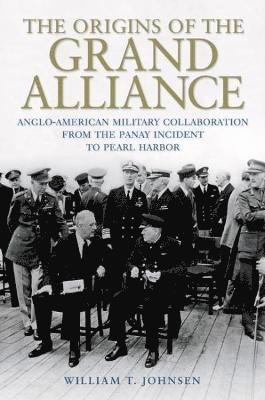
Origins of the Grand Alliance
Anglo-American Military Collaboration from the Panay Incident to Pearl Harbor
Inbunden, Engelska, 2016
655 kr
Skickas inom 3-6 vardagar
On December 12, 1937, Japanese aircraft sank the American gunboat Panay, which was anchored in the Yangtze River outside Nanjing, China. Although the Japanese apologized, the attack turned American public opinion against Japan, and President Roosevelt dispatched Captain Royal Ingersoll to London to begin conversations with the British admiralty about Japanese aggression in the Far East. While few Americans remember the Panay Incident, it established the first links in the chain of Anglo-American military collaboration that eventually triumphed in World War II.In The Origins of the Grand Alliance, William T. Johnsen provides the first comprehensive analysis of military collaboration between the United States and Great Britain before the Second World War. He sets the stage by examining Anglo-French and Anglo-American coalition military planning from 1900 through World War I and the interwar years. Johnsen also considers the formulation of policy and grand strategy, operational planning, and the creation of the command structure and channels of communication. He addresses vitally important logistical and materiel issues, particularly the difficulties of war production.Military conflicts in the early twenty-first century continue to underscore the increasing importance of coalition warfare for historian and soldier alike. Drawn from extensive sources and private papers held in the United Kingdom, Canada, and the United States, Johnsen's exhaustively researched study refutes the idea that America was the naive junior partner in the coalition and casts new light on the US-UK "special relationship."
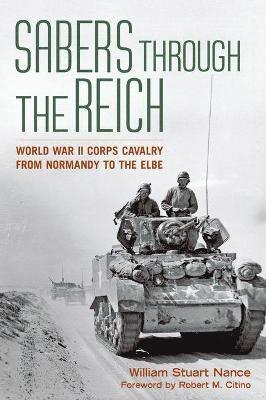
Sabers through the Reich
World War II Corps Cavalry from Normandy to the Elbe
Inbunden, Engelska, 2017
798 kr
Skickas inom 3-6 vardagar
In Sabers through the Reich, William Stuart Nance provides the first comprehensive operational history of American corps cavalry in the European Theater of Operations (ETO) during World War II. The corps cavalry had a substantive and direct impact on Allied success in almost every campaign, and served as offensive guards for armies across Europe, conducting reconnaissance, economy of force, and security missions, as well as prisoner of war rescues. From D-Day and Operation Cobra to the Battle of the Bulge and the drive to the Rhine, these groups had the mobility, flexibility, and firepower to move quickly across the battlefield, enabling them to aid communications and intelligence gathering, reducing the Clausewitzian "friction of war."