BEST Buildings Energy and Solar Technology - Böcker
Visar alla böcker i serien BEST Buildings Energy and Solar Technology. Handla med fri frakt och snabb leverans.
12 produkter
12 produkter
721 kr
Skickas inom 10-15 vardagar
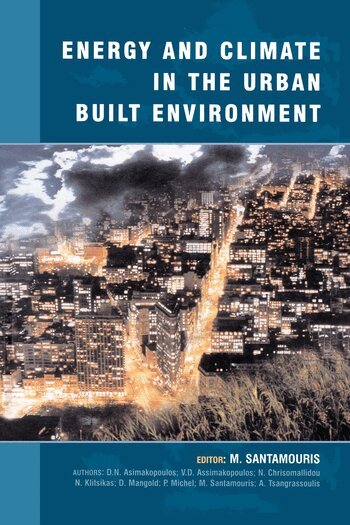
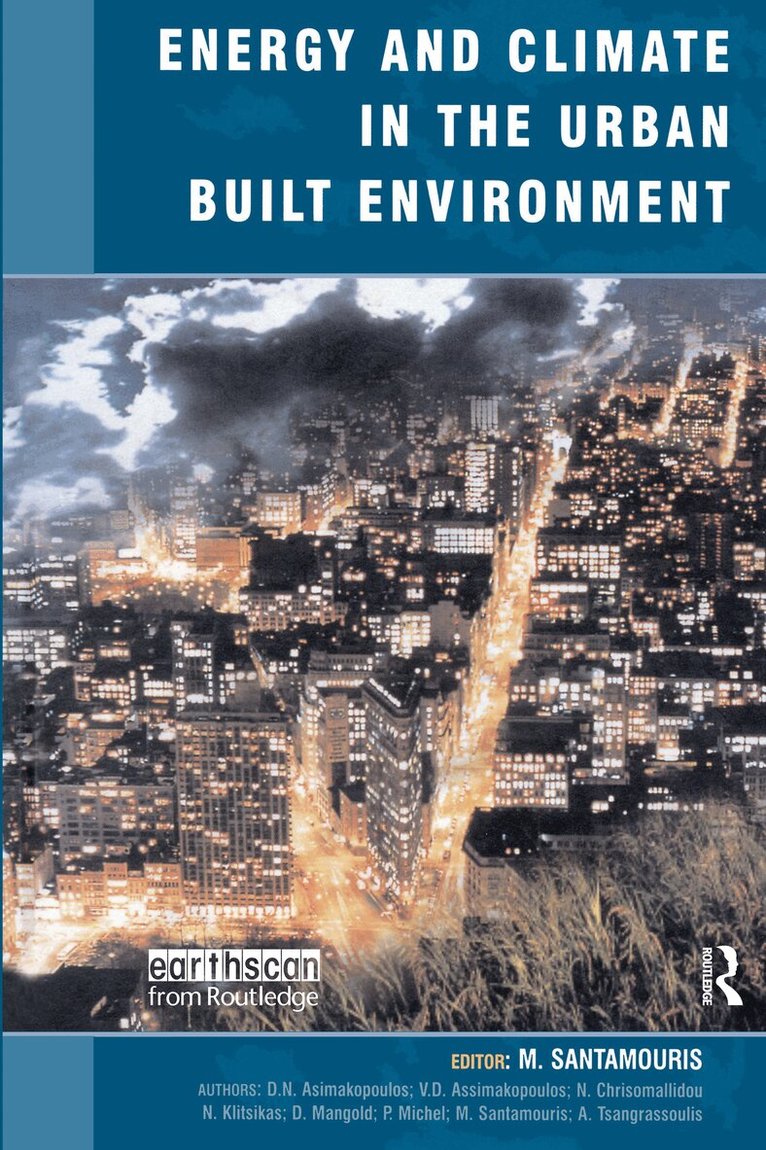
Both the number and percentage of people living in urban areas is growing rapidly. Up to half of the world's population is expected to be living in a city by the end of the century and there are over 170 cities in the world with populations over a million.Cities have a huge impact on the local climate and require vast quantities of energy to keep them functioning. The urban environment in turn has a big impact on the performance and needs of buildings. The size, scale and mechanism of these interactions is poorly understood and strategies to mitigate them are rarely implemented.This is the first comprehensive book to address these questions. It arises out of a programme of work (POLISTUDIES) carried out for the Save programme of the European Commission. Chapters describe not only the main problems encountered such as the heat island and canyon effects, but also a range of design solutions that can be adopted both to improve the energy performance and indoor air quality of individual buildings and to look at aspects of urban design that can reduce these climatic effects.The book concludes with some examples of innovative urban bioclimatic buildings.The project was co-ordinated by Professor Mat Santamouris from the University of Athens who is also the editor of the book. Other contributions are from the University of Thessaloniki, Greece, ENTPE, Lyons, France and the University of Stuttgart, Germany.
721 kr
Skickas inom 10-15 vardagar
Passive solar design techniques are becoming increasingly important in building design. This design reference book takes the building engineer or physicist step-by-step through the thermal analysis and design of passive solar buildings. In particular it emphasises two important topics: the maximum utilization of available solar energy and thermal storage, and the sizing of an appropriate auxiliary heating/cooling system in conjunction with good thermal control.Thermal Analysis and Design of Passive Solar Buildings is an important contribution towards the optimization of buildings as systems that act as natural filters between the indoor and outdoor environments, while maximizing the utilization of solar energy. As such it will be an essential source of information to engineers, architects, HVAC engineers and building physicists.
721 kr
Skickas inom 10-15 vardagar
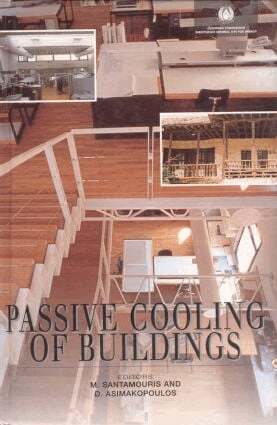
Energy use in buildings in the EU represents about 40% of the total annual energy consumption. With greater awareness of the need to reduce energy consumption comes a growth of interest in passive cooling, particularly as an alternative to air-conditioning. This book describes the fundamentals of passive cooling together with the principles and formulae necessary for its successful implementation. The material is comprised largely of information and results compiled under the SAVE European Research Programme.
721 kr
Skickas inom 10-15 vardagar
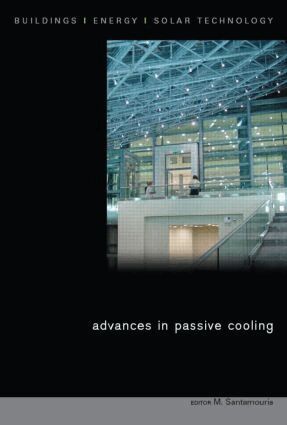
Following a rapid increase in the use of air conditioning in buildings of all types, the energy demand for powering such devices has become a significant cause for concern. Passive cooling is increasingly being thought of as the best alternative to air conditioning.This book offers the latest knowledge and techniques on passive cooling, enabling building professionals to understand the state of the art and employ relevant new strategies. With separate chapters on comfort, urban microclimate, solar control, ventilation, ground cooling and evaporative and radiative cooling, this authoritative text will also be invaluable for architects, engineers and students working on building physics and low-energy design.Advances in Passive Cooling is part of the BEST series, edited by Mat Santamouris. The aim of the series is to present the most current, high quality theoretical and application oriented material in the field of solar energy and energy efficient buildings. Leading international experts cover the strategies and technologies that form the basis of high-performance, sustainable buildings, crucial to enhancing our built and urban environment.
693 kr
Skickas inom 10-15 vardagar
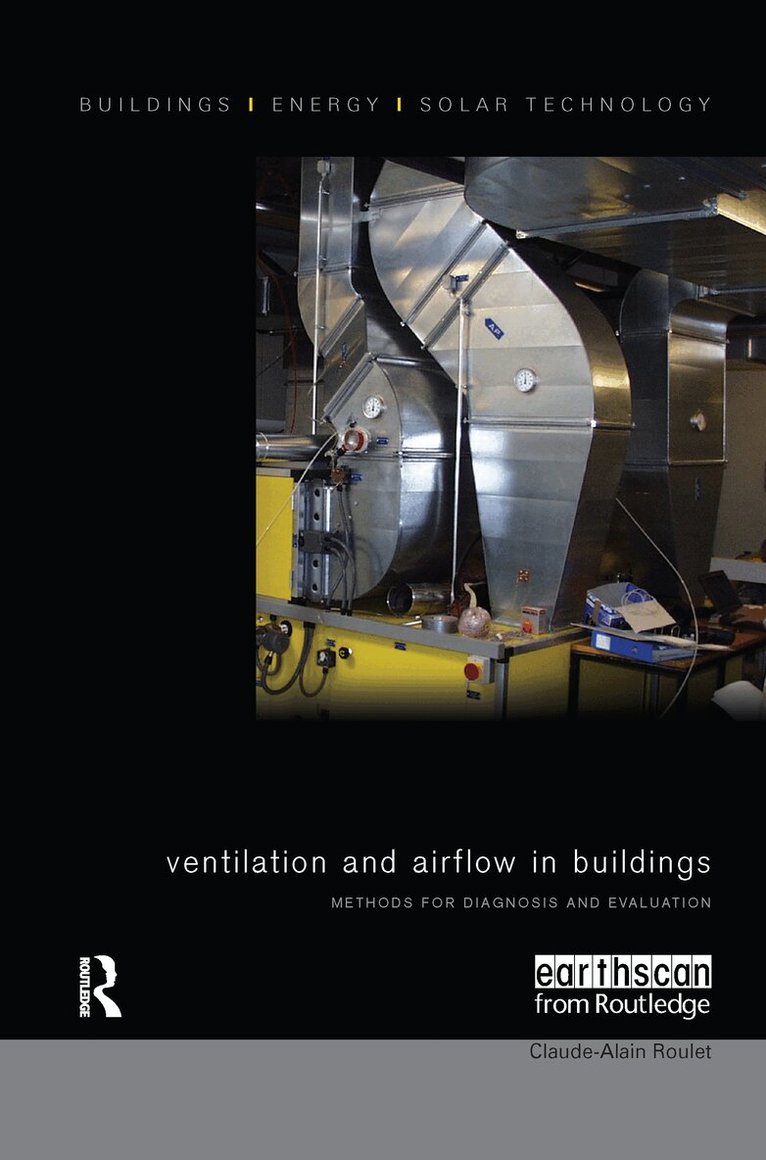
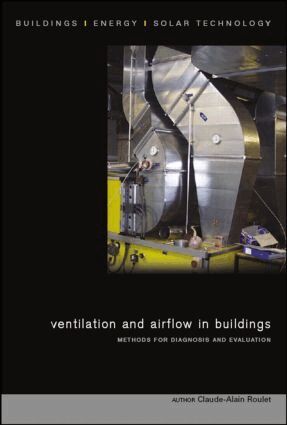
Energy efficiency in buildings requires, among other things, that ventilation be appropriately dimensioned: too much ventilation wastes energy, and insufficient ventilation leads to poor indoor air quality and low comfort.Studies have shown that ventilation systems seldom function according to their commissioned design. They have also shown that airflow measurement results are essential in improving a ventilation system. This key handbook explains why ventilation in buildings should be measured and describes how to measure it, giving applied examples for each measurement method.The book will help building physicists and ventilation engineers to properly commission ventilation systems and appropriately diagnose ventilation problems throughout the life of a building. Drawing on over 20 years of experience and the results of recent international research projects, this is the definitive guide to diagnosing airflow patterns within buildings.
777 kr
Skickas inom 10-15 vardagar
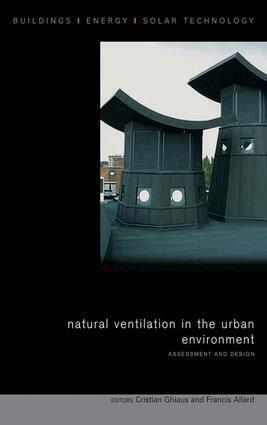
Throughout the world, there is an increasing interest in ecological design of buildings, and natural ventilation has proved to be the most efficient low-energy cooling technique. Its practical application, however, is hindered by the lack of information on the complex relationship between the building and its urban environment. In this book, a team of experts provide first-hand information and tools on the efficient use of natural ventilation in urban buildings. Key design principles are explained, enabling readers to decide on the best solution for natural ventilation of buildings, taking into account climate and urban context.In the initial sketches, architects need answers to open problems such as 'what kind of solution to adopt' and 'how to modify existing strategies to exploit the potential of the site'. This book formalizes the multi-criteria analysis of candidate solutions based on quantitative and qualitative estimation of the driving forces (wind and buoyancy), as well as of the barriers induced by the urban environment (wind speed reduction, noise and pollution) and gives a methodology for optimal design of openings. The book is accompanied by downloadable resources, containing software for assessing the potential of a given site, estimating wind speed and dimensioning the openings for natural ventilation. The methodologies and tools are tested, self-contained and user friendly.About the editorsThe editors, Cristian Ghiaus and Francis Allard, are affiliated with the University of La Rochelle, France. The authors and reviewers combine expertise from universities, research institutions and industry in Belgium, France, Great Britain, Greece, Portugal and Switzerland.
2 666 kr
Skickas inom 10-15 vardagar
Throughout the world, there is an increasing interest in ecological design of buildings, and natural ventilation has proved to be the most efficient low-energy cooling technique. Its practical application, however, is hindered by the lack of information on the complex relationship between the building and its urban environment. In this book, a team of experts provide first-hand information and tools on the efficient use of natural ventilation in urban buildings. Key design principles are explained, enabling readers to decide on the best solution for natural ventilation of buildings, taking into account climate and urban context.In the initial sketches, architects need answers to open problems such as 'what kind of solution to adopt' and 'how to modify existing strategies to exploit the potential of the site'. This book formalizes the multi-criteria analysis of candidate solutions based on quantitative and qualitative estimation of the driving forces (wind and buoyancy), as well as of the barriers induced by the urban environment (wind speed reduction, noise and pollution) and gives a methodology for optimal design of openings. The book is accompanied by downloadable resources, containing software for assessing the potential of a given site, estimating wind speed and dimensioning the openings for natural ventilation. The methodologies and tools are tested, self-contained and user friendly.About the editorsThe editors, Cristian Ghiaus and Francis Allard, are affiliated with the University of La Rochelle, France. The authors and reviewers combine expertise from universities, research institutions and industry in Belgium, France, Great Britain, Greece, Portugal and Switzerland.
2 666 kr
Skickas inom 10-15 vardagar
Following a rapid increase in the use of air conditioning in buildings of all types, the energy demand for powering such devices has become a significant cause for concern. Passive cooling is increasingly being thought of as the best alternative to air conditioning.This book offers the latest knowledge and techniques on passive cooling, enabling building professionals to understand the state of the art and employ relevant new strategies. With separate chapters on comfort, urban microclimate, solar control, ventilation, ground cooling and evaporative and radiative cooling, this authoritative text will also be invaluable for architects, engineers and students working on building physics and low-energy design.Advances in Passive Cooling is part of the BEST series, edited by Mat Santamouris. The aim of the series is to present the most current, high quality theoretical and application oriented material in the field of solar energy and energy efficient buildings. Leading international experts cover the strategies and technologies that form the basis of high-performance, sustainable buildings, crucial to enhancing our built and urban environment.
2 666 kr
Skickas inom 10-15 vardagar
Energy efficiency in buildings requires, among other things, that ventilation be appropriately dimensioned: too much ventilation wastes energy, and insufficient ventilation leads to poor indoor air quality and low comfort.Studies have shown that ventilation systems seldom function according to their commissioned design. They have also shown that airflow measurement results are essential in improving a ventilation system. This key handbook explains why ventilation in buildings should be measured and describes how to measure it, giving applied examples for each measurement method.The book will help building physicists and ventilation engineers to properly commission ventilation systems and appropriately diagnose ventilation problems throughout the life of a building. Drawing on over 20 years of experience and the results of recent international research projects, this is the definitive guide to diagnosing airflow patterns within buildings.
2 386 kr
Skickas inom 10-15 vardagar
Energy use in buildings in the EU represents about 40% of the total annual energy consumption. With greater awareness of the need to reduce energy consumption comes a growth of interest in passive cooling, particularly as an alternative to air-conditioning. This book describes the fundamentals of passive cooling together with the principles and formulae necessary for its successful implementation. The material is comprised largely of information and results compiled under the SAVE European Research Programme.
1 966 kr
Skickas inom 10-15 vardagar
Both the number and percentage of people living in urban areas is growing rapidly. Up to half of the world's population is expected to be living in a city by the end of the century and there are over 170 cities in the world with populations over a million.Cities have a huge impact on the local climate and require vast quantities of energy to keep them functioning. The urban environment in turn has a big impact on the performance and needs of buildings. The size, scale and mechanism of these interactions is poorly understood and strategies to mitigate them are rarely implemented.This is the first comprehensive book to address these questions. It arises out of a programme of work (POLISTUDIES) carried out for the Save programme of the European Commission. Chapters describe not only the main problems encountered such as the heat island and canyon effects, but also a range of design solutions that can be adopted both to improve the energy performance and indoor air quality of individual buildings and to look at aspects of urban design that can reduce these climatic effects. The book concludes with some examples of innovative urban bioclimatic buildings.The project was co-ordinated by Professor Mat Santamouris from the University of Athens who is also the editor of the book. Other contributions are from the University of Thessaloniki, Greece, ENTPE, Lyons, France and the University of Stuttgart, Germany.
2 113 kr
Skickas inom 10-15 vardagar
Passive solar design techniques are becoming increasingly important in building design. This design reference book takes the building engineer or physicist step-by-step through the thermal analysis and design of passive solar buildings. In particular it emphasises two important topics: the maximum utilization of available solar energy and thermal storage, and the sizing of an appropriate auxiliary heating/cooling system in conjunction with good thermal control.Thermal Analysis and Design of Passive Solar Buildings is an important contribution towards the optimization of buildings as systems that act as natural filters between the indoor and outdoor environments, while maximizing the utilization of solar energy. As such it will be an essential source of information to engineers, architects, HVAC engineers and building physicists.