Bioelectrochemistry: Principles and Practice - Böcker
Visar alla böcker i serien Bioelectrochemistry: Principles and Practice. Handla med fri frakt och snabb leverans.
8 produkter
8 produkter
536 kr
Skickas inom 10-15 vardagar
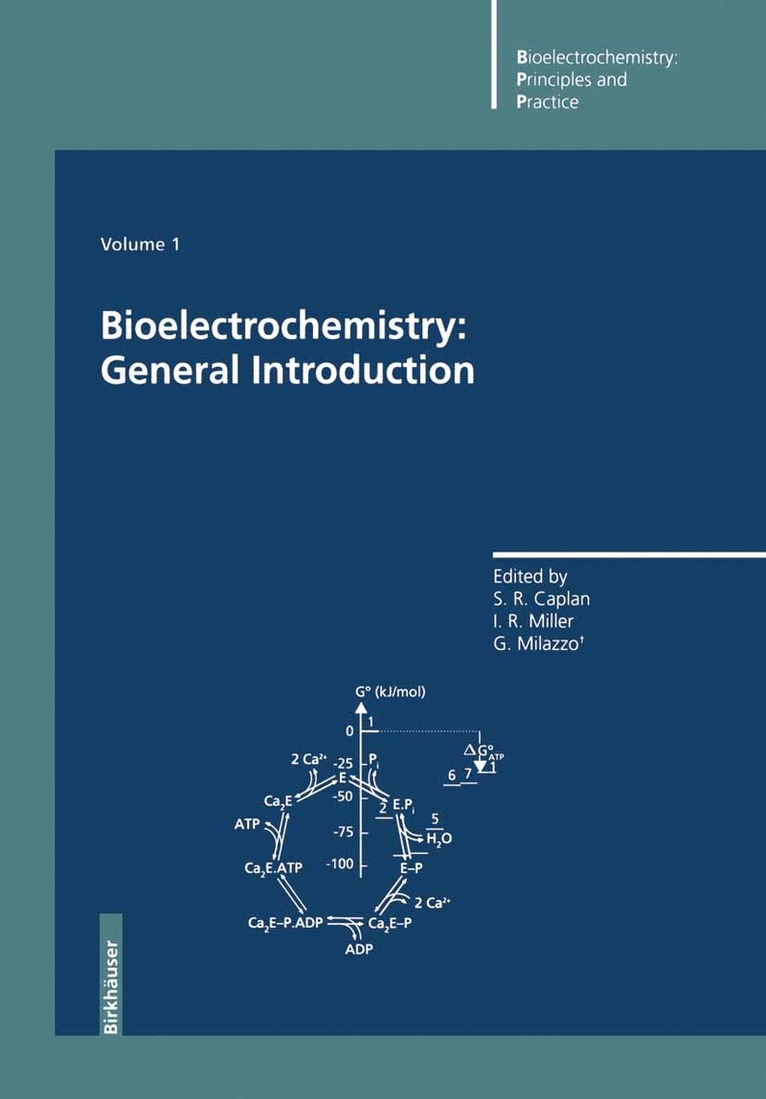
Volume 1 of this Series is intended to give the reader a fundamental understanding of the key areas deemed essential to the study of bioelec trochemistry. A thorough grasp of the theory and methodology of these basic topics is vital to cope successfully with the complex phenomena that currently face investigators in most bioelectrochemical laboratories. Chapter 1 outlines the nonequilibrium thermodynamics and kinetics of the processes involved, stressing the connection between the two ap proaches. Particular emphasis is placed on the enzymes catalyzing cytosolic reactions and membrane transport. The techniques discussed are sufficient for the study of systems in the steady state, but systems that are evolving towards the steady state, or show some other time-depen dent behavior, require in addition the techniques of mathematical modelling. These are dealt with in some detail in Chapter 2, where network representation of the system is treated at length as the method of choice in carrying out appropriate simulations. In Chapter 3 attention is directed to the twin problems of water structure and ionic hydration.
1 064 kr
Skickas inom 10-15 vardagar
Bioelectrochemistry represents an interdisciplinary scientific field linking together relevant areas of biology, medicine, chemistry, and physics. It is therefore not surprising that research in bioelectrochemistry requires the use of a great many experimental methods. These methods are, however, mostly from the methodological arsenal of classical natural sciences so that a description of general principles of common methods of biology, chemistry, physics, and medicine is not presented in this volume. Thus, this volume does not attempt to give an exhaustive survey of techniques used in bioelectrochemical research. The principles of several techniques and methodologies are mainly reviewed from the viewpoint of their specific application in studies of electrochemical and interfacial phenomena in various biological systems involving simple low-molecular-mass molecules of biological significance, biomacro- molecules and their conjugates (like for instance chromatine or mem- branes), cells and living organisms.The measurements of electrochemical impedance, voltammetric (po- larographic) analysis, and spectroelectrochemistry represent a basis for analysis of molecules of biological significance in bulk of solution and at interfaces. These principles are reviewed in the first four chapters. The next three chapters demonstrate how these principles are utilized in voltammetric and interfacial analysis of biomacromolecules such as nucleic acids, proteins, polysaccharides, and viruses in vitro, in the development of biosensors with electrochemical transducers and in in vivo voltammetry.
1 593 kr
Skickas inom 10-15 vardagar
Bioelectrochemistry of Membranes is the last volume in the book series "Bioelectrochemistry: Principles and Practice" that provides a comprehensive compilation of physicochemical aspects of different biochemical and physiological processes. This sixth volume introduces basic knowledge and important electrochemical and biophysical aspects of membrane potentials, lipid bilayers and cell membranes.The volumes of this book series serve as source books for advanced students and researchers at all levels of bioelectrochemistry.
1 064 kr
Skickas inom 10-15 vardagar
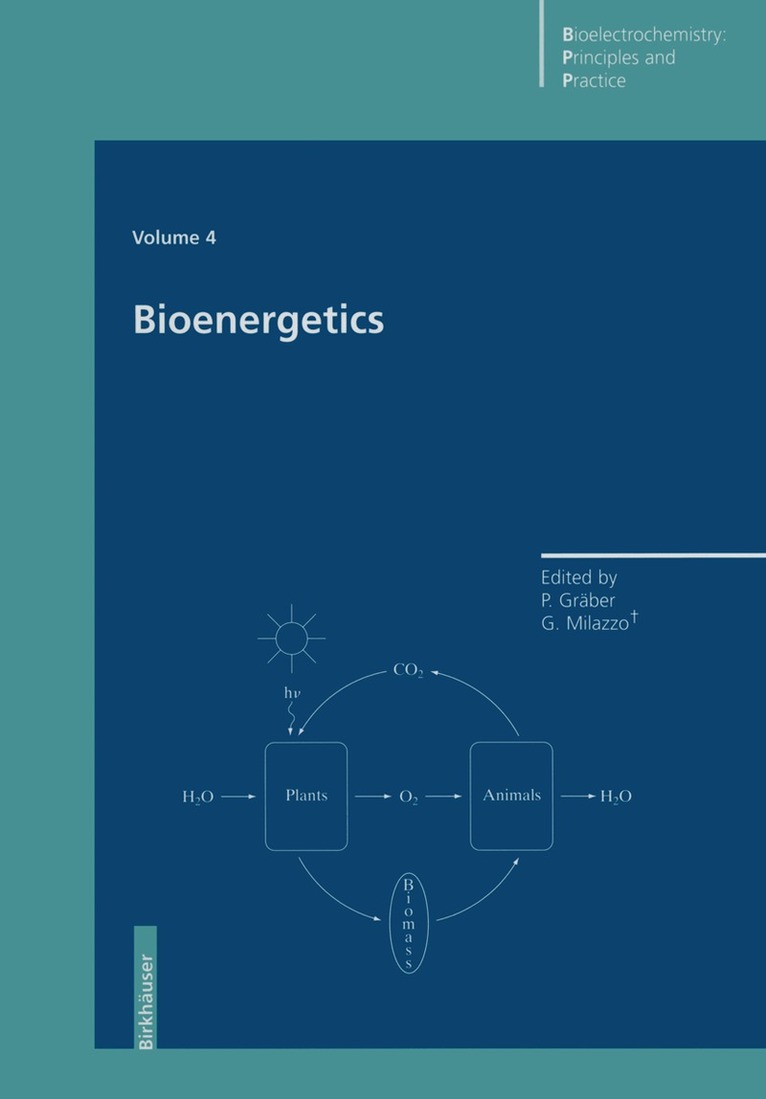
Bioenergetics, the topic of volume 5 of this Series, is concerned with the energetics, the kinetics, and the mechanisms of energy conversion in biological systems. This phenomenon can be investigated on diffe rent levels of complexity. On a global level the role of biological pro cesses for the steady state of our enviroment is considered. At the physiological level, the relation between energy input and the physiolo gical state of an organism is of interest, while at the cellular level the biochemical pathways for degradation and synthesis of all relevant substrates is investigated. At present the majority of bioenergetic stu dies pertain to the molecular level. The processes in a cell are cataly zed by a large number of proteins called enzymes. The enzymes in volved in energy transduction can be considered as molecular ma chines which transform energy from one form into another, or transfer energy from one process to another. Living systems operate far from equilibrium and are open in the ther modynamic sense, i. e. they exchange energy and matter with the sur roundings. Chapter 1 presents the principles of non equilibrium thermo dynamics applied to biological systems. About 0. 05% of the energy from the sunlight which reaches the surface of the earth is used by plants and algae as well as some bacteria to synthesize organic com pounds, and thus supplies all organisms with the energy necessary for life.
1 064 kr
Skickas inom 10-15 vardagar
Bioelectrochemistry: Principles and Practice provides a comprehensive compilation of all the physicochemical aspects of the different biochemical and physiological processes. The role of electric and magnetic fields in biological systems forms the focus of this second volume in the Bioelectrochemistry series. The most prominent use of electric fields is found in some fish. These species generate fields of different strengths and patterns serving either as weapons, or for the purpose of location and communication. Electrical phenomena involved in signal transduction are discussed by means of two examples, namely excitation-contraction coupling in muscles and light transduction in photoreceptors. Also examined is the role of electrical potential differences in energy metabolism and its control. Temporal and spatial changes of the potential difference across the membranes of nerve cells are carefully evaluated, since they are the basis of the spreading and processing of information in the nervous system. The dielectric properties of cells and their responses to electric fields, such as electrophoresis and electrorotation, are dealt with in detail. Finally, the effects of magnetic fields on living systems and of low-frequency electromagnetic fields on cell metabolism are also considered. Further volumes will be added to the series, which is intended as a set of source books for graduate and postgraduate students as well as research workers at all levels in bioelectrochemistry.
1 593 kr
Skickas inom 10-15 vardagar
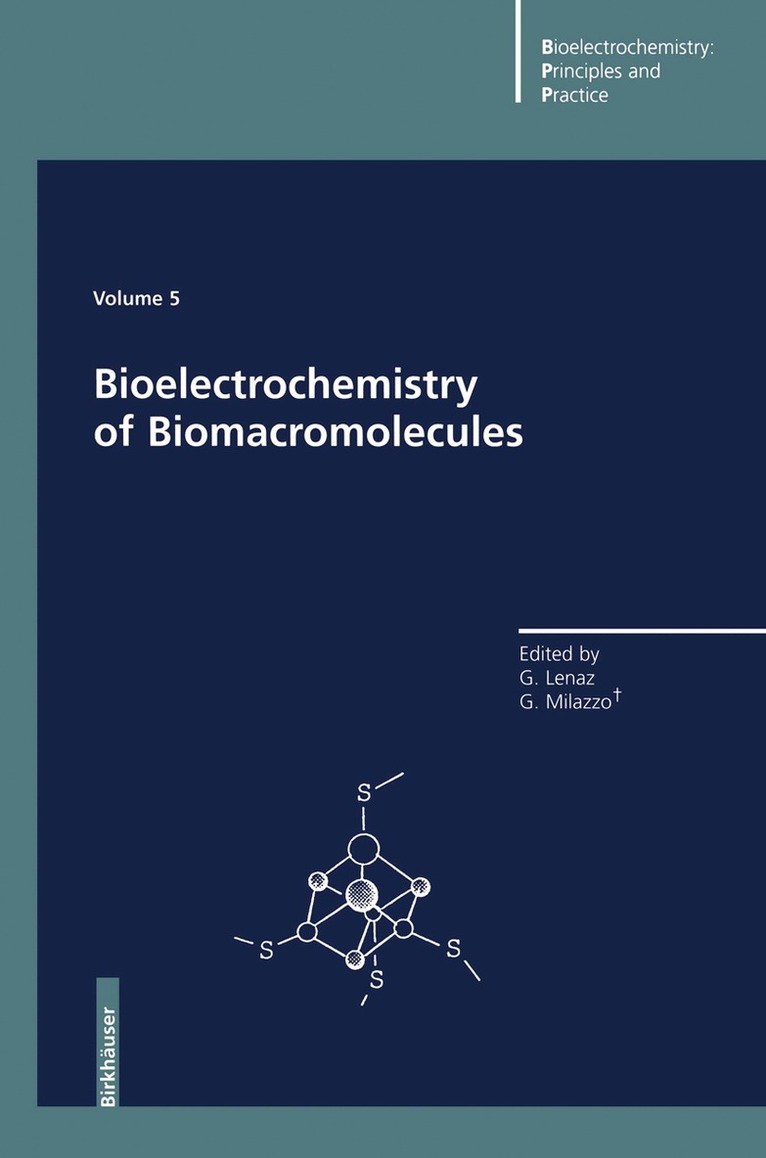
Bioelectrochemistry: Principles and Practice provides a comprehensive compilation of all the physicochemical aspects of the different biochemical and physiological processes. Macromolecules, essentially nucleic acids, proteins and complex carbohydrates, are the building blocks of cell structure and function. This fifth volume in the "Bioelectrochemistry" series deals essentially with water-soluble biomacromolecules, since the properties of membrane-bound proteins are considered in other volumes of this series. The first chapter provides an extensive review of the structure, chemical reactivity and electromagnetic properties of nucleic acids. The following five chapters concentrate on proteins, their structure, folding and function, the electrochemistry of redox proteins and voltammetric methods. Special attention is devoted to the field of thiol/disulfide exchange as well as to one particular class of proteins, the iron-sulfur proteins. The last chapter considers the chemistry and properties of glycosaminoglycans, the complex charged polysaccharides of the cell surface and extracellular matrix. This series is intended as a set of source books for graduate and postgraduate students as well as research workers at all levels in bioelectrochemistry.
1 593 kr
Skickas inom 10-15 vardagar
Bioelectrochemistry of Membranes is the last volume in the book series "Bioelectrochemistry: Principles and Practice" that provides a comprehensive compilation of physicochemical aspects of different biochemical and physiological processes. This sixth volume introduces basic knowledge and important electrochemical and biophysical aspects of membrane potentials, lipid bilayers and cell membranes.The volumes of this book series serve as source books for advanced students and researchers at all levels of bioelectrochemistry.
1 593 kr
Skickas inom 10-15 vardagar
Bioelectrochemistry: Principles and Practice provides a comprehensive compilation of all the physicochemical aspects of the different biochemical and physiological processes. Macromolecules, essentially nucleic acids, proteins and complex carbohydrates, are the building blocks of cell structure and function. This fifth volume in the "Bioelectrochemistry" series deals essentially with water-soluble biomacromolecules, since the properties of membrane-bound proteins are considered in other volumes of this series. The first chapter provides an extensive review of the structure, chemical reactivity and electromagnetic properties of nucleic acids. The following five chapters concentrate on proteins, their structure, folding and function, the electrochemistry of redox proteins and voltammetric methods. Special attention is devoted to the field of thiol/disulfide exchange as well as to one particular class of proteins, the iron-sulfur proteins. The last chapter considers the chemistry and properties of glycosaminoglycans, the complex charged polysaccharides of the cell surface and extracellular matrix. This series is intended as a set of source books for graduate and postgraduate students as well as research workers at all levels in bioelectrochemistry.