Cambridge Studies in Literature and Philosophy - Böcker
Visar alla böcker i serien Cambridge Studies in Literature and Philosophy. Handla med fri frakt och snabb leverans.
4 produkter
4 produkter
1 302 kr
Skickas inom 7-10 vardagar
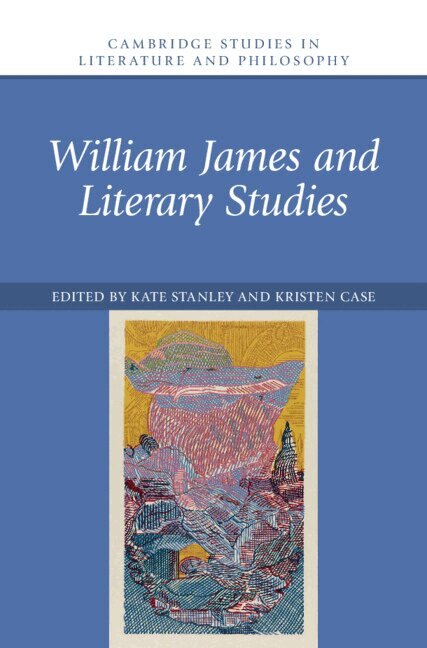
Why does William James matter for literary studies? And what can the practice of literary criticism bring to our reading of James? While James is widely credited as a founding figure for the fields of psychology, philosophy, religious studies, and progressive education, his equal significance for the field of literary criticism has been comparatively neglected. By modelling a variety of literary critical approaches to reading James and investigating James's equally various approaches to literature, this book demonstrates how his work historically informs and prospectively transforms the way we think about the bedrock premises of literary study - namely, style, influence, and method. The volume's diverse contributions unfold and elaborate these three facets of James's literary critical paradigm as they manifest in the rousing character of his sentences, in the impactful disseminations of his formative relationships, and in his uniquely programmatic responsiveness to the urgent issues of his time.
1 380 kr
Skickas inom 7-10 vardagar
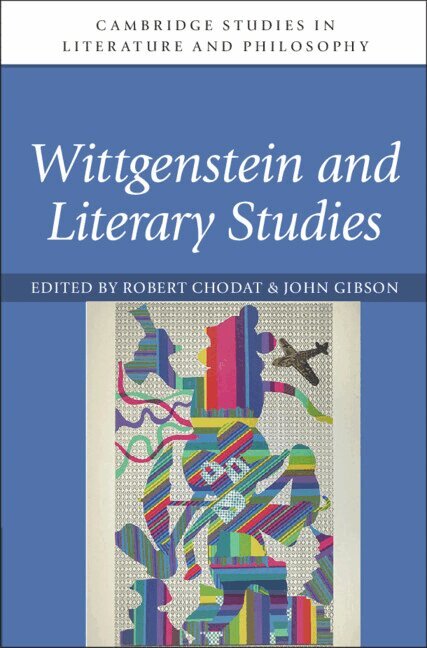
Wittgenstein is often regarded as the most important philosopher of the twentieth century, and in recent decades, his work has begun to play a prominent role in literary studies, particularly in debates over language, interpretation, and critical judgment. Wittgenstein and Literary Studies solidifies this critical movement, assembling recent critics and philosophers who understand Wittgenstein as a counterweight to longstanding tendencies in both literary studies and philosophical aesthetics. The essays here cover a wide range of topics. Why have contemporary writers been so drawn to Wittgenstein? What is a Wittgensteinian response to New Historicism, Post-Critique, and other major critical movements? How does Wittgenstein help us understand the nature of style, fiction, poetry, and the link between ethics and aesthetics? As the volume makes clear, Wittgenstein's work provides a rare bridge between professional philosophy and literary studies, offering us a way out of entrenched positions and their denials-what Wittgenstein himself called 'pictures' 'that held us captive.'
1 411 kr
Skickas inom 7-10 vardagar
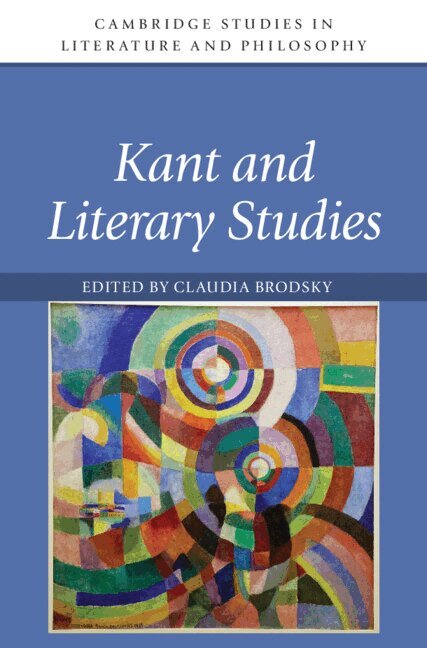
With original contributions from a wide range of scholars of literature and philosophy alike, Kant and Literary Studies is the first volume devoted to examining the premises and principles of Kant's explicitly interdisciplinary philosophy in its specific relation to the defining features, means and aims of literature. Its central explorations of the relations between experience and representation, feeling and judgment, thought and poetics, and language and freedom make the critical philosophy of Immanuel Kant one of the most relevant to the understanding of literature. Organizing its analyses of Kant's relationship to literature along intersecting lines, the three sections of the book focus, first, on the relation of central literary problems and genres to the theoretical underpinnings of Kant's thought; second, on the epistemological, narrative and historiographic dimensions of Kant's critical conceptions; and third, on the formative relation of his Critique to specific literary works and of critical discourse to ethics.
1 333 kr
Skickas inom 7-10 vardagar
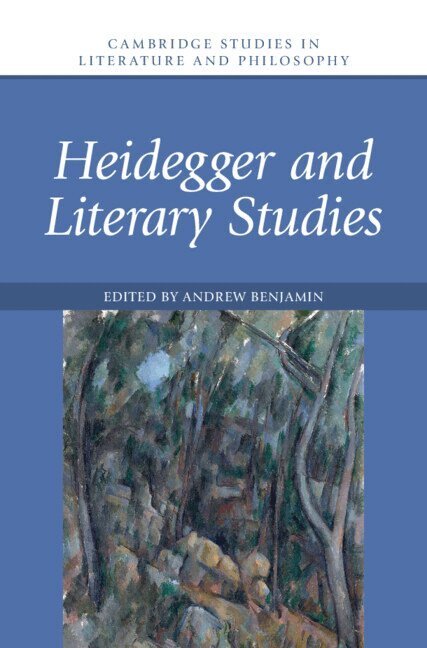
Martin Heidegger is one of the most influential philosophers of the 20th Century, and a key philosophical resource for literary critics. Not only has he written about poetry, generations of poets have engaged his writings. And yet, for Heidegger poetry and literature are separate. An essential part of the project of this book therefore is to show how both the distinction and connection between literature and poetry is staged within Heidegger's thought. It offers Heidegger's perspective on a range of key themes, topics, poets, and writers, including Poetry and Poetics, Ancient Greek theatre and tragedies and then specifically Friedrich Hölderlin, Thomas Mann, Paul Celan, Euripides and Sophocles. As the Chapters comprising this book make clear, Heidegger's work remains indispensable for any serious engagement with either literature or poetry today.