Chapman & Hall/CRC Mathematical and Computational Imaging Sciences Series - Böcker
Visar alla böcker i serien Chapman & Hall/CRC Mathematical and Computational Imaging Sciences Series. Handla med fri frakt och snabb leverans.
13 produkter
13 produkter
2 500 kr
Skickas inom 10-15 vardagar
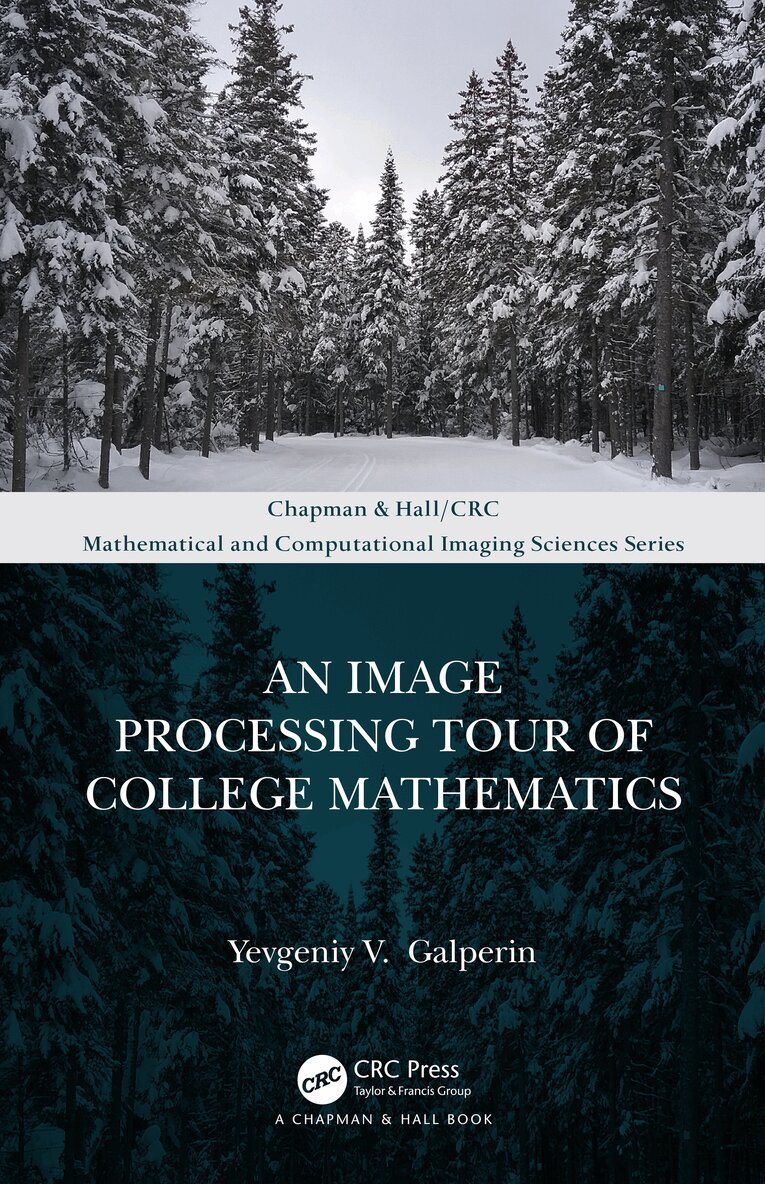
An Image Processing Tour of College Mathematics aims to provide meaningful context for reviewing key topics of the college mathematics curriculum, to help students gain confidence in using concepts and techniques of applied mathematics, to increase student awareness of recent developments in mathematical sciences, and to help students prepare for graduate studies.The topics covered include a library of elementary functions, basic concepts of descriptive statistics, probability distributions of functions of random variables, definitions and concepts behind first- and second-order derivatives, most concepts and techniques of traditional linear algebra courses, an introduction to Fourier analysis, and a variety of discrete wavelet transforms – all of that in the context of digital image processing.Features Pre-calculus material and basic concepts of descriptive statistics are reviewed in the context of image processing in the spatial domain. Key concepts of linear algebra are reviewed both in the context of fundamental operations with digital images and in the more advanced context of discrete wavelet transforms. Some of the key concepts of probability theory are reviewed in the context of image equalization and histogram matching. The convolution operation is introduced painlessly and naturally in the context of naïve filtering for denoising and is subsequently used for edge detection and image restoration. An accessible elementary introduction to Fourier analysis is provided in the context of image restoration. Discrete wavelet transforms are introduced in the context of image compression, and the readers become more aware of some of the recent developments in applied mathematics. This text helps students of mathematics ease their way into mastering the basics of scientific computer programming.
950 kr
Skickas inom 10-15 vardagar
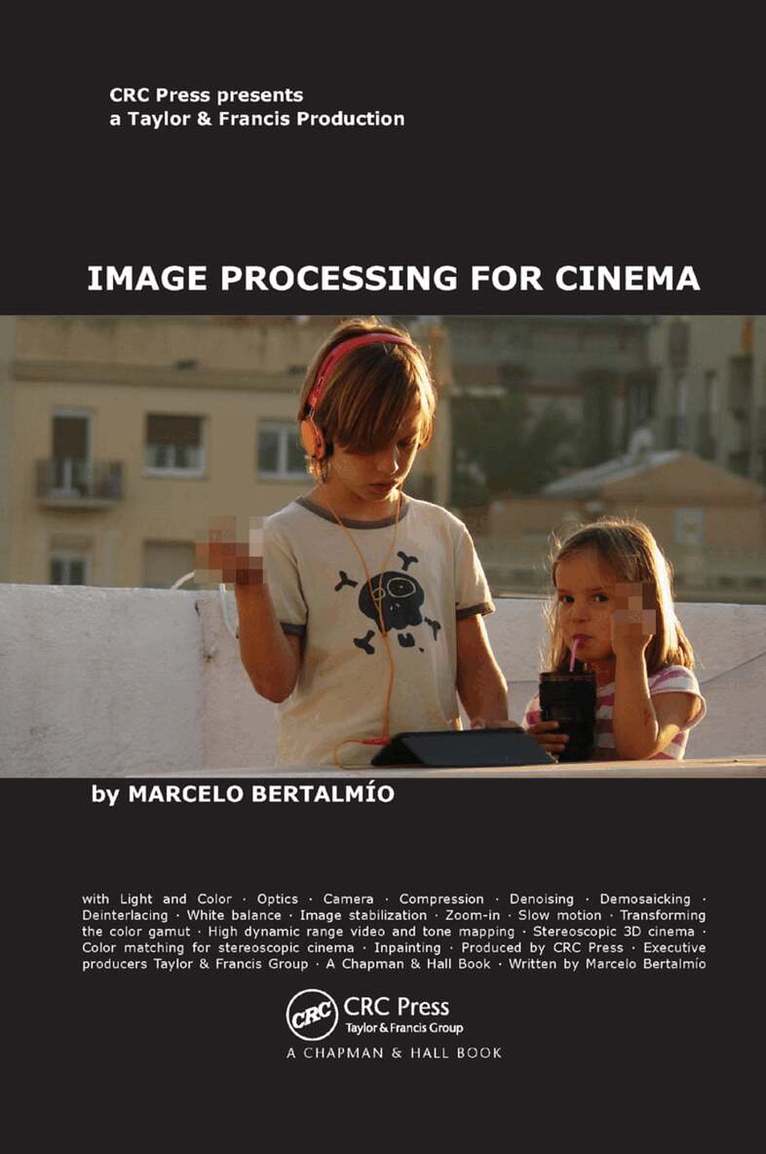
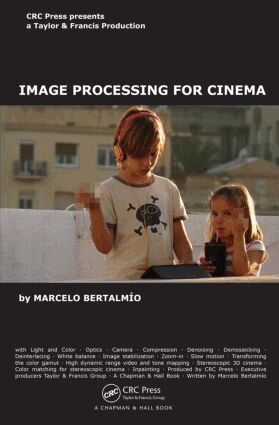
Image Processing for Cinema presents a detailed overview of image processing techniques that are used in practice in digital cinema. The book shows how image processing has become ubiquitous in movie-making, from shooting to exhibition. It covers all the ways in which image processing algorithms are used to enhance, restore, adapt, and convert moving images. These techniques and algorithms make the images look as good as possible while exploiting the capabilities of cameras, projectors, and displays.The author focuses on the ideas behind the methods, rather than proofs and derivations. The first part of the text presents fundamentals on optics and color. The second part explains how cameras work and details all the image processing algorithms that are applied in-camera. With an emphasis on state-of-the-art methods that are actually used in practice, the last part describes image processing algorithms that are applied offline to solve a variety of problems.The book is designed for advanced undergraduate and graduate students in applied mathematics, image processing, computer science, and related fields. It is also suitable for academic researchers and professionals in the movie industry.
743 kr
Skickas inom 10-15 vardagar
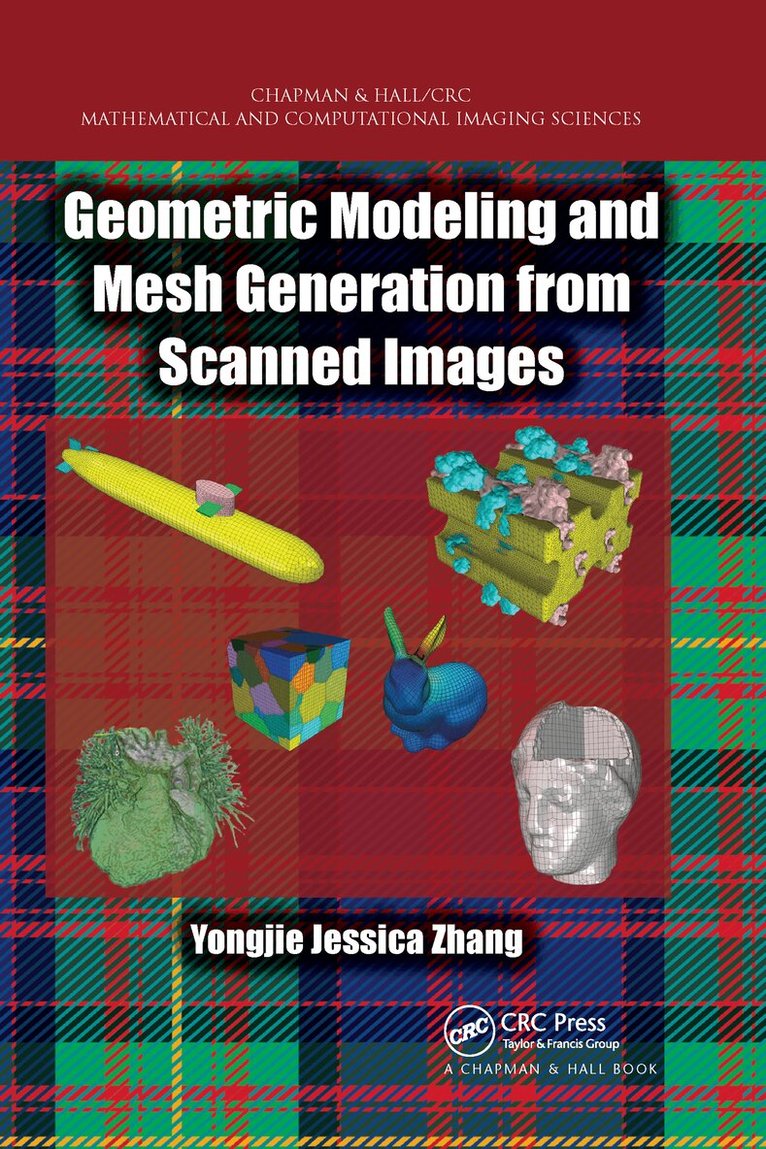
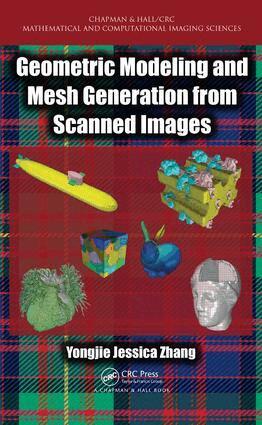
Cutting-Edge Techniques to Better Analyze and Predict Complex Physical PhenomenaGeometric Modeling and Mesh Generation from Scanned Images shows how to integrate image processing, geometric modeling, and mesh generation with the finite element method (FEM) to solve problems in computational biology, medicine, materials science, and engineering. Based on the author’s recent research and course at Carnegie Mellon University, the text explains the fundamentals of medical imaging, image processing, computational geometry, mesh generation, visualization, and finite element analysis. It also explores novel and advanced applications in computational biology, medicine, materials science, and other engineering areas.One of the first to cover this emerging interdisciplinary field, the book addresses biomedical/material imaging, image processing, geometric modeling and visualization, FEM, and biomedical and engineering applications. It introduces image-mesh-simulation pipelines, reviews numerical methods used in various modules of the pipelines, and discusses several scanning techniques, including ones to probe polycrystalline materials.The book next presents the fundamentals of geometric modeling and computer graphics, geometric objects and transformations, and curves and surfaces as well as two isocontouring methods: marching cubes and dual contouring. It then describes various triangular/tetrahedral and quadrilateral/hexahedral mesh generation techniques. The book also discusses volumetric T-spline modeling for isogeometric analysis (IGA) and introduces some new developments of FEM in recent years with applications.
950 kr
Skickas inom 10-15 vardagar
An Image Processing Tour of College Mathematics aims to provide meaningful context for reviewing key topics of the college mathematics curriculum, to help students gain confidence in using concepts and techniques of applied mathematics, to increase student awareness of recent developments in mathematical sciences, and to help students prepare for graduate studies.The topics covered include a library of elementary functions, basic concepts of descriptive statistics, probability distributions of functions of random variables, definitions and concepts behind first- and second-order derivatives, most concepts and techniques of traditional linear algebra courses, an introduction to Fourier analysis, and a variety of discrete wavelet transforms – all of that in the context of digital image processing.Features Pre-calculus material and basic concepts of descriptive statistics are reviewed in the context of image processing in the spatial domain. Key concepts of linear algebra are reviewed both in the context of fundamental operations with digital images and in the more advanced context of discrete wavelet transforms. Some of the key concepts of probability theory are reviewed in the context of image equalization and histogram matching. The convolution operation is introduced painlessly and naturally in the context of naïve filtering for denoising and is subsequently used for edge detection and image restoration. An accessible elementary introduction to Fourier analysis is provided in the context of image restoration. Discrete wavelet transforms are introduced in the context of image compression, and the readers become more aware of some of the recent developments in applied mathematics. This text helps students of mathematics ease their way into mastering the basics of scientific computer programming.
896 kr
Skickas inom 10-15 vardagar
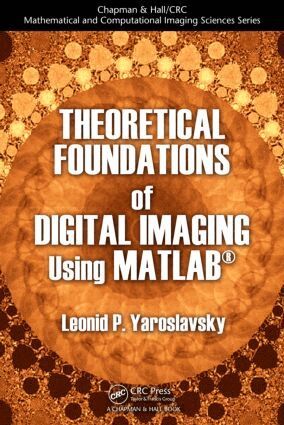
With the ubiquitous use of digital imaging, a new profession has emerged: imaging engineering. Designed for newcomers to imaging science and engineering, Theoretical Foundations of Digital Imaging Using MATLAB® treats the theory of digital imaging as a specific branch of science. It covers the subject in its entirety, from image formation to image perfecting. Based on the author’s 50 years of working and teaching in the field, the text first addresses the problem of converting images into digital signals that can be stored, transmitted, and processed on digital computers. It then explains how to adequately represent image transformations on computers. After presenting several examples of computational imaging, including numerical reconstruction of holograms and virtual image formation through computer-generated display holograms, the author introduces methods for image perfect resampling and building continuous image models. He also examines the fundamental problem of the optimal estimation of image parameters, such as how to localize targets in images. The book concludes with a comprehensive discussion of linear and nonlinear filtering methods for image perfecting and enhancement.Helping you master digital imaging, this book presents a unified theoretical basis for understanding and designing methods of imaging and image processing. To facilitate a deeper understanding of the major results, it offers a number of exercises supported by MATLAB programs, with the code available at www.crcpress.com.
660 kr
Skickas inom 10-15 vardagar
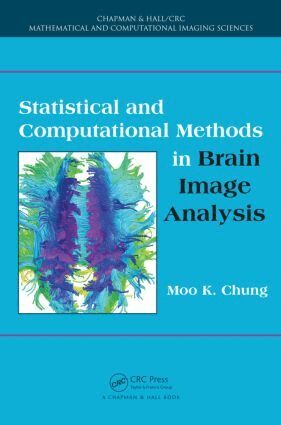
The massive amount of nonstandard high-dimensional brain imaging data being generated is often difficult to analyze using current techniques. This challenge in brain image analysis requires new computational approaches and solutions. But none of the research papers or books in the field describe the quantitative techniques with detailed illustrations of actual imaging data and computer codes. Using MATLAB® and case study data sets, Statistical and Computational Methods in Brain Image Analysis is the first book to explicitly explain how to perform statistical analysis on brain imaging data. The book focuses on methodological issues in analyzing structural brain imaging modalities such as MRI and DTI. Real imaging applications and examples elucidate the concepts and methods. In addition, most of the brain imaging data sets and MATLAB codes are available on the author’s website.By supplying the data and codes, this book enables researchers to start their statistical analyses immediately. Also suitable for graduate students, it provides an understanding of the various statistical and computational methodologies used in the field as well as important and technically challenging topics.
1 072 kr
Skickas inom 10-15 vardagar
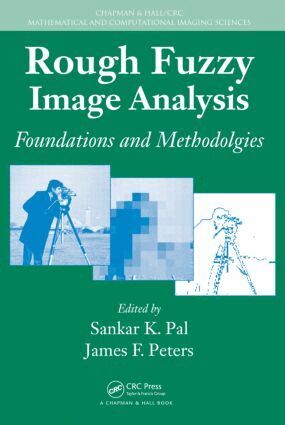
Fuzzy sets, near sets, and rough sets are useful and important stepping stones in a variety of approaches to image analysis. These three types of sets and their various hybridizations provide powerful frameworks for image analysis. Emphasizing the utility of fuzzy, near, and rough sets in image analysis, Rough Fuzzy Image Analysis: Foundations and Methodologies introduces the fundamentals and applications in the state of the art of rough fuzzy image analysis. In the first chapter, the distinguished editors explain how fuzzy, near, and rough sets provide the basis for the stages of pictorial pattern recognition: image transformation, feature extraction, and classification. The text then discusses hybrid approaches that combine fuzzy sets and rough sets in image analysis, illustrates how to perform image analysis using only rough sets, and describes tolerance spaces and a perceptual systems approach to image analysis. It also presents a free, downloadable implementation of near sets using the Near Set Evaluation and Recognition (NEAR) system, which visualizes concepts from near set theory. In addition, the book covers an array of applications, particularly in medical imaging involving breast cancer diagnosis, laryngeal pathology diagnosis, and brain MR segmentation.Edited by two leading researchers and with contributions from some of the best in the field, this volume fully reflects the diversity and richness of rough fuzzy image analysis. It deftly examines the underlying set theories as well as the diverse methods and applications.
2 185 kr
Tillfälligt slut
Fuzzy sets, near sets, and rough sets are useful and important stepping stones in a variety of approaches to image analysis. These three types of sets and their various hybridizations provide powerful frameworks for image analysis. Emphasizing the utility of fuzzy, near, and rough sets in image analysis, Rough Fuzzy Image Analysis: Foundations and Methodologies introduces the fundamentals and applications in the state of the art of rough fuzzy image analysis. In the first chapter, the distinguished editors explain how fuzzy, near, and rough sets provide the basis for the stages of pictorial pattern recognition: image transformation, feature extraction, and classification. The text then discusses hybrid approaches that combine fuzzy sets and rough sets in image analysis, illustrates how to perform image analysis using only rough sets, and describes tolerance spaces and a perceptual systems approach to image analysis. It also presents a free, downloadable implementation of near sets using the Near Set Evaluation and Recognition (NEAR) system, which visualizes concepts from near set theory. In addition, the book covers an array of applications, particularly in medical imaging involving breast cancer diagnosis, laryngeal pathology diagnosis, and brain MR segmentation.Edited by two leading researchers and with contributions from some of the best in the field, this volume fully reflects the diversity and richness of rough fuzzy image analysis. It deftly examines the underlying set theories as well as the diverse methods and applications.
1 742 kr
Skickas inom 10-15 vardagar
The massive amount of nonstandard high-dimensional brain imaging data being generated is often difficult to analyze using current techniques. This challenge in brain image analysis requires new computational approaches and solutions. But none of the research papers or books in the field describe the quantitative techniques with detailed illustrations of actual imaging data and computer codes. Using MATLAB® and case study data sets, Statistical and Computational Methods in Brain Image Analysis is the first book to explicitly explain how to perform statistical analysis on brain imaging data. The book focuses on methodological issues in analyzing structural brain imaging modalities such as MRI and DTI. Real imaging applications and examples elucidate the concepts and methods. In addition, most of the brain imaging data sets and MATLAB codes are available on the author’s website.By supplying the data and codes, this book enables researchers to start their statistical analyses immediately. Also suitable for graduate students, it provides an understanding of the various statistical and computational methodologies used in the field as well as important and technically challenging topics.
1 287 kr
Skickas inom 10-15 vardagar
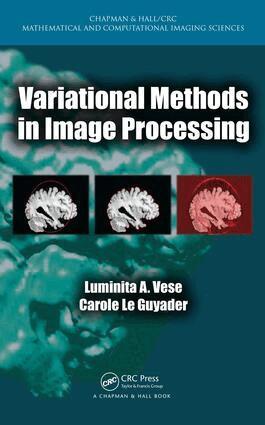
Variational Methods in Image Processing presents the principles, techniques, and applications of variational image processing. The text focuses on variational models, their corresponding Euler–Lagrange equations, and numerical implementations for image processing. It balances traditional computational models with more modern techniques that solve the latest challenges introduced by new image acquisition devices.The book addresses the most important problems in image processing along with other related problems and applications. Each chapter presents the problem, discusses its mathematical formulation as a minimization problem, analyzes its mathematical well-posedness, derives the associated Euler–Lagrange equations, describes the numerical approximations and algorithms, explains several numerical results, and includes a list of exercises. MATLAB® codes are available online.Filled with tables, illustrations, and algorithms, this self-contained textbook is primarily for advanced undergraduate and graduate students in applied mathematics, scientific computing, medical imaging, computer vision, computer science, and engineering. It also offers a detailed overview of the relevant variational models for engineers, professionals from academia, and those in the image processing industry.
1 125 kr
Tillfälligt slut
With the ubiquitous use of digital imaging, a new profession has emerged: imaging engineering. Designed for newcomers to imaging science and engineering, Theoretical Foundations of Digital Imaging Using MATLAB® treats the theory of digital imaging as a specific branch of science. It covers the subject in its entirety, from image formation to image perfecting. Based on the author’s 50 years of working and teaching in the field, the text first addresses the problem of converting images into digital signals that can be stored, transmitted, and processed on digital computers. It then explains how to adequately represent image transformations on computers. After presenting several examples of computational imaging, including numerical reconstruction of holograms and virtual image formation through computer-generated display holograms, the author introduces methods for image perfect resampling and building continuous image models. He also examines the fundamental problem of the optimal estimation of image parameters, such as how to localize targets in images. The book concludes with a comprehensive discussion of linear and nonlinear filtering methods for image perfecting and enhancement.Helping you master digital imaging, this book presents a unified theoretical basis for understanding and designing methods of imaging and image processing. To facilitate a deeper understanding of the major results, it offers a number of exercises supported by MATLAB programs, with the code available at www.crcpress.com.
1 189 kr
Skickas
Image Processing for Cinema presents a detailed overview of image processing techniques that are used in practice in digital cinema. The book shows how image processing has become ubiquitous in movie-making, from shooting to exhibition. It covers all the ways in which image processing algorithms are used to enhance, restore, adapt, and convert moving images. These techniques and algorithms make the images look as good as possible while exploiting the capabilities of cameras, projectors, and displays.The author focuses on the ideas behind the methods, rather than proofs and derivations. The first part of the text presents fundamentals on optics and color. The second part explains how cameras work and details all the image processing algorithms that are applied in-camera. With an emphasis on state-of-the-art methods that are actually used in practice, the last part describes image processing algorithms that are applied offline to solve a variety of problems.The book is designed for advanced undergraduate and graduate students in applied mathematics, image processing, computer science, and related fields. It is also suitable for academic researchers and professionals in the movie industry.
2 020 kr
Skickas inom 10-15 vardagar
Cutting-Edge Techniques to Better Analyze and Predict Complex Physical PhenomenaGeometric Modeling and Mesh Generation from Scanned Images shows how to integrate image processing, geometric modeling, and mesh generation with the finite element method (FEM) to solve problems in computational biology, medicine, materials science, and engineering. Based on the author’s recent research and course at Carnegie Mellon University, the text explains the fundamentals of medical imaging, image processing, computational geometry, mesh generation, visualization, and finite element analysis. It also explores novel and advanced applications in computational biology, medicine, materials science, and other engineering areas.One of the first to cover this emerging interdisciplinary field, the book addresses biomedical/material imaging, image processing, geometric modeling and visualization, FEM, and biomedical and engineering applications. It introduces image-mesh-simulation pipelines, reviews numerical methods used in various modules of the pipelines, and discusses several scanning techniques, including ones to probe polycrystalline materials.The book next presents the fundamentals of geometric modeling and computer graphics, geometric objects and transformations, and curves and surfaces as well as two isocontouring methods: marching cubes and dual contouring. It then describes various triangular/tetrahedral and quadrilateral/hexahedral mesh generation techniques. The book also discusses volumetric T-spline modeling for isogeometric analysis (IGA) and introduces some new developments of FEM in recent years with applications.