Chawton House Library: Women’s Travel Writings – serie
Visar alla böcker i serien Chawton House Library: Women’s Travel Writings. Handla med fri frakt och snabb leverans.
19 produkter
19 produkter
9 699 kr
Skickas inom 10-15 vardagar
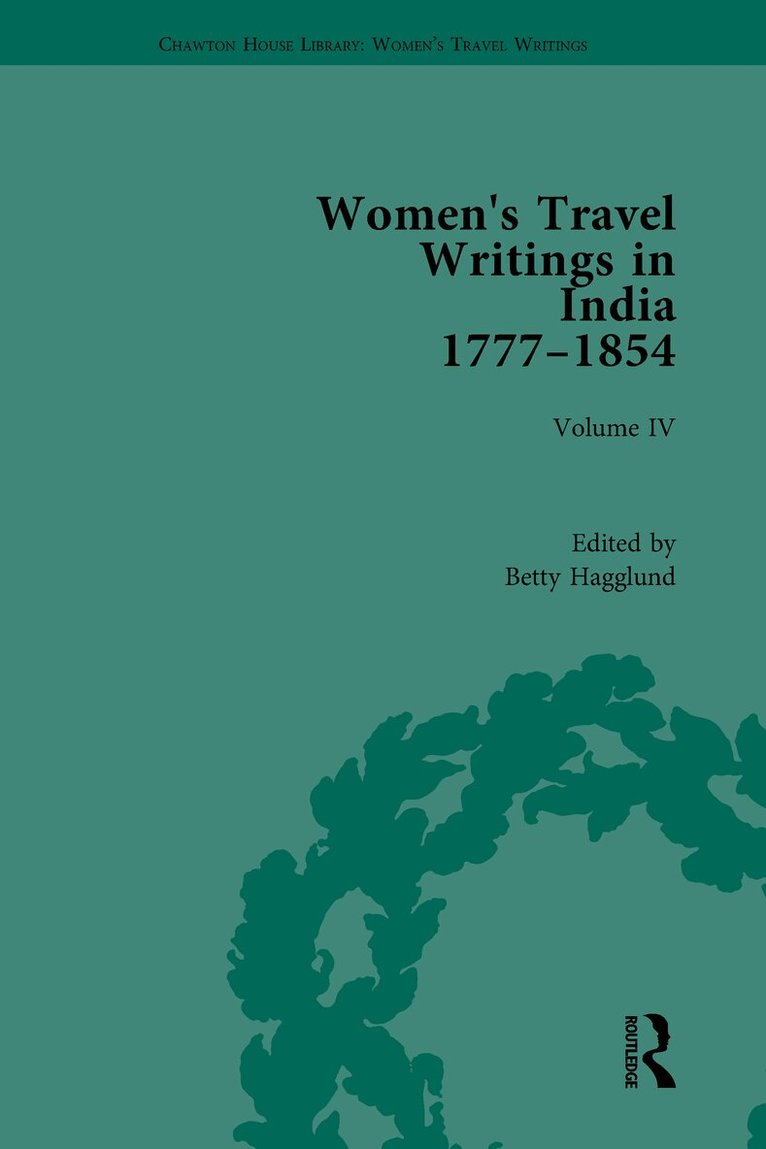
The ‘memsahibs’ of the British Raj in India are well-known figures today, frequently depicted in fiction, TV, and film. In recent years, they have also become the focus of extensive scholarship. Less familiar to both academics and the general public, however, are the eighteenth- and early nineteenth-century precursors to the memsahibs of the Victorian and Edwardian era. Yet British women also visited and resided in India in this earlier period, witnessing first-hand the tumultuous, expansionist decades in which the East India Company established British control over the subcontinent. Some of these travellers produced highly regarded accounts of their experiences, thereby inaugurating a rich tradition of women’s travel writing about India. In the process, they not only reported events and developments in the subcontinent; they also contributed to them, helping to shape opinion and policy on issues such as colonial rule, religion, and social reform.This new set in the Chawton House Library Women’s Travel Writing series assembles seven of these accounts, six by British authors (Jemima Kindersley, Maria Graham, Eliza Fay, Ann Deane, Julia Maitland and Mary Sherwood) and one by an American (Harriet Newell). Their narratives – here reproduced for the first time in reset scholarly editions – were published between 1777 and 1854, and recount journeys undertaken in India, or periods of residence there, between the 1760s and the 1830s. Collectively they showcase the range of women’s interests and activities in India, and also the variety of narrative forms, voices and personae available to them as travel writers. Some stand squarely in the tradition of Enlightenment ethnography; others show the growing influence of Evangelical beliefs. But all disrupt any lingering stereotypes about women’s passivity, reticence, and lack of public agency in this period, when colonial women were not yet as sequestered and debarred from cross-cultural contact as they would later be during the Raj. Their narratives are consequently a useful resource to students and researchers across multiple fields and disciplines, including women’s writing, travel writing, colonial and postcolonial studies, the history of women’s educational and missionary work, and Romantic-era and nineteenth-century literature.
2 062 kr
Skickas inom 10-15 vardagar
The ‘memsahibs’ of the British Raj in India are well-known figures today, frequently depicted in fiction, TV and film. In recent years, they have also become the focus of extensive scholarship. Less familiar to both academics and the general public, however, are the eighteenth- and early nineteenth-century precursors to the memsahibs of the Victorian and Edwardian era. Yet British women also visited and resided in India in this earlier period, witnessing first-hand the tumultuous, expansionist decades in which the East India Company established British control over the subcontinent. Some of these travellers produced highly regarded accounts of their experiences, thereby inaugurating a rich tradition of women’s travel writing about India. In the process, they not only reported events and developments in the subcontinent, they also contributed to them, helping to shape opinion and policy on issues such as colonial rule, religion, and social reform.This new set in the Chawton House Library Women’s Travel Writing series assembles seven of these accounts, six by British authors (Jemima Kindersley, Maria Graham, Eliza Fay, Ann Deane, Julia Maitland and Mary Sherwood) and one by an American (Harriet Newell). Their narratives – here reproduced for the first time in reset scholarly editions – were published between 1777 and 1854, and recount journeys undertaken in India, or periods of residence there, between the 1760s and the 1830s. Collectively they showcase the range of women’s interests and activities in India, and also the variety of narrative forms, voices and personae available to them as travel writers. Some stand squarely in the tradition of Enlightenment ethnography; others show the growing influence of Evangelical beliefs. But all disrupt any lingering stereotypes about women’s passivity, reticence and lack of public agency in this period, when colonial women were not yet as sequestered and debarred from cross-cultural contact as they would later be during the Raj. Their narratives are consequently a useful resource to students and researchers across multiple fields and disciplines, including women’s writing, travel writing, colonial and postcolonial studies, the history of women’s educational and missionary work, and Romantic-era and nineteenth-century literature.This volume includes 2 texts, Jemima Kindersley, Letters from the Island of Teneriffe, Brazil, the Cape of Good Hope, and the East Indies (1777) and Maria Graham, Journal of a Residence in India (1812).
Inbunden, Engelska, 2020
2 062 kr
Skickas inom 10-15 vardagar
The ‘memsahibs’ of the British Raj in India are well-known figures today, frequently depicted in fiction, TV and film. In recent years, they have also become the focus of extensive scholarship. Less familiar to both academics and the general public, however, are the eighteenth- and early nineteenth-century precursors to the memsahibs of the Victorian and Edwardian era. Yet British women also visited and resided in India in this earlier period, witnessing first-hand the tumultuous, expansionist decades in which the East India Company established British control over the subcontinent. Some of these travellers produced highly regarded accounts of their experiences, thereby inaugurating a rich tradition of women’s travel writing about India. In the process, they not only reported events and developments in the subcontinent, they also contributed to them, helping to shape opinion and policy on issues such as colonial rule, religion, and social reform.This new set in the Chawton House Library Women’s Travel Writing series assembles seven of these accounts, six by British authors (Jemima Kindersley, Maria Graham, Eliza Fay, Ann Deane, Julia Maitland and Mary Sherwood) and one by an American (Harriet Newell). Their narratives – here reproduced for the first time in reset scholarly editions – were published between 1777 and 1854, and recount journeys undertaken in India, or periods of residence there, between the 1760s and the 1830s. Collectively they showcase the range of women’s interests and activities in India, and also the variety of narrative forms, voices and personae available to them as travel writers. Some stand squarely in the tradition of Enlightenment ethnography; others show the growing influence of Evangelical beliefs. But all disrupt any lingering stereotypes about women’s passivity, reticence and lack of public agency in this period, when colonial women were not yet as sequestered and debarred from cross-cultural contact as they would later be during the Raj. Their narratives are consequently a useful resource to students and researchers across multiple fields and disciplines, including women’s writing, travel writing, colonial and postcolonial studies, the history of women’s educational and missionary work, and Romantic-era and nineteenth-century literature.This second volume includes two texts, Harriet Newell, Memoirs of Mrs Harriet Newell (1815) and Eliza Fay, Original Letters from India (1817).
Inbunden, Engelska, 2020
1 720 kr
Skickas
The ‘memsahibs’ of the British Raj in India are well-known figures today, frequently depicted in fiction, TV and film. In recent years, they have also become the focus of extensive scholarship. Less familiar to both academics and the general public, however, are the eighteenth- and early nineteenth-century precursors to the memsahibs of the Victorian and Edwardian era. Yet British women also visited and resided in India in this earlier period, witnessing first-hand the tumultuous, expansionist decades in which the East India Company established British control over the subcontinent. Some of these travellers produced highly regarded accounts of their experiences, thereby inaugurating a rich tradition of women’s travel writing about India. In the process, they not only reported events and developments in the subcontinent, they also contributed to them, helping to shape opinion and policy on issues such as colonial rule, religion, and social reform.This new set in the Chawton House Library Women’s Travel Writing series assembles seven of these accounts, six by British authors (Jemima Kindersley, Maria Graham, Eliza Fay, Ann Deane, Julia Maitland and Mary Sherwood) and one by an American (Harriet Newell). Their narratives – here reproduced for the first time in reset scholarly editions – were published between 1777 and 1854, and recount journeys undertaken in India, or periods of residence there, between the 1760s and the 1830s. Collectively they showcase the range of women’s interests and activities in India, and also the variety of narrative forms, voices and personae available to them as travel writers. Some stand squarely in the tradition of Enlightenment ethnography; others show the growing influence of Evangelical beliefs. But all disrupt any lingering stereotypes about women’s passivity, reticence and lack of public agency in this period, when colonial women were not yet as sequestered and debarred from cross-cultural contact as they would later be during the Raj. Their narratives are consequently a useful resource to students and researchers across multiple fields and disciplines, including women’s writing, travel writing, colonial and postcolonial studies, the history of women’s educational and missionary work, and Romantic-era and nineteenth-century literature.This volume includes two texts, Ann Deane, A Tour Through the Upper Provinces of Hindostan (1823) and Julia Maitland, Letters from Madras (1846).
Inbunden, Engelska, 2020
2 062 kr
Skickas inom 10-15 vardagar
The ‘memsahibs’ of the British Raj in India are well-known figures today, frequently depicted in fiction, TV and film. In recent years, they have also become the focus of extensive scholarship. Less familiar to both academics and the general public, however, are the eighteenth- and early nineteenth-century precursors to the memsahibs of the Victorian and Edwardian era. Yet British women also visited and resided in India in this earlier period, witnessing first-hand the tumultuous, expansionist decades in which the East India Company established British control over the subcontinent. Some of these travellers produced highly regarded accounts of their experiences, thereby inaugurating a rich tradition of women’s travel writing about India. In the process, they not only reported events and developments in the subcontinent, they also contributed to them, helping to shape opinion and policy on issues such as colonial rule, religion, and social reform.This new set in the Chawton House Library Women’s Travel Writing series assembles seven of these accounts, six by British authors (Jemima Kindersley, Maria Graham, Eliza Fay, Ann Deane, Julia Maitland and Mary Sherwood) and one by an American (Harriet Newell). Their narratives – here reproduced for the first time in reset scholarly editions – were published between 1777 and 1854, and recount journeys undertaken in India, or periods of residence there, between the 1760s and the 1830s. Collectively they showcase the range of women’s interests and activities in India, and also the variety of narrative forms, voices and personae available to them as travel writers. Some stand squarely in the tradition of Enlightenment ethnography; others show the growing influence of Evangelical beliefs. But all disrupt any lingering stereotypes about women’s passivity, reticence and lack of public agency in this period, when colonial women were not yet as sequestered and debarred from cross-cultural contact as they would later be during the Raj. Their narratives are consequently a useful resource to students and researchers across multiple fields and disciplines, including women’s writing, travel writing, colonial and postcolonial studies, the history of women’s educational and missionary work, and Romantic-era and nineteenth-century literature.This final volume reproduces a text by Mary Sherwood, called The Life of Mrs Sherwood (1854).
Inbunden, Engelska, 2015
2 062 kr
Skickas inom 10-15 vardagar
Part II of this edition reproduces The Tour of Africa, first published in 1821 by Catherine Hutton. Although framed as a first-person narrative, the three-volume work is in fact a compilation of existing travel accounts. Hutton’s Tour raises challenging questions about intertextuality in nineteenth-century women’s travel writing.
Inbunden, Engelska, 2016
1 667 kr
Skickas inom 10-15 vardagar
This volume contains the first volume of Anne Grant's Letters from the Mountains (1806), one of the Romantic era's most successful non-fictional accounts of the Scottish Highlands.
Inbunden, Engelska, 2016
2 615 kr
Skickas inom 10-15 vardagar
This volume contains the second volume of Anne Grant's Letters from the Mountains (1806), one of the Romantic era’s most successful non-fictional accounts of the Scottish Highlands. It is part of a four volume set, edited by Kirsteen McCue and Pam Perkins, which is accompanied by new editorial material including a new general introduction and headnotes to each work.
Inbunden, Engelska, 2016
2 615 kr
Skickas inom 10-15 vardagar
This volume contains the third volume of Anne Grant's Letters from the Mountains (1806), one of the Romantic era’s most successful non-fictional accounts of the Scottish Highlands.
Inbunden, Engelska, 2016
719 kr
Skickas inom 10-15 vardagar
This volume contains Elizabeth Isabella Spence’s Letters from the North Highlands, one of the Romantic era’s most successful non-fictional accounts of the Scottish Highlands (1816), a work that, while influenced by Grant’s Letters from the Mountains (1806), attempted to move the genre of the Scottish travelogue in new directions.
6 822 kr
Skickas inom 10-15 vardagar
Part II of this edition reproduces The Tour of Africa, first published in 1821 by Catherine Hutton. Although framed as a first-person narrative, the three-volume work is in fact a compilation of existing travel accounts. Hutton’s Tour raises challenging questions about intertextuality in nineteenth-century women’s travel writing.
8 394 kr
Skickas inom 10-15 vardagar
This collection includes the first critical editions of both Anne Grant’s Letters from the Mountains (1806), one of the Romantic era’s most successful non-fictional accounts of the Scottish Highlands, and Elizabeth Isabella Spence’s Letters from the North Highlands (1816), a work that, while influenced by Grant’s Letters, attempted to move the genre of the Scottish travelogue in new directions. Read together, these volumes offer complementary views of Scottish Highland life at a time of major historical transition: Grant was offering outsiders her perspective as a long-time resident of the region, while Spence was, unapologetically, writing as a tourist. The Highlands were central to Romantic-era debates on subjects ranging from landscape and aesthetics to national identities, and, as this collection demonstrates, women were making significant contributions to those debates.The four volume set, edited by Kirsteen McCue and Pam Perkins, is accompanied by new editorial material including a new general introduction and headnotes to each work.
7 300 kr
Skickas inom 10-15 vardagar
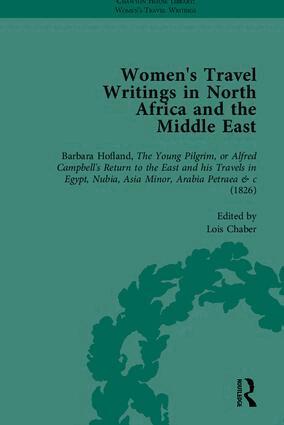
Continuing our series on Women's Travel Writings, this two-part collection presents some fascinating tales of North Africa and the Middle East.
11 785 kr
Skickas inom 5-8 vardagar
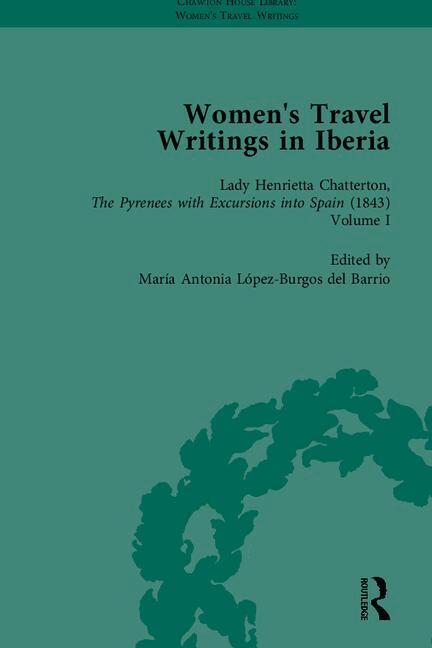
Lisbon and the Pyrenees form the basis of this lively collection of firsthand accounts of travel within Portugal and Spain in the early nineteenth century.
9 730 kr
Skickas inom 10-15 vardagar
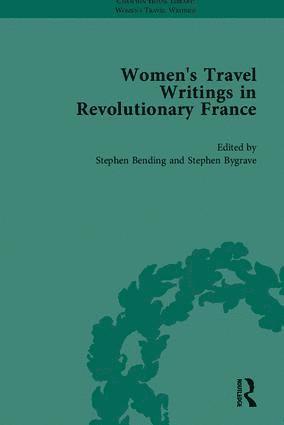
This eight-volume set in two parts gives voice to some intrepid women travellers touring post-Napoleonic France. The volumes are facsimile editions and are introduced and edited by experts in their field.
8 920 kr
Skickas inom 10-15 vardagar
This eight-volume set in two parts gives voice to some intrepid women travellers touring post-Napoleonic France. The volumes are facsimile editions and are introduced and edited by experts in their field.
7 851 kr
Skickas inom 10-15 vardagar
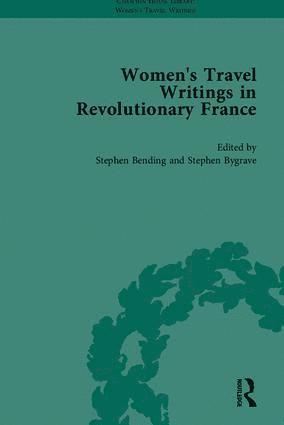
A seven-volume facsimile set which comprises accounts of France in the 1790s. The texts are drawn from the Chawton House Library collection.
11 356 kr
Skickas inom 10-15 vardagar
Part of a seven-volume facsimile set, this volume comprises firsthand accounts of France in the 1790s. It includes Helen Maria Williams' letters which narrate the fall of Robespierre in 1794 and her 1798 book on Switzerland which comments sceptically on the necessary coexistence of liberty with peace.
7 557 kr
Skickas inom 5-8 vardagar
Chawton House Library: Women's Travel Writings are multi-volume editions with full texts reproduced in facsimile with new scholarly apparatus. The texts have been carefully selected to illustrate various themes in women's history.