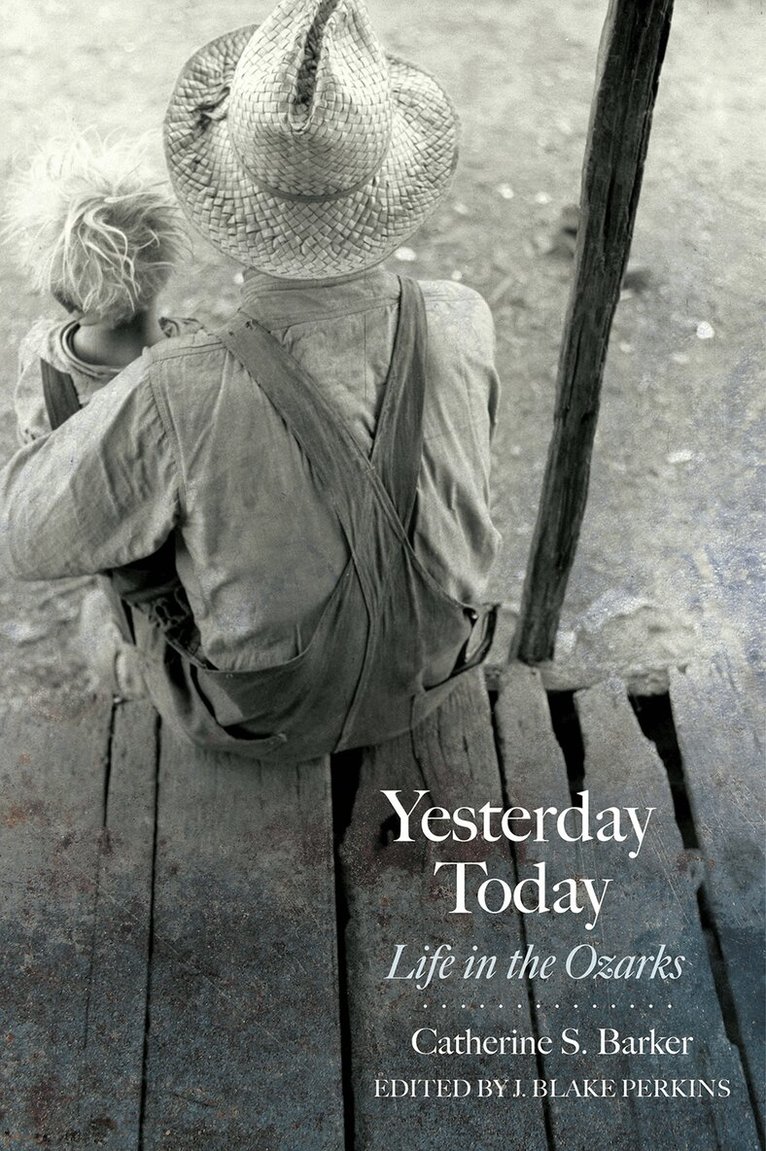
The emergence into pop culture of quaint and simple Ozarks Mountaineers—through the writings of Vance Randolph, Wayman Hogue, Charles Morrow Wilson, and others—was a comfort and fascination to many Americans in the early twentieth century. Disillusioned with the modernity they felt had contributed to the Great Depression, middle-class Americans admired the Ozarkers’ apparently simple way of life, which they saw as an alternative to an increasingly urban and industrial America.Catherine S. Barker's 1941 book Yesterday Today: Life in the Ozarks sought to illuminate another side of these “remnants of eighteenth-century life and culture”: poverty and despair. Drawing on her encounters and experiences as a federal social worker in the backwoods of the Ozarks in the 1930s, Barker described the mountaineers as “lovable and pathetic and needy and self-satisfied and valiant,” declaring that the virtuous and independent people of the hills deserved a better way and a more abundant life. Barker was also convinced that there were just as many contemptible facets of life in the Ozarks that needed to be replaced as there were virtues that needed to be preserved.This reprinting of Yesterday Today—edited and introduced by historian J. Blake Perkins—situates this account among the Great Depression-era chronicles of the Ozarks.
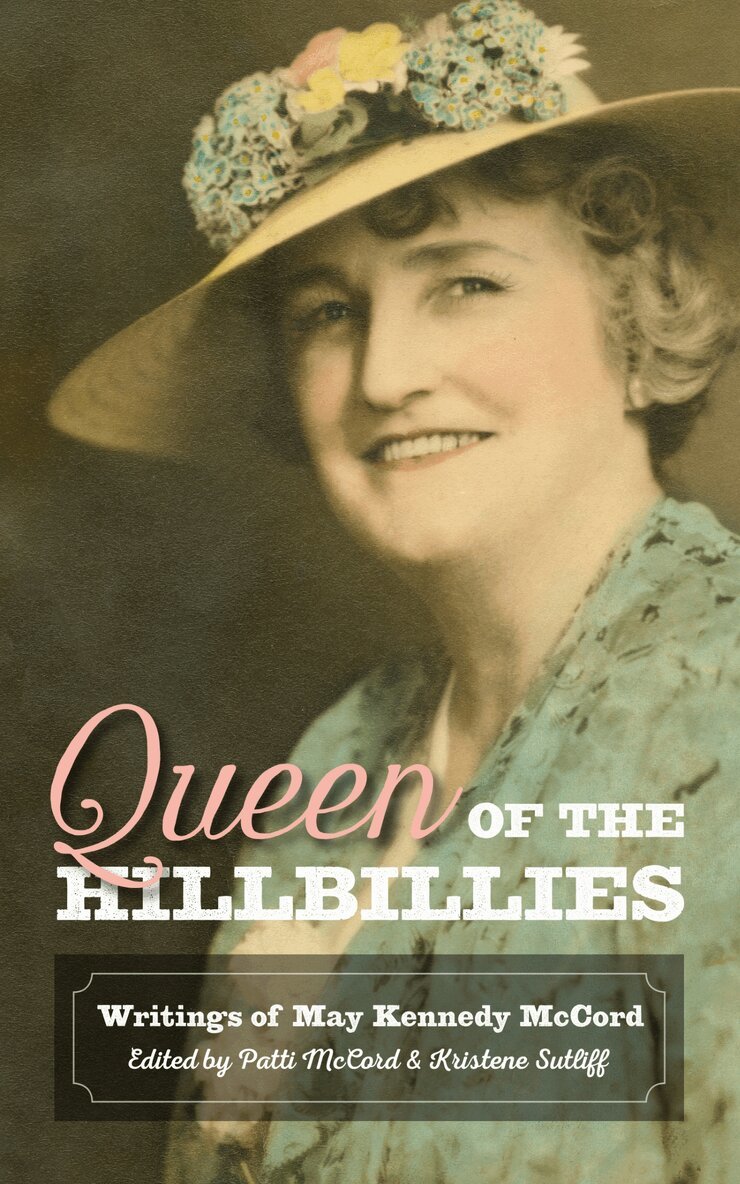
May Kennedy McCord, lovingly nicknamed “First Lady of the Ozarks” and “Queen of the Hillbillies,” spent half a century sharing the history, songs, and stories of her native Ozarks through newspaper columns, radio programs, and music festivals. Though her work made her one of the twentieth century’s preeminent folklorists, McCord was first and foremost an entertainer—at one time nearly as renowned as the hills she loved.Despite the encouragement of her contemporaries, McCord never published a collection of her work. In 1956, Vance Randolph wrote to her, “If you didn’t have such a mental block against writing books, I could show you how to make a book out of extracts from your columns. It would be very little work, and sell like hotcakes. . . . I could write a solemn little introduction, telling the citizens what a fine gal you are! The hell of it is, most of the readers know all about you.” In Queen of the Hillbillies, editors Patti McCord and Kristene Sutliff at last bring together the best of McCord’s published and previously unpublished writings to share her knowledge, humor, and inimitable spirit with a new generation of readers.
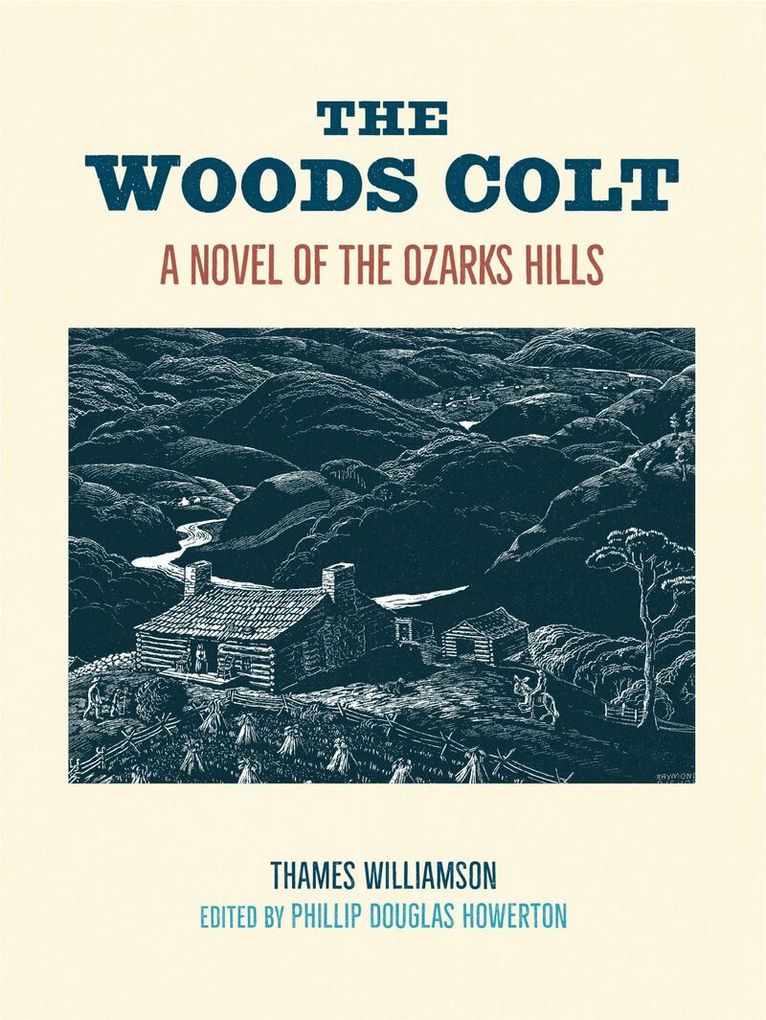
Although more than one hundred novels set in the Ozarks were published before it, Thames Ross Williamson’s 1933 novel The Woods Colt was the first to achieve notable success both popularly and critically. Written entirely in regional dialect, The Woods Colt is the story of the violent and reckless Clint Morgan, whose attempts to secure love and freedom force him down a path of self-destruction.Simultaneously exploitative and romantic, The Woods Colt carries us back to the heart of the Great Depression, heyday of the hillbilly in pop culture, when the perceived self-reliance and old-fashioned wisdom of rural people allowed audiences to not only escape their current circumstances but also imagine more hopeful ways of living. Williamson, a prolific author, answered this interest with a fast-paced and action-driven novel filled with folklore that had, ostensibly, been authenticated by none other than renowned Ozarks expert Vance Randolph.The Woods Colt, with its familiar sense of danger and adventure, continues to offer insight and entertainment as it wrestles with timeless themes of economic struggle, cultural conflict, and modernization. With an introduction and explanatory notes from Phillip Douglas Howerton, this new edition makes the seminal novel available once more to scholars, regional enthusiasts, and anyone looking for a tale of the Ozark hills.
The emergence into pop culture of quaint and simple Ozarks Mountaineers—through the writings of Vance Randolph, Wayman Hogue, Charles Morrow Wilson, and others—was a comfort and fascination to many Americans in the early twentieth century. Disillusioned with the modernity they felt had contributed to the Great Depression, middle-class Americans admired the Ozarkers’ apparently simple way of life, which they saw as an alternative to an increasingly urban and industrial America.Catherine S. Barker's 1941 book Yesterday Today: Life in the Ozarks sought to illuminate another side of these “remnants of eighteenth-century life and culture”: poverty and despair. Drawing on her encounters and experiences as a federal social worker in the backwoods of the Ozarks in the 1930s, Barker described the mountaineers as “lovable and pathetic and needy and self-satisfied and valiant,” declaring that the virtuous and independent people of the hills deserved a better way and a more abundant life. Barker was also convinced that there were just as many contemptible facets of life in the Ozarks that needed to be replaced as there were virtues that needed to be preserved.This reprinting of Yesterday Today—edited and introduced by historian J. Blake Perkins—situates this account among the Great Depression-era chronicles of the Ozarks.
May Kennedy McCord, lovingly nicknamed “First Lady of the Ozarks” and “Queen of the Hillbillies,” spent half a century sharing the history, songs, and stories of her native Ozarks through newspaper columns, radio programs, and music festivals. Though her work made her one of the twentieth century’s preeminent folklorists, McCord was first and foremost an entertainer—at one time nearly as renowned as the hills she loved.Despite the encouragement of her contemporaries, McCord never published a collection of her work. In 1956, Vance Randolph wrote to her, “If you didn’t have such a mental block against writing books, I could show you how to make a book out of extracts from your columns. It would be very little work, and sell like hotcakes. . . . I could write a solemn little introduction, telling the citizens what a fine gal you are! The hell of it is, most of the readers know all about you.” In Queen of the Hillbillies, editors Patti McCord and Kristene Sutliff at last bring together the best of McCord’s published and previously unpublished writings to share her knowledge, humor, and inimitable spirit with a new generation of readers.
Although more than one hundred novels set in the Ozarks were published before it, Thames Ross Williamson’s 1933 novel The Woods Colt was the first to achieve notable success both popularly and critically. Written entirely in regional dialect, The Woods Colt is the story of the violent and reckless Clint Morgan, whose attempts to secure love and freedom force him down a path of self-destruction.Simultaneously exploitative and romantic, The Woods Colt carries us back to the heart of the Great Depression, heyday of the hillbilly in pop culture, when the perceived self-reliance and old-fashioned wisdom of rural people allowed audiences to not only escape their current circumstances but also imagine more hopeful ways of living. Williamson, a prolific author, answered this interest with a fast-paced and action-driven novel filled with folklore that had, ostensibly, been authenticated by none other than renowned Ozarks expert Vance Randolph.The Woods Colt, with its familiar sense of danger and adventure, continues to offer insight and entertainment as it wrestles with timeless themes of economic struggle, cultural conflict, and modernization. With an introduction and explanatory notes from Phillip Douglas Howerton, this new edition makes the seminal novel available once more to scholars, regional enthusiasts, and anyone looking for a tale of the Ozark hills.