Cities of the Biblical World Series – serie
Visar alla böcker i serien Cities of the Biblical World Series. Handla med fri frakt och snabb leverans.
3 produkter
3 produkter
Häftad, Engelska, 1987
298 kr
Skickas inom 5-8 vardagar
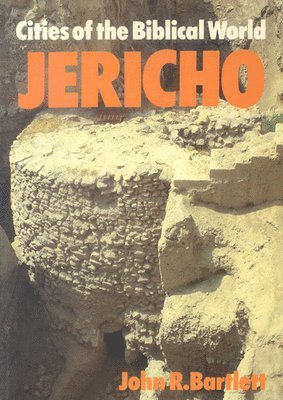
An account of archaeological developments at the biblical site of Jericho.From the Cities of the Biblical World series - a series presenting the results of recent archaeological developments at major Biblical sites for the general reader, the student and the tourist. Say the name Jericho and the one thing everybody knows about the city is that once upon a time the walls fell down flat. The more knowledgeable will go on to tell you that it had something to do with Joshua, with the children of Israel, possibly even with spies; and that you can read all about it in Exodus. In Jericho John Barlett says that the biblical story cries out for archaeological support. Fifty years ago the archaeologists believed they had found it. Now they are not so sure. Some of them even say that there is no archaeological evidence at all to support the idea of a collapse in the days of Joshua, and this therefore provides a classic example of relating what the Bible says and what archaeologists find (or fail to find) in the reconstruction of history. There is, however, more to the history of Jericho than this one incident and John Barlett guides us through the story of its excavation, describing the many finds, including a large amount of pottery and the famous plastered skulls.
Häftad, Engelska, 1987
298 kr
Skickas inom 5-8 vardagar
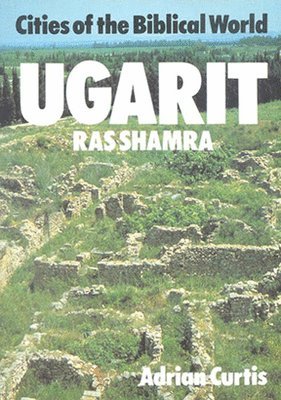
An account of recent archaeological developments at the biblical site of Ugarit, aimed at the general reader, the student and the tourist.From the Cities of the Biblical World series - a series presenting the results of recent major archaeological developments at major Biblical sites for the general reader, the student and the tourist. By chance, fifty years ago, a farmer found a cemetery on the coast of Syria. It led to a series of discoveries, and in particular of an unknown language which has radically changed our understanding of the Israelites' settlement in Canaan.In Ugarit, Adrian Curtis describes the discovery of a royal palace near the sea, two temples and numerous buildings and artefacts. But the most important discovery was of a collection of baked clay tablets and other collections of texts in a variety of languages, including a local, unknown language which may be the first known alphabet. This was deciphered with amazing speed and one repeated phrase confirmed that the site was the ancient city of Ugarit. When the children of Israel arrived in Canaan, they borrowed and adapted ideas from Canaanite culture. The Ugaritic texts were written at this time, and they may prove vital to our understanding of early Hebrew thought and language.
Häftad, Engelska, 2004
298 kr
Skickas inom 5-8 vardagar
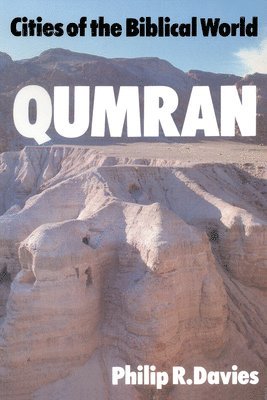
An account of the ancient Jewish settlement of Khirbet Qumran, where the Dead Sea Scrolls were found, based on archaeological evidence uncovered at the site.From the Cities of the Biblical World series - a series describing the recent archaeological developments at major Biblical sites for the general reader, the student and the tourist. Until the discovery of the Dead Sea Scrolls in 1947, and the subsequent excavation of Khirbet Qumran, the existence of a Jewish settlement near the Dead Sea remained unsuspected by biblical scholars. Apart from one possible allusion in the Old Testament, the site is unrecorded in the Bible, and no hint emerges of the fascinating community which inhabited it in Jesus' own day. In Biblical terms it could be described as the discovery of the century, all the more remarkable because from its last occupation in AD 135 until the arrival of the archaeologists in the wake of the Scrolls' discovery, Qumran remained a well-known but little considered ruin. Philip Davies explains how the archaeological evidence helps us to interpret the writings in the scrolls, and how the writings in turn help archaeologists to understand their discoveries. The author puts the site in perspective, explaining its history and development from an early settlement, possibly in the time of King Uzziah (781-40BC), to the community which produced the famous scrolls. The only substantial corpus of Jewish literature from this time, the scrolls offer the reader an insight into the organisation of the community and its daily activities, the religious and philosophical beliefs, rituals and hopes, which characterised Judaism in the first century AD. The Scrolls have provided the only substantial corpus of Jewish literature from this age.