
Civil & Environmental Engineer – serie
Visar alla böcker i serien Civil & Environmental Engineer. Handla med fri frakt och snabb leverans.
2 produkter
2 produkter
1 608 kr
Skickas inom 5-8 vardagar
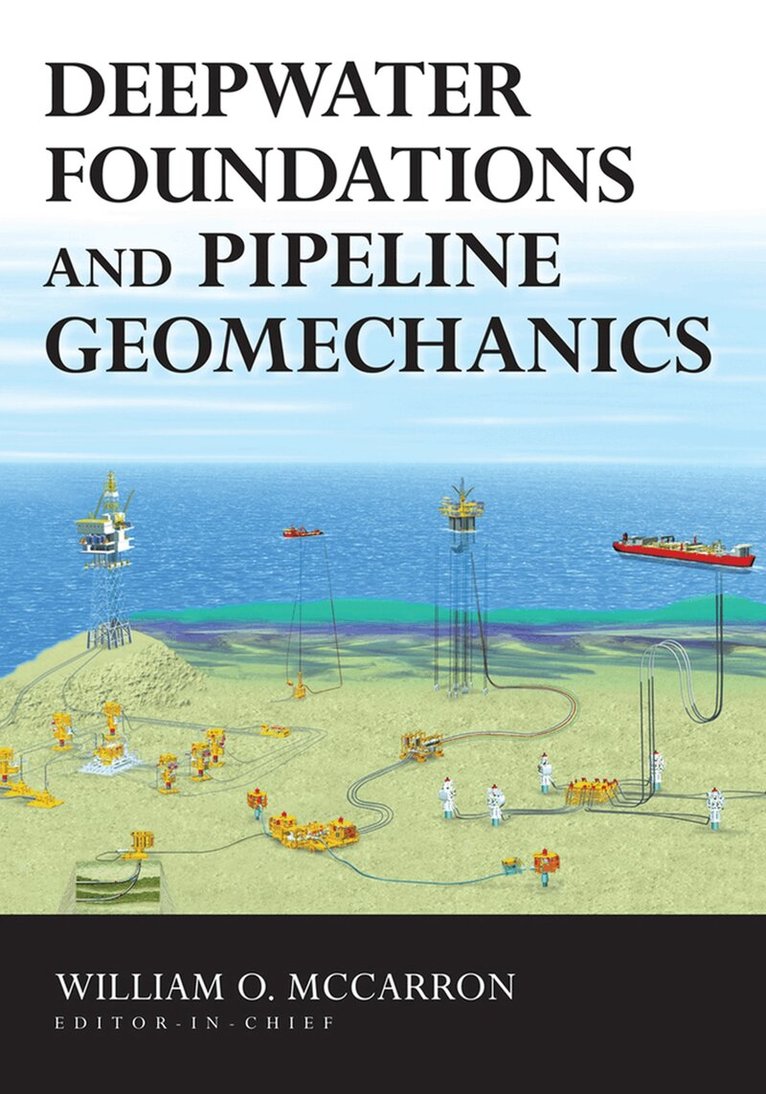
Practicing engineers in the offshore engineering industry will find in this contributed handbook practical information on current oil field production development practices for foundations and subsea flowlines. The technical challenges associated with deepwater developments have led to significant innovations. The contributors are practicing engineers and academics who have been at the forefront of offshore geotechnic development for several decades. Until the 1980s, the most common design concerns for offshore foundation and pipeline engineering were associated with extreme storm loadings, earthquakes, mudflows, fatigue, and installation activities. Engineers today face additional concerns, including: submarine slope failures, thermal buckling of pipelines, catenary riser interaction with the seafloor, vortex induced vibration of flowlines, shallow water flows encountered during drilling operations, and thermal interaction of pipelines with permafrost. This handbook describes recent advances in geophysical data acquisition and evaluation as they relate to offshore developments, as well as foundation and pipeline design considerations. The presentation is focused on deepwater geotechnics as well as subsea and Arctic pipeline design considerations, but engineers will find much of it applicable to other situations.

2 827 kr
Skickas
Research on the topic of steel frames with semi-rigid connections (Partially Restrained (PR) construction or PR connection) has been conducted over the past 10 years. Despite significant research and development efforts, usage of PR principles has nevertheless been very slow in coming to the profession caused in part by the lack of easy access to reliable test data on these connections and also due to the lack of software for practical implementation. With the publication of the 2005 AISC specifications as well as Eurocode 3, practical implementation of the use of PR connections in structural systems is now a real possibility. This Handbook presents a simple and comprehensive introduction that will help design practitioners implement these new developments into engineering practice. Beginning with a discussion of the new specifications and classifications of these connections, the authors go on to show, on the basis of the collected connections database, practical mathematical models for computer implementation, and provide case studies on these frames including composite construction. With the help of the user-friendly list of collected data in tabular form with illustrative figures, information on semi-rigid connections is now available in a single publication and may ultimately result in its wide-spread usage among practitioners.