Cognitive Informatics in Biomedicine and Healthcare – serie
Visar alla böcker i serien Cognitive Informatics in Biomedicine and Healthcare. Handla med fri frakt och snabb leverans.
8 produkter
8 produkter
Inbunden, Engelska, 2022
704 kr
Skickas inom 10-15 vardagar
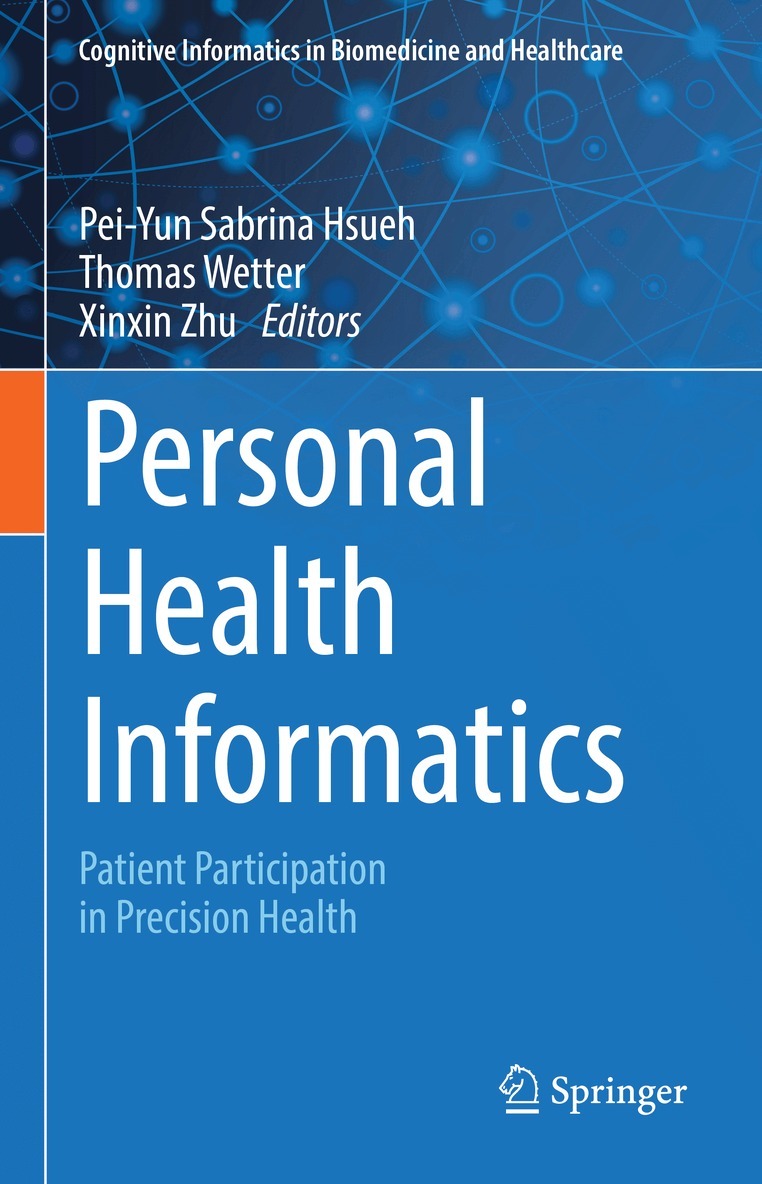
This book clarifies consumer and personal health informatics and their relevance to precision medicine and healthcare applications. Personal Health Informatics covers a broad definition of this emerging field, with individuals not simply consuming health but as active participants, researchers and designers in the healthcare ecosystem. The world of health informatics is constantly changing given the ever-increasing variety and volume of health data, care delivery models that shift from fee-for-service to value-based care, new entrants in the ecosystem and the evolving regulatory decision landscape. These changes have increased the importance of the role of patients in research studies for understanding work processes and activities, and the design and implementation of health information systems. Therefore, personal health informatics now provide research tools and protocols to engage within individual contexts when developing solutions, which can improve clinical practice, patientengagement and public health. Personal Health Informatics offers a snapshot of this emerging field, supported by the methodological, practical, legal and ethical perspectives of researchers and practitioners. In addition to being a research reader, this book provides pragmatic insights for practitioners in designing, implementing and evaluating personal health informatics in healthcare settings. It represents an excellent reader for students in all clinical disciplines and biomedical and health informatics to learn from the case studies provided in this emerging field.
Häftad, Engelska, 2023
651 kr
Skickas inom 10-15 vardagar
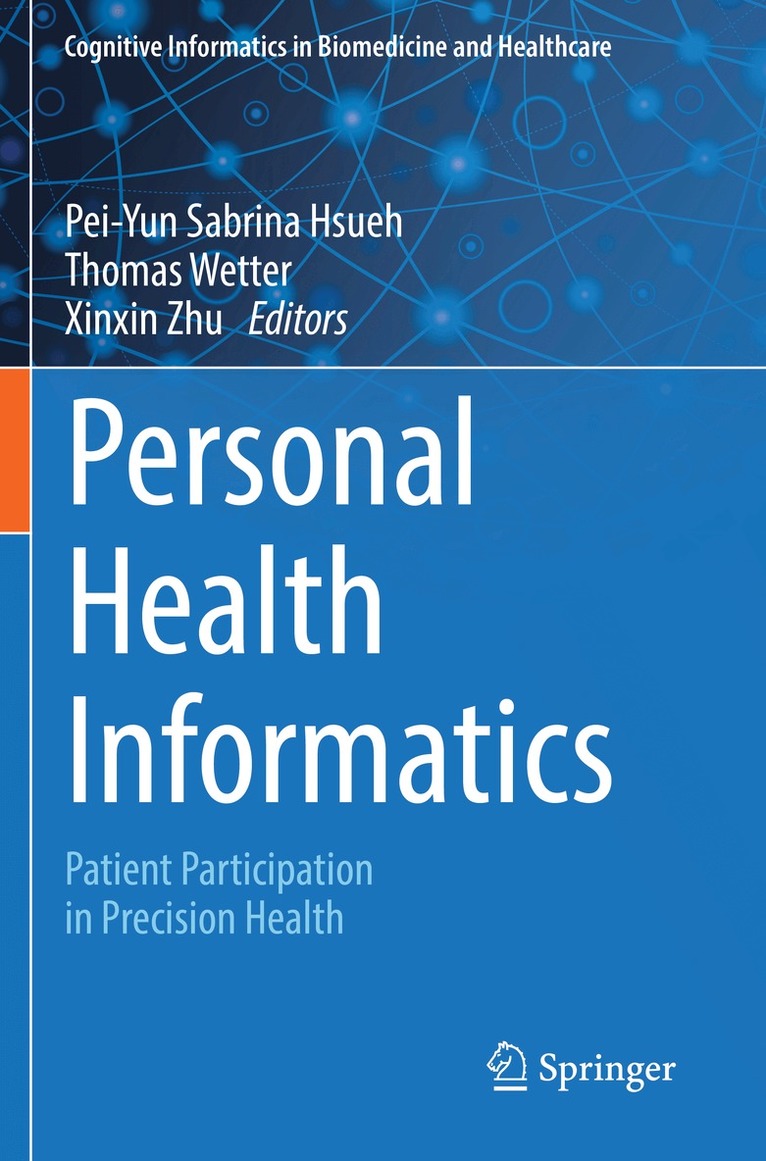
This book clarifies consumer and personal health informatics and their relevance to precision medicine and healthcare applications. Personal Health Informatics covers a broad definition of this emerging field, with individuals not simply consuming health but as active participants, researchers and designers in the healthcare ecosystem. The world of health informatics is constantly changing given the ever-increasing variety and volume of health data, care delivery models that shift from fee-for-service to value-based care, new entrants in the ecosystem and the evolving regulatory decision landscape. These changes have increased the importance of the role of patients in research studies for understanding work processes and activities, and the design and implementation of health information systems. Therefore, personal health informatics now provide research tools and protocols to engage within individual contexts when developing solutions, which can improve clinical practice, patientengagement and public health. Personal Health Informatics offers a snapshot of this emerging field, supported by the methodological, practical, legal and ethical perspectives of researchers and practitioners. In addition to being a research reader, this book provides pragmatic insights for practitioners in designing, implementing and evaluating personal health informatics in healthcare settings. It represents an excellent reader for students in all clinical disciplines and biomedical and health informatics to learn from the case studies provided in this emerging field.
Inbunden, Engelska, 2022
1 001 kr
Skickas inom 10-15 vardagar
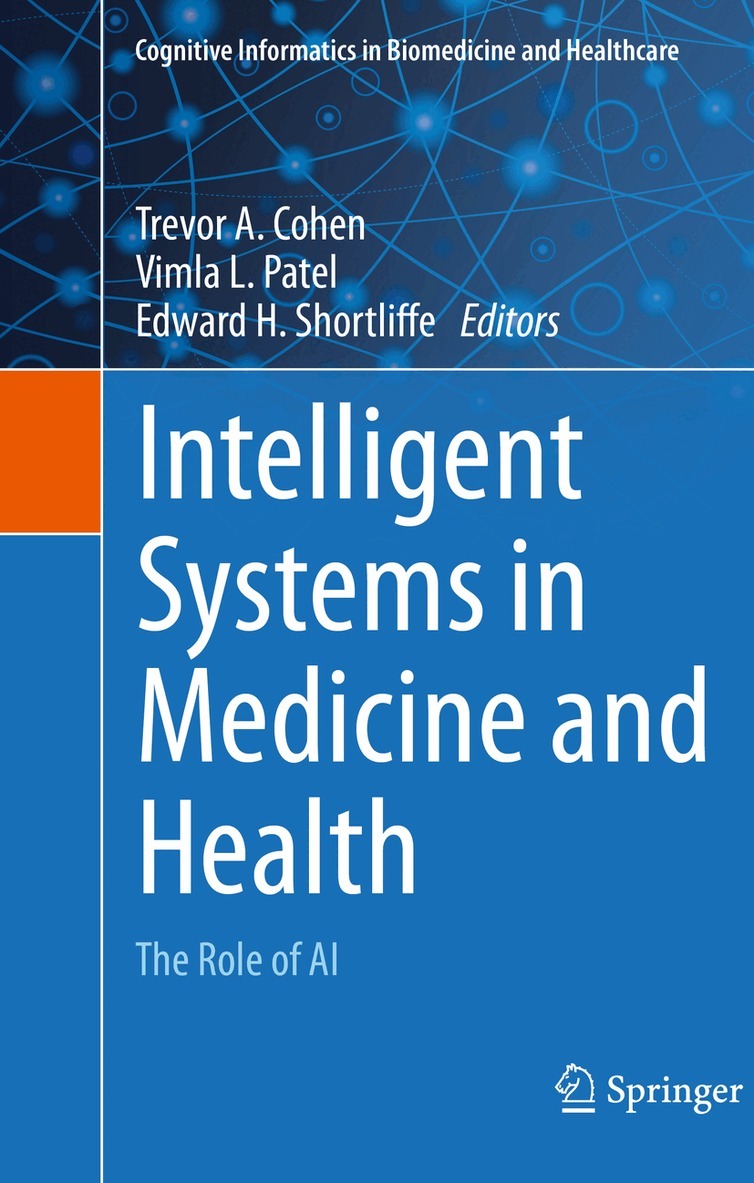
This textbook comprehensively covers the latest state-of-the-art methods and applications of artificial intelligence (AI) in medicine, placing these developments into a historical context. Factors that assist or hinder a particular technique to improve patient care from a cognitive informatics perspective are identified and relevant methods and clinical applications in areas including translational bioinformatics and precision medicine are discussed. This approach enables the reader to attain an accurate understanding of the strengths and limitations of these emerging technologies and how they relate to the approaches and systems that preceded them.With topics covered including knowledge-based systems, clinical cognition, machine learning and natural language processing, Intelligent Systems in Medicine and Health: The Role of AI details a range of the latest AI tools and technologies within medicine. Suggested additional readings and review questions reinforce the key points covered and ensure readers can further develop their knowledge. This makes it an indispensable resource for all those seeking up-to-date information on the topic of AI in medicine, and one that provides a sound basis for the development of graduate and undergraduate course materials.
Häftad, Engelska, 2023
725 kr
Skickas inom 10-15 vardagar
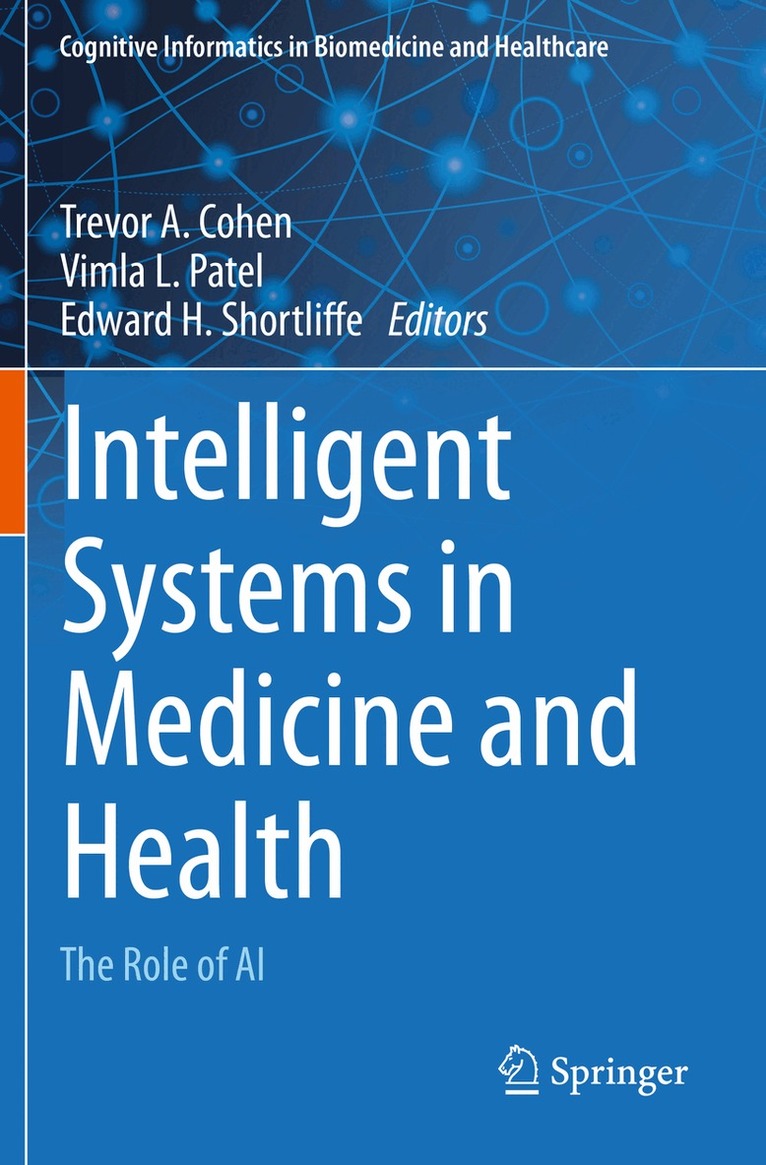
This textbook comprehensively covers the latest state-of-the-art methods and applications of artificial intelligence (AI) in medicine, placing these developments into a historical context. Factors that assist or hinder a particular technique to improve patient care from a cognitive informatics perspective are identified and relevant methods and clinical applications in areas including translational bioinformatics and precision medicine are discussed. This approach enables the reader to attain an accurate understanding of the strengths and limitations of these emerging technologies and how they relate to the approaches and systems that preceded them.With topics covered including knowledge-based systems, clinical cognition, machine learning and natural language processing, Intelligent Systems in Medicine and Health: The Role of AI details a range of the latest AI tools and technologies within medicine. Suggested additional readings and review questions reinforce the key points covered and ensure readers can further develop their knowledge. This makes it an indispensable resource for all those seeking up-to-date information on the topic of AI in medicine, and one that provides a sound basis for the development of graduate and undergraduate course materials.
Inbunden, Engelska, 2024
972 kr
Skickas inom 5-8 vardagar
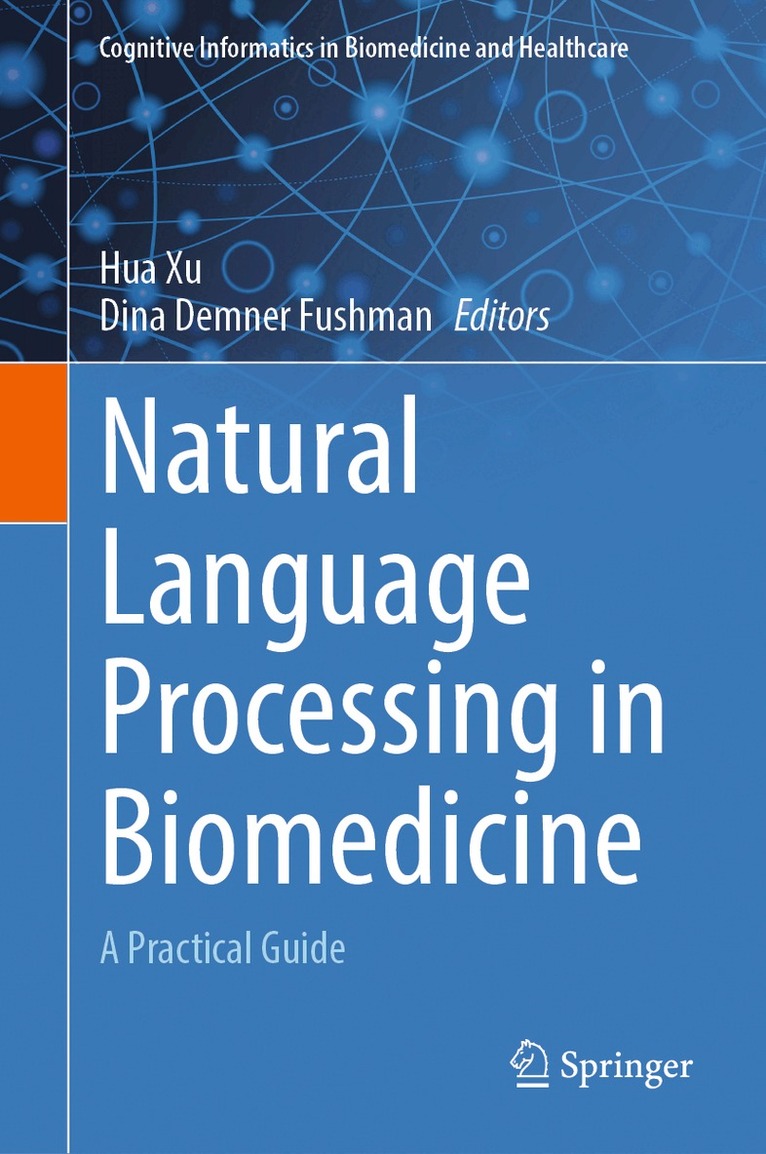
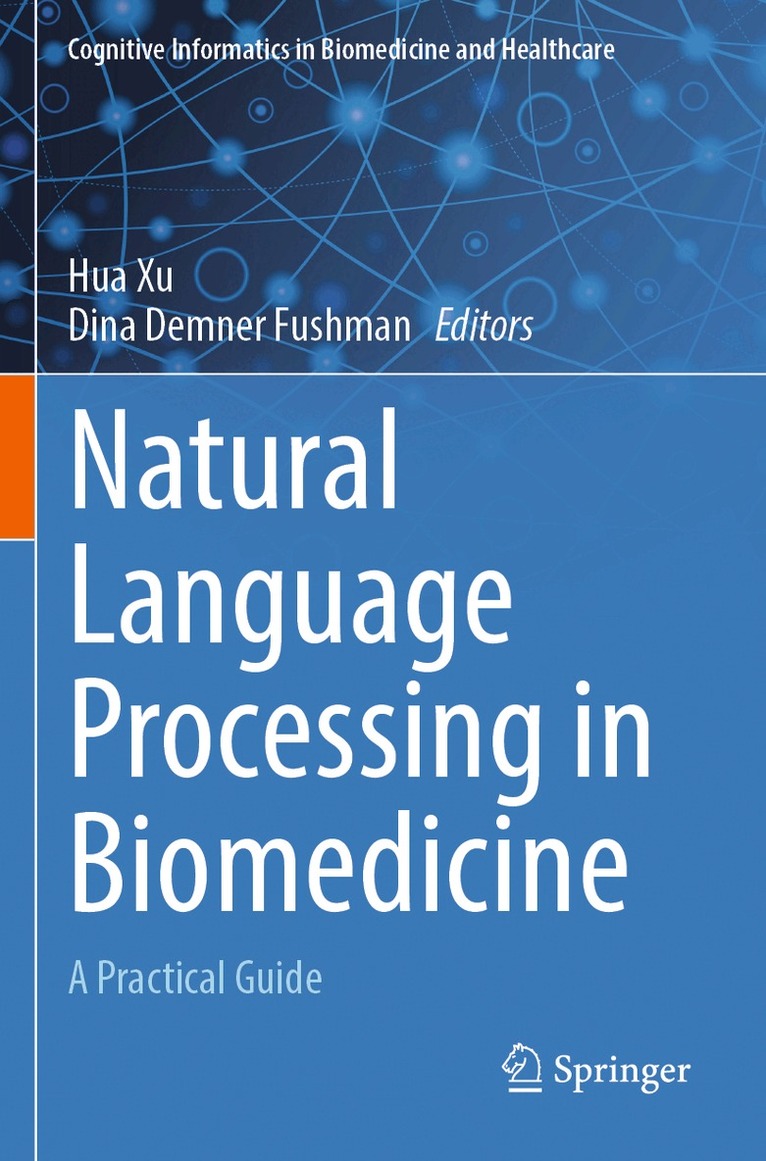
This textbook covers broad topics within the application of natural language processing (NLP) in biomedicine, and provides in-depth review of the NLP solutions that reveal information embedded in biomedical text. The need for biomedical NLP research and development has grown rapidly in the past two decades as an important field in cognitive informatics. Natural Language Processing in Biomedicine: A Practical Guide introduces the history of the biomedical NLP field and takes the reader through the basic aspects of NLP including different levels of linguistic information and widely used machine learning and deep learning algorithms. The book details common biomedical NLP tasks, such as named entity recognition, concept normalization, relation extraction, text classification, information retrieval, and question answering. The book illustrates the tasks with real-life use cases and introduces real-world datasets, novel machine learning and deep learning algorithms, and large language models. Relevant resources for corpora and medical terminologies are also introduced. The final chapters are devoted to discussing applications of biomedical NLP in healthcare and life sciences. This textbook therefore represents essential reading for students in biomedical informatics programs, as well as for professionals who are conducting research or building biomedical NLP systems.
Inbunden, Engelska, 2024
780 kr
Skickas inom 10-15 vardagar
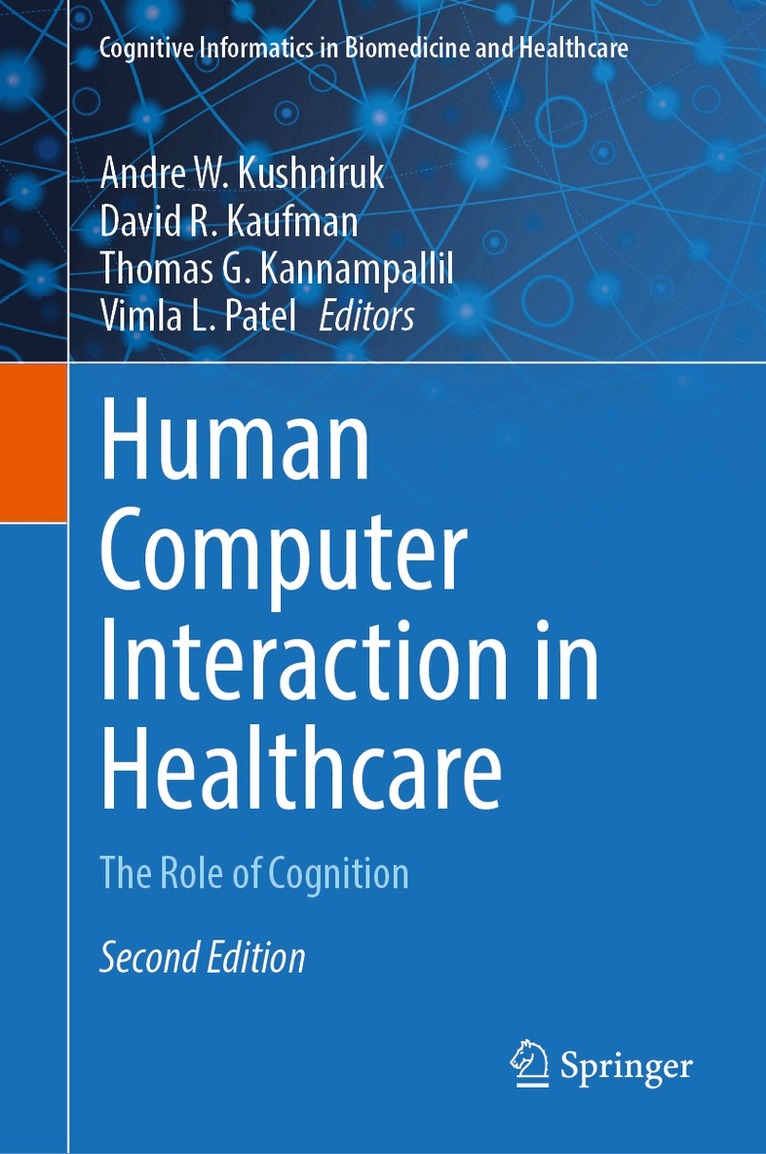
This thoroughly updated edition reports on the current state of human computer interaction (HCI) in biomedicine and healthcare, focusing on the cognitive underpinnings of human interactions with people and technology. With health information technologies becoming increasingly vital tools for the practice of clinical medicine, this book draws from key theories, models and evaluation frameworks, and their application in biomedical contexts to apply this to current research in HCI. However, numerous challenges remain in order to fully realize their potential as instruments for advancing clinical care and enhancing patient safety.There is a general consensus that health IT has not realized its potential as a tool to facilitate clinical decision-making, the coordination of care and improvements in patient safety. Embracing sound principles of iterative design can yield significant dividends. It can also enhance practitioner’s abilities to meet “meaningful use” requirements. The purpose of the book is two-fold: to address key gaps on the applicability of theories, models and evaluation frameworks of HCI and human factors for research in biomedical informatics. It highlights the state of the art, drawing from the current research in HCI. It also serves as a graduate level textbook highlighting key topics in HCI relevant for biomedical informatics, computer science and social science students working in the healthcare domain. Cognitive Informatics for Biomedicine: Human Computer Interaction in Healthcare is indispensable to those who want to ensure that the systems they build, and the interactive environments that they promote, will reflect the rigor and dedication to human-computer interaction principles that will ultimately enhance both the user’s experience and the quality and safety of the care that is offered to patients. It is an essential reference to all who are interested in the application of these new techniques within healthcare, from students of informatics through to clinicians, informatics researchers and developers of health IT looking to incorporate them into their day-to-day workflow.
Inbunden, Engelska, 2025
891 kr
Skickas inom 10-15 vardagar
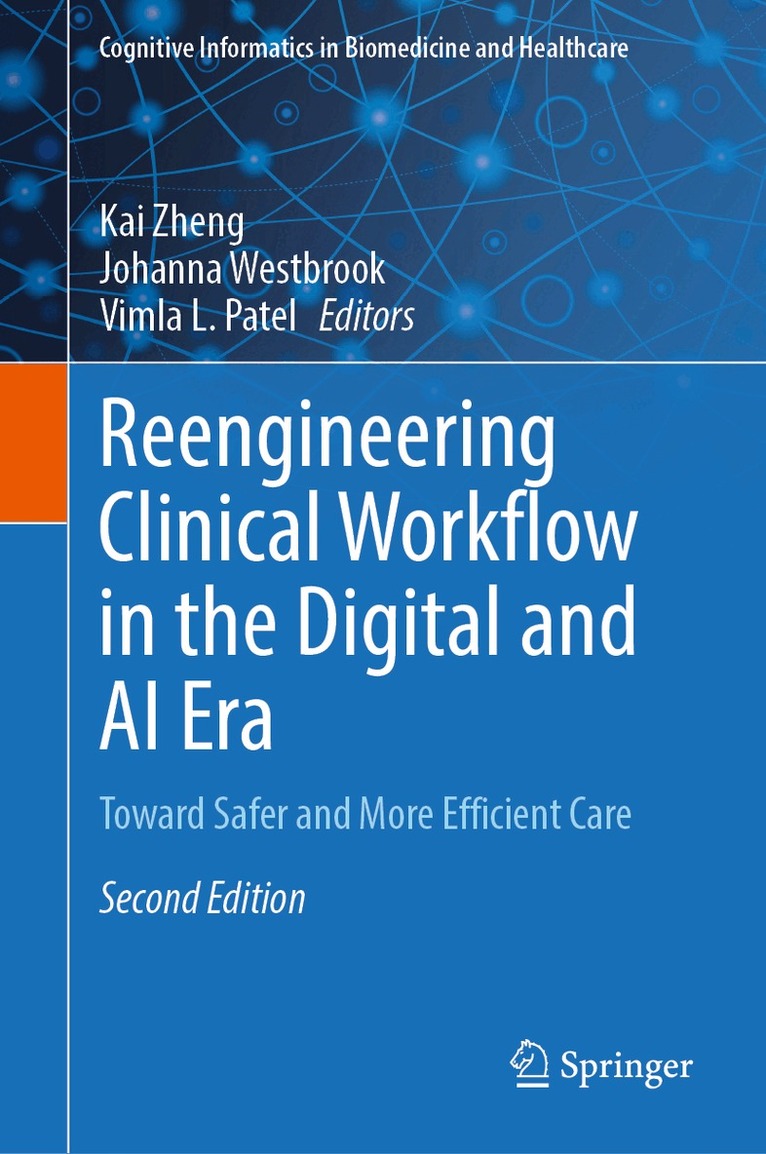
This timely new edition addresses gaps in the understanding of how health information technology (IT) impacts clinical workflows and how this impact is central to the safe and effective delivery of care to patients. The research in this area has advanced substantially in the past few years since the publication of the first edition, marked by milestone events such as the widespread and matured use of health IT, particularly electronic health records, and a new wave of innovations stimulated by the clinical application of AI-enabled systems such as ambient documentation technologies. This book has been expanded to reflect these new developments in the field and features clearly structured chapters covering a wide range of topics, including aspects of clinical workflows relevant to both practitioners and patients, tools for recording clinical workflow data, and techniques for potentially redesigning health IT-enabled care coordination. Reengineering Clinical Workflow in the Digital and AI Era: Toward Safer and More Efficient Care enables readers to develop a deeper understanding of clinical workflows and how they can potentially be modified to facilitate greater efficiency and safety in care provision, offering a valuable resource for both biomedical and health informatics professionals and trainees.
Häftad, Engelska, 2026
670 kr
Skickas inom 10-15 vardagar
This timely new edition addresses gaps in the understanding of how health information technology (IT) impacts clinical workflows and how this impact is central to the safe and effective delivery of care to patients. The research in this area has advanced substantially in the past few years since the publication of the first edition, marked by milestone events such as the widespread and matured use of health IT, particularly electronic health records, and a new wave of innovations stimulated by the clinical application of AI-enabled systems such as ambient documentation technologies. This book has been expanded to reflect these new developments in the field and features clearly structured chapters covering a wide range of topics, including aspects of clinical workflows relevant to both practitioners and patients, tools for recording clinical workflow data, and techniques for potentially redesigning health IT-enabled care coordination. Reengineering Clinical Workflow in the Digital and AI Era: Toward Safer and More Efficient Care enables readers to develop a deeper understanding of clinical workflows and how they can potentially be modified to facilitate greater efficiency and safety in care provision, offering a valuable resource for both biomedical and health informatics professionals and trainees.