Communications - Böcker
Visar alla böcker i serien Communications. Handla med fri frakt och snabb leverans.
4 produkter
4 produkter
1 056 kr
Skickas inom 10-15 vardagar
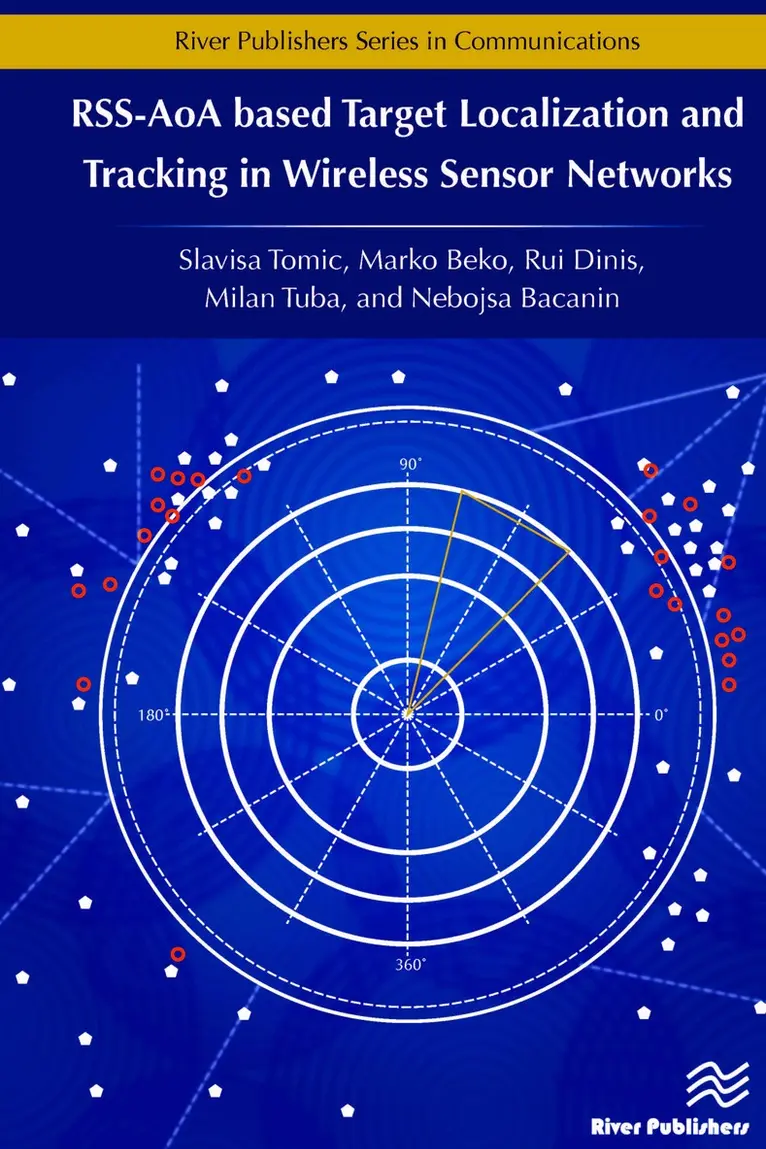
The desire for precise knowledge about the location of a moving object at any time instant has motivated a great deal of scientific research recently. This is owing to a steady expansion of the range of enabling devices and technologies, as well as the need for seamless solutions for location-based services. Besides localization accuracy, a common requirement for emerging solutions is that they are cost-abstemious, both in terms of the financial and computational cost. Hence, development of localization strategies from already deployed technologies, e.g., from different terrestrial radio frequency sources is of great practical interest. Amongst other, these include localization strategies based on received signal strength (RSS), time of arrival, angle of arrival (AoA) or a combination of them. RSS-AoA-based Target Localization and Tracking in Wireless Sensor Networks presents recent advances in developing algorithms for target localization and tracking, reflecting the state-of-the-art algorithms and research achievements in target localization and tracking based on hybrid (RSS-AoA) measurements.Technical topics discussed in the book include:Centralized RSS-AoA-based Target LocalizationDistributed RSS-AoA-based Target LocalizationRSS-AoA-based Target Tracking via Maximum A Posteriori EstimatorRSS-AoA-based Target Tracking via Kalman FilterRSS-AoA-based via Sensor NavigationThis book is of interest for personnel in telecommunications and surveillance industries, military, smart systems, as well as academic staff and postgraduate/research students in telecommunications, signal processing, and non-smooth and convex optimization.
Cognitive Hyperconnected Digital Transformation
Internet of Things Intelligence Evolution
Inbunden, Engelska, 2017
1 297 kr
Skickas inom 10-15 vardagar
Cognitive Hyperconnected Digital Transformation provides an overview of the current Internet of Things (IoT) landscape, ranging from research, innovation and development priorities to enabling technologies in a global context. It is intended as a standalone book in a series that covers the Internet of Things activities of the IERC-Internet of Things European Research Cluster, including both research and technological innovation, validation and deployment. The book builds on the ideas put forward by the European Research Cluster, the IoT European Platform Initiative (IoT-EPI) and the IoT European Large-Scale Pilots Programme, presenting global views and state-of-the-art results regarding the challenges facing IoT research, innovation, development and deployment in the next years. Hyperconnected environments integrating industrial/business/consumer IoT technologies and applications require new IoT open systems architectures integrated with network architecture (a knowledge-centric network for IoT), IoT system design and open, horizontal and interoperable platforms managing things that are digital, automated and connected and that function in real-time with remote access and control based on Internet-enabled tools. The IoT is bridging the physical world with the virtual world by combining augmented reality (AR), virtual reality (VR), machine learning and artificial intelligence (AI) to support the physical-digital integrations in the Internet of mobile things based on sensors/actuators, communication, analytics technologies, cyber-physical systems, software, cognitive systems and IoT platforms with multiple functionalities. These IoT systems have the potential to understand, learn, predict, adapt and operate autonomously. They can change future behaviour, while the combination of extensive parallel processing power, advanced algorithms and data sets feed the cognitive algorithms that allow the IoT systems to develop new services and propose new solutions. IoT technologies are moving into the industrial space and enhancing traditional industrial platforms with solutions that break free of device-, operating system- and protocol-dependency. Secure edge computing solutions replace local networks, web services replace software, and devices with networked programmable logic controllers (NPLCs) based on Internet protocols replace devices that use proprietary protocols. Information captured by edge devices on the factory floor is secure and accessible from any location in real time, opening the communication gateway both vertically (connecting machines across the factory and enabling the instant availability of data to stakeholders within operational silos) and horizontally (with one framework for the entire supply chain, across departments, business units, global factory locations and other markets). End-to-end security and privacy solutions in IoT space require agile, context-aware and scalable components with mechanisms that are both fluid and adaptive. The convergence of IT (information technology) and OT (operational technology) makes security and privacy by default a new important element where security is addressed at the architecture level, across applications and domains, using multi-layered distributed security measures. Blockchain is transforming industry operating models by adding trust to untrusted environments, providing distributed security mechanisms and transparent access to the information in the chain. Digital technology platforms are evolving, with IoT platforms integrating complex information systems, customer experience, analytics and intelligence to enable new capabilities and business models for digital business.
1 124 kr
Skickas inom 10-15 vardagar
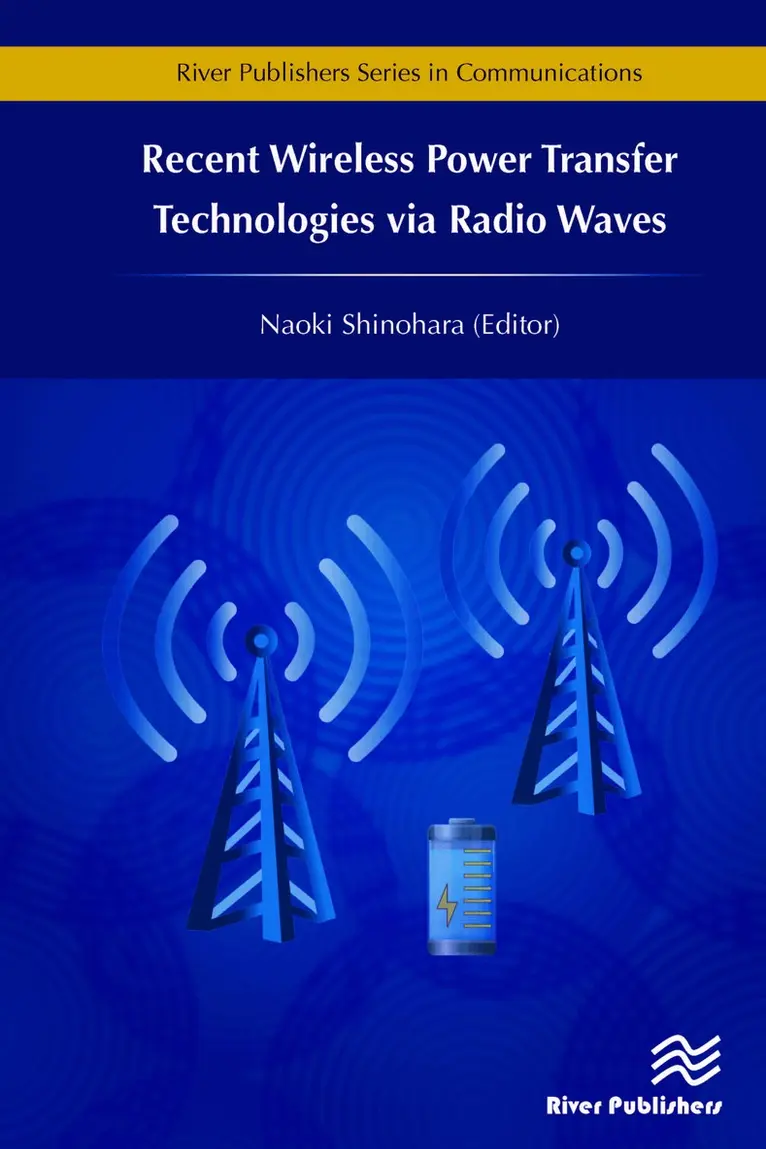
Wireless Power Transfer (WPT) is considered to be an innovative game changing technology. The same radio wave and electromagnetic field theory and technology for wireless communication and remote sensing is applied for WPT. In conventional wireless communication systems, information is “carried” on a radio wave and is then transmitted over a distance. In WPT however, the energy of the radio wave itself is transmitted over a distance. Wireless communication technology has proven to be extremely useful, however in future it should be even more useful to apply both wireless communication and wireless power technologies together.There are various WPT technologies, e.g. inductive near field WPT, resonance coupling WPT, WPT via radio waves, and laser power transfer. Recent Wireless Power Transfer Technologies via Radio Waves focusses on recent technologies and applications of the WPT via radio waves in far field. The book also covers the history, and future, of WPT via radio waves, as well as safety, EMC and coexistence of radio waves for WPT.Technical topics discussed in the book include: Radio Wave Generation Radio Wave Amplification with Solid States Circuit and Microwave Tubes Antenna and Beam Forming Technologies Radio Wave Conversion/Rectification to Electricity Battery-less Sensor Applications toward Internet of Things (IoT) Solar Power Satellite Application Safety, EMC, Coexistence of Radio Waves for the WPTWPT is an old technology based on the basic theory of radio waves, however WPT is also a state-of-the-art technology for the latest applications in IoT, sensor networks, wireless chargers for mobile phones, and solar power satellite. The theory behind these technologies, as well as applications, are explained in this book.
1 192 kr
Skickas inom 10-15 vardagar
Towards Future Technologies for Business Ecosystem Innovation describes CONASENSE within the broad platform of the CTIF Global Capsule (CGC) covering future technologies and its enablers, smart cities, telemedicine, crowd computing, satellite, unmanned air vehicles , cooperative wireless sensor network, remotely piloted aircraft system, network neutrality as well as virtual business model