Complex Dispute Resolution - Böcker
Visar alla böcker i serien Complex Dispute Resolution. Handla med fri frakt och snabb leverans.
4 produkter
4 produkter
5 198 kr
Skickas inom 7-10 vardagar
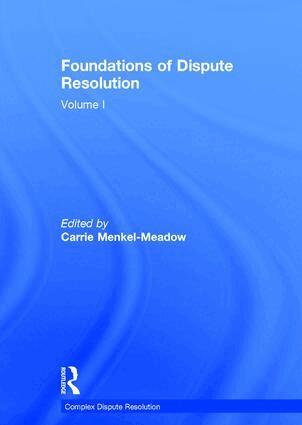
This volume brings together leading research articles in to the theory, research findings and applications of modern dispute resolution. The articles relate to a wide variety of settings and cover the primary processes of negotiation, mediation and arbitration, as well as exploring combinations and hybridization of those processes. Also included are articles on the search for 'value-added' or 'pie-expanding' creative solutions; the choosing of strategies, based on game theory, economics and social and cognitive psychology; how foundational theories have been altered or modified, depending on contexts, and numbers of parties and issues; and what issues are raised by the 'privatization of justice'. The articles span both the 'science' and 'art' of dispute resolution, consider the relationship of peace to justice and include both empirical (descriptive) and normative (prescriptive) assessments of how these processes of dispute resolution function.
5 569 kr
Skickas inom 7-10 vardagar
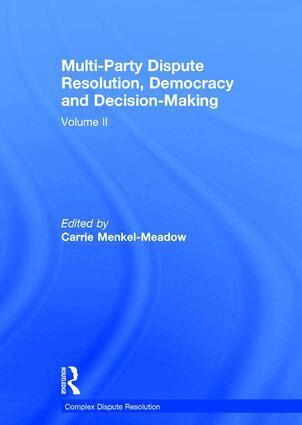
The articles selected for this volume draw on game theory, political science, psychology, sociology and anthropology to consider how the process of dispute resolution is altered, challenged and made more complex by the presence of multiple parties and/or multiple issues. The volume explores issues of coalition formation, defection, collaboration, commitments, voting practices, and joint decision making in settings of increasing human complexity. Also included are examples of concrete uses of deliberative democracy processes taken from new applications of complex dispute resolution theory and practice. The selected essays represent the latest theoretical advances and challenges in the field and demonstrate attempts to use dispute resolution theory in a wide variety of settings such as political decision making and policy formation; regulatory matters; environmental disputes; healthcare; community disputes; constitutional formation; and in many other controversial issues in the polity.
5 198 kr
Skickas inom 7-10 vardagar
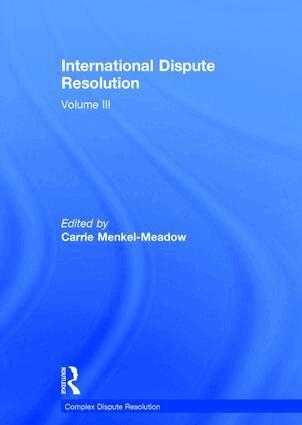
This volume considers the application of dispute resolution theory and practice to international conflicts and explores the uses of formal processes such as diplomacy or treaty formation, as well as more informal processes such as multiple-track private negotiations or peace workshops. The volume also presents materials on more innovative forms of complex transnational or sub-national conflict resolution, such as transitional and restorative justice institutions and processes, both formal (truth and reconciliation commissions) and indigenous and informal (Rwandan gacaca). The articles are selected from both public and private international law settings and query whether universal principles of multi-national dispute resolution are possible or whether each conflict is likely to be sui generis or requiring deep contextual analysis and integrity. They also explore the dialogic, as well as dialectical, relationships in the development of conflict resolution theory and practice in multi-cultural and multi-disciplinary settings and show that the application of dispute resolution theories from multiple sources and cultures (both Western and Eastern, as well as Northern and Southern) to multiple sites of conflicts (including courts, tribunals and other forms of dispute resolution at different levels and from multiple jurisdictions) raises important dilemmas of universalism and particularism in international conflict resolution.
615 kr
Skickas inom 10-15 vardagar
This volume considers the application of dispute resolution theory and practice to international conflicts and explores the uses of formal processes such as diplomacy or treaty formation, as well as more informal processes such as multiple-track private negotiations or peace workshops. The volume also presents materials on more innovative forms of complex transnational or sub-national conflict resolution, such as transitional and restorative justice institutions and processes, both formal (truth and reconciliation commissions) and indigenous and informal (Rwandan gacaca). The articles are selected from both public and private international law settings and query whether universal principles of multi-national dispute resolution are possible or whether each conflict is likely to be sui generis or requiring deep contextual analysis and integrity. They also explore the dialogic, as well as dialectical, relationships in the development of conflict resolution theory and practice in multi-cultural and multi-disciplinary settings and show that the application of dispute resolution theories from multiple sources and cultures (both Western and Eastern, as well as Northern and Southern) to multiple sites of conflicts (including courts, tribunals and other forms of dispute resolution at different levels and from multiple jurisdictions) raises important dilemmas of universalism and particularism in international conflict resolution.