Congressional Leaders – serie
Visar alla böcker i serien Congressional Leaders. Handla med fri frakt och snabb leverans.
2 produkter
2 produkter
Inbunden, Engelska, 2023
469 kr
Skickas inom 5-8 vardagar
Thomas S. Foley, a Democratic representative from the traditionally Republican region of eastern Washington, served in Congress from 1964 to 1994. In 1989 he became the first Speaker of the US House of Representatives from a district west of Texas. His thirty years of experience as a Democrat representing a Republican-leaning district contributed to his strong commitment to bipartisanship and institution building. His speakership came to an end when the Newt Gingrich-led “Republican Revolution” ushered in an era of ideological polarization and fierce partisanship.Tom Foley: The Man in the Middle is a political biography of this important but often overlooked figure in modern congressional history. While examining the story of Foley’s service as Speaker of the House, R. Kenton Bird and John C. Pierce place his career in the context of both his own life story and congressional politics in the late twentieth century. What emerges is the story of a leader whose strongly held political values motivated him to sustain a vibrant and responsive House of Representatives as an institution, with a stance that proved incompatible with the polarized and strident political environment that emerged in the early 1990s.Bird and Pierce offer the first major study of Tom Foley’s political career in this penetrating look at a unique and transformative congressional leader who focused on making Congress work by bringing politicians from both sides of the aisle together. Foley’s tenure spanned the crucial years of transition between this bipartisan ideology of governance and the politics of the twenty-first century, between the leadership styles of Democrats Jim Wright and Tip O’Neil and that of Republican Gingrich. Foley’s defeat in 1994 ended this remarkable career of leading from the middle and marked a seismic transition in the landscape of American politics.
Häftad, Engelska, 2023
351 kr
Skickas inom 10-15 vardagar
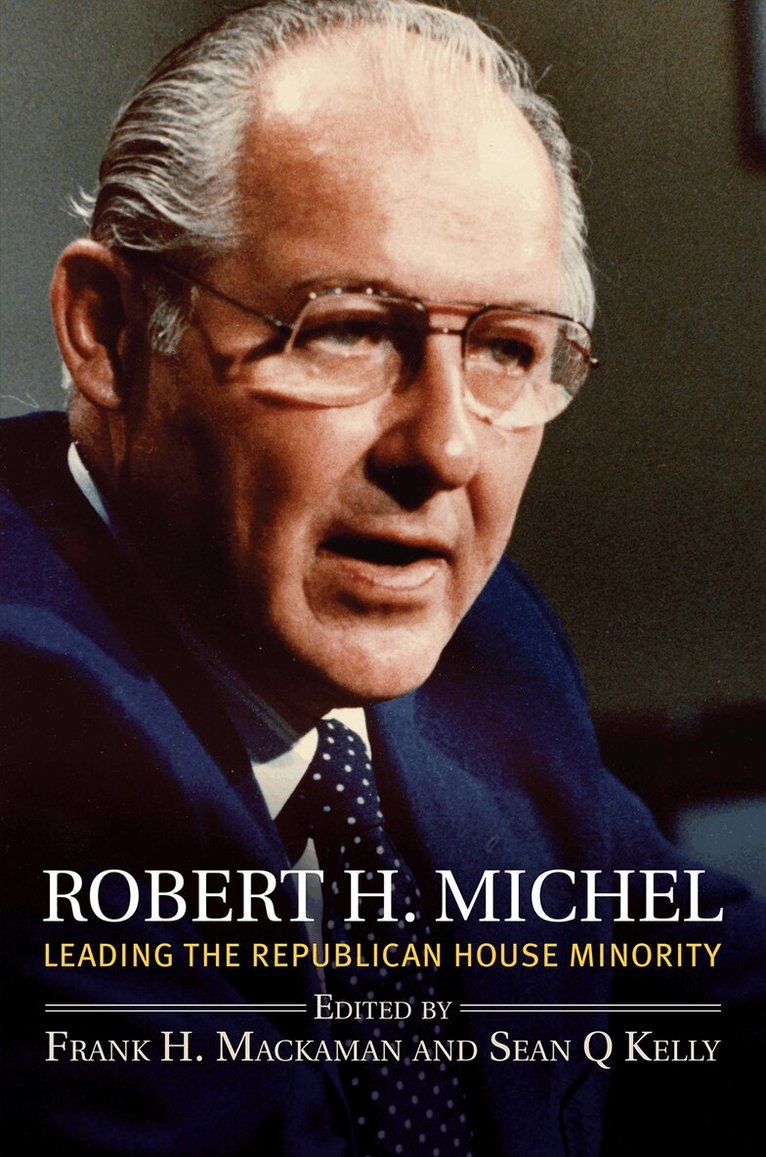
As incredible as it might seem, there was a time when Congress worked—a time when partisan competition produced consensus and good public policy. At the center of it all, for four decades, was Robert H. Michel, the longest-serving Republican leader in the history of the US House of Representatives. In this book, top congressional scholars, historians, and political scientists provide a compelling picture of Bob Michel and the congressional politics of his day. Marshaling a wealth of biographical, historical, and political detail, they describe Michel’s House of Representatives and how the institution became what it is now.During the thirty-eight years that Michel represented Illinois’s 18th congressional district (January 3, 1957–January 3, 1995), the last fourteen as Republican leader in the House, his party was in the minority. Drawing on archival material that captures politics in the making, the authors of this volume show how Michel made the most of that minority status. They write about his legislative efforts, as with President Ronald Reagan’s tax cuts and President George H. W. Bush’s North American Free Trade Agreement negotiations. The resulting friction between Michel’s leadership on the national stage and his responsibilities to constituents back home almost cost him reelection in 1982, forcing a change in his “home style.” Their essays also cover Michel’s strategies for House minority leadership, his party’s proposals to reform the House, and his retirement one election before Republicans became the House majority party—the result of a generational and ideological shift to a more combative style of politics practiced by Michel’s successor, Newt Gingrich.An innovative approach to biography, with its examination of Bob Michel’s career from a variety of angles, this volume offers both an unusually nuanced portrait of one important politician and a uniquely informed perspective on politics in the latter half of the twentieth century.