Contemporary Concepts of Condensed Matter Science - Böcker
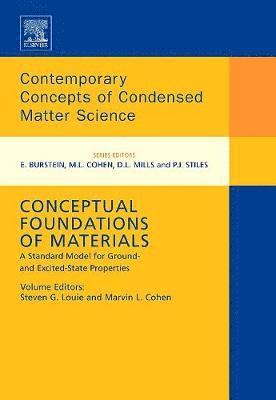
Conceptual Foundations of Materials
A Standard Model for Ground- and Excited-State Properties
2 855 kr
Skickas inom 5-8 vardagar
The goal of this Volume "Conceptual Foundations of Materials: A standard model for ground- and excited-state properties" is to present the fundamentals of electronic structure theory that are central to the understanding and prediction of materials phenomena and properties. The emphasis is on foundations and concepts. The Sections are designed to offer a broad and comprehensive perspective of the field. They cover the basic aspects of modern electronic structure approaches and highlight their applications to the structural (ground state, vibrational, dynamic and thermodynamic, etc.) and electronic (spectroscopic, dielectric, magnetic, transport, etc.) properties of real materials including solids, clusters, liquids, and nanostructure materials. This framework also forms a basis for studies of emergent properties arising from low-energy electron correlations and interactions such as the quantum Hall effects, superconductivity, and other cooperative phenomena.
Although some of the basics and models for solids were developed in the early part of the last century by figures such as Bloch, Pauli, Fermi, and Slater, the field of electronic structure theory went through a phenomenal growth during the past two decades, leading to new concepts, understandings, and predictive capabilities for determining the ground- and excited-state properties of real, complex materials from first principles. For example, theory can now be used to predict the existence and properties of materials not previously realized in nature or in the laboratory. Computer experiments can be performed to examine the behavior of individual atoms in a particular process, to analyze the importance of different mechanisms, or just to see what happen if one varies the interactions and parameters in the simulation. Also, with ab initio calculations, one can determine from first principles important interaction parameters which are needed in model studies of complex processes or highly correlated systems. Each time a new material or a novel form of a material is discovered, electronic structure theory inevitably plays a fundamental role in unraveling its properties.
Provides the foundations of the field of condensed matter physics An excellent supplementary text for classes on condensed matter physics/solid state physics Volume covers current work at the forefront Presentations are accessible to nonspecialists, with focus on underlying fundamentalsNanomagnetism
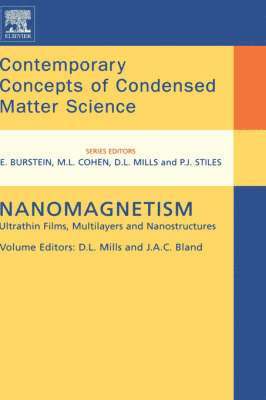
Ultrathin Films, Multilayers and Nanostructures
2 106 kr
Skickas inom 5-8 vardagar
Carbon Nanotubes: Quantum Cylinders of Graphene
2 081 kr
Skickas inom 7-10 vardagar
Superconductivity in New Materials
1 947 kr
Skickas inom 7-10 vardagar
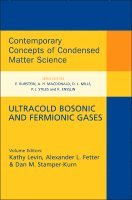
Ultracold Bosonic and Fermionic Gases
1 739 kr
Skickas inom 7-10 vardagar
The rapidly developing topic of ultracold atoms has many actual and potential applications for condensed-matter science, and the contributions to this book emphasize these connections.
Ultracold Bose and Fermi quantum gases are introduced at a level appropriate for first-year graduate students and non-specialists such as more mature general physicists. The reader will find answers to questions like: how are experiments conducted and how are the results interpreted? What are the advantages and limitations of ultracold atoms in studying many-body physics? How do experiments on ultracold atoms facilitate novel scientific opportunities relevant to the condensed-matted community?
This volume seeks to be comprehensible rather than comprehensive; it aims at the level of a colloquium, accessible to outside readers, containing only minimal equations and limited references. In large part, it relies on many beautiful experiments from the past fifteen years and their very fruitful interplay with basic theoretical ideas. In this particular context, phenomena most relevant to condensed-matter science have been emphasized.
Introduces ultracold Bose and Fermi quantum gases at a level appropriate for non-specialists Discusses landmark experiments and their fruitful interplay with basic theoretical ideas Comprehensible rather than comprehensive, containing only minimal equationsTopological Insulators
1 739 kr
Skickas inom 7-10 vardagar
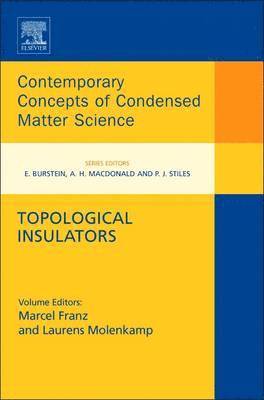
Topological Insulators, volume six in the Contemporary Concepts of Condensed Matter Series, describes the recent revolution in condensed matter physics that occurred in our understanding of crystalline solids. The book chronicles the work done worldwide that led to these discoveries and provides the reader with a comprehensive overview of the field.
Starting in 2004, theorists began to explore the effect of topology on the physics of band insulators, a field previously considered well understood. However, the inclusion of topology brings key new elements into this old field. Whereas it was thought that all band insulators are essentially equivalent, the new theory predicts two distinct classes of band insulators in two spatial dimensions and 16 classes in three dimensions. These "topological" insulators exhibit a host of unusual physical properties, including topologically protected gapless surface states and exotic electromagnetic response, previously thought impossible in such systems.
Within a short time, this new state of quantum matter, topological insulators, has been discovered experimentally both in 2D thin film structures and in 3D crystals and alloys. It appears that topological insulators are quite common in nature, and there are dozens of confirmed substances that exhibit this behavior. Theoretical and experimental studies of these materials are ongoing with the goal of attaining the fundamental understanding and exploiting them in future practical applications.
Usable as a textbook for graduate students and as a reference resource for professionals Includes the most recent discoveries and visions for future technological applications All authors are prominent in the field