Crisis Of Genocide - Böcker
Visar alla böcker i serien Crisis Of Genocide. Handla med fri frakt och snabb leverans.
4 produkter
4 produkter
889 kr
Skickas
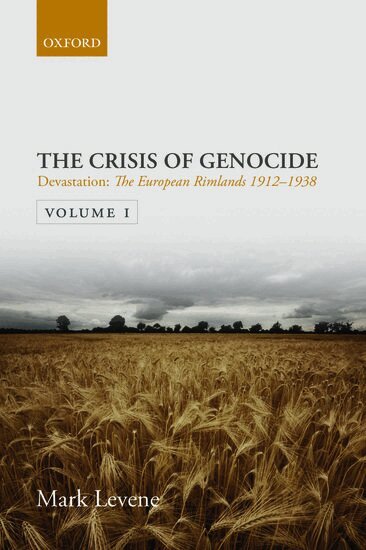
From the years leading up to the First World War to the aftermath of the Second, Europe experienced an era of genocide. As well as the Holocaust, this period also witnessed the Armenian genocide in 1915, mass killings in Bolshevik and Stalinist Russia, and a host of further ethnic cleansings in Anatolia, the Balkans, and Eastern Europe. Crisis of Genocide seeks to integrate these genocidal events into a single, coherent history. Over two volumes, Mark Levene demonstrates how the relationship between geography, nation, and power came to play a key role in the emergence of genocide in a collapsed or collapsing European imperial zone - the Rimlands - and how the continuing geopolitical contest for control of these Eastern European or near-European regions destabilised relationships between diverse and multifaceted ethnic communities who traditionally had lived side by side. An emergent pattern of toxicity can also be seen in the struggles for regional dominance as pursued by post-imperial states, nation-states, and would-be states. Volume I: Devastation covers the period from 1912 to 1938. It is divided into two parts, the first associated with the prelude to, actuality of, and aftermath of the Great War and imperial collapse, the second the period of provisional 'New Europe' reformulation as well as post-imperial Stalinist, Nazi - and Kemalist - consolidation up to 1938. Levene also explores the crystallisation of truly toxic anti-Jewish hostilities, the implication being that the immediate origins of the Jewish genocides in the Second World War are to be found in the First.
855 kr
Skickas
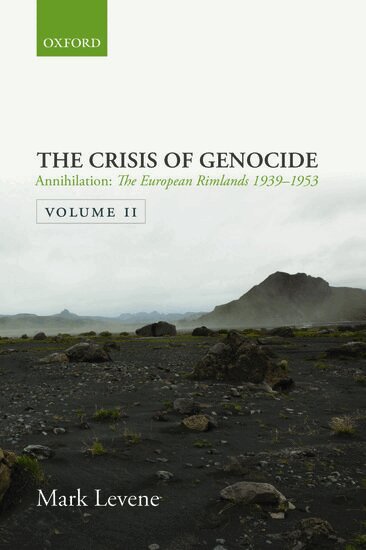
From the years leading up to the First World War to the aftermath of the Second, Europe experienced an era of genocide. As well as the Holocaust, this period also witnessed the Armenian genocide in 1915, mass killings in Bolshevik and Stalinist Russia, and a host of further ethnic cleansings in Anatolia, the Balkans, and Eastern Europe. Crisis of Genocide seeks to integrate these genocidal events into a single, coherent history. Over two volumes, Mark Levene demonstrates how the relationship between geography, nation, and power came to play a key role in the emergence of genocide in a collapsed or collapsing European imperial zone - the Rimlands - and how the continuing geopolitical contest for control of these Eastern European or near-European regions destabilised relationships between diverse and multifaceted ethnic communities who traditionally had lived side by side. An emergent pattern of toxicity can also be seen in the struggles for regional dominance as pursued by post-imperial states, nation-states, and would-be states. Volume II: Annihilation covers the period from 1939 to 1953, particularly focussing on the Second World War, and its aftermath, the Holocaust and its lasting impact, and the latter part of the Stalinist regime. Levene demonstrates that while the attempted Nazi mass murder of the entirety of European Jewry represents the most thoroughgoing and extreme consequence of efforts aimed at political and social reformulation of the Rimlands' arena in particular, the accumulation and concentration of genocidal violence against many 'minority' groups would suggest that anti-Semitism or racism alone is insufficient to provide a comprehensive explanation for genocide.
1 647 kr
Skickas inom 7-10 vardagar
From the years leading up to the First World War to the aftermath of the Second, Europe experienced an era of genocide. As well as the Holocaust, this period also witnessed the Armenian genocide in 1915, mass killings in Bolshevik and Stalinist Russia, and a host of further ethnic cleansings in Anatolia, the Balkans, and Eastern Europe. Crisis of Genocide seeks to integrate these genocidal events into a single, coherent history.Over two volumes, Mark Levene demonstrates how the relationship between geography, nation, and power came to play a key role in the emergence of genocide in a collapsed or collapsing European imperial zone - the Rimlands - and how the continuing geopolitical contest for control of these Eastern European or near-European regions destabilised relationships between diverse and multifaceted ethnic communities who traditionally had lived side by side. An emergent pattern of toxicity can also be seen in the struggles for regional dominance as pursued by post-imperial states, nation-states, and would-be states.Volume I: Devastation covers the period from 1912 to 1938. It is divided into two parts, the first associated with the prelude to, actuality of, and aftermath of the Great War and imperial collapse, the second the period of provisional 'New Europe' reformulation as well as post-imperial Stalinist, Nazi - and Kemalist - consolidation up to 1938. Levene also explores the crystallisation of truly toxic anti-Jewish hostilities, the implication being that the immediate origins of the Jewish genocides in the Second World War are to be found in the First.
1 612 kr
Skickas inom 7-10 vardagar
From the years leading up to the First World War to the aftermath of the Second, Europe experienced an era of genocide. As well as the Holocaust, this period also witnessed the Armenian genocide in 1915, mass killings in Bolshevik and Stalinist Russia, and a host of further ethnic cleansings in Anatolia, the Balkans, and Eastern Europe. Crisis of Genocide seeks to integrate these genocidal events into a single, coherent history.Over two volumes, Mark Levene demonstrates how the relationship between geography, nation, and power came to play a key role in the emergence of genocide in a collapsed or collapsing European imperial zone - the Rimlands - and how the continuing geopolitical contest for control of these Eastern European or near-European regions destabilised relationships between diverse and multifaceted ethnic communities who traditionally had lived side by side. An emergent pattern of toxicity can also be seen in the struggles for regional dominance as pursued by post-imperial states, nation-states, and would-be states.Volume II: Annihilation covers the period from 1939 to 1953, particularly focussing on the Second World War, and its aftermath, the Holocaust and its lasting impact, and the latter part of the Stalinist regime. Levene demonstrates that while the attempted Nazi mass murder of the entirety of European Jewry represents the most thoroughgoing and extreme consequence of efforts aimed at political and social reformulation of the Rimlands' arena in particular, the accumulation and concentration of genocidal violence against many 'minority' groups would suggest that anti-Semitism or racism alone is insufficient to provide a comprehensive explanation for genocide.