Cultural Dynamics of Science - Böcker
Visar alla böcker i serien Cultural Dynamics of Science. Handla med fri frakt och snabb leverans.
4 produkter
4 produkter
Del 1 - Cultural Dynamics of Science
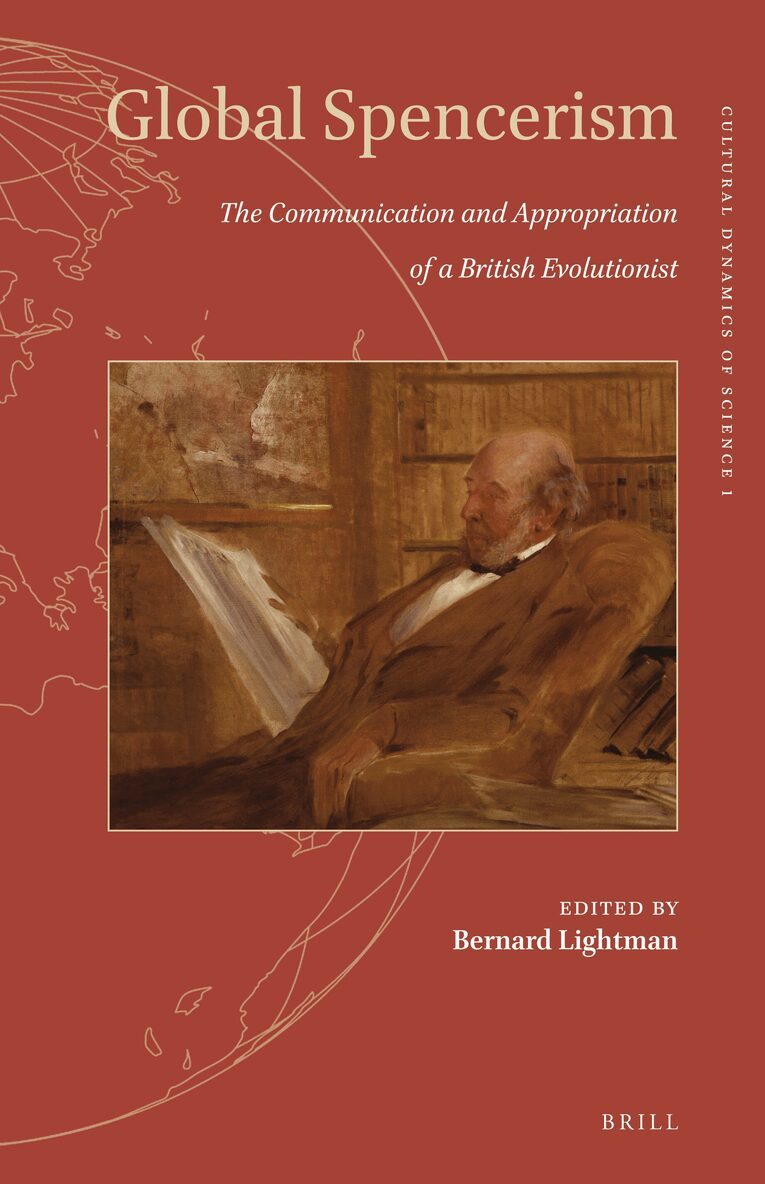
Global Spencerism
The Communication and Appropriation of a British Evolutionist
Inbunden, Engelska, 2015
2 427 kr
Skickas inom 5-8 vardagar
Today the name most closely associated with evolutionary theory is Charles Darwin. Given Darwin’s immense reputation it is easy to forget that Herbert Spencer, in his time, was just as famous as Darwin. It turns out that Spencer’s evolutionary thought was not what necessarily appealed to many of his readers, since they had their own sense of his identity and importance. By focusing on Spencer the evolutionist, scholars have tended to concentrate their attention on a rather narrow view of him that has come out of Anglo-American appropriations of his thought. Spencer was one of the first international, public intellectuals whose views on psychology, religion, sociology, ethics, education, and biology captured the imagination of readers all over the world. The chapters will cover the communication and appropriation of Spencer’s ideas in Russia, the Middle East, China, Japan, Mexico, Argentina, Brazil, the United States, Italy, Scandinavia, and France. Contributors are: Li Bin, Juan Manuel Rodriguez Caso, Gowan Dawson, Heloisa Maria Bertol Domingues, Marwa Elshakry, Mark Francis, G. Clinton Godart, Michael Gordon, Paola Govoni, Rosaura Ruiz Gutiérrez, Hans Henrik Hjermitslev, Ricardo Noguera-Solano, Adriana Novoa, Greg Radick, Nathalie Richard, Ke Zunke.
Del 2 - Cultural Dynamics of Science
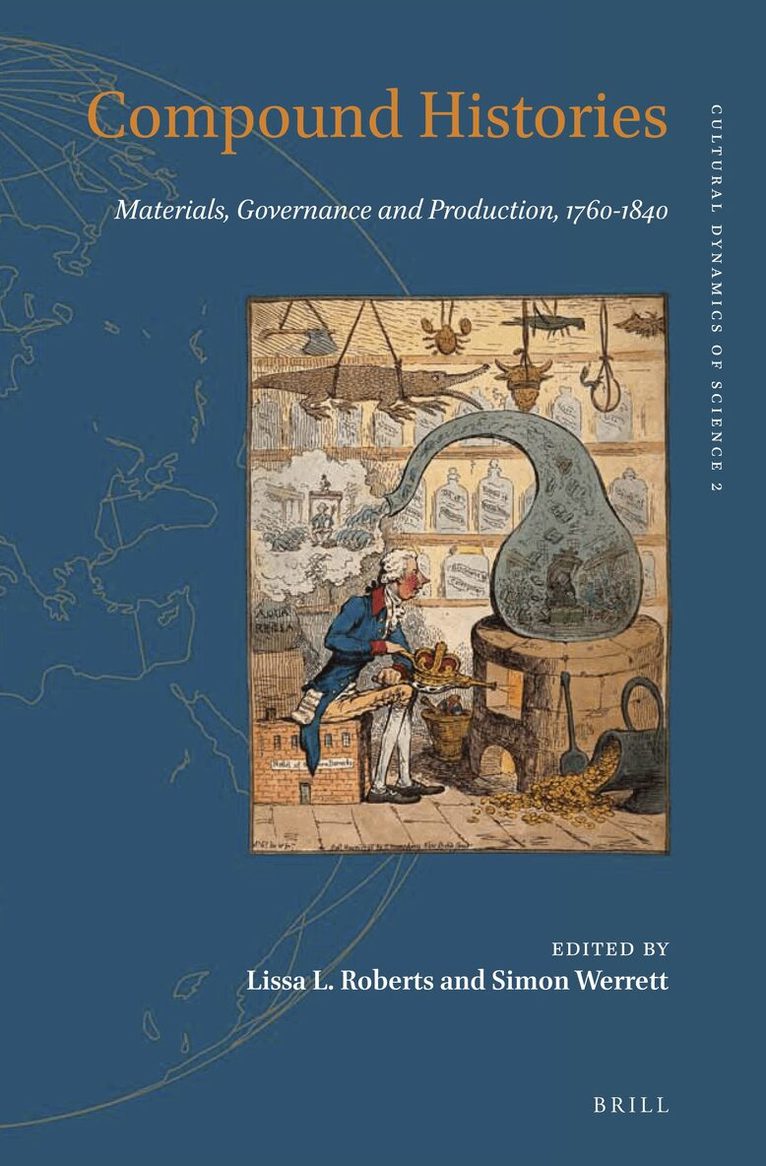
Compound Histories
Materials, Governance and Production, 1760-1840
Inbunden, Engelska, 2017
1 941 kr
Skickas inom 5-8 vardagar
Compound Histories: Materials, Governance and Production, 1760-1840 offers a new view of the period during which Europe took on its modern character and globally dominant position. By exploring the intertwined realms of production, governance and materials, it places chemists and chemistry at the center of processes most closely identified with the construction of the modern world. This includes the interactive intensification of material and knowledge production; the growth and management of consumption; environmental changes, regulation of materials, markets, landscapes and societies; and practices embodied in political economy. Rather than emphasize revolutionary breaks and the primacy of innovation-driven change, the volume highlights the continuities and accumulation of incremental changes that framed historical development. Contributors are: Robert G.W. Anderson, Bernadette Bensaude Vincent, José Ramón Bertomeu Sánchez, John R.R. Christie, Joppe van Driel, Frank A.J.L. James, Christine Lehman, Lissa L. Roberts, Thomas le Roux, Elena Serrano, Anna Simmons, Marie Thébaud-Sorger, Sacha Tomic, Andreas Weber, Simon Werrett.
Del 3 - Cultural Dynamics of Science
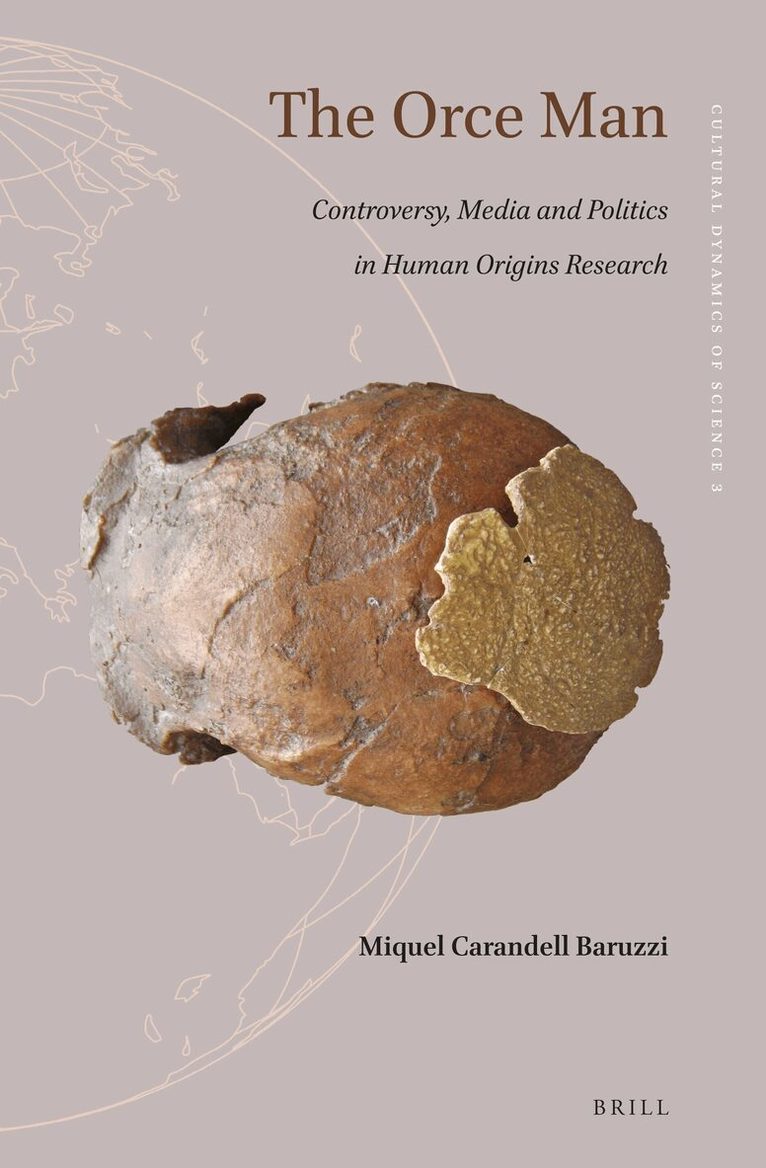
Orce Man
Controversy, Media and Politics in Human Origins Research
Inbunden, Engelska, 2020
2 325 kr
Skickas inom 5-8 vardagar
In The Orce Man: Controversy, Media and Politics in Human Origins Research, Miquel Carandell presents a thrilling story of a controversy on an Spanish “First European” that involved scientists, politicians and newspapers. In the early 1980s, with Spanish democracy in its beginnings, the Orce bone was transformed from a famous human ancestor to an apparently ridiculous donkey remain. With a chronological narrative, this book is not centered on whether the bone was human or not, but on the circumstances that made a certain claim credible or not, from both the scientific community and the general public. Carandell’s analysis draws on the thin line that separates success from failure and the role of media and politics in the controversy.
Del 4 - Cultural Dynamics of Science
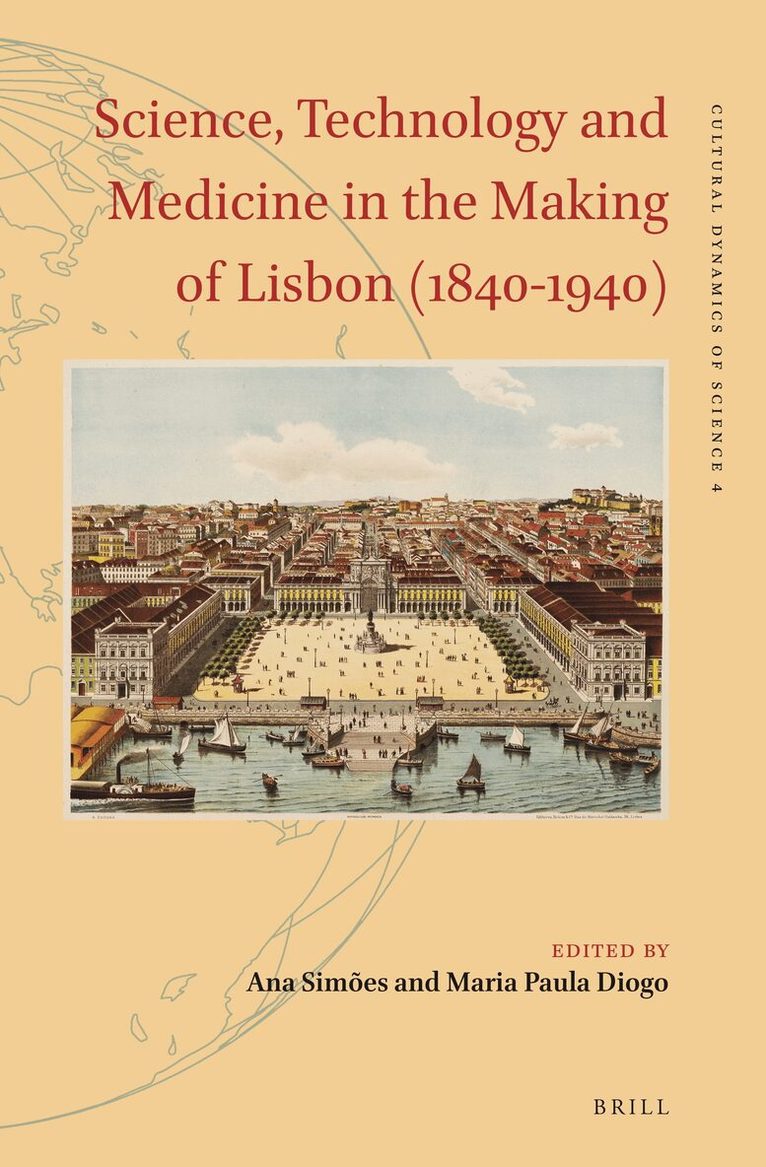
Science, Technology and Medicine in the Making of Lisbon (1840–1940)
Inbunden, Engelska, 2022
2 797 kr
Skickas inom 5-8 vardagar
Why write a book about science, technology, and medicine in Lisbon? No one questions the value of similar studies of European capital cities such as Paris or London, but they are not reflective of the norm. Alongside its unique characteristics, Lisbon more closely represents the rule and deserves attention as such. This book offers the first urban history of science, technology and medicine in Lisbon, 1840–1940. It addresses the hybrid character of a European port city, scientific capital and imperial metropolis. It discusses the role of science, technology, and medicine in the making of Lisbon, framed by the analysis of invisibilities, urban connections, and techno-scientific imaginaries. The book is accompanied by a virtual interactive map.