D.A.P./National Gallery of Art – serie
Visar alla böcker i serien D.A.P./National Gallery of Art. Handla med fri frakt och snabb leverans.
2 produkter
2 produkter
Inbunden, Engelska, 2020
607 kr
Skickas inom 5-8 vardagar
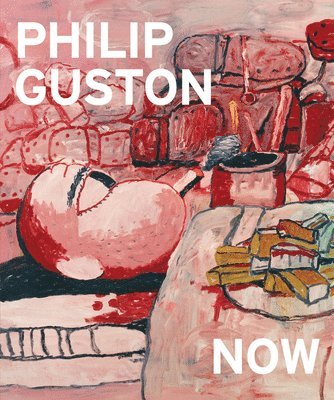
A sweeping retrospective of Philip Guston’s influential work, from Depression-era muralist to abstract expressionist to tragicomic contemporary masterPublished with National Gallery of Art.A Wall Street Journal 2020 holiday gift guide pickPhilip Guston—perhaps more than any other figure in recent memory—has given contemporary artists permission to break the rules and paint what, and how, they want. His winding career, embrace of "high" and "low" sources, and constant aesthetic reinvention defy easy categorization, and his 1968 figurative turn is by now one of modern art's most legendary conversion narratives. "I was feeling split, schizophrenic. The war, what was happening in America, the brutality of the world. What kind of man am I, sitting at home, reading magazines, going into a frustrated fury about everything—and then going into my studio to adjust a red to a blue?"And so Guston's sensitive abstractions gave way to large, cartoonlike canvases populated by lumpy, sometimes tortured figures and mysterious personal symbols in a palette of juicy pinks, acid greens, and cool blues. That Guston continued mining this vein for the rest of his life—despite initial bewilderment from his peers—reinforced his reputation as an artist's artist and a model of integrity; since his death 50 years ago, he has become hugely influential as contemporary art has followed Guston into its own antic twists and turns.Published to accompany the first retrospective museum exhibition of Guston's career in over 15 years, Philip Guston Now includes a lead essay by Harry Cooper surveying Guston's life and work, and a definitive chronology reflecting many new discoveries. It also highlights the voices of artists of our day who have been inspired by the full range of his work: Tacita Dean, Peter Fischli, Trenton Doyle Hancock, William Kentridge, Glenn Ligon, David Reed, Dana Schutz, Amy Sillman, Art Spiegelman and Rirkrit Tiravanija. Thematic essays by co-curators Mark Godfrey, Alison de Lima Greene and Kate Nesin trace the influences, interests and evolution of this singular force in modern and contemporary art—including several perspectives on the 1960s and '70s, when Guston gradually abandoned abstraction, returning to the figure and to current history but with a personal voice, by turns comic and apocalyptic, that resonates today more than ever.
Häftad, Engelska, 2020
166 kr
Skickas inom 5-8 vardagar
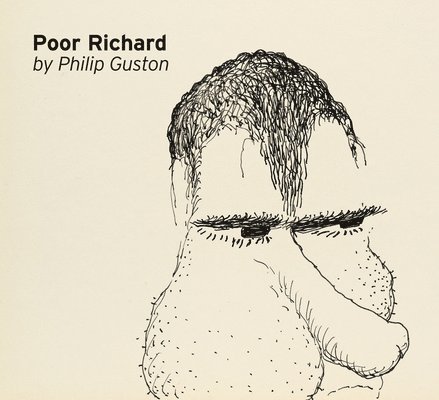
Philip Guston’s legendary, prescient political satire of Richard NixonPublished with National Gallery of Art.In the summer of 1971—two years before the Watergate hearings—Richard Nixon was an incumbent whose grip on power was being tested by the Pentagon Papers. Inspired in part by the work of his friend Philip Roth, who had just finished the novel Our Gang, Philip Guston began drawing the object of his political anger and despair—Richard Nixon, transformed into the character "Poor Richard," rendered with a distinctively phallic nose and scrotal jowls, and accompanied by henchmen Spiro Agnew, John Mitchell, and Henry Kissinger.Guston carefully sequenced the drawings in 1971 and planned to publish them as a book, even designing an original title page. But he held back, and the images were never released during his lifetime; only in 2001 were they first exhibited, accompanied by a publication of the series from the University of Chicago Press by Debra Bricker Balken. Today, as we face yet another moment of presidential crisis and global turmoil, Poor Richard is more relevant than ever.Poor Richard by Philip Guston brings Guston's series back into print. Following Guston's own sequencing, layout and original title page from 1971, Poor Richard by Philip Guston presents this shockingly fresh, delightfully profane series, with beautiful new reproductions. The publication marks the promised gift of these 73 drawings by The Guston Foundation to the National Gallery of Art, where they will be preserved and studied as a monument of contemporary satirical art and virtuoso drawing.