Defense Research Series – serie
Visar alla böcker i serien Defense Research Series. Handla med fri frakt och snabb leverans.
10 produkter
10 produkter
Inbunden, Engelska, 1989
1 605 kr
Skickas inom 10-15 vardagar
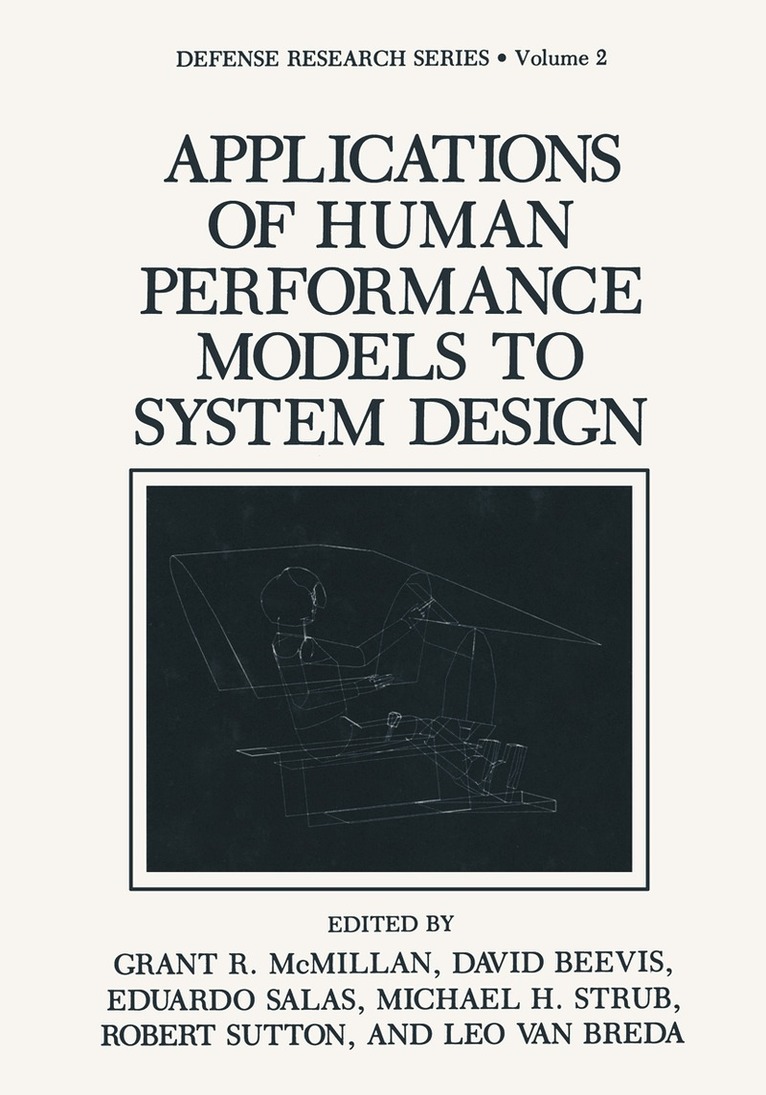
The human factors profession is currently attempting to take a more proactive role in the design of man-machine systems than has been character istic of its past. Realizing that human engineering contributions are needed well before the experimental evaluation of prototypes or operational systems, there is a concerted effort to develop tools that predict how humans will interact with proposed designs. This volume provides an over view of one category of such tools: mathematical models of human performance. It represents a collection of invited papers from a 1988 NATO Workshop. The Workshop was conceived and organized by NATO Research Study Group 9 (RSG.9) on "Modelling of Human Operator Behaviour in Weapon Systems". It represented the culmination of over five years of effort, and was attended by 139 persons from Europe, Canada, and the United States. RSG.9 was established in 1982 by Panel 8 of the Defence Research Group to accomplish the following objectives: * Determine the utility and state of the art of human performance modelling. * Encourage international research and the exchange of ideas. * Foster the practical application of modelling research. * Provide a bridge between the models and approaches adopted by engineers and behavioral scientists. * Present the findings in an international symposium.
Inbunden, Engelska, 1992
2 202 kr
Skickas inom 10-15 vardagar
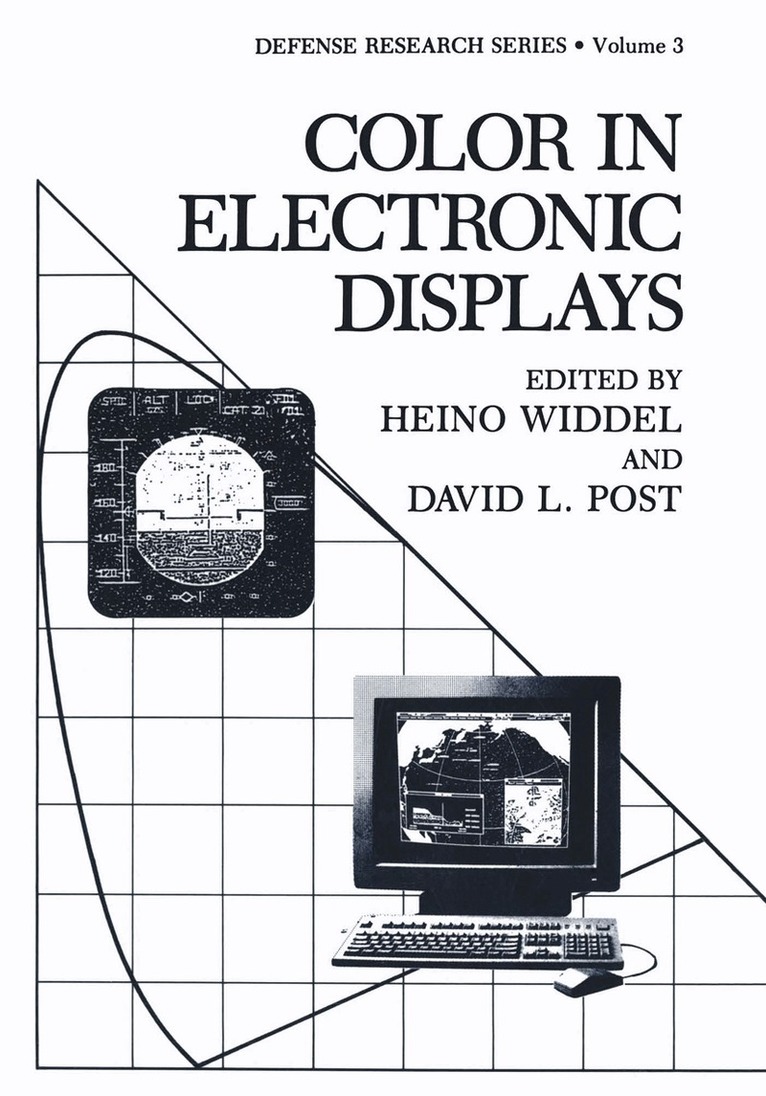
This book is the product of Research Study Group (RSG) 13 on "Human Engineering Evaluation on the Use of Colour in Electronic Displays," of Panel 8, "Defence Applications of Human and Biomedical Sciences," of the NATO Defence Research Group. RSG 13 was chaired by Heino Widdel (Germany) and consisted of Jeffrey Grossman (United States), Jean-Pierre Menu (France), Giampaolo Noja (Italy, point of contact), David Post (United States), and Jan Walraven (Netherlands). Initially, Christopher Gibson (United Kingdom) and Sharon McFaddon (Canada) participated also. Most of these representatives served previously on the NATO program committee that produced Proceedings of a Workshop on Colour Coded vs. Monochrome Displays (edited by Christopher Gibson and published by the Royal Aircraft Establishment, Farnborough, England) in 1984. RSG 13 can be regarded as a descendent of that program committee. RSG 13 was formed in 1987 for the purpose of developing and distributing guidance regarding the use of color on electronic displays. During our first meeting, we discussed the fact that, although there is a tremendous amount of information available concerning color vision, color perception, colorimetry, and color displays-much of it relevant to display design-it is scattered across numerous texts, journals, conference proceedings, and technical reports. We decided that we could fulfill the RSG's purpose best by producing a book that consolidates and summarizes this information, emphasizing those aspects that are most applicable to display design.
Inbunden, Engelska, 1993
835 kr
Skickas inom 10-15 vardagar
Inbunden, Engelska, 1995
1 560 kr
Skickas inom 10-15 vardagar
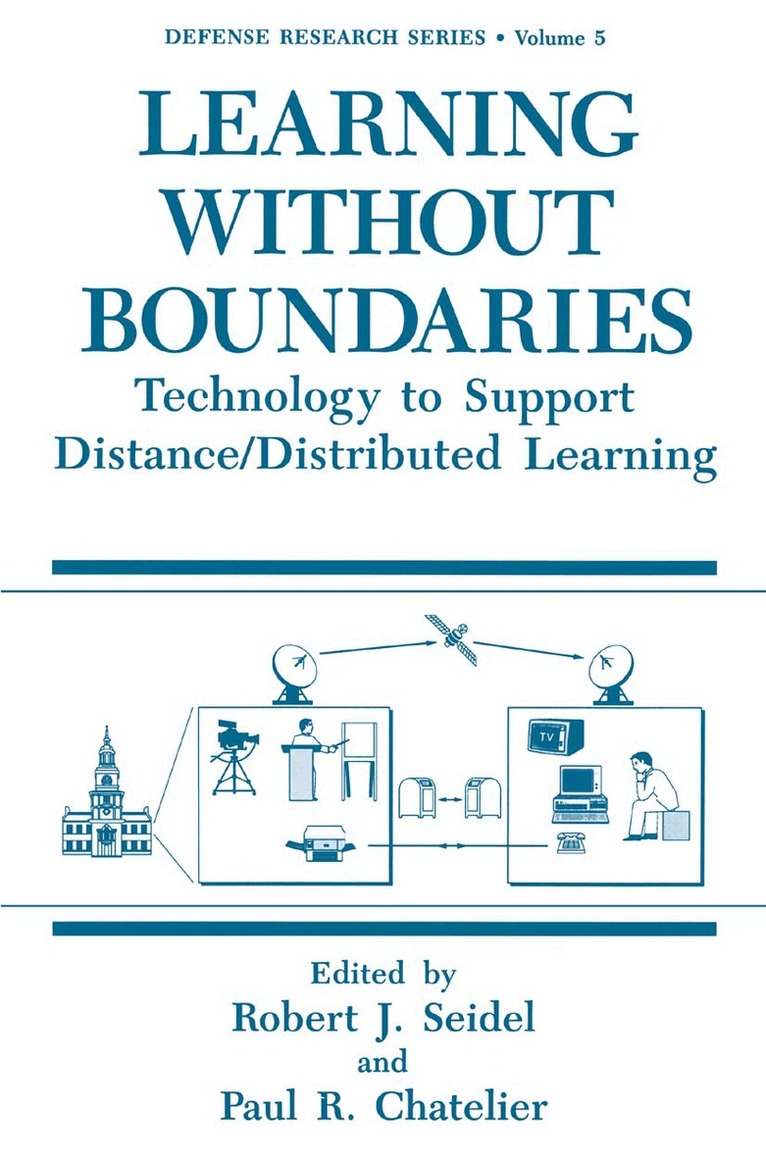
This collection of papers is the result of a workshop sponsored by NATO's Defense Research Group Panel 8 during the Fall of 1993. The workshop was held at the University of German Armed Forces at Neubiberg (Munich) Germany 29 September-l October, 1993. Robert J. Seidel Paul R. Chatelier U.S. Army Research Institute for the Executive Office of the President Behavioral and Social Sciences Office of Science and Technology Policy Washington, D.C. Washington, D.C. v PREFACE We would like to thank the authors of the papers for providing an excellent coverage of this rapidly developing technology, the session chairpersons for providing excellent structure and management for each group of papers, and each session's discussant's for their summary and personal views of their sessions papers. Our special thanks go to Dr. Rolfe Otte, the German ministry of Defense's research study group member and the person responsible for our being able to have this workshop in Munich. We are also grateful to Dr. H. Closhen of the IABG for technical and administrative assistance throughout the planning and conduct of the workshop.
Virtual Reality, Training’s Future?
Perspectives on Virtual Reality and Related Emerging Technologies
Inbunden, Engelska, 1997
1 605 kr
Skickas inom 10-15 vardagar
In 1988, the NATO panel governing human sciences (Panel 8 on Defence Applica of Human and Bio-Medical Sciences) established a Research Study Group to synthe tions size information relevant to Advanced Technologies Applied to Training Design. During its first phase, the RSG established an active exchange of information on advanced tech nologies applied to training design and stimulated much military application of these tech nologies. With the increased emphasis on training throughout the alliance, Panel 8, during its April 1991 meeting decided to continue with Phase II of this RSG focusing in the area of advanced training technologies that were emerging within the alliance. In order to ac complish its mission, the RSG held a series of workshops. Leaders in technology and training were brought together and exchanged information on the latest developments in technologies applicable to training and education. This volume represents the last in a se ries based on the NATO workshops. In Part One, it details findings from the last work shop, Virtual Reality for Training; and in Part Two, we provide a summary perspective on Virtual Reality and the other emerging technologies previously studied. These include computer-based training, expert systems, authoring systems, cost-effectiveness, and dis tance learning. It is a natural extension to proceed from learning without boundaries to virtual envi ronments. From the extended classroom to the individual or team immersion in a distrib uted, virtual, and collaborative environment is an easy conceptual step.
Häftad, Engelska, 2012
525 kr
Skickas inom 10-15 vardagar
This collection of papers is the result of a workshop sponsored by NATO's Defense Research Group Panel 8 in the Fall of 1991. The workshop is the second of a series, the fIrst of which was held in the Spring of 1985. As you study these papers, recall that this workshop occurred during the time that many changes were occurring in Eastern Europe and world wide. The need to identify training technologies for maintaining a capable and ready force during times of decreases in military force structure was, and is currently, our challenge. The opportunities for these technologies to provide a service and opportunity for nonmilitary usage is our future. Therefore this workshop maintained its focus on technology and application, regardless of the user. These and other statements made herein are personal and reflect the opinions of the author(s) and in no way represent the offIcial position or policy of our individual governments. v PREFACE The truly international contributions to this book reinforced our belief that training technology must be collaborative and data widely shared to strengthen our future. We want to thank the authors of these papers for their abilities to see beyond the near horizon. Their contributions, and the support of the organizations that sponsored their work is greatly appreciated. We also gratefully recognize the contributions of all who attended the workshop.
Häftad, Engelska, 2013
1 653 kr
Skickas inom 10-15 vardagar
The human factors profession is currently attempting to take a more proactive role in the design of man-machine systems than has been character istic of its past. Realizing that human engineering contributions are needed well before the experimental evaluation of prototypes or operational systems, there is a concerted effort to develop tools that predict how humans will interact with proposed designs. This volume provides an over view of one category of such tools: mathematical models of human performance. It represents a collection of invited papers from a 1988 NATO Workshop. The Workshop was conceived and organized by NATO Research Study Group 9 (RSG.9) on "Modelling of Human Operator Behaviour in Weapon Systems". It represented the culmination of over five years of effort, and was attended by 139 persons from Europe, Canada, and the United States. RSG.9 was established in 1982 by Panel 8 of the Defence Research Group to accomplish the following objectives: * Determine the utility and state of the art of human performance modelling. * Encourage international research and the exchange of ideas. * Foster the practical application of modelling research. * Provide a bridge between the models and approaches adopted by engineers and behavioral scientists. * Present the findings in an international symposium.
Häftad, Engelska, 2013
2 138 kr
Skickas inom 10-15 vardagar
This book is the product of Research Study Group (RSG) 13 on "Human Engineering Evaluation on the Use of Colour in Electronic Displays," of Panel 8, "Defence Applications of Human and Biomedical Sciences," of the NATO Defence Research Group. RSG 13 was chaired by Heino Widdel (Germany) and consisted of Jeffrey Grossman (United States), Jean-Pierre Menu (France), Giampaolo Noja (Italy, point of contact), David Post (United States), and Jan Walraven (Netherlands). Initially, Christopher Gibson (United Kingdom) and Sharon McFaddon (Canada) participated also. Most of these representatives served previously on the NATO program committee that produced Proceedings of a Workshop on Colour Coded vs. Monochrome Displays (edited by Christopher Gibson and published by the Royal Aircraft Establishment, Farnborough, England) in 1984. RSG 13 can be regarded as a descendent of that program committee. RSG 13 was formed in 1987 for the purpose of developing and distributing guidance regarding the use of color on electronic displays. During our first meeting, we discussed the fact that, although there is a tremendous amount of information available concerning color vision, color perception, colorimetry, and color displays-much of it relevant to display design-it is scattered across numerous texts, journals, conference proceedings, and technical reports. We decided that we could fulfill the RSG's purpose best by producing a book that consolidates and summarizes this information, emphasizing those aspects that are most applicable to display design.
Virtual Reality, Training’s Future?
Perspectives on Virtual Reality and Related Emerging Technologies
Häftad, Engelska, 2013
1 653 kr
Skickas inom 10-15 vardagar
In 1988, the NATO panel governing human sciences (Panel 8 on Defence Applica of Human and Bio-Medical Sciences) established a Research Study Group to synthe tions size information relevant to Advanced Technologies Applied to Training Design. During its first phase, the RSG established an active exchange of information on advanced tech nologies applied to training design and stimulated much military application of these tech nologies. With the increased emphasis on training throughout the alliance, Panel 8, during its April 1991 meeting decided to continue with Phase II of this RSG focusing in the area of advanced training technologies that were emerging within the alliance. In order to ac complish its mission, the RSG held a series of workshops. Leaders in technology and training were brought together and exchanged information on the latest developments in technologies applicable to training and education. This volume represents the last in a se ries based on the NATO workshops. In Part One, it details findings from the last work shop, Virtual Reality for Training; and in Part Two, we provide a summary perspective on Virtual Reality and the other emerging technologies previously studied. These include computer-based training, expert systems, authoring systems, cost-effectiveness, and dis tance learning. It is a natural extension to proceed from learning without boundaries to virtual envi ronments. From the extended classroom to the individual or team immersion in a distrib uted, virtual, and collaborative environment is an easy conceptual step.
Häftad, Engelska, 2013
1 653 kr
Skickas inom 10-15 vardagar
This collection of papers is the result of a workshop sponsored by NATO's Defense Research Group Panel 8 during the Fall of 1993. The workshop was held at the University of German Armed Forces at Neubiberg (Munich) Germany 29 September-l October, 1993. Robert J. Seidel Paul R. Chatelier U.S. Army Research Institute for the Executive Office of the President Behavioral and Social Sciences Office of Science and Technology Policy Washington, D.C. Washington, D.C. v PREFACE We would like to thank the authors of the papers for providing an excellent coverage of this rapidly developing technology, the session chairpersons for providing excellent structure and management for each group of papers, and each session's discussant's for their summary and personal views of their sessions papers. Our special thanks go to Dr. Rolfe Otte, the German ministry of Defense's research study group member and the person responsible for our being able to have this workshop in Munich. We are also grateful to Dr. H. Closhen of the IABG for technical and administrative assistance throughout the planning and conduct of the workshop.