Designing Environments – serie
Visar alla böcker i serien Designing Environments. Handla med fri frakt och snabb leverans.
8 produkter
8 produkter
Inbunden, Engelska, 2023
1 792 kr
Skickas inom 10-15 vardagar
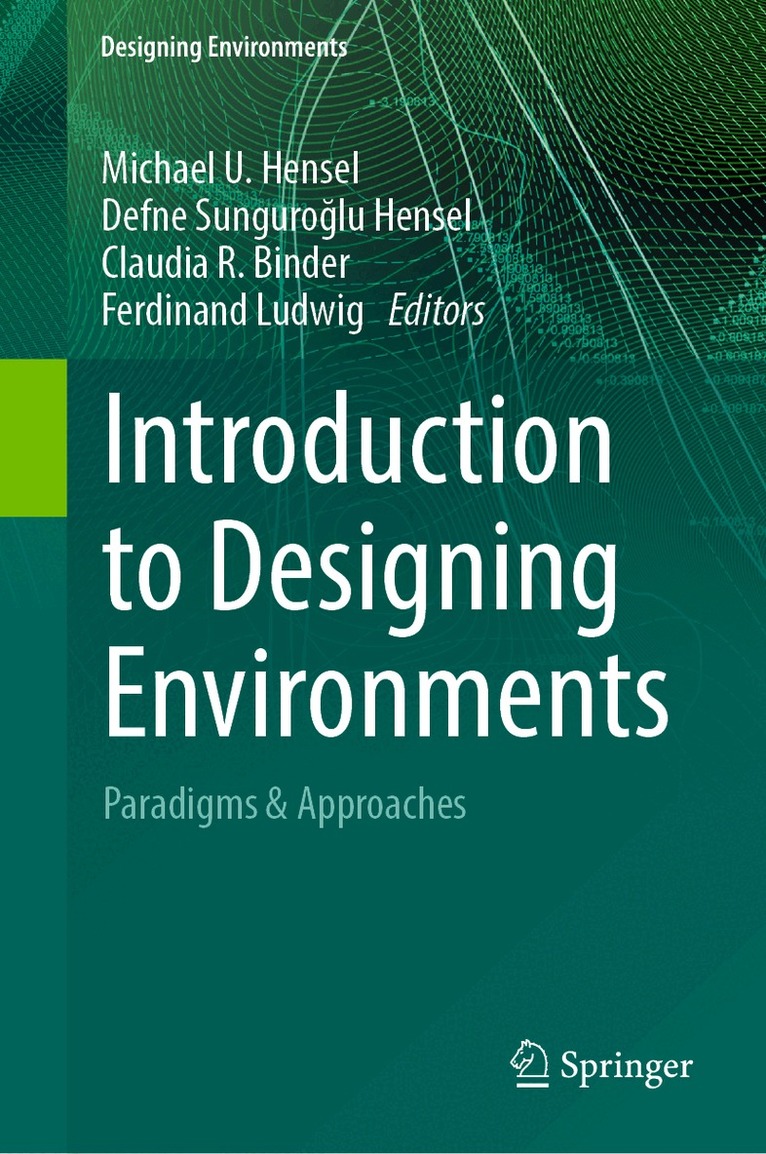
The Designing Environments book series addresses questions regarding necessary environmental transformation in the context of the fast-unfolding environmental crisis. This is done from a broad interdisciplinary perspective, examining the negative impact of human transformations of the environment and providing different inroads towards sustainable environmental transformation with net positive impact.Volume one of the Designing Environments book series brings together experts from different disciplines and often inter- and transdisciplinary contexts, who discuss specific approaches to overcoming the negative impact of the transformation of environments by humans. Across the 12 chapters of volume one, specific keywords recur that are indicative of shared insights and concerns. These include Anthropocene, climate change, complexity, critical zone, ecosystem services, and sustainability. Furthermore, interdisciplinary approaches to human–environment interactions, sustainability transitions, and socio-ecological systems take center stage and are discussed in relation to conceptual and methodological as well as societal and technological challenges and opportunities.
Häftad, Engelska, 2024
1 792 kr
Skickas inom 10-15 vardagar
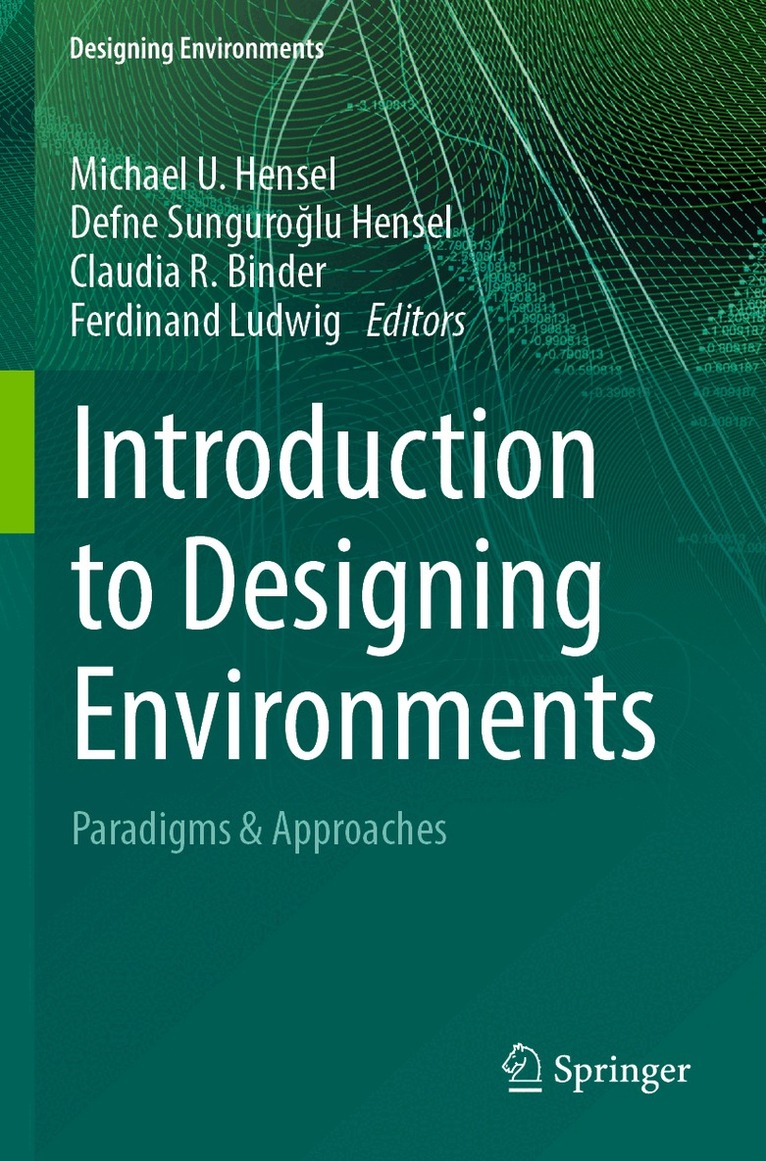
The Designing Environments book series addresses questions regarding necessary environmental transformation in the context of the fast-unfolding environmental crisis. This is done from a broad interdisciplinary perspective, examining the negative impact of human transformations of the environment and providing different inroads towards sustainable environmental transformation with net positive impact.Volume one of the Designing Environments book series brings together experts from different disciplines and often inter- and transdisciplinary contexts, who discuss specific approaches to overcoming the negative impact of the transformation of environments by humans. Across the 12 chapters of volume one, specific keywords recur that are indicative of shared insights and concerns. These include Anthropocene, climate change, complexity, critical zone, ecosystem services, and sustainability. Furthermore, interdisciplinary approaches to human–environment interactions, sustainability transitions, and socio-ecological systems take center stage and are discussed in relation to conceptual and methodological as well as societal and technological challenges and opportunities.
Inbunden, Engelska, 2024
1 792 kr
Skickas inom 10-15 vardagar
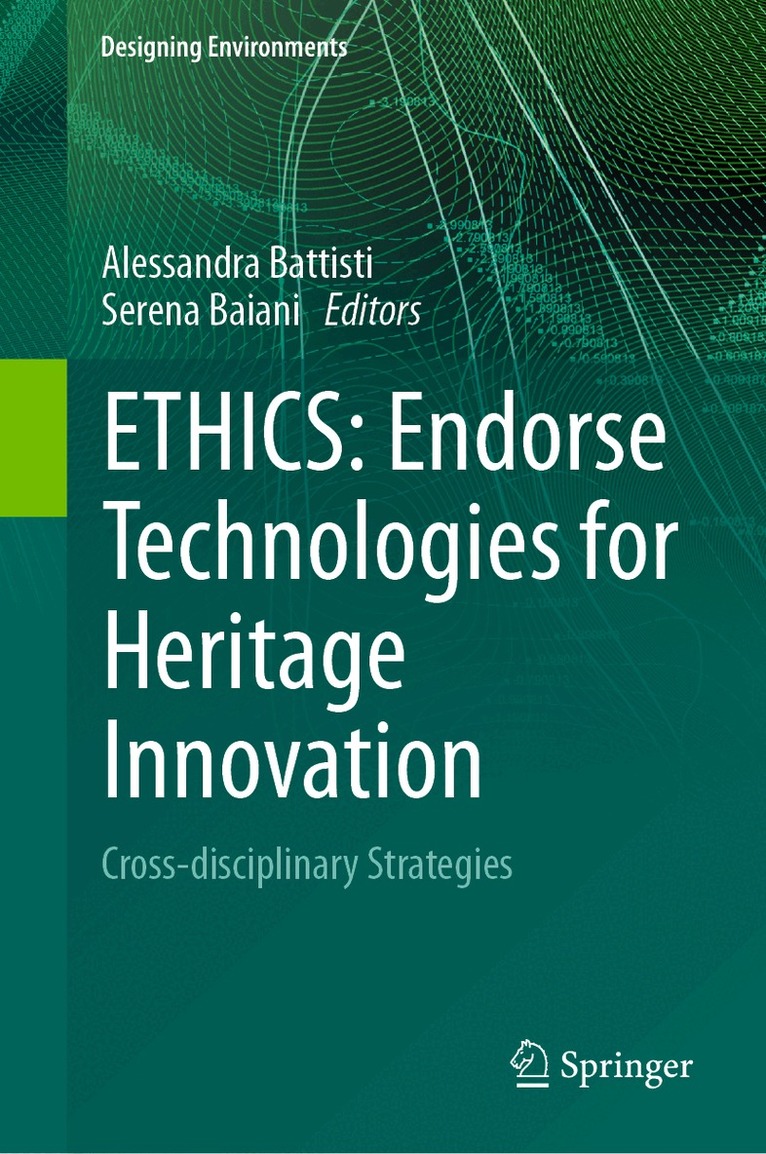
This book outlines, within the Italian national framework, the current and potential paths oriented towards a new concept of Architectural Heritage, through actions referring to Innovation and Experimentation and Protection and Transformation of the Architectural Heritage. The development of the themes is articulated in two sessions dealing with the aspects related to the analysis and mapping of Architectural Heritage to face the context of the current Climate Crisis and the development of projects and experimentations oriented to the Green and Digital Transition.The evolution of the concept of Heritage, as conceived by the United Nations 2030 Agenda and in the Green Deal and New European Bauhaus, aimed at constructing an inclusive and universally recognised definition to support supranational objectives of sustainable human development, gives rise to innovative strategies, methodologies and technologies that—in a direction of mitigation, contrast and adaptation to climatechange—allow for the safeguard, renewed management and a hope for valorisation of Heritage on a national scale. In this direction, the understanding of Architectural Heritage as a 'non-renewable resource' determines the need to activate design experimentation laboratories oriented towards regeneration, articulated and complex, which require, in order to respond to the challenges posed by our era, a sensitive and dialogic multidisciplinary vision of a holistic type. In fact, on the one hand, it is necessary to redefine the usability and management methods of built heritage through the adoption of digital, mobility, energy, ecological, social, green and blue infrastructures; on the other hand, it is necessary to introduce new qualitative and quantitative parameters and performance indicators, adequate to verify the validity of the implemented strategies in a perspective of adaptation to climate change, able to clarify contents, processes and tools to contrast future risks.The pursuit of these objectives refers to the innovation of training paths, professionalising procedures, administrative regulations, and public policies that involve citizens and the private partnership towards a different project qualification and empowerment of stakeholders, inhabitants, professionals, and clients. The Technological Project makes it possible to activate different interventions aimed at acting, in an integrated manner, on assets, context and communities, according to an approach that reinterprets them on a common score, as proposed by the European Next Generation programme in three priority aspects: digitalisation and innovation, environmental transition, increased resilience and social sustainability of national economies. In this scenario, the interventions aimed at outlining sustainable development actions will have to place these concepts at the centre in a harmonious vision that starts from the recognition and enhancement of the Architectural Heritage, recognising itas a fundamental asset of the territories.
Häftad, Engelska, 2025
1 792 kr
Skickas inom 10-15 vardagar
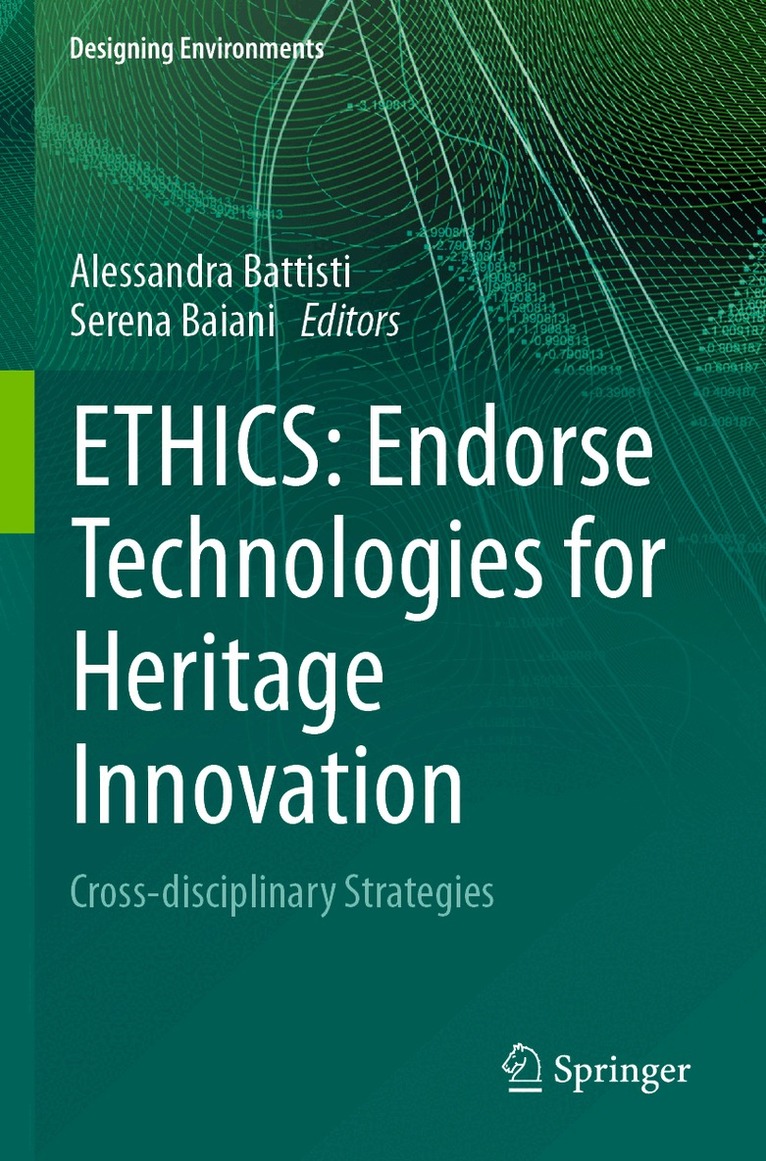
This book outlines, within the Italian national framework, the current and potential paths oriented towards a new concept of Architectural Heritage, through actions referring to Innovation and Experimentation and Protection and Transformation of the Architectural Heritage. The development of the themes is articulated in two sessions dealing with the aspects related to the analysis and mapping of Architectural Heritage to face the context of the current Climate Crisis and the development of projects and experimentations oriented to the Green and Digital Transition.The evolution of the concept of Heritage, as conceived by the United Nations 2030 Agenda and in the Green Deal and New European Bauhaus, aimed at constructing an inclusive and universally recognised definition to support supranational objectives of sustainable human development, gives rise to innovative strategies, methodologies and technologies that—in a direction of mitigation, contrast and adaptation to climatechange—allow for the safeguard, renewed management and a hope for valorisation of Heritage on a national scale. In this direction, the understanding of Architectural Heritage as a 'non-renewable resource' determines the need to activate design experimentation laboratories oriented towards regeneration, articulated and complex, which require, in order to respond to the challenges posed by our era, a sensitive and dialogic multidisciplinary vision of a holistic type. In fact, on the one hand, it is necessary to redefine the usability and management methods of built heritage through the adoption of digital, mobility, energy, ecological, social, green and blue infrastructures; on the other hand, it is necessary to introduce new qualitative and quantitative parameters and performance indicators, adequate to verify the validity of the implemented strategies in a perspective of adaptation to climate change, able to clarify contents, processes and tools to contrast future risks.The pursuit of these objectives refers to the innovation of training paths, professionalising procedures, administrative regulations, and public policies that involve citizens and the private partnership towards a different project qualification and empowerment of stakeholders, inhabitants, professionals, and clients. The Technological Project makes it possible to activate different interventions aimed at acting, in an integrated manner, on assets, context and communities, according to an approach that reinterprets them on a common score, as proposed by the European Next Generation programme in three priority aspects: digitalisation and innovation, environmental transition, increased resilience and social sustainability of national economies. In this scenario, the interventions aimed at outlining sustainable development actions will have to place these concepts at the centre in a harmonious vision that starts from the recognition and enhancement of the Architectural Heritage, recognising itas a fundamental asset of the territories.
Inbunden, Engelska, 2024
1 523 kr
Skickas inom 10-15 vardagar
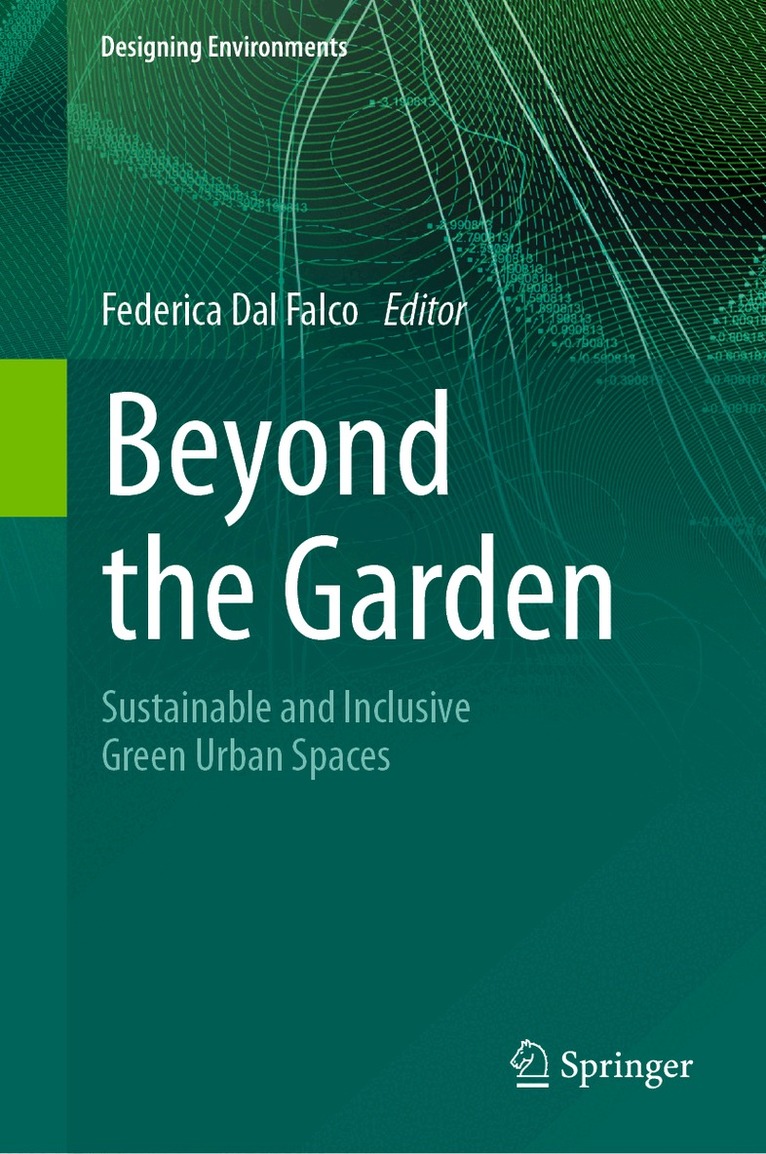
The book addresses the interdisciplinary and multiscale theme of the design of sustainable, inclusive and creative urban green spaces in relation to the socio-ecological transition and in line with the systemic vision promoted by the 2030 Agenda, the 17 Sustainable Development Goals (SDGs) and the principles outlined by the New European Bauhaus (European Commission, 2021). The publication refers to the International Study Day organized in June 2022 by the Unit for Internationalization of the PDTA Department of the Sapienza University of Rome, develops and updates its themes, with essays that deepen theories and methodologies pursued in specific disciplinary and research fields, and with case studies of design experiments and achievements that constitute best practices at an international level in the sign of a conscious sustainability.The book is therefore part of an international and interdisciplinary dialogue and discussion focused on the challenges of climate change, economic crises and social inequalities as well as the questions that emerged during the Covid-19 pandemic. These issues are fundamental in the rethinking and reconfiguration of the role of urban green spaces, conceived as a priority place for the existence of citizens, the archetype of European culture, the conservation of biodiversity, and the relationship with nature.
Häftad, Engelska, 2025
1 568 kr
Skickas inom 10-15 vardagar
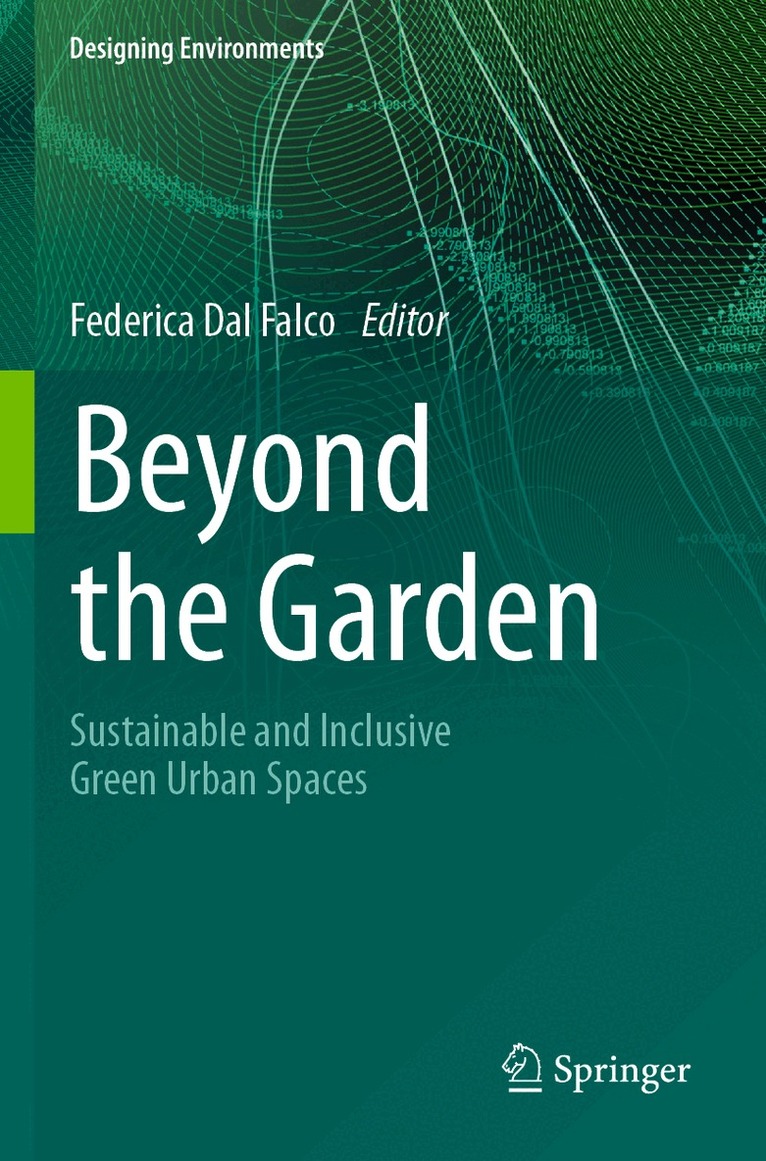
The book addresses the interdisciplinary and multiscale theme of the design of sustainable, inclusive and creative urban green spaces in relation to the socio-ecological transition and in line with the systemic vision promoted by the 2030 Agenda, the 17 Sustainable Development Goals (SDGs) and the principles outlined by the New European Bauhaus (European Commission, 2021). The publication refers to the International Study Day organized in June 2022 by the Unit for Internationalization of the PDTA Department of the Sapienza University of Rome, develops and updates its themes, with essays that deepen theories and methodologies pursued in specific disciplinary and research fields, and with case studies of design experiments and achievements that constitute best practices at an international level in the sign of a conscious sustainability.The book is therefore part of an international and interdisciplinary dialogue and discussion focused on the challenges of climate change, economic crises and social inequalities as well as the questions that emerged during the Covid-19 pandemic. These issues are fundamental in the rethinking and reconfiguration of the role of urban green spaces, conceived as a priority place for the existence of citizens, the archetype of European culture, the conservation of biodiversity, and the relationship with nature.
Inbunden, Engelska, 2025
2 461 kr
Skickas inom 10-15 vardagar
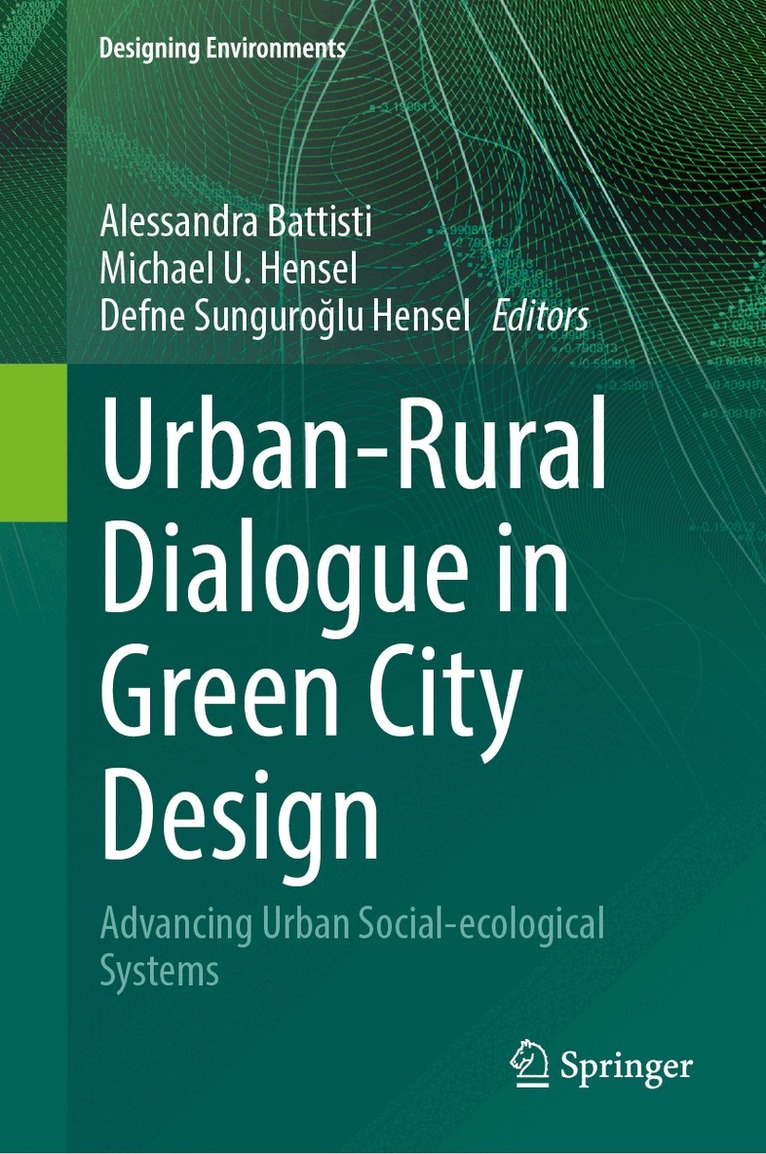
Urbanization and construction are primary drivers of land cover and land use change, climate change and environmental degradation. Sustainable development seeks to counteract the negative impact of cities and urbanization. Shifting away from the still prevailing human-nature dialectic, social-ecological systems view humans as part of nature, thereby linking biophysical and social factors into a coherent system across spatial, temporal and functional scales. This approach and related complex and adaptive approaches and systems enable a new take on sustainable urban development and in particular green cities. The proposed book will focus on different aspects of advancing urban social-ecological systems with particular emphasis on the Urban-Rural Dialogue in Green City Design. The chapters will outline novel approaches to thinking and designing green cities, urban form as urban landform, integration of architectures and their settings, novel hybrid land use and related hybrid architectural typologies, multi-stakeholder and multi-species approaches. This will include a range of topics including green urban land use, urban ecosystem development and support, urban agriculture and food production, urban farming and gardening, and human health and well-being. Given the existing strong movement and research in this field in Italy, the book will concentrate on ground-breaking approaches and research from this region. A list of recognized authors will present approaches and discussions centering around the above-listed thematic foci concerning green cities planning, design, governance and ultimately aspects of living in green cities. The presented themes and approaches are also of more general fundamental relevance for urban contexts in other regions with comparable climate and environmental conditions. Therefore, we anticipate that the book will become a course book for many courses taught at universities worldwide, as well as a book for researchers and practitioners that wish to inform and prepare themselves for what is to come in terms of novel green city design.
Häftad, Engelska, 2026
2 389 kr
Skickas inom 10-15 vardagar
Urbanization and construction are primary drivers of land cover and land use change, climate change and environmental degradation. Sustainable development seeks to counteract the negative impact of cities and urbanization. Shifting away from the still prevailing human-nature dialectic, social-ecological systems view humans as part of nature, thereby linking biophysical and social factors into a coherent system across spatial, temporal and functional scales. This approach and related complex and adaptive approaches and systems enable a new take on sustainable urban development and in particular green cities. The proposed book will focus on different aspects of advancing urban social-ecological systems with particular emphasis on the Urban-Rural Dialogue in Green City Design. The chapters will outline novel approaches to thinking and designing green cities, urban form as urban landform, integration of architectures and their settings, novel hybrid land use and related hybrid architectural typologies, multi-stakeholder and multi-species approaches. This will include a range of topics including green urban land use, urban ecosystem development and support, urban agriculture and food production, urban farming and gardening, and human health and well-being. Given the existing strong movement and research in this field in Italy, the book will concentrate on ground-breaking approaches and research from this region. A list of recognized authors will present approaches and discussions centering around the above-listed thematic foci concerning green cities planning, design, governance and ultimately aspects of living in green cities. The presented themes and approaches are also of more general fundamental relevance for urban contexts in other regions with comparable climate and environmental conditions. Therefore, we anticipate that the book will become a course book for many courses taught at universities worldwide, as well as a book for researchers and practitioners that wish to inform and prepare themselves for what is to come in terms of novel green city design.