Developments in Heat Transfer - Böcker
Visar alla böcker i serien . Handla med fri frakt och snabb leverans.
2 produkter
2 produkter
2 044 kr
Skickas inom 5-8 vardagar
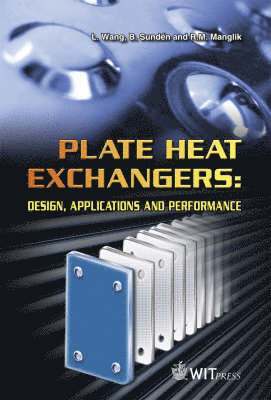
Heat exchangers are important, and used frequently in the processing, heat and power, air-conditioning and refrigeration, heat recovery, transportation and manufacturing industries. Such equipment is also important in electronics cooling and for environmental issues like thermal pollution, waste disposal and sustainable development. The present book concerns plate heat exchangers (PHEs), which are one of the most common types in practice. The overall objectives are to present comprehensive descriptions of such heat exchangers and their advantages and limitations, to provide in-depth thermal and hydraulic design theory for PHEs, and to present state-of-the-art knowledge.The book starts with a general introduction and historical background to PHEs, then discusses construction and operation (PHE types, plate pattern, etc.) and gives examples of PHEs in different application areas. Material issues (plates, gaskets, brazing materials) and manufacturing methods are also treated.The major part of the book concerns the basic design methods for both single-phase and two-phase flow cases, various flow arrangements, thermal-hydraulic performance in single-phase flow and for PHEs operating as condensers and evaporators.Fouling problems are also discussed and in a section on extended design and operation issues, modern Research and Development (R & D) tools like computational fluid dynamics (CFD) methods are discussed. Unique features for PHEs are discussed throughout.
1 548 kr
Skickas inom 5-8 vardagar
The exergy method makes it possible to detect and quantify the possibilities of improving thermal and chemical processes and systems. The introduction of the concept "thermo-ecological cost" (cumulative consumption of non-renewable natural exergy resources) generated large application possibilities of exergy in ecology. This book contains a short presentation on the basic principles of exergy analysis and discusses new achievements in the field over the last 15 years. One of the most important issues considered by the distinguished author is the economy of non-renewable natural exergy. Previously discussed only in scientific journals, other important new problems highlighted include: calculation of the chemical exergy of all the stable chemical elements, global natural and anthropogenic exergy losses, practical guidelines for improvement of the thermodynamic imperfection of thermal processes and systems, development of the determination methods of partial exergy losses in thermal systems, evaluation of the natural mineral capital of the Earth, and the application of exergy for the determination of a pro-ecological tax.A basic knowledge of thermodynamics is assumed, and the book is therefore most appropriate for graduate students and engineers working in the field of energy and ecological management.