Dutch Monographs on Ancient History and Archaeology – serie
Visar alla böcker i serien Dutch Monographs on Ancient History and Archaeology. Handla med fri frakt och snabb leverans.
5 produkter
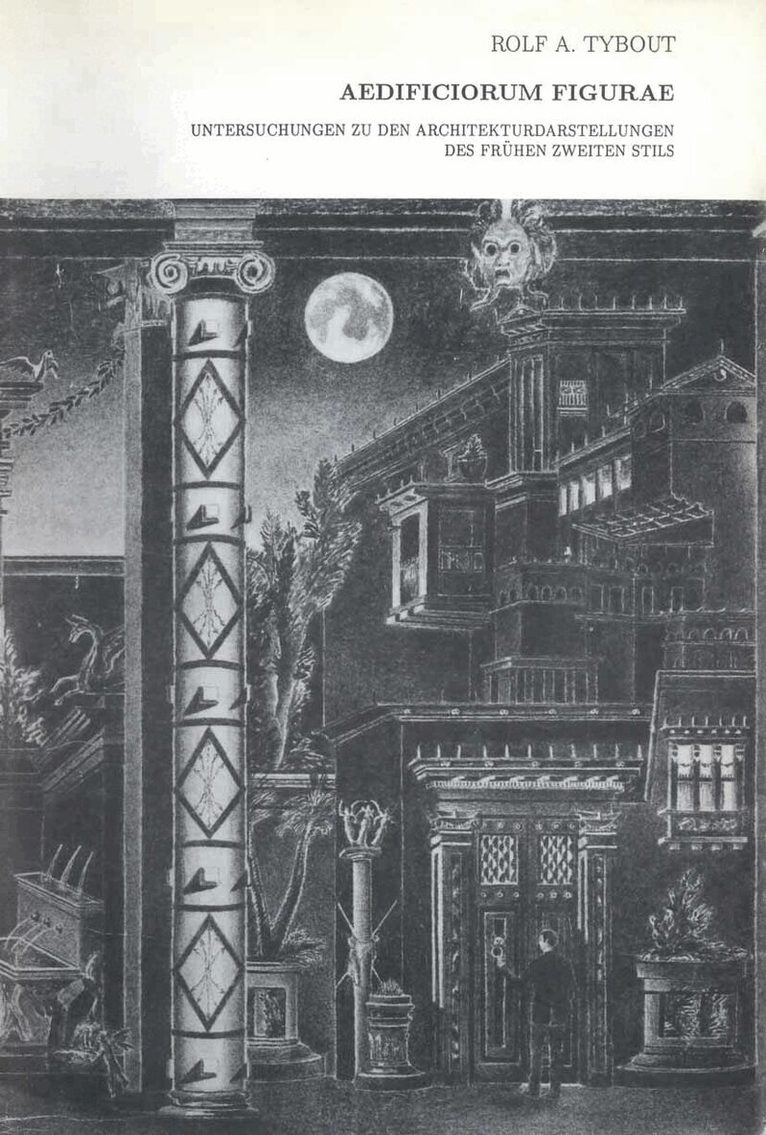
Aedificiorum figurae
Untersuchungen zu den Architekturdarstellungen des frühen zweiten Stils
Häftad, 2022
2754 kr
Lägg i varukorg
Gegenstand dieses Buches is die illusionistische Architekturmalerei des zweiten Stils in ihrer ersten Phase (ca. 100-50/40 v.Chr.). Es Befäßt sich einerseits mit formalen und typologischen Aspekten, zum anderen mit Fragen nach Funktion und Bedeutung. Eine ausführliche philologische Analyse von …
De Agricultura
In Memoriam Pieter Willem de Neeve
Häftad, 2022
1868 kr
Lägg i varukorg
With contributions by J.N. Bremmer, J. Carlsen, D.P. Kehoe, L. De ligt, E. Lo Cascio, F.J.A.M. Meijer, H.W. Pleket, D. Rathbone, P. Rosafio, H. Sancisi-Weerdenburg, H.W. Singor, W. Scheidel, R.J. v.d. Spek, H.C. Teitler, H.S. Versnel, H.T. Wallinga, D. Yntema.
Konsuln und Konsulare in der Zeit von Commodus bis Severus Alexander (180-235 n. Chr.)
Prosopographische Untersuchungen zur senatorischen Elite im römischen Kaiserreich
Häftad, 1989
2050 kr
Lägg i varukorg
In dieser Arbeit werden die zukünftigen und gewesen Konsuln in der Zeit von Commodus bis zum Tode des Severus Alexander (180-235) untersucht. Wegen des unvermindert hohen Prestiges des Konsulates können die mit diesem Amt ausgezeichneten Senatoren der Elite des Senatorenstandes zugerechnet werden, …
Bronze Liver of Piacenza
Analysis of a Polytheistic Structure
Av van der Meer
Häftad, 2022
1734 kr
Lägg i varukorg
This book deals with the Iecur Placentinum, the bronze model of a sheep’s liver, bearing 42 Etruscan inscriptions. The Piacenza Liver is a highly interesting document of the utmost importance for the understanding of Etruscan religion. It will appear that the network with the inscribed names of …
Mills-Bakeries of Ostia
Description and Interpretation
Häftad, 1999
3036 kr
Lägg i varukorg
The ruins of Ostia, main harbour of Imperial Rome, were uncovered in the late nineteenth and first half of the twentieth century. In the present volume the remains of three buildings used for the milling of grain and baking of bread (pistrina) are studied according to modern archaeological …