Earthscan Series on Sustainable Design - Böcker
Visar alla böcker i serien Earthscan Series on Sustainable Design. Handla med fri frakt och snabb leverans.
10 produkter
10 produkter
1 686 kr
Skickas inom 10-15 vardagar
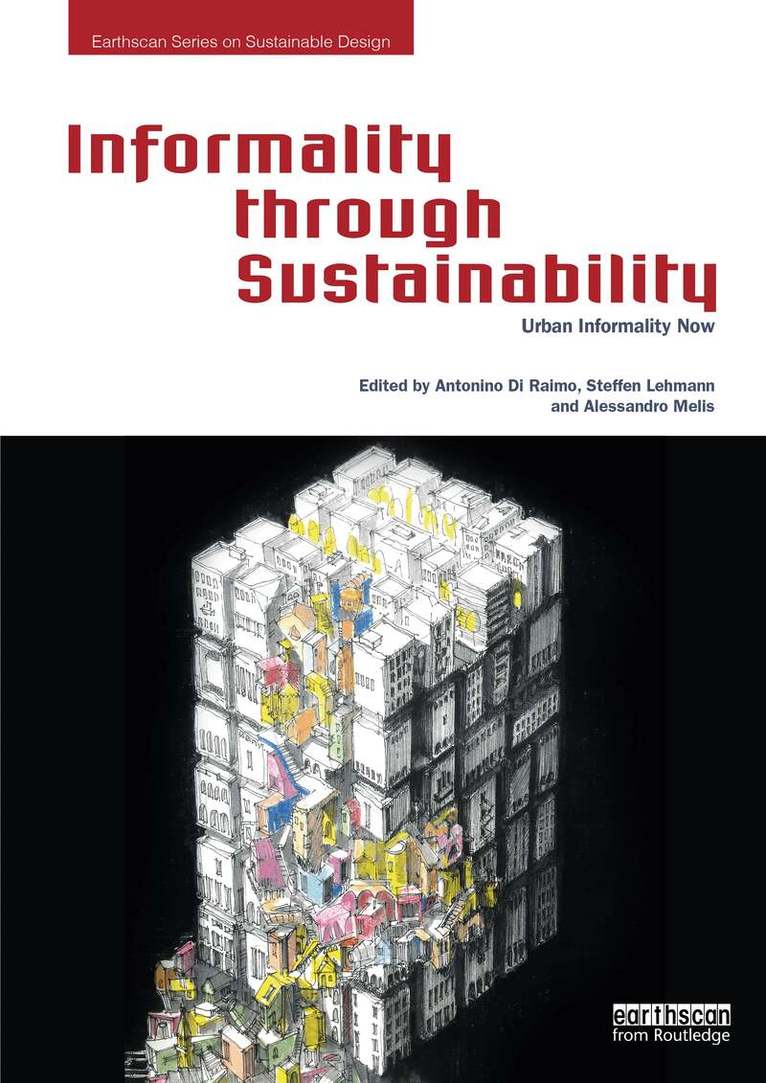
Informality through Sustainability explores the phenomenon of informality within urban settlements and aims to unravel the subtle links between informal settlements and sustainability.Penetrating its global profile and considering urban informality through an understanding of local implications, the authors collectively reveal specific correlations between sites and their local inhabitants. The book opposes simplistic calls to legalise informal settlements or to view them as ‘problems’ to be solved. It comes at a time when common notions of ‘informality’ are being increasingly challenged.In 25 chapters, the book presents contributions from well-known scholars and practitioners whose theoretical or practical work addresses informality and sustainability at various levels, from city planning and urban design to public space and architectural education. Whilst previous studies on informal settlements have mainly focused on cases in developing countries, approaching the topic through social, cultural and material dimensions, the book explores the concept across a range of contexts, including former Communist countries and those in the so-called Global North. Contributions also explore understandings of informality at various scalar levels – region, precinct, neighbourhood and individual building. Thus, this work helps reposition informality as a relational concept at various scales of urbanisation.This book will be of great benefit to planners, architects, researchers and policymakers interested in the interplay between informality and sustainability.
497 kr
Skickas inom 10-15 vardagar
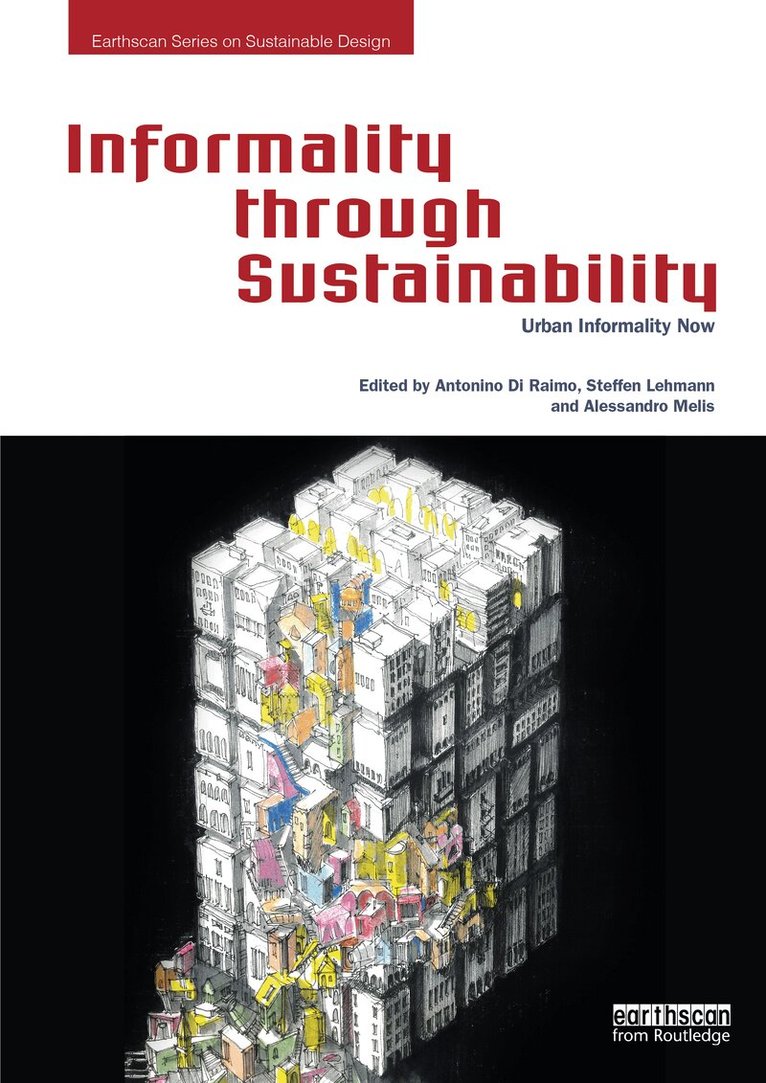
Informality through Sustainability explores the phenomenon of informality within urban settlements and aims to unravel the subtle links between informal settlements and sustainability.Penetrating its global profile and considering urban informality through an understanding of local implications, the authors collectively reveal specific correlations between sites and their local inhabitants. The book opposes simplistic calls to legalise informal settlements or to view them as ‘problems’ to be solved. It comes at a time when common notions of ‘informality’ are being increasingly challenged.In 25 chapters, the book presents contributions from well-known scholars and practitioners whose theoretical or practical work addresses informality and sustainability at various levels, from city planning and urban design to public space and architectural education. Whilst previous studies on informal settlements have mainly focused on cases in developing countries, approaching the topic through social, cultural and material dimensions, the book explores the concept across a range of contexts, including former Communist countries and those in the so-called Global North. Contributions also explore understandings of informality at various scalar levels – region, precinct, neighbourhood and individual building. Thus, this work helps reposition informality as a relational concept at various scales of urbanisation.This book will be of great benefit to planners, architects, researchers and policymakers interested in the interplay between informality and sustainability.
2 806 kr
Skickas inom 10-15 vardagar
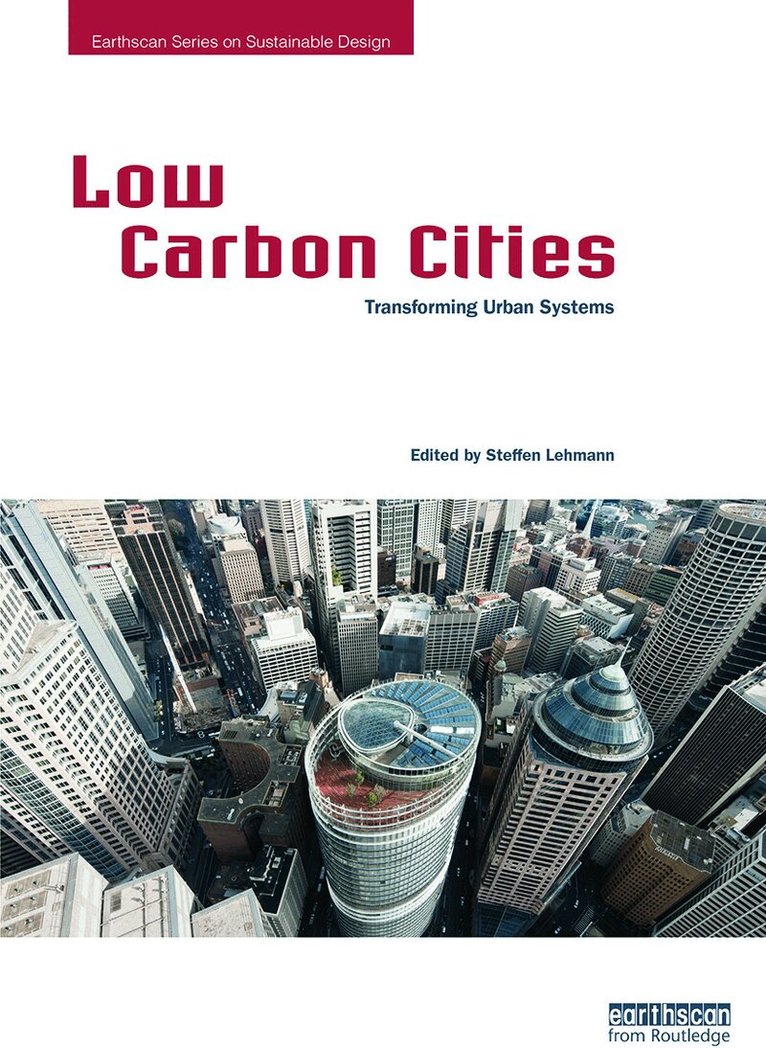
Low Carbon Cities is a book for practitioners, students and scholars in architecture, urban planning and design. It features essays on ecologically sustainable cities by leading exponents of urban sustainability, case studies of the new directions low carbon cities might take and investigations of how we can mitigate urban heat stress in our cities’ microclimates. The book explores the underlying dimensions of how existing cities can be transformed into low carbon urban systems and describes the design of low carbon cities in theory and practice. It considers the connections between low carbon cities and sustainable design, social and individual values, public space, housing affordability, public transport and urban microclimates. Given the rapid urbanisation underway globally, and the need for all our cities to operate more sustainably, we need to think about how spatial planning and design can help transform urban systems to create low carbon cities, and this book provides key insights.
959 kr
Skickas inom 10-15 vardagar
Low Carbon Cities is a book for practitioners, students and scholars in architecture, urban planning and design. It features essays on ecologically sustainable cities by leading exponents of urban sustainability, case studies of the new directions low carbon cities might take and investigations of how we can mitigate urban heat stress in our cities’ microclimates. The book explores the underlying dimensions of how existing cities can be transformed into low carbon urban systems and describes the design of low carbon cities in theory and practice. It considers the connections between low carbon cities and sustainable design, social and individual values, public space, housing affordability, public transport and urban microclimates. Given the rapid urbanisation underway globally, and the need for all our cities to operate more sustainably, we need to think about how spatial planning and design can help transform urban systems to create low carbon cities, and this book provides key insights.
Motivating Change: Sustainable Design and Behaviour in the Built Environment
Inbunden, Engelska, 2013
2 666 kr
Skickas inom 10-15 vardagar
Today’s most pressing challenges require behaviour change at many levels, from the city to the individual. This book focuses on the collective influences that can be seen to shape change. Exploring the underlying dimensions of behaviour change in terms of consumption, media, social innovation and urban systems, the essays in this book are from many disciplines, including architecture, urban design, industrial design and engineering, sociology, psychology, cultural studies, waste management and public policy. Aimed especially at designers and architects, Motivating Change explores the diversity of current approaches to change, and the multiple ways in which behaviour can be understood as an enactment of values and beliefs, standards and habitual practices in daily life, and more broadly in the urban environment.
1 015 kr
Skickas inom 10-15 vardagar
Today’s most pressing challenges require behaviour change at many levels, from the city to the individual. This book focuses on the collective influences that can be seen to shape change. Exploring the underlying dimensions of behaviour change in terms of consumption, media, social innovation and urban systems, the essays in this book are from many disciplines, including architecture, urban design, industrial design and engineering, sociology, psychology, cultural studies, waste management and public policy. Aimed especially at designers and architects, Motivating Change explores the diversity of current approaches to change, and the multiple ways in which behaviour can be understood as an enactment of values and beliefs, standards and habitual practices in daily life, and more broadly in the urban environment.
2 176 kr
Skickas inom 10-15 vardagar
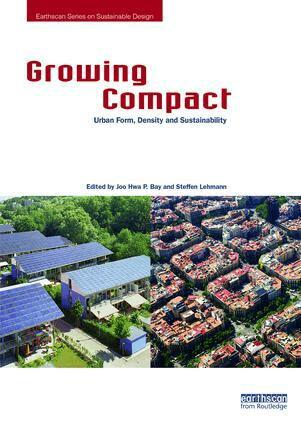
Growing Compact: Urban Form, Density and Sustainability explores and unravels the phenomena, links and benefits between density, compactness and the sustainability of cities. It looks at the socio-climatic implications of density and takes a more holistic approach to sustainable urbanism by understanding the correlations between the social, economic and environmental dimensions of the city, and the challenges and opportunities with density. The book presents contributions from internationally well-known scholars, thinkers and practitioners whose theoretical and practical works address city planning, urban and architectural design for density and sustainability at various levels, including challenges in building resilience against climate change and natural disasters, capacity and integration for growth and adaptability, ageing, community and security, vegetation, food production, compact resource systems and regeneration.
777 kr
Skickas inom 10-15 vardagar
Growing Compact: Urban Form, Density and Sustainability explores and unravels the phenomena, links and benefits between density, compactness and the sustainability of cities. It looks at the socio-climatic implications of density and takes a more holistic approach to sustainable urbanism by understanding the correlations between the social, economic and environmental dimensions of the city, and the challenges and opportunities with density. The book presents contributions from internationally well-known scholars, thinkers and practitioners whose theoretical and practical works address city planning, urban and architectural design for density and sustainability at various levels, including challenges in building resilience against climate change and natural disasters, capacity and integration for growth and adaptability, ageing, community and security, vegetation, food production, compact resource systems and regeneration.
2 526 kr
Skickas inom 10-15 vardagar
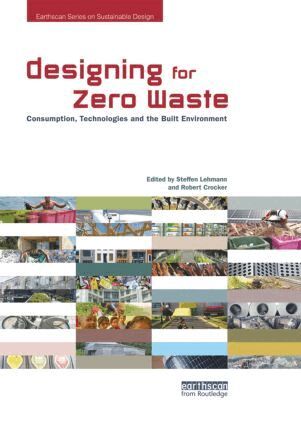
Designing for Zero Waste is a timely, topical and necessary publication. Materials and resources are being depleted at an accelerating speed and rising consumption trends across the globe have placed material efficiency, waste reduction and recycling at the centre of many government policy agendas, giving them an unprecedented urgency. While there has been a considerable literature addressing consumption and waste reduction from different disciplinary perspectives, the complex nature of the problem requires an increasing degree of interdisciplinarity. Resource recovery and the optimisation of material flow can only be achieved alongside and through behaviour change to reduce the creation of material waste and wasteful consumption. This book aims to develop a more robust understanding of the links between lifestyle, consumption, technologies and urban development.
931 kr
Skickas inom 10-15 vardagar
Designing for Zero Waste is a timely, topical and necessary publication. Materials and resources are being depleted at an accelerating speed and rising consumption trends across the globe have placed material efficiency, waste reduction and recycling at the centre of many government policy agendas, giving them an unprecedented urgency. While there has been a considerable literature addressing consumption and waste reduction from different disciplinary perspectives, the complex nature of the problem requires an increasing degree of interdisciplinarity. Resource recovery and the optimisation of material flow can only be achieved alongside and through behaviour change to reduce the creation of material waste and wasteful consumption. This book aims to develop a more robust understanding of the links between lifestyle, consumption, technologies and urban development.