Ecological and Environmental Physiology Series – serie
Visar alla böcker i serien Ecological and Environmental Physiology Series. Handla med fri frakt och snabb leverans.
6 produkter
6 produkter
1 944 kr
Skickas inom 5-8 vardagar
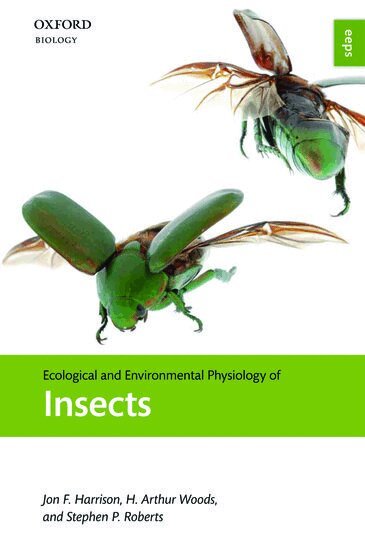
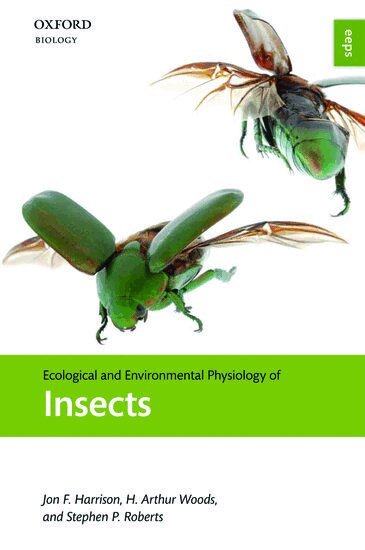
Insects are the most ecologically important multicellular heterotrophs in terrestrial systems. They play critical roles in ecological food webs, remain devastating agricultural and medical pests, and represent the most diverse group of eukaryotes in terms of species numbers. Their dominant role among terrestrial heterotrophs arises from a number of key physiological traits, and in particular by the developmental and evolutionary plasticity of these traits. Ecological and Environmental Physiology of Insects presents a current and comprehensive overview of how the key physiological traits of insects respond to environmental variation. It forges conceptual links from molecular biology through organismal function to population and community ecology. As with other books in the Series, the emphasis is on the unique physiological characteristics of the insects, but with applications to questions of broad relevance in physiological ecology. As an aid to new researchers on insects, it also includes introductory chapters on the basics and techniques of insect physiology ecology.
801 kr
Skickas inom 7-10 vardagar
Insects are the most ecologically important multicellular heterotrophs in terrestrial systems. They play critical roles in ecological food webs, remain devastating agricultural and medical pests, and represent the most diverse group of eukaryotes in terms of species numbers. Their dominant role among terrestrial heterotrophs arises from a number of key physiological traits, and in particular by the developmental and evolutionary plasticity of these traits. Ecological and Environmental Physiology of Insects presents a current and comprehensive overview of how the key physiological traits of insects respond to environmental variation. It forges conceptual links from molecular biology through organismal function to population and community ecology. As with other books in the Series, the emphasis is on the unique physiological characteristics of the insects, but with applications to questions of broad relevance in physiological ecology. As an aid to new researchers on insects, it also includes introductory chapters on the basics and techniques of insect physiology ecology.
2 480 kr
Skickas inom 7-10 vardagar
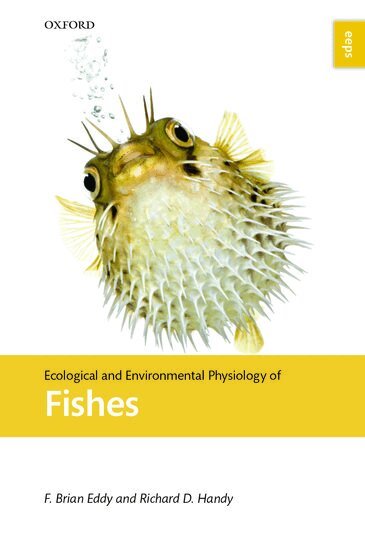
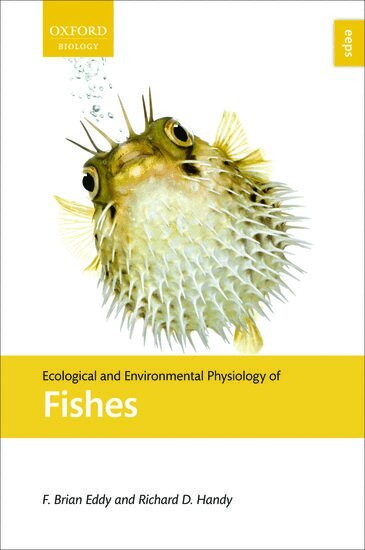
Fishes have evolved to colonise almost every type of aquatic habitat and today they are a hugely diverse group of over 25,000 species. The evolution of this great diversity of species has resulted in a myriad of solutions to the demands posed by the aquatic environment. Ecological and Environmental Physiology of Fishes presents a current and comprehensive overview of fish physiology to demonstrate how living fishes function in their environment. As with other books in the Series, the emphasis is on the unique physiological characteristics of the fish, but with applications to questions of broad relevance in physiological ecology. A preliminary chapter introduces the aquatic environment and gives a general description of fish biology, evolution, and taxonomy. Subsequent sections discuss the particular problems of living in water, life in extreme environments, techniques for studying fish ecophysiology, and future research directions.
815 kr
Skickas inom 7-10 vardagar
Fishes have evolved to colonise almost every type of aquatic habitat and today they are a hugely diverse group of over 25,000 species. The evolution of this great diversity of species has resulted in a myriad of solutions to the demands posed by the aquatic environment. Ecological and Environmental Physiology of Fishes presents a current and comprehensive overview of fish physiology to demonstrate how living fishes function in their environment. As with other books in the Series, the emphasis is on the unique physiological characteristics of the fish, but with applications to questions of broad relevance in physiological ecology. A preliminary chapter introduces the aquatic environment and gives a general description of fish biology, evolution, and taxonomy. Subsequent sections discuss the particular problems of living in water, life in extreme environments, techniques for studying fish ecophysiology, and future research directions.
2 442 kr
Skickas inom 3-6 vardagar
Mammals are the so-called "pinnacle" group of vertebrates, successfully colonising virtually all terrestrial environments as well as the air (bats) and sea (especially pinnipeds and cetaceans). How mammals function and survive in these diverse environments has long fascinated mammologists, comparative physiologists and ecologists.Ecological and Environmental Physiology of Mammals explores the physiological mechanisms and evolutionary necessities that have made the spectacular adaptation of mammals possible. It summarises our current knowledge of the complex and sophisticated physiological approaches that mammals have for survival in a wide variety of ecological and environmental contexts: terrestrial, aerial, and aquatic. The authors have a strong comparative and quantitative focus in their broad approach to exploring mammal ecophysiology. As with other books in the Ecological and Environmental Physiology Series, the emphasis is on the unique physiological characteristics of mammals, their adaptations to extreme environments, and current experimental techniques and future research directions are also considered.This accessible text is suitable for graduate level students and researchers in the fields of mammalian comparative physiology and physiological ecology, including specialist courses in mammal ecology. It will also be of value and use to the many professional mammologists requiring a concise overview of the topic.
909 kr
Skickas inom 5-8 vardagar
Mammals are the so-called "pinnacle" group of vertebrates, successfully colonising virtually all terrestrial environments as well as the air (bats) and sea (especially pinnipeds and cetaceans). How mammals function and survive in these diverse environments has long fascinated mammologists, comparative physiologists and ecologists.Ecological and Environmental Physiology of Mammals explores the physiological mechanisms and evolutionary necessities that have made the spectacular adaptation of mammals possible. It summarises our current knowledge of the complex and sophisticated physiological approaches that mammals have for survival in a wide variety of ecological and environmental contexts: terrestrial, aerial, and aquatic. The authors have a strong comparative and quantitative focus in their broad approach to exploring mammal ecophysiology. As with other books in the Ecological and Environmental Physiology Series, the emphasis is on the unique physiological characteristics of mammals, their adaptations to extreme environments, and current experimental techniques and future research directions are also considered.This accessible text is suitable for graduate level students and researchers in the fields of mammalian comparative physiology and physiological ecology, including specialist courses in mammal ecology. It will also be of value and use to the many professional mammologists requiring a concise overview of the topic.