Edition Bautechnikgeschichte / Construction History - Böcker
Visar alla böcker i serien Edition Bautechnikgeschichte / Construction History. Handla med fri frakt och snabb leverans.
5 produkter
5 produkter
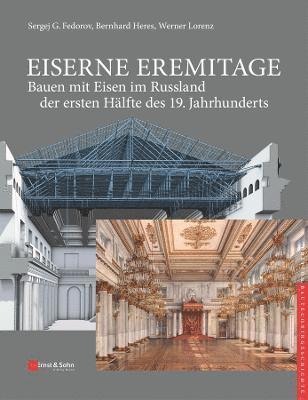
Eiserne Eremitage
Bauen mit Eisen im Russland der ersten Hälfte des 19. Jahrhunderts
Inbunden, Tyska, 2022
995 kr
Skickas inom 11-20 vardagar
Im Dezember 1837 zerstört ein verheerender Großbrand das Machtzentrum des russischen Reichs, den Winterpalast in St. Petersburg. Der von Zar Nikolaus I. forcierte umgehende Wiederaufbau bildet den Auftakt eines groß angelegten Um- und Neubauprogramms für nahezu sämtliche Bauten der kaiserlichen Residenz, die heute umgangssprachlich unter dem Namen Eremitage zusammengefasst werden. Vermeintlich "feuersichere" Eisenkonstruktionen modernster Bauart ersetzen in den Dächern und Decken die traditionellen Holztragwerke. Bis 1852 entsteht in beispiellosen Ausmaßen, erstaunlicher Vielfalt und unterschiedlichen konstruktiven Handschriften das größte Ensemble eiserner Tragwerke der ersten Hälfte des 19. Jahrhunderts - die Eiserne Eremitage.Errichtet in einer technologisch noch offenen Zeit, in der Europa gerade erst daran arbeitet, die Möglichkeiten des Bauens mit Eisen zu erkunden und erste Regeln und Praktiken dafür zu formulieren, bilden die hinter den Fassaden und abgehängten Decken der Eremitage verborgenen Eisenkonstruktionen heute ein einzigartiges Zeugnis aus der Frühzeit des europäischen Stahlbaus.Im Ergebnis eines langjährigen Forschungsprojekts eröffnet die zweibändige Monographie eine gänzlich neue Sichtweise auf diesen Gebäudekomplex von Weltrang: Nie zuvor ist eine historische Eisenkonstruktion in derartiger Tiefe und Weite erfasst, dokumentiert und interpretiert worden. Exemplarisch zeigt die Untersuchung dabei das Potenzial einer Bauforschung mit ingenieurwissenschaftlichem Schwerpunkt, die nicht nur die Auswertung umfangreicher Archivbestände, handnahe In-situ-Untersuchungen, Laboranalysen und statisch-konstruktive Analysen umfasst, sondern auch die kompetente Verortung und Bewertung im zeitgenössischen bautechnikgeschichtlichen Kontext. In einem eigenen Tafelband werden aus der Fülle des Materials Archivalien, detaillierte Konstruktionszeichnungen und Visualisierungen der eisernen Tragwerke präsentiert und kommentiert.Auf der Suche nach Erklärungen verfolgen die Autoren in ihrer detaillierten Aufbereitung der Bau- und Konstruktionsgeschichte den langen Weg des Eisens zurück bis zu den Wurzeln im Ural, dem Abbau und der Verhüttung des Erzes. Die Spurensuche entfaltet die Folie, vor der sich der Bau der Eisernen Eremitage überhaupt erst vollziehen konnte - die beeindruckende Geschichte der russischen Eisenproduktion und bislang nahezu unbekannter Pionierleistungen des Bauens mit Eisen im 18. und frühen 19. Jahrhundert. Das Ergebnis verändert unseren Blick auf die Frühgeschichte des Stahlbaus - im Verständnis der Entwurfs-, Konstruktions- und Bauprozesse eines solchen Großprojekts, vor allem aber auch hinsichtlich der bereits weit zurückreichenden Traditionslinien des russischen Eisenbaus.
1 111 kr
Kommande
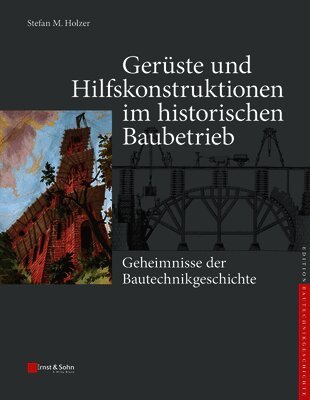
Gerüste und Hilfskonstruktionen im historischen Baubetrieb
Geheimnisse der Bautechnikgeschichte
Inbunden, Tyska, 2021
938 kr
Skickas inom 3-6 vardagar
The author tells the fascinating history of falsework and scaffolding for buildings, bridges, and auxiliary transport structures through centuries. He discusses building methods and construction types and their distribution, and he shows how building technologies were formatted.
1 722 kr
Tillfälligt slut
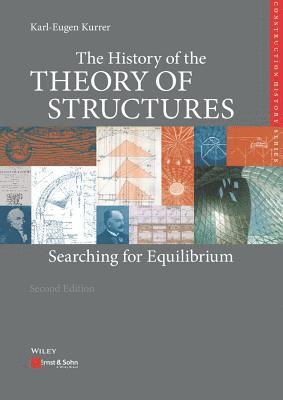
Ten years after the publication of the first English edition of The History of the Theory of Structures, Dr. Kurrer now gives us a much enlarged second edition with a new subtitle: Searching for Equilibrium. The author invites the reader to take part in a journey through time to explore the equilibrium of structures. That journey starts with the emergence of the statics and strength of materials of Leonardo da Vinci and Galileo, and reaches its first climax with Coulomb's structural theories for beams, earth pressure and arches in the late 18th century. Over the next 100 years, Navier, Culmann, Maxwell, Rankine, Mohr, Castigliano and Müller-Breslau moulded theory of structures into a fundamental engineering science discipline that - in the form of modern structural mechanics - played a key role in creating the design languages of the steel, reinforced concrete, aircraft, automotive and shipbuilding industries in the 20th century. In his portrayal, the author places the emphasis on the formation and development of modern numerical engineering methods such as FEM and describes their integration into the discipline of computational mechanics.Brief insights into customary methods of calculation backed up by historical facts help the reader to understand the history of structural mechanics and earth pressure theory from the point of view of modern engineering practice. This approach also makes a vital contribution to the teaching of engineers.Dr. Kurrer manages to give us a real feel for the different approaches of the players involved through their engineering science profiles and personalities, thus creating awareness for the social context. The 260 brief biographies convey the subjective aspect of theory of structures and structural mechanics from the early years of the modern era to the present day. Civil and structural engineers and architects are well represented, but there are also biographies of mathematicians, physicists, mechanical engineers and aircraft and ship designers. The main works of these protagonists of theory of structures are reviewed and listed at the end of each biography. Besides the acknowledged figures in theory of structures such as Coulomb, Culmann, Maxwell, Mohr, Müller-Breslau, Navier, Rankine, Saint-Venant, Timoshenko and Westergaard, the reader is also introduced to G. Green, A. N. Krylov, G. Li, A. J. S. Pippard, W. Prager, H. A. Schade, A. W. Skempton, C. A. Truesdell, J. A. L. Waddell and H. Wagner. The pioneers of the modern movement in theory of structures, J. H. Argyris, R. W. Clough, T. v. Kármán, M. J. Turner and O. C. Zienkiewicz, are also given extensive biographical treatment. A huge bibliography of about 4,500 works rounds off the book.New content in the second edition deals with earth pressure theory, ultimate load method, an analysis of historical textbooks, steel bridges, lightweight construction, theory of plates and shells, Green's function, computational statics, FEM, computer-assisted graphical analysis and historical engineering science. The number of pages now exceeds 1,200 - an increase of 50% over the first English edition.This book is the first all-embracing historical account of theory of structures from the 16th century to the present day.
1 637 kr
Skickas inom 3-6 vardagar