Sustainable Water Developments - Resources, Management, Treatment, Efficiency and Reuse – serie
Visar alla böcker i serien Sustainable Water Developments - Resources, Management, Treatment, Efficiency and Reuse. Handla med fri frakt och snabb leverans.
14 produkter
14 produkter
Häftad, Engelska, 2020
777 kr
Skickas inom 10-15 vardagar
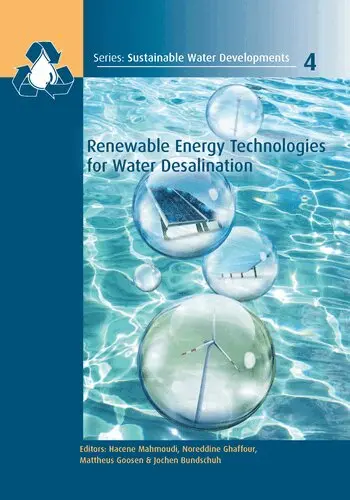
The book presents a thorough overview of the latest trends and challenges in renewable energy technologies applications for water desalination, with an emphasis on environmental concerns and sustainable development. Emphasis is on the various uses of renewable energy, as well as economics & scale-up, government subsidies & regulations, and environmental concerns. It provides an indication on how renewable energy technologies are rapidly emerging with the promise of economic and environmental viability for desalination. Further it gives a clear indication on how exactly to accelerate the expansion and commercialization of novel water production systems powered by renewable energies and in what manner environmental concerns may be minimized. This book is all-inclusive and wide-ranging and directed at decision makers in government, industry and the academic world as well as students.
Häftad, Engelska, 2020
736 kr
Skickas inom 10-15 vardagar
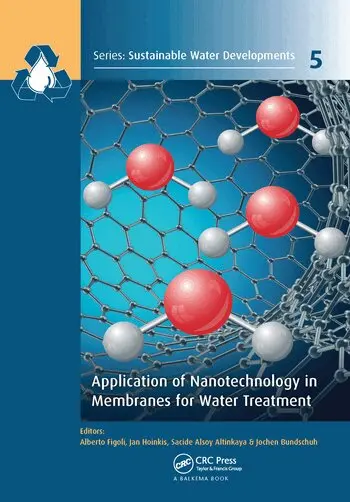
The book focuses on Application of Nanotechnology in Membranes for Water Treatment but not only provides a series of innovative solutions for water reclamation through advanced membrane technology but also serves as a medium to promote international cooperation and networking for the development of advanced membrane technology for Universal well-being and to achieve the common goal of supplying economically, environmentally and societally sustainable freshwater and better sanitation systems. This book is unique because the chapters were authored by established researchers all around the globe based on their recent research findings. In addition, this book provides a holistic coverage of membrane development for water treatment, from the membrane preparation and characterizations to the performance for specific processes and applications. Since that water scarcity has become a global risk and one of the most serious challenges for the scientific community in this century, the publication of this book is therefore significant as it will serve as a medium for a good reference of an alternative solution in water reclamation. This book will provide the readers with a thorough understanding of the different available approaches for manufacturing membranes both with innovative polymeric systems and inorganic nano-materials which could give enhanced functionalities, catalytic and antimicrobial activities to improve the performance of the existing membranes. It will be useful for leading decision and policy makers, water sector representatives and administrators, policy makers from the governments, business leaders, business houses in water treatment, and engineers/ scientists from both industrialized and developing countries as well.
Inbunden, Engelska, 2021
2 414 kr
Skickas inom 10-15 vardagar
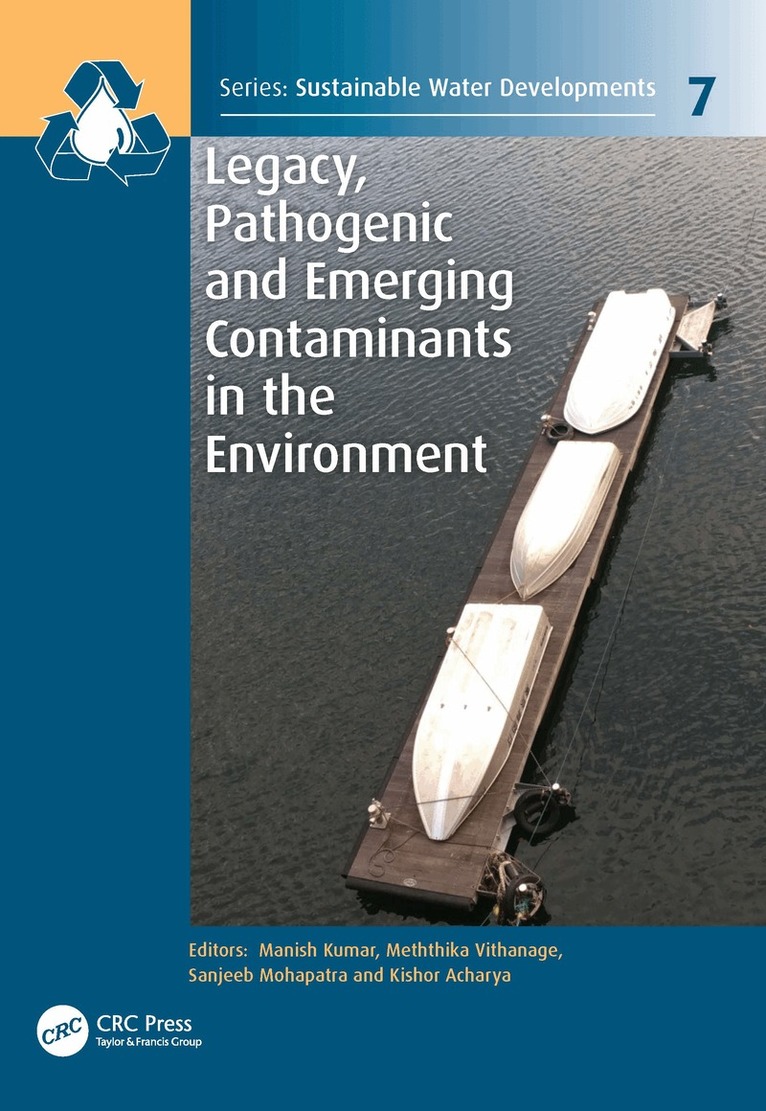
This is the time when legacy, pathogenic, and emerging contaminants must be talked about, understood, and dealt with together. While the geogenic contamination of the groundwater is a well-established phenomenon that is considered as legacy contaminants that risk people’s health globally, both pathogenic and emerging contaminants like various water-borne pathogens and pharmaceutical personal care products (PPCPs) are becoming imperative for their acute and chronic toxic effects. While contaminated groundwater consumption leads to skin pigmentation, hyperkeratosis, kidney damage, cardiovascular disease, and children’s overall development, poor sanitation-related pathogenic microorganisms cause a significant number of child and prenatal deaths. Simultaneously, antibiotic microbial resistance (AMR) is expected to kill 100 million people by 2050. However, there are rare texts that combine aspects of all these three under a single book cover.This book gives an understanding of the occurrence, fate, and transport of geogenic, microbial, and anthropogenic contaminants in the groundwater. It covers not only the scientific and technical aspects but also environmental, legal, and policy aspects for contaminant management in the environment under the paradigm shift of COVID-19. This book is intended to bring the focus on the natural contaminants—biotic or abiotic—in the post-COVID Anthropocene, which is illustrating a significant alteration of systems and the subsequent downstream impacts owing to globalization. This book has compiled global work on emergence, mass flow, partitioning, and activation of geogenic, emerging, and pathogenic contaminants in various spheres of environment with special emphasis on soil, sediment, and aquatic systems for enhancing the understanding on their migration and evolution for the welfare of mankind.
Inbunden, Engelska, 2022
2 414 kr
Skickas inom 10-15 vardagar
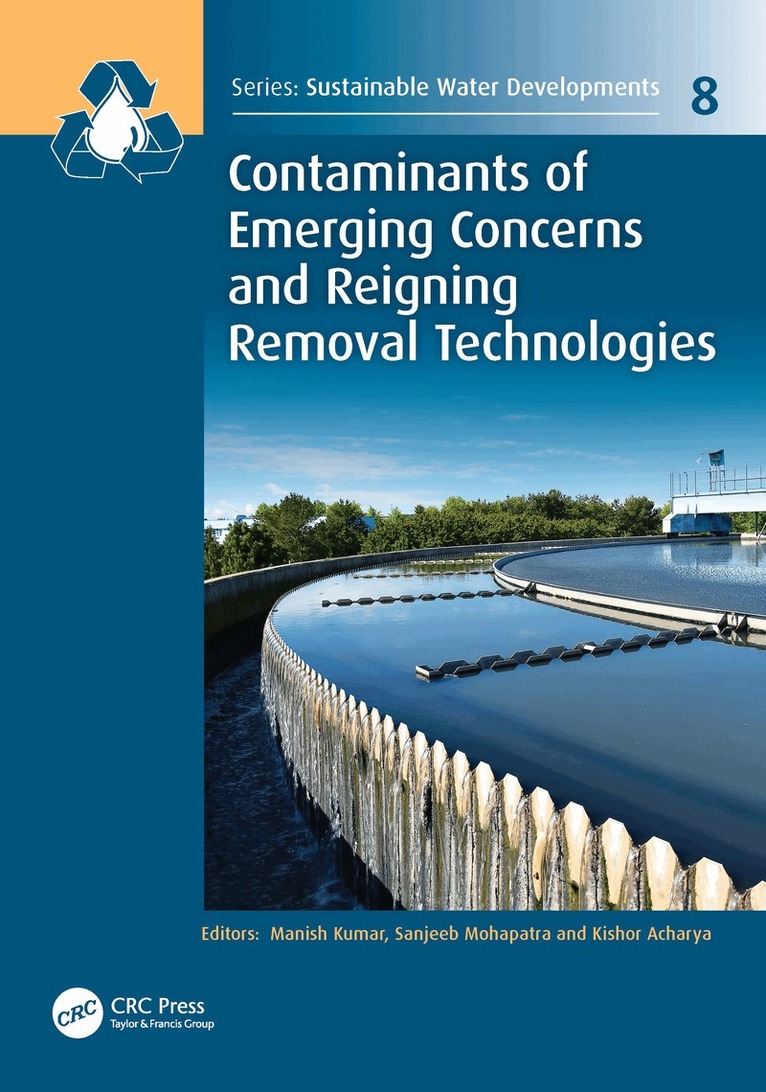
With an increased demand for wastewater reuse, groundwater recharge with treated wastewater has been practiced across the globe. As a result, groundwater quality deteriorates by emerging micropollutants from various anthropogenic origins, including untreated wastewater, seepage of landfill leachate, and runoff from agricultural lands. The fate of such emerging and geogenic contaminants in subsurface systems, especially in the groundwater, depends on several factors. Physicochemical properties of contaminants such as octanol-water partition coefficient, dissociation constant, water solubility, susceptibility to biodegradation under anaerobic conditions, and environmental persistence under diverse geological and pH conditions play a critical role during subsurface mass flow. Thus, advanced wastewater treatment techniques, followed by implementing stricter guidelines, are some of the measures that can safeguard water resources.This book, in general, gives an understanding of the fate and mitigation strategies for emerging and geogenic contaminants in the groundwater. The first and second sections provide a detailed insight into various removal techniques and mitigation approaches. Possible treatment strategies, including bioremediation and natural attenuation, are also covered in those sections. Environmental assessment, groundwater vulnerability, health effects, and regulations pertaining to various contaminants are systematically presented in the third section.
Inbunden, Engelska, 2016
2 827 kr
Skickas inom 10-15 vardagar
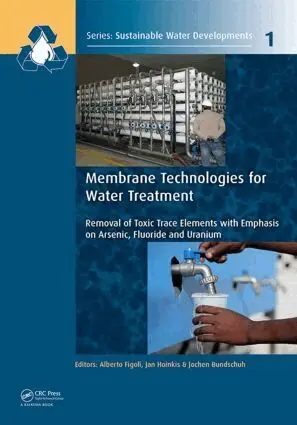
Focuses on the application of membrane technologies in removing toxic metals\metalloids from water. Particular attention is devoted to the removal of arsenic, uranium, and fluoride. These compounds are all existing in the earth’s crust at levels between two and five thousands micrograms per kg (parts per million) on average and these compounds can be considered highly toxic to humans, who are exposed to them primarily from air, food and water. In order to comply with the new maximum contaminant level, numerous studies have been undertaken to improve established treatments or to develop novel treatment technologies for removing toxic metals from contaminated surface and groundwater. Among the technologies available, applicable for water treatment, membrane technology has been identified as a promising technology to remove such toxic metals from water. The book describes both pressure driven (traditional processes, such as Nanofiltration, Reverse Osmosis, Ultrafiltration,etc) and more advanced membrane processes (such as forward osmosis, membrane distillation, and membrane bio-reactors) employed in the application of interest. Key aspect of this book is to provide information on both the basics of membrane technologies and on the results depending on the type of technology employed.
Inbunden, Engelska, 2017
3 377 kr
Skickas inom 10-15 vardagar
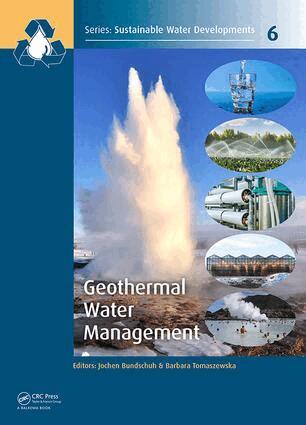
Availability of and adequate accessibility to freshwater and energy are two key technological and scientific problems of global significance. At the end of the 20th century, the deficit of water for human consumption and economic application forced us to focus on rational use of resources. Increasing the use of renewable energy sources and improving energy efficiency is a challenge for the 21st century. Geothermal energy is heat energy generated and stored in the Earth, accumulated in hydrothermal systems or in dry rocks within the Earth’s crust, in amounts which constitute the energy resources. The sustainable management of geothermal energy resources should be geared towards optimization of energy recovery, but also towards rational management of water resources since geothermal water serves both as energy carrier and also as valuable raw material. Geothermal waters, depending on their hydrogeothermal characteristics, the lithology of the rocks involved, the depth at which the resources occur and the sources of water supply, may be characterized by very diverse physicochemical parameters. This factor largely determines the technology to be used in their exploitation and the way the geothermal water can be used. This book is focused on the effective use of geothermal water and renewable energy for future needs in order to promote modern, sustainable and effective management of water resources. The research field includes crucial new areas of study:• an improvement in the management of freshwater resources through the use of residual geothermal water;• a review of the technologies available in the field of geothermal water treatment for its (re)use for energetic purposes and freshwater production, and• the development of balneotherapy.The book is aimed at professionals, academics and decision makers worldwide, water sector representatives and administrators, business enterprises specializing in renewable energy management and water treatment, working in the areas of geothermal energy usage, water resources, water supply and energy planning. This book has the potential to become a standard text used by educational institutions and research & development establishments involved in the geothermal water management.
Inbunden, Engelska, 2016
2 486 kr
Skickas inom 10-15 vardagar
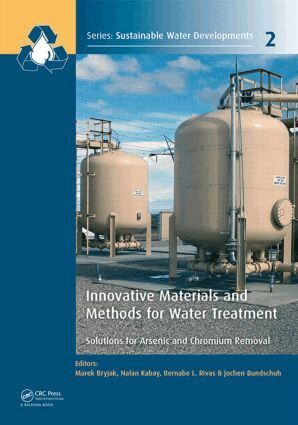
Due to increasing demand for potable and irrigation water, water suppliers have to use alternative resources. They either have to regenerate wastewater or deal with contaminated surface water. This book brings together the experiences of various experts in preparing of innovative materials that are selective for arsenic and chromium removal, and inventing some innovative processes to extract these elements from water. The book should be of high interest to engineers and decision-makers responsible for production and delivery of safe water. The book is divided into three parts. The first one shows the effect of arsenic and chromium ions on living organisms. The second one presents the studies on preparation of innovative materials with improved affinity towards arsenic as well as chromium. The third part shows the innovative methods for removal of these toxic elements, with special attention paid to chromatographic, membrane, and hybrid systems. The book is the first ever scientific work addressed to two most harmful elements appearing in water and provides a comprehensive review of materials and methods useful for making the water safe. The book discusses in detail the various fabrication techniques for sorbents and membranes that are now commercially available or appear in the development stage and will be commercialized in the next decades. Some of the technologies described in the third part will be implemented at the industrial scale in the future as well.
Inbunden, Engelska, 2016
1 864 kr
Skickas inom 10-15 vardagar
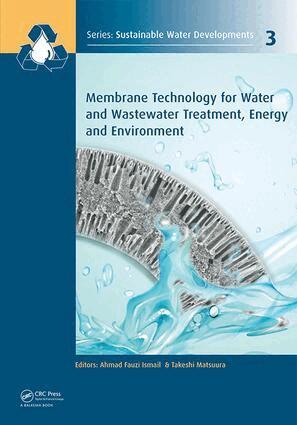
Realizing that water, energy and food are the three pillars to sustain the growth of human population in the future, this book deals with all the above aspects with particular emphasis on water and energy. In particular, the book addresses applications of membrane science and technology for water and wastewater treatment, energy and environment. The readers are also offered a glimpse into the rapidly growing R & D activities in the ASEAN and the Middle East regions that are emerging as the next generation R & D centers of membrane technologies, especially owing to their need of technology for water and wastewater treatment. Hence, this book will be useful not only for the engineers, scientists, professors and graduate students who are engaged in the R & D activities in this field, but also for those who are interested in the sustainable development of these geographical regions. Thus, it is believed that the book will open up new avenues for the establishment of global collaborations to achieve our common goal of welfare of the human society.
Inbunden, Engelska, 2017
2 676 kr
Skickas inom 5-8 vardagar
The book presents a thorough overview of the latest trends and challenges in renewable energy technologies applications for water desalination, with an emphasis on environmental concerns and sustainable development. Emphasis is on the various uses of renewable energy, as well as economics & scale-up, government subsidies & regulations, and environmental concerns. It provides an indication on how renewable energy technologies are rapidly emerging with the promise of economic and environmental viability for desalination. Further it gives a clear indication on how exactly to accelerate the expansion and commercialization of novel water production systems powered by renewable energies and in what manner environmental concerns may be minimized. This book is all-inclusive and wide-ranging and directed at decision makers in government, industry and the academic world as well as students.
Häftad, Engelska, 2021
744 kr
Skickas inom 10-15 vardagar
Due to increasing demand for potable and irrigation water, water suppliers have to use alternative resources. They either have to regenerate wastewater or deal with contaminated surface water. This book brings together the experiences of various experts in preparing of innovative materials that are selective for arsenic and chromium removal, and inventing some innovative processes to extract these elements from water. The book should be of high interest to engineers and decision-makers responsible for production and delivery of safe water. The book is divided into three parts. The first one shows the effect of arsenic and chromium ions on living organisms. The second one presents the studies on preparation of innovative materials with improved affinity towards arsenic as well as chromium. The third part shows the innovative methods for removal of these toxic elements, with special attention paid to chromatographic, membrane, and hybrid systems. The book is the first ever scientific work addressed to two most harmful elements appearing in water and provides a comprehensive review of materials and methods useful for making the water safe. The book discusses in detail the various fabrication techniques for sorbents and membranes that are now commercially available or appear in the development stage and will be commercialized in the next decades. Some of the technologies described in the third part will be implemented at the industrial scale in the future as well.
Häftad, Engelska, 2021
1 066 kr
Skickas inom 10-15 vardagar
Focuses on the application of membrane technologies in removing toxic metals\metalloids from water. Particular attention is devoted to the removal of arsenic, uranium, and fluoride. These compounds are all existing in the earth’s crust at levels between two and five thousands micrograms per kg (parts per million) on average and these compounds can be considered highly toxic to humans, who are exposed to them primarily from air, food and water. In order to comply with the new maximum contaminant level, numerous studies have been undertaken to improve established treatments or to develop novel treatment technologies for removing toxic metals from contaminated surface and groundwater. Among the technologies available, applicable for water treatment, membrane technology has been identified as a promising technology to remove such toxic metals from water. The book describes both pressure driven (traditional processes, such as Nanofiltration, Reverse Osmosis, Ultrafiltration,etc) and more advanced membrane processes (such as forward osmosis, membrane distillation, and membrane bio-reactors) employed in the application of interest. Key aspect of this book is to provide information on both the basics of membrane technologies and on the results depending on the type of technology employed.
Häftad, Engelska, 2021
1 066 kr
Skickas inom 10-15 vardagar
Realizing that water, energy and food are the three pillars to sustain the growth of human population in the future, this book deals with all the above aspects with particular emphasis on water and energy. In particular, the book addresses applications of membrane science and technology for water and wastewater treatment, energy and environment. The readers are also offered a glimpse into the rapidly growing R & D activities in the ASEAN and the Middle East regions that are emerging as the next generation R & D centers of membrane technologies, especially owing to their need of technology for water and wastewater treatment. Hence, this book will be useful not only for the engineers, scientists, professors and graduate students who are engaged in the R & D activities in this field, but also for those who are interested in the sustainable development of these geographical regions. Thus, it is believed that the book will open up new avenues for the establishment of global collaborations to achieve our common goal of welfare of the human society.
Häftad, Engelska, 2017
1 933 kr
Skickas inom 10-15 vardagar
Availability of and adequate accessibility to freshwater and energy are two key technological and scientific problems of global significance. At the end of the 20th century, the deficit of water for human consumption and economic application forced us to focus on rational use of resources. Increasing the use of renewable energy sources and improving energy efficiency is a challenge for the 21st century. Geothermal energy is heat energy generated and stored in the Earth, accumulated in hydrothermal systems or in dry rocks within the Earth’s crust, in amounts which constitute the energy resources. The sustainable management of geothermal energy resources should be geared towards optimization of energy recovery, but also towards rational management of water resources since geothermal water serves both as energy carrier and also as valuable raw material. Geothermal waters, depending on their hydrogeothermal characteristics, the lithology of the rocks involved, the depth at which the resources occur and the sources of water supply, may be characterized by very diverse physicochemical parameters. This factor largely determines the technology to be used in their exploitation and the way the geothermal water can be used. This book is focused on the effective use of geothermal water and renewable energy for future needs in order to promote modern, sustainable and effective management of water resources. The research field includes crucial new areas of study:• an improvement in the management of freshwater resources through the use of residual geothermal water;• a review of the technologies available in the field of geothermal water treatment for its (re)use for energetic purposes and freshwater production, and• the development of balneotherapy.The book is aimed at professionals, academics and decision makers worldwide, water sector representatives and administrators, business enterprises specializing in renewable energy management and water treatment, working in the areas of geothermal energy usage, water resources, water supply and energy planning. This book has the potential to become a standard text used by educational institutions and research & development establishments involved in the geothermal water management.
Inbunden, Engelska, 2017
2 403 kr
Skickas inom 5-8 vardagar
The book focuses on Application of Nanotechnology in Membranes for Water Treatment but not only provides a series of innovative solutions for water reclamation through advanced membrane technology but also serves as a medium to promote international cooperation and networking for the development of advanced membrane technology for Universal well-being and to achieve the common goal of supplying economically, environmentally and societally sustainable freshwater and better sanitation systems. This book is unique because the chapters were authored by established researchers all around the globe based on their recent research findings. In addition, this book provides a holistic coverage of membrane development for water treatment, from the membrane preparation and characterizations to the performance for specific processes and applications. Since that water scarcity has become a global risk and one of the most serious challenges for the scientific community in this century, the publication of this book is therefore significant as it will serve as a medium for a good reference of an alternative solution in water reclamation. This book will provide the readers with a thorough understanding of the different available approaches for manufacturing membranes both with innovative polymeric systems and inorganic nano-materials which could give enhanced functionalities, catalytic and antimicrobial activities to improve the performance of the existing membranes. It will be useful for leading decision and policy makers, water sector representatives and administrators, policy makers from the governments, business leaders, business houses in water treatment, and engineers/ scientists from both industrialized and developing countries as well.